Schuhplattler Dance Costumes & Oktoberfest Tracht 2026
The Resurgence of Authentic Alpine Tracht in 2026
As we navigate the 2026 European festival season, the intersection of heritage preservation and folk performance has never been more vibrant. Among the most iconic expressions of European folk dress is the Bavarian and Alpine Tracht, particularly the garments worn for the Schuhplattler—a traditional folk dance characterized by rhythmic leaping, stomping, and the striking of thighs, knees, and shoes. While mass-market costume shops flood Munich and global Oktoberfest events with synthetic replicas, true folk dance troupes (Trachtenvereine) and cultural purists insist on historically accurate, meticulously constructed garments. According to the Bayerischer Trachtenverband (Bavarian Folk Costume Association), the demand for authentic, region-specific Vereinstracht (association-grade costumes) has surged in 2026, driven by a younger generation eager to reclaim their intangible cultural heritage.
Whether you are a performer preparing for a summer folk dance competition, or a festival attendee seeking to honor the sartorial traditions of the Alps, understanding the anatomy of authentic Lederhosen and the Dirndl is essential. This guide breaks down the construction, regional variations, and 2026 sourcing metrics for traditional Alpine dance costumes.
The Anatomy of Authentic Schuhplattler Lederhosen
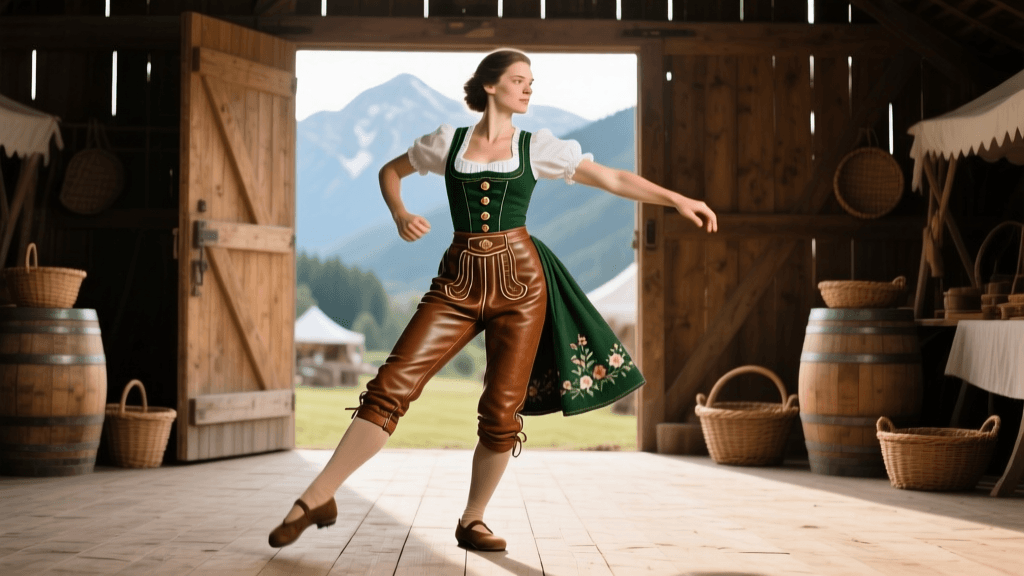
The term Lederhosen translates simply to 'leather breeches,' but the garments worn for the Schuhplattler are masterpieces of functional tailoring. For a dancer, the leather must withstand the violent friction of the platteln (slapping) while allowing a full range of acrobatic motion.
Material and Tanning: Hirschleder vs. Rindsleder
Authentic dance Lederhosen are crafted exclusively from Hirschleder (deerskin) or high-grade Rehleder (doeskin). Unlike cowhide (Rindsleder), which is stiff and heavy, deerskin is naturally breathable, incredibly supple, and possesses a unique velvet-like nap. The tanning process, known as Sämischgerbung, uses cod liver oil and smoke to cure the hide. This traditional brain-and-smoke tanning method ensures the leather remains soft even after being soaked in sweat during a summer festival and subsequently air-dried. In 2026, master tanners in the Alpine regions continue this labor-intensive process, making genuine Hirschleder a premium investment.
Tailoring for the Dance Floor
A performer's Lederhosen features a specific cut designed for high kicks and deep squats. Key tailoring elements include:
- The Drop-Crotch Gusset: A diamond-shaped leather insert at the inseam that prevents tearing during the deep lunges of the Wiegler dance figure.
- High Waistband: Sitting above the navel, secured by a sturdy linen backing to support the lower back during rapid spins.
- The Latze (Front Flap): The iconic buttoned drop-front, reinforced with extra stitching to withstand the repetitive slapping of the Schuhplattler.
The embroidery (Stickerei) is not merely decorative; it denotes the wearer's specific valley or village. Hand-embroidered floral motifs, such as edelweiss, thistles, or oak leaves, are stitched using silk or heavy cotton thread. As of 2026, a bespoke, hand-embroidered Hirschleder Lederhosen from a master saddler in Garmisch-Partenkirchen typically costs between €950 and €1,600.
Dirndl Construction for Folk Dance Performers
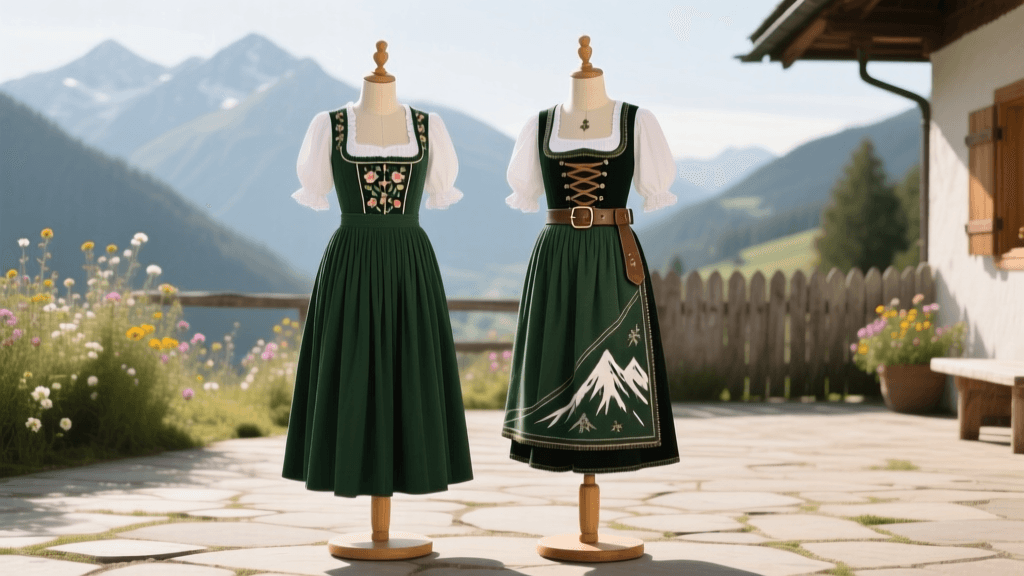
The female counterpart to the Lederhosen is the Dirndl, though the garments worn by folk dance troupes are more accurately referred to as Miedergwandl or Festtagsdirndl. The construction of a dance-grade Dirndl prioritizes posture, durability, and the physics of rotational movement.
The Mieder (Bodice)
The bodice of a performance Dirndl is heavily structured. In 2026, traditionalists utilize flexible steel boning or high-density synthetic reeds sewn into the lining. This structure acts almost like a corset, providing vital lumbar support for the female dancer during the Dreher (rapid, continuous spinning). The bodice is fastened with silver or horn hooks, laced with silk ribbons or chains, ensuring a snug fit that prevents the garment from shifting during vigorous choreography.
The Rock (Skirt) and Hem Weighting
For folk dance, the skirt must fall precisely at the mid-calf (typically 65 to 75 centimeters from the waist, depending on the dancer's height). This length allows the intricate footwork and the male dancer's leaps to remain visible to the audience, while maintaining historical modesty. Crucially, the hem of a dance skirt is often weighted with a hidden cotton bias tape or a heavier wool blend. This weighting creates a beautiful, controlled flare when the dancer spins, preventing the lightweight cotton or linen fabric from tangling around the legs.
The Schürze (Apron) and the Knot Code
The apron is tied at the front, and its bow placement communicates the wearer's relationship status—a tradition still strictly observed at 2026 Alpine festivals:
- Left Side: Single and available.
- Right Side: Married, engaged, or in a relationship.
- Center Front: Traditionally indicates a maiden (though less commonly used today).
- Center Back: Widowed (or the waitress is working).
Regional Variations: Miesbacher vs. Werdenfelser Tracht
When sourcing a costume, it is vital to avoid mixing regional elements. The Deutsches Trachtenmuseum (German Folk Costume Museum) emphasizes that Tracht is deeply tied to local geography. Two of the most prominent styles seen at folk dance competitions include:
Miesbacher Tracht
Originating from the Miesbach district, this is perhaps the most globally recognized Bavarian style. For men, it features a grey Joppe (jacket) with horn buttons, and a distinctive Scheibling hat adorned with a Gamsbart (a tuft of chamois hair). Women wear a dark, heavily embroidered bodice with a silver lace-up front and a black silk apron for formal festivals.
Werdenfelser Tracht
From the Werdenfelser Land region near Garmisch, this style is characterized by vibrant colors. Men often wear shorter, lighter leather breeches with green embroidery, while women's Dirndls feature bright, contrasting bodices (often red or green) with intricate gold thread work and lighter, floral-patterned silk aprons.
Footwear and Accessories for the Dance Floor
No Schuhplattler costume is complete without the proper footwear. The traditional Haferlschuh is a sturdy, side-lacing leather shoe originally designed for Alpine hunting and farming. For folk dance, the sole is paramount. In 2026, specialist cobblers like Meindl and Schratt offer reinforced dance soles with stacked leather heels and rubberized toe caps to withstand the percussive stamping required by the choreography. Men pair these with Loferl (calf warmers) made of ribbed wool, while women wear delicate, low-heeled Dirndlschuhe with silver buckles and sheer white stockings.
2026 Sourcing & Comparison Chart
When outfitting a dance troupe or purchasing personal festival wear in 2026, understanding the market tiers is crucial for balancing budget and authenticity.
| Category | Material & Construction | 2026 Price Range (EUR) | Dance Suitability | Best For |
|---|---|---|---|---|
| Mass-Market / Tourist | Chrome-tanned cowhide, polyester blends, glued embroidery. | €80 - €250 | Poor (Stiff, causes chafing, poor spin physics) | Single-use costume parties |
| Mid-Tier Festive | Split cowhide or basic deerskin, machine embroidery, cotton skirts. | €350 - €650 | Moderate (Acceptable for casual festival dancing) | Oktoberfest attendees, amateur hobbyists |
| Authentic Vereinstracht | Smoked Hirschleder, hand-stitched silk embroidery, steel-boned bodices, weighted wool skirts. | €950 - €2,500+ | Excellent (Designed for acrobatics, breathable, durable) | Trachtenvereine, professional performers, cultural purists |
Care and Maintenance of Heritage Garments
Investing in authentic Tracht requires proper maintenance, especially after the rigors of a summer dance festival. Hirschleder should never be machine washed or dry-cleaned with harsh chemicals, as this strips the natural oils. Instead, performers in 2026 rely on specialized Hirschhornöl (deer horn oil) and saddle soap to gently lift sweat and dirt, followed by air-drying in a shaded, well-ventilated area. Once dry, the leather is brushed with a suede brush to restore the nap.
For the Dirndl, the silk apron and delicate lace blouse must be hand-washed or professionally cleaned. The heavy bodice should be spot-cleaned and aired out. To protect the wool and linen components from moth damage during the off-season, garments should be stored in breathable cotton garment bags alongside natural cedar blocks, avoiding plastic covers that trap moisture and promote mildew.
Preserving Intangible Cultural Heritage
The Schuhplattler and its associated garments are more than just festival entertainment; they are a living archive of European rural history. Organizations recognized by the German UNESCO Commission for Intangible Cultural Heritage continue to champion the preservation of these regional dances and their sartorial requirements. By choosing authentic, well-crafted Tracht in 2026, dancers and festival-goers alike play a direct role in sustaining the artisanal tanneries, embroiderers, and tailors who keep this magnificent European folk tradition alive for future generations.