Romanian Ie and Ukrainian Vyshyvanka: 2026 Buyer Guide
The Renaissance of Eastern European Embroidery in 2026
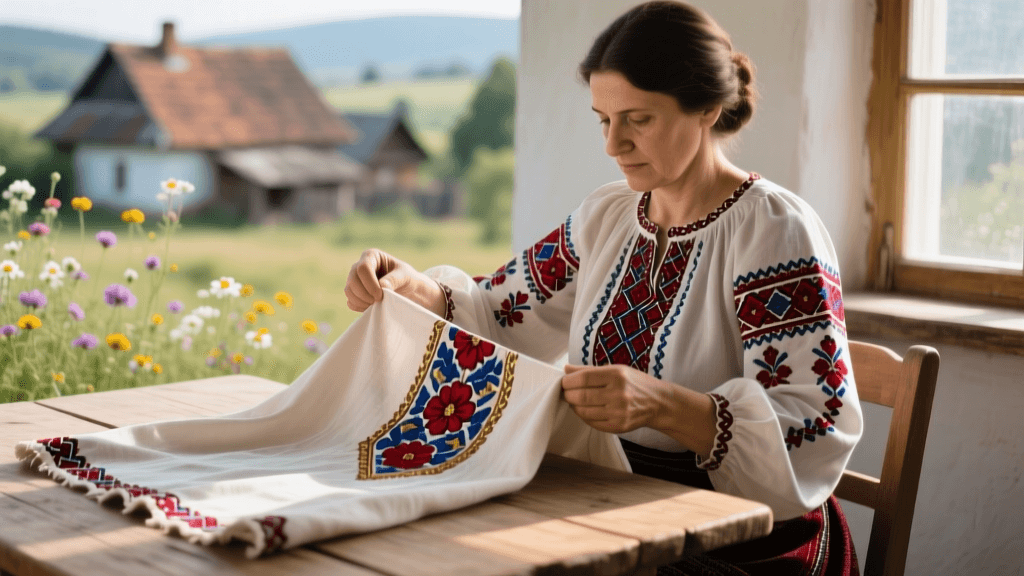
In 2026, the global slow-fashion movement has fully embraced the intricate textile traditions of Eastern Europe and the Balkans. No longer confined to museum archives or annual folk festivals, garments like the Romanian Ie and the Ukrainian Vyshyvanka have become highly sought-after centerpieces in contemporary, sustainable wardrobes. As consumers pivot away from mass-produced fast fashion, the demand for authentic, hand-loomed, and hand-embroidered garments has surged, leading to a revitalized network of artisan cooperatives across the Carpathian Mountains and the Balkan Peninsula.
However, this surge in popularity has also flooded the market with machine-made replicas and synthetic blends. For the discerning collector or conscious consumer, understanding the nuances of regional motifs, traditional construction, and ethical sourcing is more critical than ever. This comprehensive guide will walk you through the anatomy of these iconic garments, how to authenticate hand-stitched pieces, and where to source them directly from master artisans in 2026.
Decoding the Romanian Ie: Motifs, Regions, and Sourcing
The Romanian Ie (pronounced 'ee-yeh') is far more than a simple peasant blouse; it is a complex canvas of cultural identity, with its origins tracing back to the Cucuteni-Trypillia archaeological culture. Recognized for its profound cultural significance, the traditional techniques of making the Romanian blouse with embroidery on the shoulder (altiță) were inscribed on the UNESCO Representative List of the Intangible Cultural Heritage of Humanity. This prestigious recognition has helped protect the craft and elevate the status of the master embroiderers who keep the tradition alive today.
The Anatomy of the Ie
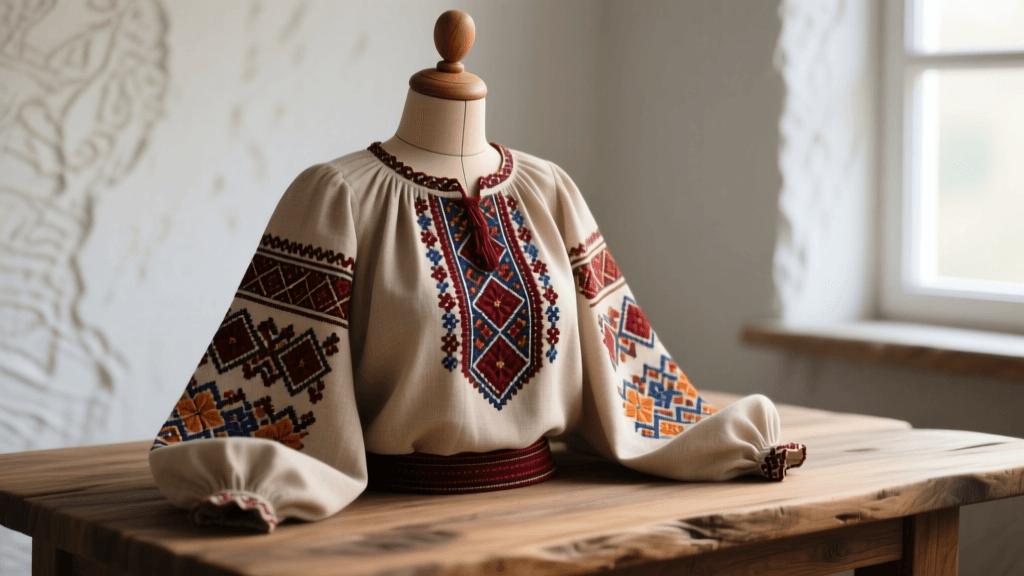
A genuine Ie is constructed from hand-woven linen or hemp and features three distinct embroidered zones:
- Altiță: The broad, heavily embroidered band on the upper shoulder, traditionally serving as the focal point and protective talisman of the garment.
- Increț: A narrower, secondary band of embroidery situated just below the altiță, acting as a transitional element.
- Râuri (Rivers): Vertical or diagonal stripes of embroidery that flow down the sleeves and bodice, symbolizing the rivers of the Carpathian landscape and guiding the eye downward.
Key Regional Variations and 2026 Market Pricing
When sourcing an Ie in 2026, you will encounter distinct regional styles. The table below outlines the primary variations, their dominant color palettes, and the current average pricing for authentic, hand-stitched pieces sourced directly from artisan cooperatives.
| Region | Dominant Colors & Motifs | Primary Fabric | 2026 Average Artisan Price (EUR) |
|---|---|---|---|
| Muscel / Argeș | Deep red, black, and gold metallic thread; dense geometric patterns. | Borangi silk-cotton blend | €350 - €550 |
| Olt | Vibrant red and black; stylized floral and solar motifs. | Heavy hand-woven linen | €280 - €400 |
| Vâlcea | Multicolored (blue, green, yellow, red); intricate 'river' stripes. | Finely woven hemp | €300 - €450 |
| Suceava / Bukovina | Black on white, or subtle earth tones; highly detailed cutwork. | Raw linen | €250 - €380 |
The Ukrainian Vyshyvanka: Symbolism and Modern Authenticity
The Ukrainian Vyshyvanka is a masterclass in coded symbolism, where every stitch, color, and geometric shape holds specific meaning related to protection, fertility, and ancestral lineage. In 2026, the Vyshyvanka continues to serve as a powerful emblem of Ukrainian cultural resilience and national identity, with global interest supporting numerous artisan-led initiatives and heritage preservation funds.
Geometric vs. Floral Patterns
Ukrainian embroidery is broadly categorized into regional styles, which generally fall into two main aesthetic camps:
- Hutsul (Carpathian Mountains): Famous for dense, vibrant geometric patterns. The Hutsul style utilizes complex cross-stitch and intricate beading, often featuring the eight-pointed star (Rozha) and rhombus motifs symbolizing sown fields and prosperity.
- Poltava and Central Ukraine: Characterized by delicate, white-on-white embroidery (bil po bilomu) and subtle floral motifs. This style relies heavily on complex cutwork (lyshva) and satin stitches, requiring immense technical skill and natural lighting to execute properly.
- Bukovyna: A transitional region blending Ukrainian and Balkan influences, often incorporating heavy wool threads, metallic accents, and a wider, bolder color palette including deep crimsons and forest greens.
According to cultural preservation data tracked by the Ukrainian Cultural Diplomacy Portal, the revival of natural dyeing techniques—such as using walnut hulls for deep browns, madder root for reds, and woad for blues—has become a hallmark of premium Vyshyvankas produced in 2026. Buyers should specifically look for artisans who advertise 'natural botanical dyes' to ensure they are getting a historically accurate, eco-friendly garment.
2026 Authentication: Hand-Stitched vs. Machine-Made
As the market for Eastern European folk dress expands, so does the prevalence of machine-embroidered replicas. While machine-made pieces are more affordable (typically €40 - €80), they lack the structural integrity, cultural authenticity, and investment value of hand-stitched garments. The Victoria and Albert Museum's textile archives emphasize that the true value of folk embroidery lies in the human touch and the slight, intentional imperfections that prove its handmade origin.
Here is how to authenticate a genuine hand-stitched Ie or Vyshyvanka when shopping online or in-person:
- Examine the Reverse Side: Turn the garment inside out. Machine embroidery relies on a continuous bobbin thread, resulting in a messy back with long 'jump threads' or a stiff, paper-like stabilizer backing. Hand embroidery will look nearly identical on the front and back, with neat, intentional knots and no stabilizer.
- Check the Thread Tension: Hand-stitched threads will have microscopic variations in tension. If every single cross-stitch is mathematically uniform and perfectly flat, it is likely machine-made.
- Feel the Fabric: Authentic pieces are woven on traditional wooden looms. Run your hand over the linen; it should have a slightly uneven texture (slubs) and a natural, earthy scent. If the fabric feels slick, perfectly uniform, or smells like synthetic chemicals, it is a modern mill-produced blend.
- Analyze the Color Fastness: Natural dyes used by traditional artisans will have a soft, muted depth to them and may show slight variations where the thread absorbed the dye differently. Synthetic threads will appear harsh, overly bright, and completely uniform.
Navigating Sourcing, Shipping, and Customs in 2026
Buying directly from Eastern European artisans in 2026 is easier than ever, thanks to improved digital cooperatives, but it requires an understanding of bespoke sizing and international logistics.
Measurements and Bespoke Sizing
Traditional garments do not follow modern S/M/L sizing charts. When commissioning a piece, you must provide specific flat-lay measurements:
- Chest Width: Measured from armpit to armpit, then doubled. Add 4-6 cm for a comfortable, traditional drape.
- Shoulder Drop: Measured from the base of the neck to the edge of the shoulder. Traditional Ie sleeves often drop 5-10 cm past the natural shoulder line.
- Sleeve Circumference: Measure around the fullest part of the bicep, adding at least 8 cm for ease of movement, especially for the voluminous 'bishop' sleeves typical of the Olt region.
Shipping and Import Duties
When ordering from cooperatives in Romania, Ukraine, or neighboring Balkan states, be prepared for standard international shipping times of 14 to 21 days via tracked couriers. For buyers in the European Union, most established cooperatives now utilize the IOSS (Import One-Stop Shop) system, meaning VAT is collected at checkout, preventing unexpected customs fees upon delivery. Buyers in North America or the UK should factor in an additional 15-20% for import duties on textiles valued over €150.
Care, Preservation, and Contemporary Styling
To ensure your investment lasts for generations, proper care is non-negotiable. Never machine-wash a hand-embroidered Ie or Vyshyvanka. Instead, soak the garment in cool water (maximum 20°C) using a pH-neutral, eco-friendly detergent specifically formulated for delicate natural fibers. Gently agitate by hand, rinse thoroughly, and roll the garment in a clean, dry cotton towel to press out excess water. Always dry flat, away from direct sunlight, to prevent the natural dyes from fading.
For long-term storage, fold the garment with acid-free tissue paper to prevent hard creases from breaking the embroidery threads over time, and store it in a breathable cotton garment bag in a cool, dry environment.
Styling for the 2026 Wardrobe
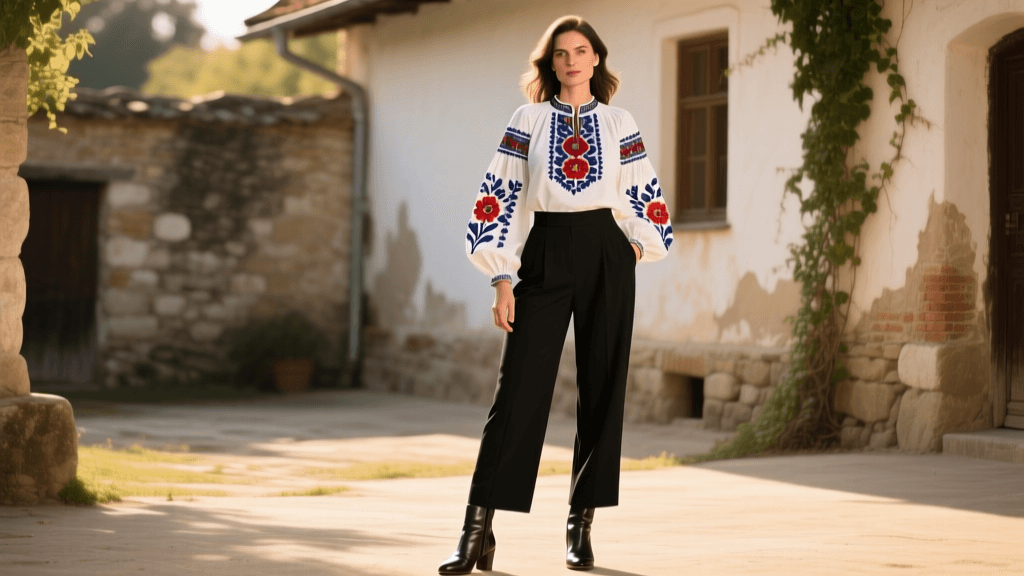
The beauty of Eastern European folk dress lies in its versatility. In 2026, the most compelling way to style an Ie or Vyshyvanka is through high-contrast juxtaposition. Pair a delicate, white-on-white Poltava Vyshyvanka with structured, wide-leg charcoal wool trousers and minimalist leather loafers for a sophisticated office look. Alternatively, layer a vibrant, heavy-linen Muscel Ie under a tailored, oversized blazer, allowing the intricate altiță shoulder embroidery to peek out, bridging the gap between ancient Carpathian heritage and modern metropolitan elegance.
"To wear an authentic Ie or Vyshyvanka is to wear a living archive. Every knot and crossed thread is a conversation with the ancestors, adapted for the modern world." — Dr. Elena Varga, Textile Historian and Curator of Balkan Folk Arts.
By prioritizing authentic, hand-stitched garments and supporting the artisan cooperatives that preserve these ancient techniques, you are not just acquiring a beautiful piece of clothing; you are actively participating in the safeguarding of Europe's most profound textile heritage.