Authentic Romanian Ie & Ukrainian Vyshyvanka: 2026 Sourcing Guide
The Renaissance of Eastern European Heritage Textiles in 2026
The landscape of Eastern European folk dress has experienced a profound renaissance as we move through 2026. Moving far beyond the superficial 'boho-chic' trends of the previous decade, contemporary consumers and textile collectors are now prioritizing deep cultural appreciation, historical accuracy, and direct-to-artisan sourcing. At the heart of this movement are two of the most iconic garments in the Slavic and Balkan regions: the Romanian Ie and the Ukrainian Vyshyvanka. These embroidered blouses are not merely clothing; they are wearable archives of regional identity, spiritual protection, and ancestral craftsmanship. According to the UNESCO Intangible Cultural Heritage registry, the traditional techniques used to create these garments represent a vital element of cultural identity that requires active safeguarding. This comprehensive 2026 guide will help you decode the intricate motifs, navigate the modern sourcing landscape, and integrate these heritage pieces into a contemporary wardrobe while ensuring the artisans who make them are fairly compensated.
Decoding the Romanian Ie: Structure and Symbolism
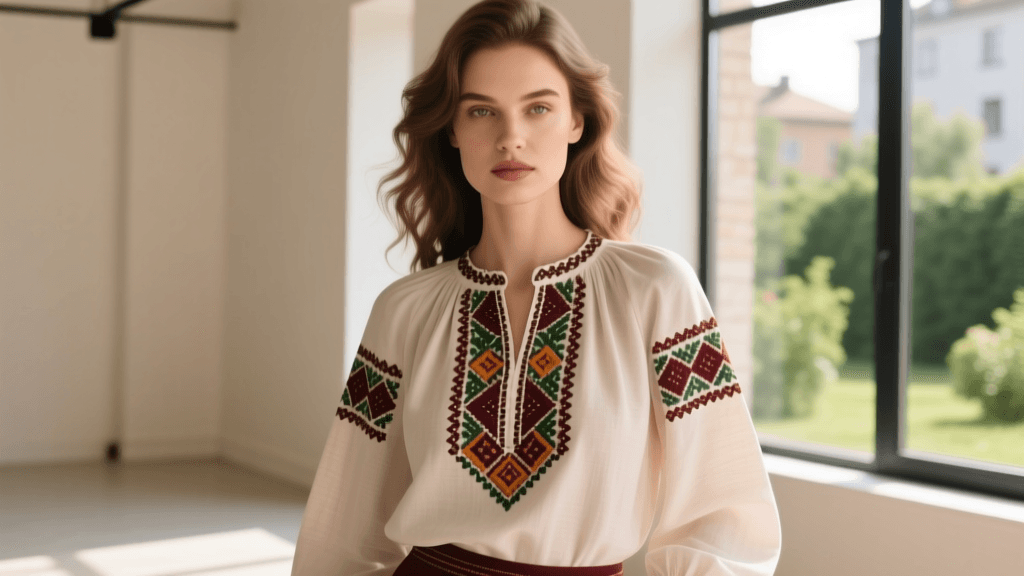
The Romanian Ie (pronounced 'yeh') is a masterpiece of structural embroidery, traditionally crafted from hand-loomed hemp, flax, or cotton. The architecture of the blouse is strictly defined by ancient rules, with the embroidery serving as both a decorative element and a talismanic shield against evil spirits. The most critical component is the altiță, the heavily embroidered rectangular panel situated on the shoulder. Historically, the altiță was the most protected part of the garment, as the shoulder was believed to be a vulnerable point where malevolent forces could enter the body. Below the altiță lies the increț, a narrow, densely stitched band that acts as a visual and structural transition. From the increț, the râuri (rivers) flow down the sleeves. These vertical or diagonal bands of embroidery mimic the flow of water, symbolizing life, continuity, and the passage of time.
In 2026, there has been a massive resurgence in the use of historically accurate natural dyes among top-tier Romanian artisan cooperatives. While synthetic threads dominated the late 20th century, modern masters in regions like Maramureș and Argeș are returning to madder root for deep crimsons, woad for indigo blues, and onion skins or buckthorn for vibrant yellows. The base fabric is increasingly being woven on traditional wooden looms, resulting in a slightly irregular, textured canvas that gives the 2026 heritage blouses a distinct, organic hand-feel that mass-produced cotton simply cannot replicate.
The Ukrainian Vyshyvanka: A Tapestry of Regional Identity
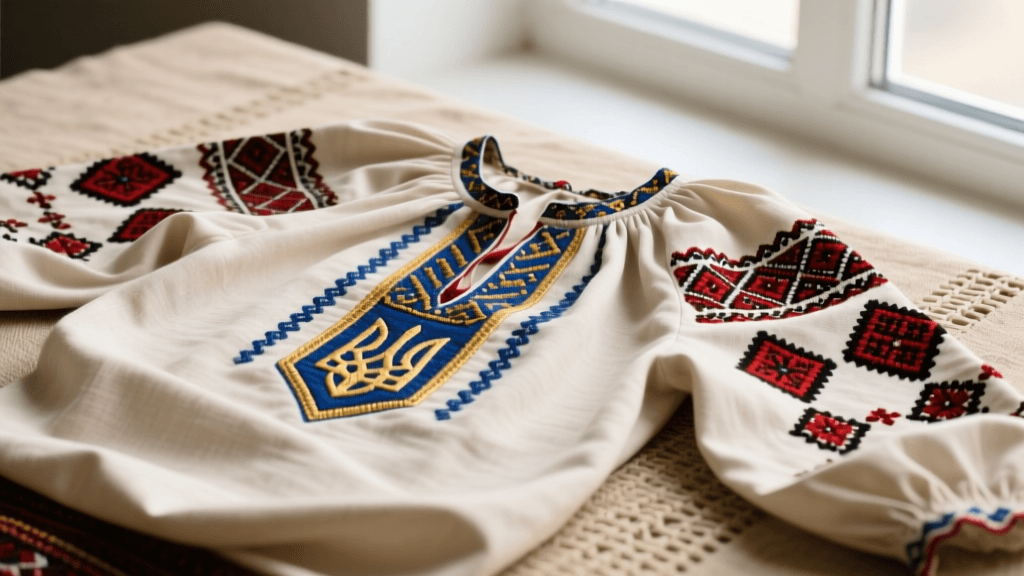
While the Romanian Ie is defined by its structural flow, the Ukrainian Vyshyvanka is celebrated for its staggering regional diversity and complex stitch techniques. The term Vyshyvanka translates simply to 'embroidered shirt,' but the execution varies wildly depending on the oblast (region) of origin. As noted by textile historians at the Victoria and Albert Museum, regional embroidery traditions often served as a visual language, communicating the wearer's village, marital status, and social standing without a single spoken word.
Poltava White-on-White and Cutwork
The Poltava region is famous for its ethereal white-on-white embroidery (bil po bilomu). This technique relies on texture rather than color, utilizing over 100 different variations of the satin stitch, hemstitching, and merezhka (intricate cutwork). The fabric is carefully cut and the threads are withdrawn and wrapped to create delicate, lace-like geometric patterns. In 2026, authentic Poltava blouses are highly sought after by collectors and command premium prices due to the hundreds of hours required to complete a single garment.
Borshchiv Black Embroidery and Hutsul Geometrics
In stark contrast, the Borshchiv region in western Ukraine is renowned for its dense, dark embroidery, primarily using black wool or cotton thread. Legend dictates that this somber palette originated as a mourning tradition for women whose husbands were lost in historical conflicts, eventually evolving into a striking regional signature. Meanwhile, the Hutsul people of the Carpathian Mountains favor explosive, polychromatic geometric patterns. Utilizing a dense cross-stitch technique, Hutsul artisans create vibrant tapestries of red, yellow, green, and black that mimic the intricate patterns found in regional kilim rugs and pysanky (Easter eggs). According to Encyclopædia Britannica, the cross-stitch remains one of the most enduring and globally recognized forms of folk embroidery, yet the specific Hutsul mathematical symmetry remains unique to the Carpathian basin.
2026 Sourcing Guide: Navigating the Authentic Market
Sourcing an authentic Ie or Vyshyvanka in 2026 requires diligence. The market is unfortunately flooded with machine-made imitations produced in overseas factories that appropriate sacred motifs without understanding their meaning. To support the living heritage of Eastern Europe, buyers must prioritize direct-to-artisan channels, verified heritage cooperatives, and museum-affiliated workshops. Below is a comparative breakdown of the 2026 sourcing landscape, including expected pricing and lead times.
| Source Type | Example / Platform | Price Range (2026 USD) | Material & Technique | Authenticity & Lead Time |
|---|---|---|---|---|
| Direct Carpathian Co-ops | Maramureș Weavers Guild, Local Etsy Artisans | $180 - $350 | Hand-loomed hemp/linen, natural dyes, hand-stitched | 100% Heritage | 4-8 weeks |
| Kyiv Artisan Collectives | Folk Motif Ukraine, Lviv Heritage Boutique | $150 - $450 | High-grade linen, traditional cutwork & cross-stitch | 100% Heritage | 2-4 weeks |
| Museum Reproduction Shops | Romanian Peasant Museum (MTR) Online Shop | $250 - $600 | Archival linen, exact historical pattern replication | Museum Grade | 1-3 weeks |
| Fast-Fashion 'Boho' Brands | Mass-market online retailers | $30 - $80 | Polyester/Rayon blends, machine-embroidered | Cultural Appropriation | Immediate |
Pro-Tip for 2026 Buyers: When purchasing from online cooperatives, always request close-up photographs of the reverse side of the embroidery. Authentic hand-embroidered traditional garments are often 'reversible' or have incredibly neat, intentional backings, whereas machine-embroidered fast fashion will show chaotic jump-stitches and thick, synthetic stabilizer meshes.
Archival Care for Heritage Linens
Investing in a hand-loomed, naturally dyed blouse requires a commitment to proper textile preservation. The organic fibers and botanical dyes used in 2026 heritage pieces are more sensitive to harsh chemicals than their synthetic counterparts. Never machine wash an authentic Ie or Vyshyvanka. Instead, submerge the garment in cool water with a pH-neutral, enzyme-free textile detergent. Allow it to soak for no more than fifteen minutes, gently agitating the water by hand. Rinse thoroughly in cool water until the runoff is completely clear.
Drying must be done flat, away from direct sunlight, which can rapidly fade natural madder and woad dyes. When ironing, always turn the blouse inside out and place a clean, damp cotton pressing cloth between the iron and the embroidery. This prevents the iron from crushing the three-dimensional texture of the satin stitches and cutwork. For long-term storage, fold the garment with acid-free archival tissue paper to prevent hard creases from breaking the linen fibers over time, and store it in a breathable cotton pillowcase in a cool, dark, and dry environment.
Contemporary 2026 Styling for the Modern Wardrobe
The beauty of Eastern European folk dress lies in its remarkable versatility when styled with intention. In 2026, the fashion zeitgeist has moved away from costumey, head-to-toe folk ensembles, favoring instead a juxtaposition of heritage textiles with sharp, modern tailoring. For a sophisticated daytime look, pair a delicate white-on-white Poltava Vyshyvanka with high-waisted, wide-leg wool trousers in charcoal or navy. Tuck the blouse in slightly at the front to define the waist, and add a structured, minimalist leather belt. Footwear should remain grounded and clean; modern leather loafers or sleek, minimalist interpretations of traditional opanci or postoly work beautifully.
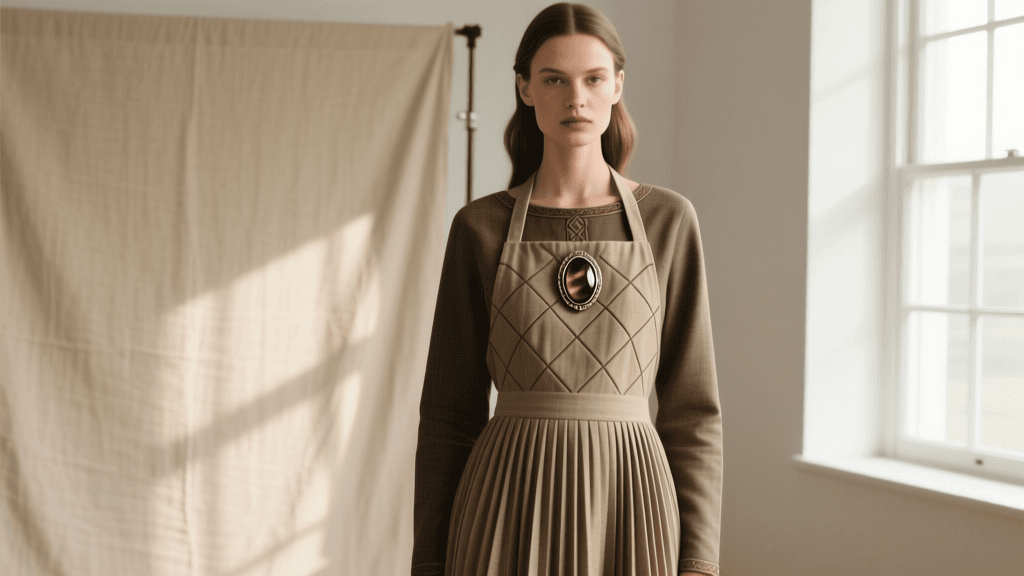
For evening wear or cultural festivals, a heavily embroidered Hutsul or Argeș blouse can serve as the ultimate statement piece. Because the embroidery is so visually dense, keep the rest of the silhouette streamlined. A flowing, floor-length linen or silk skirt in a solid, muted earth tone will allow the altiță and râuri to take center stage. Layering with a tailored, oversized blazer in a muted tweed can also bridge the gap between traditional folkwear and contemporary avant-garde fashion, proving that these ancient garments are not relics of the past, but living, breathing elements of a global, culturally conscious wardrobe in 2026 and beyond.