Authentic Oaxacan Huipiles: The 2026 Buyer's Guide
The Renaissance of the Oaxacan Huipil in 2026
In 2026, the global appreciation for Latin American textile arts has reached an unprecedented peak, bringing both immense opportunities and significant challenges to indigenous artisan communities. The Oaxacan huipil—a traditional, handwoven tunic-like garment worn by indigenous women across Mexico and Central America—is far more than a piece of clothing. It is a wearable codex, a geographic identifier, and a profound expression of cosmology. For collectors, fashion enthusiasts, and cultural preservationists, sourcing an authentic huipil requires a nuanced understanding of weaving techniques, natural dye chemistry, and the evolving legal landscape of cultural intellectual property.
This comprehensive guide will equip you with the knowledge to navigate the 2026 market, ensuring your investment supports the master weavers of the Zapotec and Mixtec communities while protecting you from the proliferation of fast-fashion imitations.
The Living Codex: Understanding Zapotec and Mixtec Motifs
Every authentic huipil tells a story specific to the weaver's village, family lineage, and spiritual beliefs. Before purchasing, it is crucial to understand the visual vocabulary embedded in the textile. In the Zapotec tradition, motifs are not merely decorative; they are prayers and historical records woven into the warp and weft.
- The Diamond (El Diamante): Representing the four cardinal directions and the cosmos, this is one of the most prevalent and sacred motifs. It symbolizes the universe and the cycle of the sun.
- The Step-Fret (Xonecuilli): Often mistaken for a simple geometric border, this pattern represents lightning, the rain god Cocijo, and the duality of life and death.
- The Toad (Sapo): A vital symbol of fertility, agriculture, and the onset of the rainy season, frequently found in huipiles from the Mixteca region.
- The Double-Headed Eagle: A post-conquest syncretic motif that blends indigenous solar symbolism with European heraldry, representing the duality of the earthly and spiritual realms.
When examining a garment, authentic pieces will feature these motifs integrated seamlessly into the structural weave, rather than embroidered on top of a finished, machine-made fabric.
Backstrap vs. Pedal Loom: Identifying Authentic Weaves
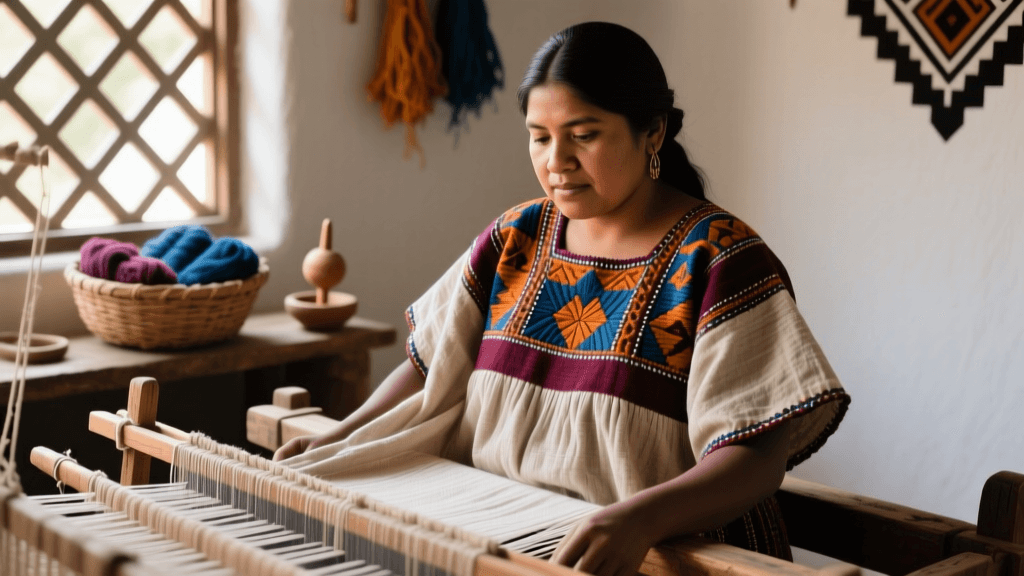
The most critical factor in determining the value, authenticity, and structural integrity of an Oaxacan huipil is the type of loom used. In 2026, the market is flooded with pedal-loom textiles marketed as 'handmade,' but true traditionalists and collectors seek the backstrap loom. According to the Museo Textil de Oaxaca, the backstrap loom (telar de cintura) is a pre-Columbian technology that physically connects the weaver to the textile, allowing for complex, continuous brocade patterns that a pedal loom cannot replicate.
| Feature | Backstrap Loom (Telar de Cintura) | Pedal Loom (Telar de Pedal) |
|---|---|---|
| Width Limitation | Restricted by the weaver's body width (typically 18-24 inches per panel) | d>Can produce wide, continuous yardage (up to 40+ inches) |
| Tension Control | Dynamic; controlled by the weaver's body weight and breath | Fixed; controlled by the wooden frame |
| Production Time | 2 to 6 months for a single three-panel huipil | 1 to 3 weeks for a comparable garment |
| 2026 Average Price (USD) | $450 - $1,500+ | $80 - $250 |
| Best Use | Ceremonial wear, heirloom collecting, high-end fashion archives | Everyday wear, home decor, accessible artisan support |
The Chemistry of Color: Natural Dyes in the Modern Market
The 2026 artisan market has seen a massive resurgence in the use of natural dyes, driven by eco-conscious consumers and a return to ancestral chemistry. Synthetic aniline dyes are still prevalent in lower-tier markets, but master weavers are increasingly dedicating their practice to botanical and insect-based colors.
Key Natural Dyes to Look For:
Cochineal (Dactylopius coccus): This parasitic insect, native to the Oaxacan nopales (prickly pear cacti), produces a staggering range of colors. By altering the pH level of the dye bath—adding acidic lime juice to yield vibrant oranges and reds, or alkaline baking soda to shift the color to deep purples and magentas—artisans create complex palettes. Authentic cochineal will have a slight organic variation in tone that synthetics cannot mimic.
Añil (Indigo): Extracted from the leaves of the indigo plant through a meticulous fermentation process, Oaxacan indigo yields deep, rich blues. Over time, authentic indigo will fade gracefully, developing a highly sought-after patina, whereas synthetic navy dyes tend to crack or wash out unevenly.
Pericón (Mexican Tarragon): Used to produce brilliant, colorfast yellows and golds, this native marigold is often combined with cochineal to create secondary shades of orange and coral.
Ethical Sourcing and 2026 Legal Protections
Purchasing indigenous textiles in 2026 requires an awareness of cultural appropriation and intellectual property rights. The Mexican government's enforcement of the Federal Law for the Protection of the Cultural Heritage of Indigenous and Afro-Mexican Peoples and Communities has fundamentally shifted the landscape. This legislation strictly prohibits the mass commercialization and patenting of indigenous designs by foreign fast-fashion brands without prior, informed consent and equitable benefit-sharing with the source communities.
As a buyer, you must ensure your purchase directly benefits the artisan. Avoid purchasing 'Oaxacan-style' garments from international boutique chains or unverified online drop-shippers. Instead, seek out certified cooperatives, direct-to-artisan e-commerce platforms verified by Mexican cultural NGOs, or purchase in person from established artisan markets like the Mercado de Artesanías in Oaxaca City or directly from weaving families in Teotitlán del Valle and Santo Tomás Jalieza.
2026 Pricing Tiers and Investment Value
Understanding the fair market value of a huipil prevents you from overpaying for machine-made goods or inadvertently lowballing a master weaver. Haggling is a part of market culture in Mexico, but aggressive bargaining over a textile that took four months to weave is deeply disrespectful and economically harmful. Use the following 2026 pricing framework as a baseline:
- Entry-Level / Everyday ($80 - $150): Usually woven on a pedal loom, utilizing a mix of cotton and synthetic threads, with commercial dyes. Beautiful and durable, but not a museum-grade heirloom.
- Mid-Tier Artisan ($250 - $500): Backstrap or high-end pedal loom, featuring 100% hand-spun cotton or wool, with at least 50% natural dyes. Intricate regional motifs and excellent finishing.
- Master Weaver / Ceremonial ($600 - $2,000+): Exclusively backstrap woven, taking hundreds of hours. Features 100% natural dyes, hand-spun native coyuche (naturally brown) cotton, and complex, continuous brocade. These are investment pieces and wearable art.
Caring for Your Handwoven Garment
An authentic huipil is an heirloom meant to last generations, but natural fibers and botanical dyes require specific care to maintain their structural integrity and vibrancy in 2026's varying climates.
- Washing: Never machine wash a backstrap-woven huipil. Hand wash in cold water using a pH-neutral, undyed textile soap. Avoid harsh detergents that will strip the natural oils from hand-spun cotton or wool.
- Drying: Do not wring or twist the fabric, as this can warp the tension of the weave. Gently press the water out between two clean towels and lay the garment flat to dry in the shade. Direct sunlight will rapidly degrade natural indigo and cochineal.
- Storage: Store your huipil flat or loosely rolled in acid-free tissue paper. Hanging a heavy, handwoven textile on a wooden hanger for prolonged periods will cause the warp threads to stretch and distort under their own weight.
By approaching your purchase with respect, knowledge, and an eye for authentic craftsmanship, you participate in the vital preservation of Latin American textile arts, ensuring these ancestral techniques continue to thrive in the modern era.