Mormon Garments in 2026: Meaning, Purpose & Traditions
Introduction: A Unique American Religious Textile Tradition
When exploring the rich tapestry of the Americas and Indigenous clothing traditions, scholars and cultural anthropologists often focus on Native American regalia, Latin American textile arts, and regional folk dress. However, one of the most distinct and widely worn religious garments originating in the Americas is the Mormon temple garment. Worn by millions of members of The Church of Jesus Christ of Latter-day Saints (LDS Church) worldwide, these garments represent a fascinating intersection of 19th-century American history, deep theological symbolism, and modern global textile manufacturing. As of 2026, the temple garment remains a cornerstone of daily life for devout Latter-day Saints, serving as a deeply personal reminder of sacred covenants while adapting to contemporary fabric technologies and global climate needs.
The Sacred Meaning and Purpose of LDS Garments
To understand the Mormon garment, one must look beyond its physical construction to its profound spiritual purpose. In the LDS faith, garments are not considered magical or mystical; rather, they are deeply symbolic. Adult members of the Church who have participated in the temple endowment ceremony are instructed to wear the temple garment day and night for the remainder of their lives. According to the Church's official guidelines on temple clothing and garments, the garment serves as a constant, tangible reminder of the covenants made with God inside the temple.
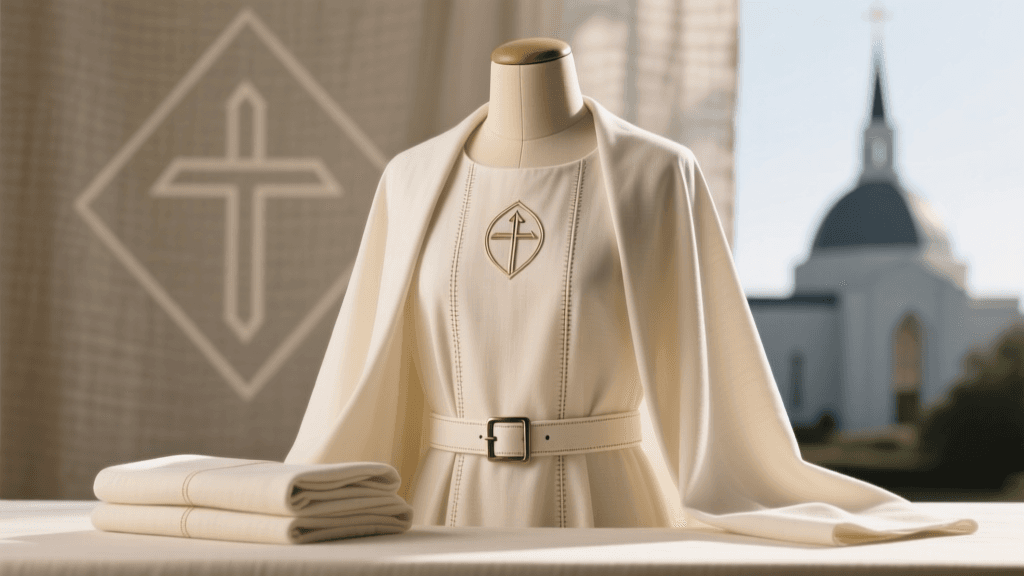
The garment features specific woven or embroidered markings that hold symbolic meaning. Historically, these included marks representing the compass, the square, the navel, and the knee. Today, only the compass and the square remain, embroidered discreetly on the chest area. The square represents honor, integrity, and loyalty to truth, while the compass signifies an undeviating course leading to eternal life. For the wearer, the garment acts as a spiritual shield, promoting modesty, encouraging righteous living, and providing a sense of divine protection and comfort in daily life.
Historical Traditions and Evolution
The origins of the temple garment trace back to the 1840s in Nauvoo, Illinois, when Church founder Joseph Smith introduced the temple endowment. The earliest garments were modeled after the long johns or union suits common in 19th-century America. These early iterations were one-piece, ankle-to-wrist undergarments made of heavy cotton or wool, featuring long sleeves and high necklines. They were designed to cover the body entirely, reflecting the strict modesty standards of the Victorian era.
As American fashion and textile manufacturing evolved throughout the 20th and 21st centuries, so did the garment. In 1922, and subsequently in 1936, the Church made official adjustments to the garment's design, eventually transitioning to the two-piece style (a t-shirt and shorts/briefs) that is standard today. This evolution allowed members to participate fully in modern society, athletics, and professional environments without compromising their religious commitments. By 2026, the garment has been refined into a highly functional piece of clothing, utilizing advanced textile engineering to meet the demands of a global membership spanning from the freezing climates of Northern Canada to the tropical heat of Brazil and the Philippines.
2026 Garment Styles, Fabrics, and Innovations
The Church's Distribution Services continually updates its catalog to reflect modern textile advancements. In 2026, members have access to a diverse range of styles and fabrics designed for specific climates, body types, and lifestyles. The introduction of eco-friendly packaging and sustainably sourced cotton blends in late 2025 has further modernized the distribution process. Below is a breakdown of the primary garment styles available in the 2026 catalog:
| Garment Style | Target Demographic | Fabric Options (2026) | Best Use Case |
|---|---|---|---|
| Men's Crew Tee & Boxer | Men | 100% Cotton, Stretch Cotton | Everyday wear, cooler climates, standard office environments |
| Men's V-Neck & Brief | Men | Modacrylic Blend, Micro-Mesh | Layering under dress shirts, active lifestyles, warm weather |
| Women's Cap Sleeve & Knee-Length | Women | Cotton/Spandex Blend | Standard daily wear, provides full coverage under skirts and dresses |
| Women's Camisole & French Cut | Women | Heat-Wicking Mesh, Microfiber | Warm weather, athletic activities, wearing under tailored blouses |
| Ultra-Lightweight Mesh (Global) | Unisex Options | Antimicrobial Modacrylic Mesh | Equatorial climates, high-humidity regions, heavy labor |
The 2026 catalog places a heavy emphasis on moisture-wicking and antimicrobial modacrylic blends. These fabrics are particularly vital for the Church's rapidly growing membership in tropical regions, ensuring that the garment remains hygienic, breathable, and comfortable during intense heat. Furthermore, the expanded size ranges introduced in recent years ensure a more inclusive and comfortable fit for all body types, reflecting a broader understanding of ergonomic apparel design.
Purchasing and Distribution in 2026
Unlike secular clothing, temple garments cannot be purchased by the general public. To buy garments, an individual must be a baptized member of The Church of Jesus Christ of Latter-day Saints and hold a current, valid 'Temple Recommend'—a card signed by local and regional Church leaders that certifies the member's worthiness and commitment to Church teachings. As detailed in the General Handbook of the Church, the recommend is required to access the purchasing portals.
In 2026, members can purchase garments through several channels:
- Online Distribution Store: The Church's secure online portal allows members to order garments directly to their homes globally, utilizing their member ID and temple recommend number for verification.
- Physical Distribution Centers: Located adjacent to temples and in major Church hubs (such as Salt Lake City, Provo, Mesa, and London), these physical stores allow members to try on different sizes and fabrics.
- Temple Rental/Purchase Kiosks: For travelers or those away from home, most temples feature small distribution kiosks where basic styles can be purchased on-site.
The pricing of garments is heavily subsidized by the Church to ensure they are affordable for members of all economic backgrounds. As of 2026, a single garment top or bottom typically costs between $11.00 and $16.00 USD, depending on the fabric complexity, with specialized mesh or maternity styles costing slightly more.
Care, Respect, and Disposal Traditions
Because of their sacred nature, the care and disposal of temple garments are governed by strict traditions of respect. Members are instructed to wash their garments regularly and care for them just as they would any other high-quality clothing. However, when a garment becomes worn, torn, or unusable, it cannot simply be thrown in the trash or donated to a thrift store.
The Church Newsroom's guide on understanding temple garments outlines the proper disposal method. Members are instructed to carefully cut out the embroidered markings (the compass and square) from the fabric. These markings are then destroyed or disposed of privately and respectfully. The remaining, unmarked fabric can then be discarded in the regular trash or repurposed as cleaning rags. This ritual of disposal underscores the belief that while the fabric itself is merely cotton or mesh, the symbols it bears are sacred and must be protected from desecration or public mockery.
Cultural Impact and Modesty Standards
The requirement to wear the temple garment profoundly influences the outerwear choices and modesty culture within the LDS community. Because the garment covers the torso, upper thighs, and shoulders, members naturally gravitate toward outer clothing that conceals the garment. This has fostered a robust 'modest fashion' market. In 2026, many Latter-day Saint entrepreneurs and mainstream brands alike offer clothing lines specifically designed to accommodate the garment, featuring higher necklines, wider shoulder straps, and longer hemlines.
This cultural emphasis on modesty extends beyond the physical garment, promoting a broader ethos of humility, self-respect, and focus on internal character rather than outward physical display. For cultural observers and textile historians, the Mormon temple garment stands as a remarkable example of how a 19th-century American religious innovation has adapted to the 21st century, maintaining its sacred core while embracing the cutting edge of global textile science.