Lakota & Ojibwe Regalia: 2026 Powwow Dress & Beadwork Guide
Understanding Indigenous Regalia in the 2026 Powwow Season
When discussing the traditional and contemporary clothing of Indigenous North American communities, the term 'regalia' is used instead of 'costume.' A costume implies a disguise or a theatrical performance, whereas regalia represents a profound expression of cultural identity, spiritual belief, and ancestral continuity. As we navigate the 2026 powwow season, the vibrant dress traditions of the Great Lakes and Plains regions continue to evolve, blending centuries-old techniques with modern materials and contemporary artistic expression.
This comprehensive guide explores the distinct dress traditions of the Ojibwe (Anishinaabe) of the Great Lakes region and the Lakota of the Great Plains. By understanding the regional variations in beadwork, garment construction, and material sourcing, collectors, enthusiasts, and emerging Indigenous artisans can better appreciate the profound artistry that defines North American Indigenous fashion in 2026.
Great Lakes Traditions: Ojibwe Floral Beadwork and the Jingle Dress
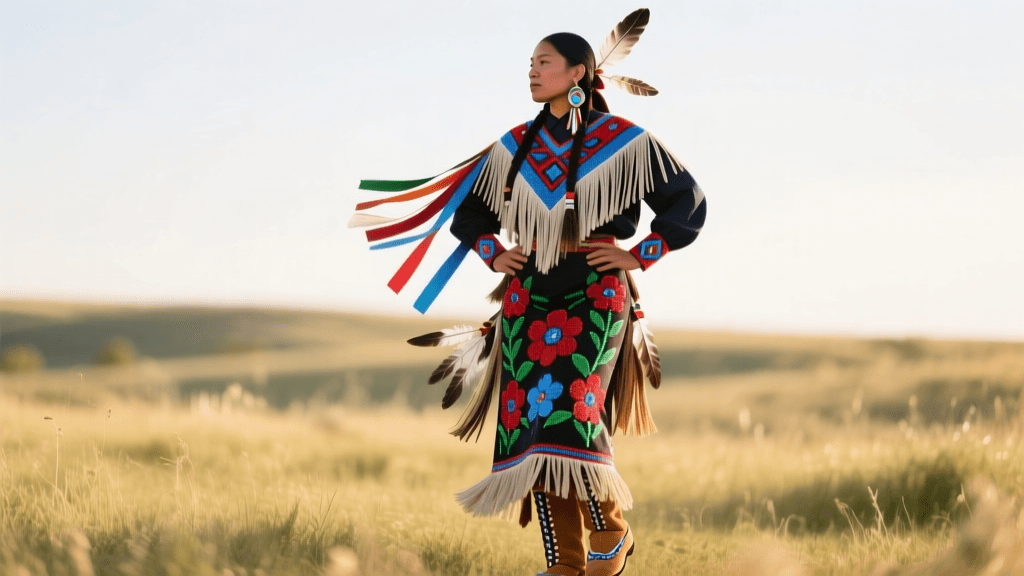
The Indigenous peoples of the Great Lakes region, particularly the Ojibwe (also known as Chippewa or Anishinaabe), are globally renowned for their intricate floral beadwork. Unlike the geometric patterns of the Plains, Woodlands beadwork features sweeping, organic vines, leaves, and blossoms. This style emerged in the 19th century as a result of the fur trade, which introduced European glass seed beads and silk ribbons to the region, replacing earlier porcupine quillwork and moose hair embroidery.
The Appliqué Beadwork Technique
Ojibwe artisans primarily utilize the appliqué (or spot stitch) technique to create their floral motifs. In 2026, master beadworkers often use high-quality Japanese Miyuki or Czech Preciosa size 11/0 seed beads, strung on a single thread and then tacked down onto a backing of velvet, wool broadcloth, or brain-tanned deer hide using a second needle and thread. This allows for the creation of smooth, curved lines that mimic the natural world. Contemporary Ojibwe designers are increasingly incorporating these floral motifs into modern streetwear, high-fashion runway pieces, and everyday ribbon shirts, ensuring the tradition remains a living, breathing art form.
The Ojibwe Jingle Dress: A Healing Garment
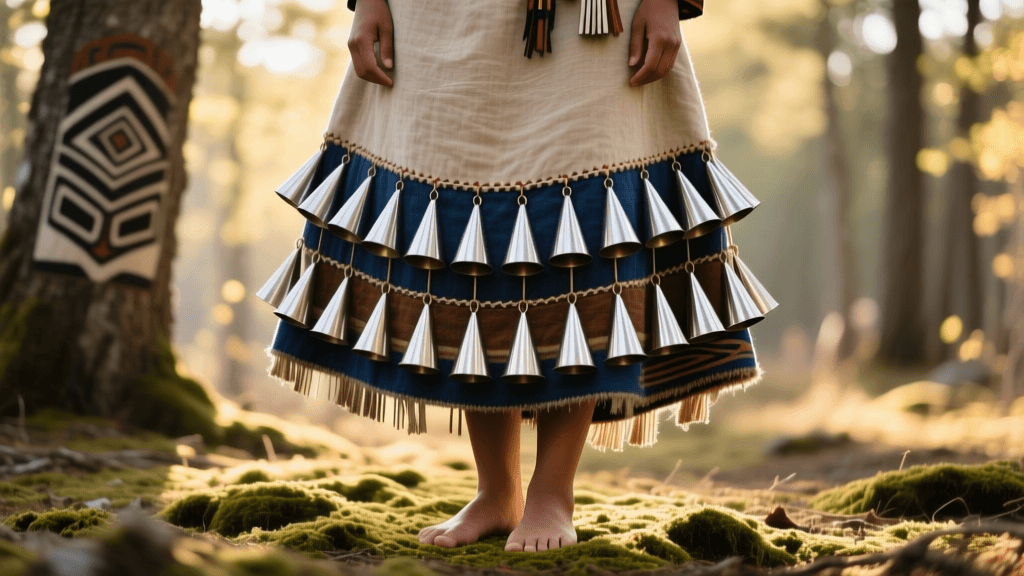
One of the most significant and recognizable garments in the Great Lakes region is the Jingle Dress. Originating from the Ojibwe communities in the early 20th century as a healing dance, the dress is adorned with rows of metal cones, traditionally made from rolled snuff can lids. Today, the jingle dress is a staple at powwows across North America. According to tradition, a proper jingle dress should contain 365 cones, representing each day of the year. In 2026, while stamped tin cones are still widely used for their sharp, rain-like acoustic resonance, many premium dressmakers are sourcing hand-rolled copper and brass cones to achieve a deeper, more resonant tone during the dance.
Plains Traditions: Lakota Geometric Beadwork and Ribbon Skirts
Moving westward to the Great Plains, the dress traditions of the Lakota, Dakota, and Nakota (the Oceti Sakowin) are defined by bold, geometric beadwork and garments that reflect the historical reliance on the buffalo and the vast, open landscapes of the region.
The Lazy Stitch and Geometric Motifs
Plains beadwork is characterized by the 'lazy stitch' (also known as the lane stitch). In this technique, a thread loaded with multiple beads (usually 5 to 9) is passed through the backing material, creating parallel rows or 'lanes' of beads. This method is incredibly durable and was historically used to completely cover rawhide parfleches, saddles, and moccasins. Lakota beadwork heavily features geometric shapes: triangles, diamonds, and crosses, often utilizing high-contrast color palettes such as translucent ruby red, cobalt blue, greasy yellow, and opaque white. In 2026, Lakota beadworkers are pushing the boundaries of this traditional stitch by incorporating 3D beading techniques and metallic-lined beads that catch the sunlight during the Grand Entry of powwows.
Ribbon Skirts and the Modern Resurgence
The ribbon skirt has experienced a massive cultural resurgence over the last decade, becoming a powerful symbol of Indigenous resilience, womanhood, and sovereignty in 2026. While historically constructed from trade wool and silk ribbons, contemporary Lakota and Plains women are crafting ribbon skirts using high-grade satin, velvet yokes, and even upcycled denim. The ribbons are sewn in horizontal tiers along the bottom third of the skirt, with color combinations often holding personal, familial, or spiritual significance. It is now common to see ribbon skirts worn not just at ceremonies, but in corporate offices, universities, and political spaces as a proud assertion of Indigenous identity.
Footwear: Moccasins Across the Regions
No discussion of Indigenous North American dress is complete without examining moccasins, which vary drastically by region based on terrain and climate.
- Plains (Lakota) Moccasins: Designed for the rugged, arid terrain of the Great Plains, these moccasins feature a thick, hardened rawhide sole that protects the wearer from cacti and rough prairie grass. The uppers are made of soft brain-tanned deer or elk hide, and the vamps (the top of the foot) are heavily beaded with geometric patterns using the lazy stitch. In 2026, many artisans use durable neoprene or thick leather for the soles to increase longevity on modern paved surfaces while maintaining the traditional silhouette.
- Woodlands (Ojibwe) Moccasins: Built for the soft, mossy floors of the boreal forests, Great Lakes moccasins typically feature a soft, flexible sole made entirely of deer hide. They are characterized by a distinctive center seam that runs down the top of the foot, creating a puckered toe. The vamp is heavily adorned with the region's signature floral appliqué beadwork, often backed by velvet or trade cloth.
Regional Regalia Comparison Chart
The following table highlights the primary distinctions between Great Lakes and Plains dress traditions as observed in the 2026 powwow circuit.
| Element | Great Lakes (Ojibwe / Anishinaabe) | Plains (Lakota / Dakota) |
|---|---|---|
| Primary Beadwork Motif | Organic, sweeping floral designs (vines, leaves, berries) | Bold geometric shapes (triangles, diamonds, hourglasses) |
| Primary Stitch Technique | Appliqué (spot stitch) for curved lines | Lazy stitch (lane stitch) for parallel rows |
| Signature Garment (Women) | The Jingle Dress (healing, metal cones) | Elk Teeth Dress / Modern Ribbon Skirt |
| Signature Garment (Men) | Woodlands Ribbon Shirt with floral yoke | Grass Dance regalia / Bone Hairpipe Breastplate |
| Moccasin Construction | Soft sole, center seam, floral vamp | Hard rawhide sole, geometric beaded cuff |
2026 Material Sourcing and Supply Chain for Artisans
For emerging Indigenous artisans and those looking to support the craft, understanding the modern supply chain for traditional materials is crucial. The global bead market has shifted significantly by 2026. While traditional Czech glass beads (Preciosa Ornela) remain the gold standard for historical accuracy and the 'greasy' or 'chalk' finishes required for authentic Lakota lazy stitch, supply chain bottlenecks have led many beadworkers to supplement with high-quality Japanese Toho and Miyuki beads for their uniform sizing.
For textiles, the search for authentic Stroud cloth and heavy wool broadcloth continues to be a priority for ribbon shirt and leggings makers. Because traditional wool mills in the UK and US have fluctuated in production, many 2026 artisans have turned to specialized Indigenous-owned textile cooperatives that import and dye heavy melton wool to exact historical colorways, ensuring the deep reds, navy blues, and forest greens match the trade blankets of the 19th century.
Ethical Sourcing and Supporting Authentic Artisans
As the appreciation for Indigenous fashion grows, so does the market for counterfeit goods. It is vital for consumers, museums, and collectors to ensure they are purchasing authentic Native-made items. In the United States, the Indian Arts and Crafts Board enforces the Indian Arts and Crafts Act, a truth-in-advertising law that prohibits misrepresentation in marketing of American Indian or Alaska Native arts and crafts. When purchasing beaded regalia, moccasins, or ribbon shirts in 2026, always verify the tribal affiliation of the artist.
Organizations and markets such as the Southwestern Association for Indian Arts (SWAIA), which hosts the prestigious Santa Fe Indian Market, provide verified platforms where buyers can connect directly with master artisans. Furthermore, the Smithsonian National Museum of the American Indian offers extensive educational resources and exhibitions that help the public distinguish between respectful cultural appreciation and harmful cultural appropriation. By purchasing directly from Native artists and respecting the sacred protocols surrounding certain ceremonial garments, supporters can help ensure that the vibrant dress traditions of the Lakota, Ojibwe, and other Indigenous nations continue to thrive for generations to come.