Authentic Norwegian Bunad Sølje Silver Jewelry Guide 2026
The Enduring Brilliance of Norwegian Bunad Silver
When exploring the rich tapestry of European folk dress, few accessories command as much reverence and visual impact as the traditional silver jewelry of Norway. Known collectively as sølje, these intricate silver pieces are not merely decorative; they are vital components of the Norwegian bunad (national folk costume). As we navigate the cultural and economic landscape of 2026, the demand for authentic, handcrafted Scandinavian silver has surged, driven by a global resurgence of interest in heritage textiles and sustainable, slow-fashion accessories.
Whether you are a collector of European ethnographic jewelry, a textile historian, or someone preparing for a traditional Norwegian wedding, understanding the nuances of bunad silver and its accompanying headwear is essential. According to the Encyclopedia Britannica, the bunad and its accessories represent a living tradition, continuously evolving while maintaining strict regional guidelines dictated by local heritage councils.
Historical Roots and Protective Folklore
To appreciate the craftsmanship of the sølje, one must understand its origins. In rural Norway, silver was historically the most accessible precious metal, often melted down from coins or imported bars. However, its value extended far beyond economics. In Norse folklore, silver was believed to possess powerful apotropaic qualities. It was thought to ward off evil spirits, trolls, and the huldufólk (hidden people).
Infants were often pinned with small silver brooches to protect them from being swapped by changelings, and brides wore cascading silver pendants to ensure fertility and ward off the evil eye. Today, while the superstitions have largely faded into charming cultural anecdotes, the symbolic weight of these pieces remains. The Norwegian Museum of Cultural History (Norsk Folkemuseum) houses extensive archives of 18th and 19th-century sølje, showcasing how these protective amulets evolved into the highly standardized, region-specific jewelry we see in 2026.
The Anatomy of the Sølje: Essential Jewelry Pieces
A complete set of bunad silver is a substantial investment, both financially and culturally. The jewelry is typically crafted from 925 sterling silver, often featuring intricate filigree work, granulation, and dangling spoon-shaped pendants known as løv (leaves).
The Halsknapp (Neck Ring)
The halsknapp is a rigid or semi-rigid silver neck ring that fastens at the front of the throat, usually securing the collar of the linen shirt. In 2026, modern metallurgists have improved the tensile strength of these rings, preventing the warping that plagued antique pieces. The clasp mechanism is a marvel of traditional engineering, often utilizing a simple hook-and-eye or a concealed box clasp that maintains the seamless visual flow of the silver.
The Brystsølje (Bodice Brooch)
Perhaps the most visually striking piece, the brystsølje is a large, ornate brooch worn at the center of the bodice. It secures the laces or clasps of the vest. Traditional designs feature a central rosette surrounded by dangling pendants that catch the light and create a soft chiming sound when the wearer moves. This acoustic element was historically intended to scare away malevolent spirits.
Mansjettknapper (Cufflinks) and Belt Buckles
While less prominent than the bodice brooch, silver cufflinks and belt buckles complete the ensemble. Cufflinks are typically smaller, domed rosettes that secure the wide, embroidered cuffs of the bunad shirt. Belt buckles vary wildly by region; some feature simple geometric engravings, while others boast elaborate cast motifs of acanthus leaves and mythical beasts.
Traditional Headwear: The Skaut and the Lin
In European folk dress, headwear is a primary indicator of marital status, age, and regional identity. Norwegian headwear is no exception, and it is designed to perfectly complement the silver jewelry.
- The Lin (Linen Coif): Worn primarily by married women, the lin is a structured, heavily starched white linen cap. It covers the hair entirely, symbolizing modesty and marital commitment. The edges are often adorned with delicate lace or subtle whitework embroidery.
- The Skaut (Silk Headscarf): In regions like Hardanger, married women wear a skaut, a meticulously folded silk scarf, over the linen coif. The folding technique is a closely guarded community skill, often requiring the assistance of a second person to achieve the perfect architectural pleats.
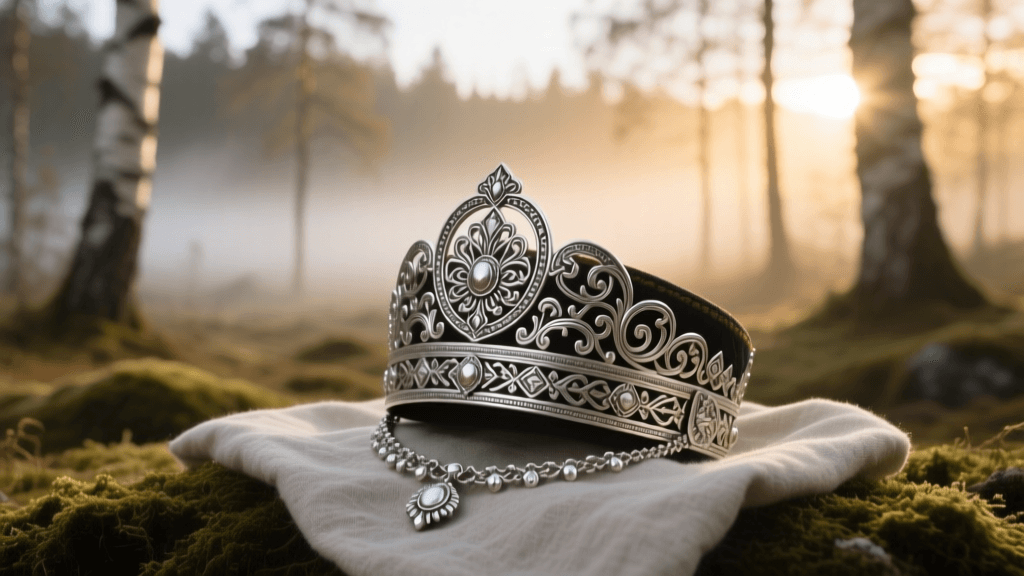
- The Krone (Crown): Unmarried women and brides traditionally wear a krone, a delicate crown made of silver filigree, pearls, and sometimes mirrored glass. The bridal crown is the pinnacle of Norwegian headwear, designed to catch the candlelight during the wedding ceremony.
Regional Variations in Silver and Headwear
As noted by Visit Norway's cultural heritage initiatives, the golden rule of the bunad is strict regional adherence. You cannot pair a Telemark bodice brooch with a Hardanger neck ring.
In Telemark, the silver is characterized by bold, heavy filigree and large, dramatic pendants. The headwear often includes a dark, embroidered cap. Conversely, the Hardanger bunad features lighter, more delicate silverwork with intricate beadwork incorporated into the metal, paired with the iconic white linen and silk skaut. The Gudbrandsdalen region favors deeply engraved, oxidized silver that provides a striking contrast against the vibrant green and red wools of the garment.
The 2026 Market: Silver Prices and Ethical Sourcing
The market for authentic bunad silver in 2026 is heavily influenced by global precious metal fluctuations. With silver prices reaching historic highs this year, the cost of commissioning a full set of hand-forged sølje has increased by approximately 18% compared to early 2024 prices. However, this has also led to a renaissance in ethical sourcing.
Contemporary Norwegian silversmiths are increasingly utilizing 100% recycled sterling silver, reducing the environmental impact of mining. Furthermore, the integration of 3D CAD modeling allows artisans to prototype complex filigree structures before committing to the final silver cast, minimizing material waste. Despite these technological aids, the final polishing, oxidation, and assembly remain strictly manual, preserving the soul of the craft.
2026 Pricing and Specification Chart
Below is a comprehensive guide to the average market pricing for authentic, newly minted Norwegian bunad silver in 2026. Prices are estimated in USD and reflect the current surge in raw silver costs and artisan labor rates.
| Jewelry Piece | Description & Function | Average Weight (g) | 2026 Est. Price (USD) |
|---|---|---|---|
| Halsknapp (Neck Ring) | Rigid collar fastener, secures the linen shirt at the throat. | 45 - 70g | $450 - $750 |
| Brystsølje (Bodice Brooch) | Large central rosette with dangling 'leaves', secures the vest. | 60 - 120g | $600 - $1,400 |
| Mansjettknapper (Cufflinks) | Paired domed rosettes for securing wide embroidered cuffs. | 15 - 25g (pair) | $180 - $300 |
| Beltespenne (Belt Buckle) | Ornate clasp for the woven or leather regional belt. | 80 - 150g | $700 - $1,500 |
| Bridal Krone (Crown) | Intricate filigree and pearl headpiece for unmarried women/brides. | 150 - 300g | $2,500 - $5,000+ |
Verifying Authenticity and Hallmarks
With the rise of global e-commerce, the market has been flooded with mass-produced, cast-white-metal imitations marketed as 'Norwegian style' jewelry. When purchasing sølje in 2026, verification is paramount.
The 2026 Hallmarking Standard: Authentic Norwegian silver must bear the official 925S stamp, indicating 92.5% pure silver. Additionally, look for the maker's mark (a unique symbol or set of initials registered with the Norwegian authorities) and, in some cases, the town mark. Beware of pieces stamped merely with 'Tibetan Silver' or 'Alpaca', which contain zero actual silver.
Always request a certificate of origin from the silversmith. Reputable workshops in Oslo, Bergen, and Voss will provide documentation detailing the artisan's name, the region the design belongs to, and the exact weight of the silver used.
Care and Maintenance for Silver and Silk
Preserving these heirloom pieces requires specific care routines, especially given the varying climates collectors might live in outside of Scandinavia.
- Silver Polishing: Avoid harsh chemical dips, which can strip the intentional oxidation (blackening) that highlights the filigree patterns. Use a soft, untreated microfiber cloth for regular buffing. For deep tarnish, use a specialized silver paste applied with a cotton swab, carefully avoiding the darkened crevices.
- Storage: Store silver in anti-tarnish flannel bags. In 2026, many collectors use silica gel packets infused with activated charcoal within their storage boxes to control humidity and prevent sulfur-induced tarnishing.
- Headwear Care: The skaut (silk scarf) must never be washed in a machine. It requires professional dry cleaning by specialists familiar with historical textiles. The lin (linen coif) can be gently hand-washed in lukewarm water with a pH-neutral detergent, then starched and ironed while damp to maintain its rigid structure.
Conclusion
Norwegian bunad silver and traditional headwear represent a masterclass in functional, symbolic, and breathtaking European folk art. As we move through 2026, the intersection of rising silver values and a renewed global appreciation for slow, heritage fashion makes the sølje not just a beautiful accessory, but a tangible piece of living history. Whether you are investing in a single, delicate halsknapp or commissioning a full bridal ensemble, understanding the deep cultural roots and meticulous craftsmanship of these pieces ensures that the brilliance of Scandinavian tradition will continue to shine for generations to come.