Kimono Couture on 2026 Runways: Global Fashion Trends
The 2026 Runway Renaissance: Beyond the T-Shaped Silhouette
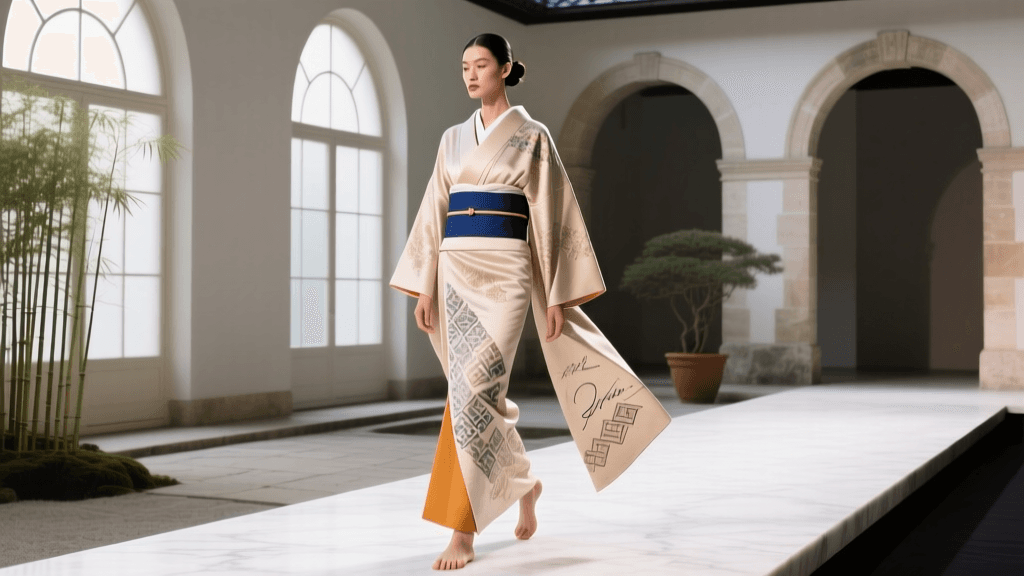
The global fashion landscape in 2026 has witnessed a profound and necessary evolution in how traditional Japanese garments are interpreted on international runways. Moving far beyond the superficial borrowing of the T-shaped silhouette that characterized earlier decades, the Spring/Summer and Autumn/Winter 2026 collections in Paris, Milan, and New York have embraced a new era of artisanal equity. Major European and American fashion houses are no longer merely mimicking the kimono; they are engaging in deep, credentialed collaborations with multi-generational Japanese artisans. This shift from cultural appropriation to authentic cultural appreciation has resulted in some of the most breathtaking, technically complex, and culturally respectful couture seen in modern fashion history.
For collectors, fashion historians, and enthusiasts of Asian traditions, understanding this 2026 runway renaissance requires a nuanced look at the textiles, weaving techniques, and structural adaptations that define these high-end garments. The modern runway kimono is not a costume; it is a meticulously engineered piece of wearable art that honors centuries of Japanese textile mastery while pushing the boundaries of contemporary haute couture.
Authentic Collaborations: Kyoto Artisans Meet European Haute Couture
The cornerstone of the 2026 global fashion week narrative is the direct integration of Kyoto-based shokunin (master artisans) into the design processes of Western fashion conglomerates. Historically, the kimono has been a garment of profound cultural significance, with its construction, motifs, and textiles governed by strict seasonal and social codes. As noted by The Metropolitan Museum of Art, the kimono's historical evolution is deeply intertwined with Japan's socio-political shifts, making its textile heritage a vital cultural artifact rather than a mere aesthetic trend.
In 2026, luxury houses have established fair-trade compensation models and co-creator billing for artisanal guilds specializing in Nishijin-ori (brocade weaving) and Kyo-yuzen (resist dyeing). Instead of printing digital replicas of traditional motifs onto European silks, design teams are traveling to the Nishijin district in Kyoto to commission custom jacquard weaves that incorporate metallic threads and modern tensile strengths suitable for structured evening wear. These collaborations ensure that the economic benefits of high fashion flow directly back into the preservation of endangered Japanese crafting communities.
Key Kimono Elements Dominating the 2026 Collections
The Obi Belt as Structural Couture
Traditionally, the obi is a wide sash used to secure the kimono, with the fukuro obi and maru obi representing the most formal and heavily brocaded varieties. On the 2026 Paris runways, the obi has been reimagined as an element of structural corsetry and architectural waist-cinching. Designers are utilizing vintage and newly commissioned Nishijin-ori obi textiles, reinforcing them with modern boning to create striking, rigid bodices that contrast sharply with flowing silk-crepe skirts. The metallic gold and silver leaf threads inherent in formal obi weaving catch the runway lights, providing a built-in luminosity that eliminates the need for heavy beading or sequins.
Haori Jackets in Evening Wear
The haori, a traditional hip- or thigh-length kimono-style jacket, has become the definitive outerwear silhouette of 2026 evening wear. Unlike the heavier, floor-sweeping uchikake, the haori offers a versatile, open-front layering piece. This season's haute couture interpretations feature chirimen (silk crepe) dyed using the labor-intensive kanoko shibori (fawn-spot tie-dye) technique. The three-dimensional texture of the shibori ties adds a tactile richness to minimalist slip dresses, allowing the garment to transition seamlessly from avant-garde runway statements to high-society gala attire.
Kasuri and Shibori Textile Innovations
While silk remains the premier fiber for formal kimono, the 2026 ready-to-wear collections have seen a massive surge in the use of kasuri (ikat weaving) and shibori (shaped-resist dyeing) applied to organic cotton and hemp blends. According to the traditional craft registries documented by Kogei Japan, techniques like Kurume kasuri require immense precision, as the threads are dyed in specific patterns before weaving to create blurred, geometric motifs. Contemporary designers are blending these indigo-dyed kasuri cottons with raw silk edges, creating a juxtaposition of rustic workwear heritage and refined luxury that perfectly captures the 2026 zeitgeist of "quiet luxury" grounded in artisanal authenticity.
2026 Runway Adaptations vs. Traditional Kimono Elements
To fully appreciate the technical achievements of the 2026 fashion season, it is essential to compare the traditional functions of kimono components with their modern haute couture adaptations. The following table outlines how master artisans and contemporary designers have bridged the gap between Edo-period traditions and futuristic silhouettes.
| Garment Element | Traditional Function & Context | 2026 Runway Adaptation | Primary Artisan Technique |
|---|---|---|---|
| Fukuro Obi | Formal sash for securing kimono; signifies marital status and seasonality. | Architectural corsetry and structured bodices over fluid silk skirts. | Nishijin-ori (brocade weaving with metallic threads). |
| Furisode Sleeves | Long, swinging sleeves worn by unmarried women to signal availability and youth. | Detachable, dramatic cape-like sleeve extensions for evening gowns. | Kyo-yuzen (paste-resist hand painting). |
| Haori | Open-front jacket worn over kimono for warmth and formality. | Cropped, boxy evening jackets worn over minimalist bias-cut slip dresses. | Kanoko Shibori (intricate micro tie-dye). |
| Eri (Collar) | Thick, layered collars framing the face and exposing the nape of the neck. | Asymmetrical, exaggerated lapels mimicking the layered nape exposure. | Saga Nishiki (intricate pictorial brocade). |
How to Identify Authentic Artisan Collaborations
As kimono-inspired silhouettes flood the global market, distinguishing between genuine artisanal collaborations and fast-fashion approximations is a critical skill for the 2026 luxury consumer. True haute couture pieces born from Japanese partnerships will exhibit specific hallmarks of traditional craftsmanship.
- The Selvedge (Mimi): Authentic kimono textiles are woven on narrow looms, typically producing bolts (tanmono) about 36 centimeters wide. High-end collaborations will often preserve the visible selvedge edges as a mark of authenticity, rather than cutting them away to fit Western wide-loom patterns.
- The Japan Traditional Crafts Mark: Look for the official certification mark of the Japan Kogei Association. Garments featuring genuine Nishijin-ori or Kaga-yuzen will often include a discreet, numbered authenticity tag woven into the inner lining, verifying the guild and master weaver responsible for the textile.
- Hand-Painted Yuzen Details: Under magnification, genuine Kyo-yuzen dyeing reveals a characteristic "white outline" (itome) where the rice-paste resist prevented the dye from penetrating the silk. Digital prints will lack this crisp, slightly raised boundary between color fields.
- Asymmetrical Pattern Matching: Unlike Western textiles that repeat symmetrically, traditional kimono motifs are designed to flow across the seams when the garment is wrapped. Couture houses in 2026 are meticulously aligning these motifs across the side seams, a time-consuming process that mass manufacturers skip.
Styling High-End Kimono-Inspired Couture
Integrating these runway pieces into a contemporary 2026 wardrobe requires a delicate balance of respect for the garment's heritage and modern styling sensibilities. When wearing a couture Haori or an Obi-cinched gown, the styling should remain deliberately minimalist to allow the textile mastery to command attention.
Footwear: Avoid literal interpretations like wooden geta, which can veer into costume territory. Instead, opt for modern footwear that echoes the geometry of traditional zori. Square-toed leather mules or architectural heels with a distinct, elevated platform provide a subtle nod to Japanese footwear without compromising modern elegance.
Jewelry and Accessories: The intricate metallic threads of Nishijin-ori and the vibrant, multi-layered dyes of Yuzen silk are visually dense. Pair these garments with matte, unpolished jewelry—such as brushed titanium cuffs or raw, uncut gemstones. This textural contrast highlights the luminosity of the silk while maintaining the "quiet luxury" aesthetic that defines 2026 high fashion.
Layering and Proportions: The kimono is inherently a garment of layered proportions. When styling a kimono-sleeve blouse or a wrap-style couture skirt, ensure the underlying layers are sleek and form-fitting. A second-skin silk turtleneck or a bias-cut slip allows the structural volume of the kimono-inspired outer layers to drape correctly, mimicking the elegant, unbroken lines of a traditionally worn kimono.
The Future of Cross-Cultural Fashion
The integration of the kimono into the 2026 global runway circuit represents a maturation of the fashion industry's approach to cross-cultural design. As institutions like the Victoria and Albert Museum have long documented, Japanese fashion has continuously influenced Western design since the late 19th century, but the current era is unique in its demand for reciprocal respect and economic equity. By elevating the shokunin to the status of co-designer, the 2026 collections ensure that the ancient techniques of weaving, dyeing, and wrapping will not only survive but will actively shape the future of global luxury. For the discerning collector, these garments are more than just seasonal trends; they are vital, living archives of Asian tradition, reimagined for the modern world.