Ancient Greek Chiton & Roman Stola Guide: 2026 Draping Tips
The 2026 Revival of Classical Antiquity Garments
As we navigate the 2026 European cultural festival season, the demand for historically accurate classical garments has reached an all-time high. From the Hellenic heritage festivals in the Mediterranean to Roman reenactment encampments across the UK and Germany, enthusiasts are moving away from cheap, synthetic costumes in favor of authentic, meticulously draped textiles. Understanding the foundational garments of antiquity—specifically the Greek chiton and the Roman stola—is essential for anyone looking to participate in these events with historical integrity. This comprehensive guide will walk you through the nuances of classical draping, modern fabric sourcing, and the precise construction techniques required to achieve an authentic silhouette.
Decoding the Chiton: Doric vs. Ionic
The chiton was the fundamental garment of ancient Greece, worn by both men and women, though its length and draping style varied significantly by gender, age, and region. According to the World History Encyclopedia's overview on Greek Dress, the chiton evolved into two primary distinct styles that every modern reenactor must understand before cutting their fabric.
The Doric Chiton
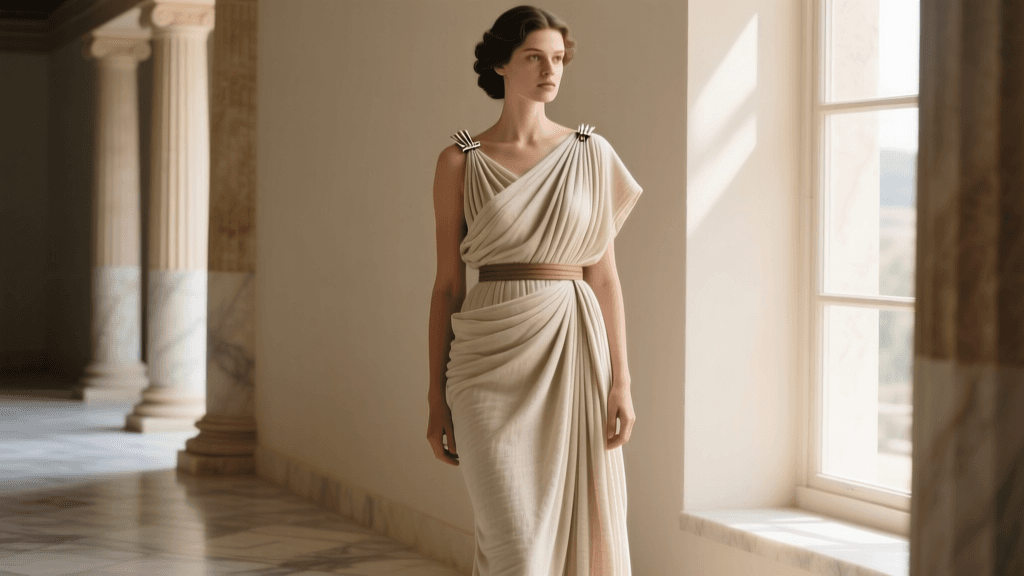
The Doric chiton is the older, heavier, and more austere of the two styles. Traditionally made from a single large rectangle of wool or heavy linen, it was folded over at the top to create an apoptygma (overfold) that hung down to the waist or chest. It was pinned at the shoulders with heavy fibulae (brooches) and belted at the waist. The excess fabric above the belt was often pulled up and over the belt to create a kolpos (blouse effect), which allowed for adjustable length and a graceful, structured drape. Because it relied on the weight of the fabric to hang correctly, sourcing the right textile is critical.
The Ionic Chiton
Emerging later and favored in warmer climates and by women of high status, the Ionic chiton was made from much wider, lighter fabric, typically fine linen or imported silk blends in later periods. Instead of a heavy overfold, the fabric was gathered or pleated and pinned at multiple intervals along the arms, creating the illusion of sleeves. This style requires a fabric with exceptional fluidity and a high thread count to achieve the cascading, rippling effect seen in classical marble sculptures.
Sourcing Authentic Linens and Wools in 2026
The modern textile market in 2026 offers incredible options for historical reenactors, but it also presents the trap of overly processed, stiff fabrics. To achieve an authentic classical drape, you must pay close attention to the fabric's weight, measured in GSM (grams per square meter), and its fiber origin.
- For the Doric Chiton: Seek out medium-weight European flax linen or lightweight tropical wool. You want a fabric between 180 and 220 GSM. It must be heavy enough to pull the folds taut but pliable enough to gather at the waist. Look for 'half-bleached' or natural unbleached linens, as stark white was a luxury reserved for specific religious ceremonies.
- For the Ionic Chiton: Opt for lightweight, high-thread-count linen (120 to 150 GSM) or a linen-cotton blend that mimics the soft drape of ancient Amorgian linen. The fabric should feel almost liquid when shaken.
- For the Roman Stola: The stola required substantial yardage. A fine wool crepe or a dense, soft linen of about 160 GSM is ideal. The fabric must hold a crease well for the intricate pleating required at the shoulders.
When purchasing online in 2026, always request a swatch to test the 'crush and release' factor. Authentic ancient garments relied on natural fibers that softened with body heat and movement; modern synthetic blends will remain stiff and ruin the historical silhouette.
Step-by-Step: Draping the Doric Chiton
Draping a Doric chiton requires no sewing, only precise measurements, folding, and pinning. Here is the actionable method for a standard female-length garment (ankle-grazing).
- Measure the Fabric: Cut a rectangle of medium-weight linen. The width should be twice the distance from your elbow to your opposite elbow (roughly 180-200 cm for an average adult). The length should be your height from shoulder to floor, plus 40 cm for the overfold and waist blousing.
- Create the Overfold: Fold the top edge of the fabric down by 30 to 40 cm. This is your apoptygma.
- Wrap the Body: Wrap the fabric around your body, ensuring the folded edge is at the top. The open edge of the fabric should fall at your side or slightly toward the back.
- Pin the Shoulders: Gather the front and back layers at your shoulders, roughly 10 cm apart on each side. Secure them with heavy bronze or iron penannular or disc fibulae.
- Belt and Blouse: Tie a woven wool or leather belt tightly around your natural waist. Pull the fabric above the belt up and over the belt to hide it, adjusting the kolpos so the hem falls evenly at your ankles.
The Roman Stola: Matronly Elegance
While Greek garments were largely draped, Roman clothing introduced more structured elements, particularly for women. The stola was the traditional, sleeveless overdress worn exclusively by Roman matrons over a tunica intima (undergarment). As detailed in the World History Encyclopedia's guide to Roman Clothing, the stola was a symbol of modesty and social standing.
The defining features of the stola include the instita (a decorative border or flounce at the hem) and the V-shaped neckline created by shoulder straps. Unlike the chiton, the stola was often sewn at the sides. To recreate this in 2026, cut two large rectangles of fine wool or linen. Sew the side seams from the hem up to the armhole, leaving the top 25 cm open. The shoulder straps are created by gathering the top edge into a series of tight, vertical pleats, which are then bound with a narrow strip of fabric or leather. A zona (belt) is tied just under the bust, creating a high-waisted, columnar silhouette that is distinctly Roman.
Garment Fabric & Drape Comparison Chart
Selecting the correct textile is the most common point of failure for modern reenactors. Use the table below to match your garment to the correct 2026 market specifications.
| Garment Type | Recommended Fabric | Weight (GSM) | Drape Quality | Best Historical Use |
|---|---|---|---|---|
| Doric Chiton | Half-bleached Flax Linen | 180 - 220 | Structured, heavy folds | Everyday wear, outdoor festivals |
| Ionic Chiton | Fine High-Count Linen | 120 - 150 | Fluid, cascading ripples | High-status events, summer wear |
| Roman Stola | Wool Crepe / Soft Linen | 150 - 180 | Columnar, holds pleats | Matronly formal wear, ceremonies |
| Himation / Palla | Lightweight Tropical Wool | 200 - 250 | Dense, wraps securely | Outerwear, modesty, winter layers |
Essential Accessories: Fibulae and Footwear
A classical garment is incomplete without its hardware and footwear. In 2026, custom bronze casting has become highly accessible, allowing reenactors to acquire museum-quality replicas of ancient fibulae. For the Doric chiton, avoid modern safety pins; instead, invest in penannular brooches or hinged disc fibulae made from cast bronze. The weight of the metal helps pull the fabric taut at the shoulder.
Footwear is equally vital. The Greek krepides (leather sandals with a woven thong pattern) and the Roman calcei (enclosed leather shoes worn by citizens outdoors) ground the outfit. Avoid modern rubber soles; seek out artisan cobblers who use vegetable-tanned leather and traditional stacked leather or wooden pegged soles to maintain the authentic sound and gait of antiquity.
Maintenance and Storage for Natural Fibers
Caring for heavy linens and wools requires a departure from modern laundry habits. Never machine wash or tumble dry your historical garments. The agitation will felt the wool and break the linen fibers, destroying the drape you spent hours perfecting.
- Washing: Hand wash in cool water using a pH-neutral detergent specifically formulated for natural fibers. For wool, use a lanolin-based wash to maintain the fiber's natural water resistance and softness.
- Drying: Roll the garment in a clean, dry towel to press out excess water, then lay it flat on a mesh drying rack out of direct sunlight. Sun exposure will rapidly degrade natural dyes and unbleached fibers.
- Storage: Store your chitons and stolas folded with acid-free tissue paper in cedar chests. Avoid wire hangers, which will stretch the shoulder points and distort the fabric's grain over time.
Conclusion
Recreating the garments of ancient Greece and Rome is a deeply rewarding pursuit that connects us directly to the material culture of the classical world. By prioritizing authentic textile weights, mastering the geometry of the drape, and utilizing period-accurate accessories, you can achieve a silhouette that honors history while standing out in the vibrant 2026 reenactment community. For further reading on the evolution of the wrapped garment, the World History Encyclopedia's extensive archive on the Toga and classical wraps provides an excellent foundation for expanding your historical wardrobe beyond the chiton and stola.