Doric Chiton & Roman Stola Reconstruction Guide 2026
Introduction to Classical Antiquity Garments in 2026
The resurgence of classical antiquity fashion has reached new heights in 2026, driven by a growing interest in historical reenactment, neoclassical wedding aesthetics, and sustainable, zero-waste clothing practices. At the forefront of this movement are the ancient Greek chiton and the Roman stola. Unlike modern tailored garments that rely on complex pattern cutting and synthetic seams, these foundational pieces of European folk and historical dress rely on the elegant manipulation of rectangular textiles. Whether you are preparing for a Hellenic festival, a university classics seminar, or a historical theater production, understanding the precise draping, measurements, and material requirements of these garments is essential. This comprehensive guide will walk you through the authentic reconstruction of the Doric chiton and the Roman stola, utilizing 2026 textile sourcing standards and historical accuracy.
The Ancient Greek Chiton: Doric vs. Ionic
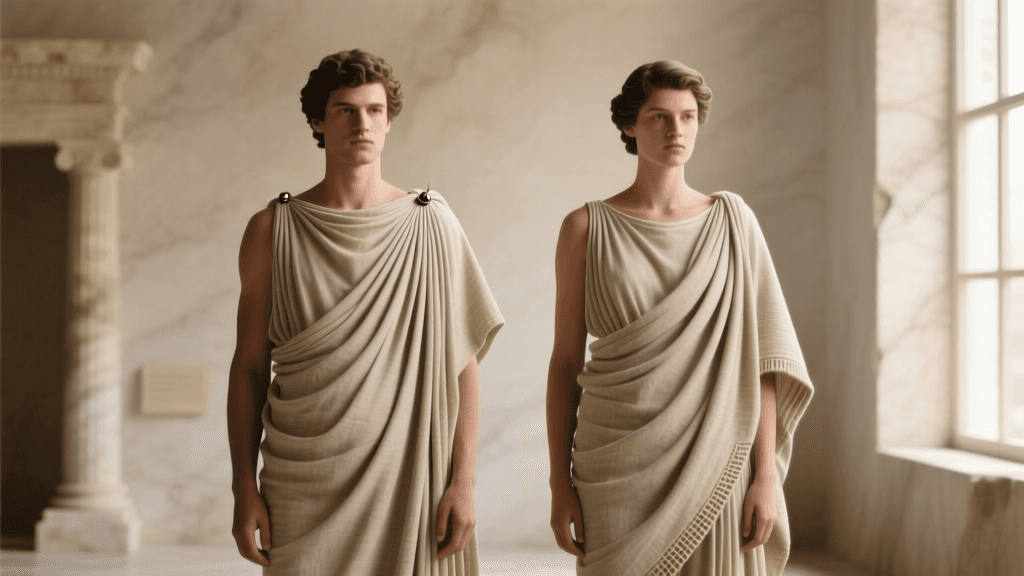
The chiton was the standard everyday garment for both men and women in ancient Greece. According to the Metropolitan Museum of Art's Heilbrunn Timeline of Art History, the chiton evolved significantly over the centuries, primarily manifesting in two distinct styles: the Doric and the Ionic. The Doric chiton, often associated with the heavier woolen peplos, was typically made of a single large rectangle of fabric, folded over at the top to create an apoptygma (overfold), and pinned at the shoulders with fibulae. The Ionic chiton, conversely, utilized lighter linen or silk, featured sleeves created by multiple shoulder pins, and lacked the heavy overfold.
For modern reconstructors in 2026, the Doric chiton remains the most popular choice due to its structural simplicity and striking visual drape. It embodies the zero-waste philosophy that has become a cornerstone of the 2026 sustainable fashion movement, as it requires absolutely no cutting or sewing of the main textile body—only the careful application of pins and a waist girdle.
Step-by-Step Doric Chiton Draping Guide
Draping a Doric chiton requires precision in measurement to ensure the fabric falls correctly and allows for movement. Follow these actionable steps for a historically accurate fit:
- Step 1: Calculate Your Fabric Dimensions. Measure your height from the shoulder to the ankle. Add 12 inches to this measurement to allow for the kolpos (the bloused overhang at the waist). For the width, measure your wingspan (fingertip to fingertip with arms outstretched) and add 14 inches to allow for the side seam overlap and the depth of the folds.
- Step 2: Create the Apoptygma (Overfold). Lay the fabric flat and fold the top edge down by 12 to 18 inches, depending on your desired torso length. This folded panel will hang over the chest and back.
- Step 3: Pin the Shoulders. Wrap the fabric around your body with the fold at the top. Bring the front and back edges together at your shoulders. Secure them using traditional bronze or silver fibulae (brooches), placing one pin on each shoulder, roughly 3 inches from the edge of the fabric.
- Step 4: Gird the Waist. Tie a woven wool or linen cord around your natural waist. Pull the fabric up and over the cord to create the kolpos, adjusting the blousing until the hem grazes your ankles evenly.
- Step 5: Secure the Side Seam (Optional). While the side can be left open for mobility, historical evidence suggests many women stitched or pinned the side seam from the hem up to the hip to preserve modesty.
The Roman Stola: Matronly Elegance and Construction
While Greek dress relied heavily on draping, Roman dress introduced more structured elements, particularly regarding social status. The Met Museum's essay on Roman Dress highlights that the stola was the traditional, defining garment of the Roman matron (a married female citizen). Worn over a tunica intima (undergarment), the stola was a long, sleeveless or short-sleeved dress that hung from the shoulders, characterized by its distinctive V-neckline and the instita—a decorative woven border at the hem and sometimes the neckline.
Unlike the chiton, the stola required actual sewing. In 2026, historical tailors recommend using a medium-weight linen or a lightweight wool crepe to achieve the dense, vertical folds seen in Roman statuary. The stola was typically girdled high under the bust with a zona, and a second belt could be worn at the waist. The presence of the instita was a legal and social marker; only women with the right of conubium (legal marriage) were permitted to wear it, making it a powerful symbol of Roman societal structure.
Sewing the Stola: 2026 Best Practices
To construct a Roman stola, you will need approximately 4 to 5 yards of 54-inch wide fabric. Cut two large rectangular panels for the front and back. Sew the side seams from the hem up to the armhole, leaving enough space for the arms to pass through comfortably. The neckline is created by gathering the top edge of the fabric and binding it with a strip of contrasting linen or silk, which also serves as the shoulder strap. The World History Encyclopedia notes that while Greek and Roman dress shared Mediterranean roots, the Roman emphasis on sewn construction and status-marking borders like the instita set their textile traditions apart. To replicate the instita authentically, source a 2-inch wide tablet-woven wool band in a contrasting color like Tyrian purple (or a modern madder-root red) and stitch it to the bottom hem.
2026 Sourcing Guide: Fabrics, Costs, and Sustainability
Sourcing historically accurate textiles has become significantly easier in 2026, thanks to the rise of heritage weaving cooperatives and eco-friendly dye houses. Avoid synthetic polyesters and modern rayon, which drape too fluidly and lack the historical body required for classical garments. Instead, opt for European-grown flax linen, merino wool, and peace silk.
| Garment Component | 2026 Recommended Fabric | Estimated Cost per Yard (USD) | Yardage Needed |
|---|---|---|---|
| Doric Chiton | Medium-weight European Flax Linen | $24.00 | 3.5 yards |
| Ionic Chiton | Lightweight Bleached Linen or Peace Silk | $32.00 | 4.0 yards |
| Roman Stola | Wool Crepe or Heavy Linen | $28.00 | 4.5 yards |
| Instita (Border) | Tablet-Woven Wool Trim | $12.00 (per yard) | 2.5 yards |
| Fibulae (Pins) | Cast Bronze (90/10 Copper-Tin Alloy) | $18.00 (per pair) | 1-2 pairs |
| Footwear | Vegetable-Tanned Leather Krepides | $85.00 (per pair) | 1 pair |
'The beauty of the chiton lies not in the tailoring, but in the wearer's understanding of gravity, proportion, and the natural behavior of woven fibers.' — Dr. Aris Thorne, Textile Historian, 2026 Classical Antiquity Symposium.
Footwear, Fibulae, and Accessories
No classical garment is complete without the appropriate accessories. For the Greek chiton, the primary footwear is the krepis (plural: krepides), a sturdy leather sandal with a woven thong that wraps around the ankle and lower calf. In 2026, custom cordwainers specializing in historical footwear utilize vegetable-tanned leathers and natural hemp threads to replicate these durable sandals, ensuring they can withstand the rigors of outdoor reenactment festivals.
For the Roman stola, women of status would wear the calceus, a closed leather shoe that covered the entire foot, often dyed in vibrant colors using natural madder or indigo. Jewelry should be kept historically grounded: opt for cast bronze or gold-plated brass fibulae featuring geometric or animal motifs. Avoid modern glass beads; instead, use carnelian, lapis lazuli, or polished amber for necklaces and earrings, as these were the premier trade goods of the ancient Mediterranean.
Caring for Historical Textiles
Maintaining your garments is crucial for longevity. Linen and wool require specific care routines. In 2026, we recommend using pH-neutral, enzyme-free detergents specifically formulated for heritage textiles. Wash your linen chiton in cool water (below 85°F) to prevent the fibers from breaking down and shrinking. Never tumble dry wool crepe stolas; instead, lay them flat on a drying rack in the shade. To remove wrinkles from linen without an iron, mist the garment lightly with distilled water and hang it in a steamy bathroom, allowing the natural weight of the wet fibers to pull the fabric taut.
Conclusion
The reconstruction of the Doric chiton and the Roman stola offers a profound connection to the daily lives, social structures, and aesthetic ideals of classical antiquity. By prioritizing accurate measurements, historically appropriate textiles, and traditional draping techniques, modern enthusiasts can bring the elegance of ancient Europe to life. Whether you are attending a historical symposium or simply exploring the zero-waste potential of ancient fashion, these garments remain a testament to the timeless ingenuity of early European textile traditions.