Ancient Greek Chiton and Roman Toga Draping Guide 2026
The Resurgence of Classical Dress in 2026
The year 2026 has witnessed an unprecedented boom in historical reenactment, immersive museum exhibitions, and Hellenic and Roman cultural festivals across Europe and North America. As the historical costuming community moves further away from the synthetic, mass-produced costumes of the past decade, there is a rigorous demand for authenticity. Enthusiasts, theatrical designers, and living historians are now prioritizing historically accurate textiles, mathematically correct proportions, and traditional draping techniques. Understanding the foundational garments of antiquity—specifically the Greek chiton, the peplos, the Roman stola, and the iconic toga—is essential for anyone looking to participate in classical reenactment or simply appreciate the engineering of ancient European folk dress.
Decoding the Greek Chiton and Peplos
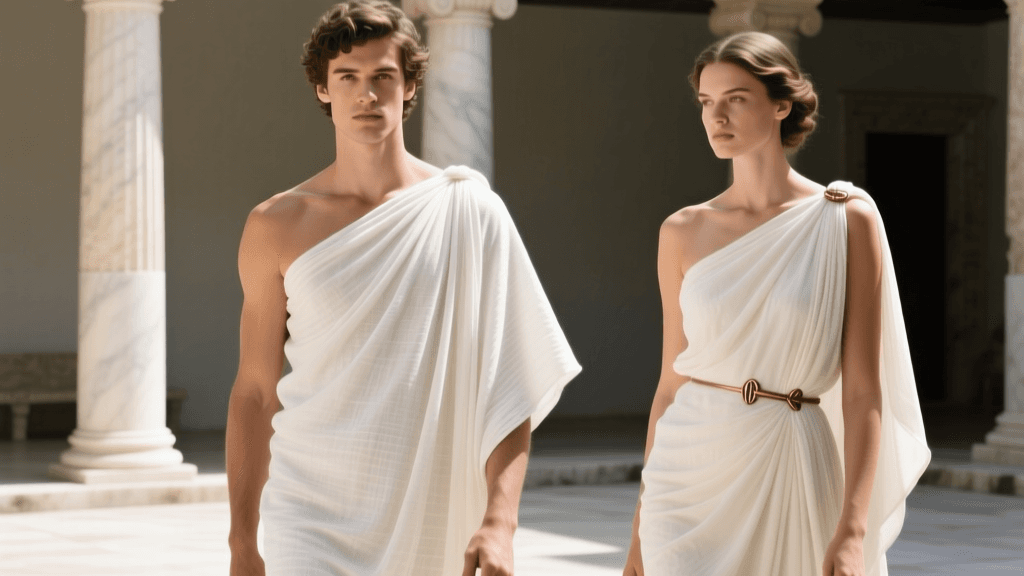
Ancient Greek clothing was fundamentally based on the draping of rectangular pieces of fabric rather than complex tailoring and sewing. The garments were held in place by gravity, belts, and pins (fibulae). According to the World History Encyclopedia, the two most prominent garments for women and men were the Doric peplos and the Ionic chiton.
The Doric Peplos
The peplos is a heavy, woolen garment characterized by an overfold at the top, known as the apoptygma. It was the traditional dress of Dorian women and is frequently depicted in archaic and classical statuary. The peplos is pinned at the shoulders, leaving the sides open or sewn up to the knee, and is belted at the waist. The overfold creates a layered, structured silhouette that provides warmth and modesty.
The Ionic Chiton
Constructed from much lighter, wider fabrics like linen, the Ionic chiton requires no top overfold. Instead, the excessive width of the fabric is gathered and pinned at intervals along the arms, creating elegant, flowing sleeves. The chiton was worn by both men and women, though men typically wore it at knee-length, while women wore it ankle-length. The fabric is often pulled up through the belt to create a blousing effect called a kolpos.
The Roman Toga and Stola: Symbols of Citizenship
While Greek dress influenced Roman fashion heavily, the Romans developed their own distinct garments that served as powerful markers of social status, citizenship, and gender.
The Toga
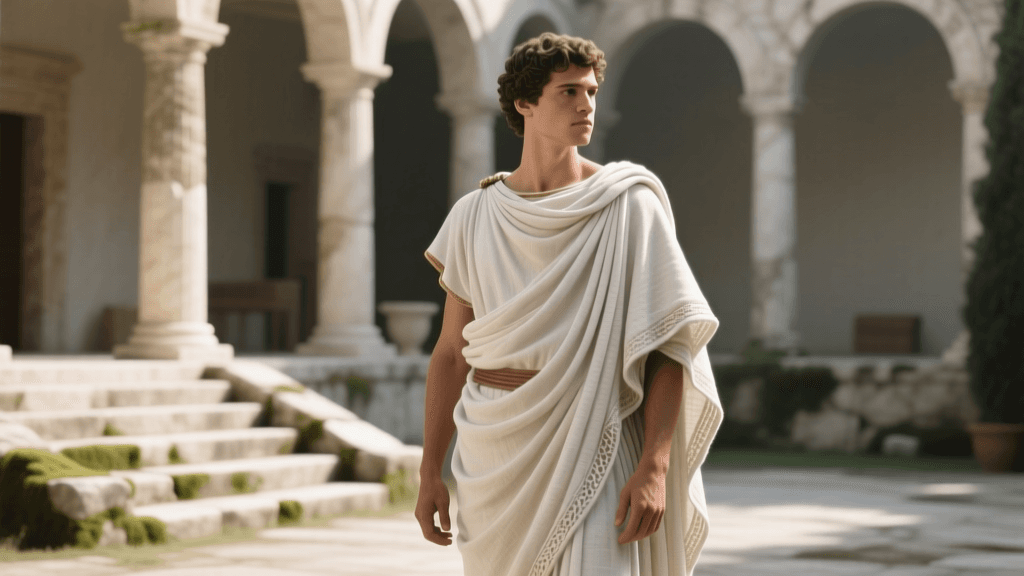
The toga is perhaps the most misunderstood garment in historical costuming. It is not a simple bedsheet wrapped around the body. As detailed by the World History Encyclopedia, the toga was a massive, semi-circular piece of heavy white wool, reserved exclusively for male Roman citizens. By the Imperial period, the toga had grown to enormous proportions—often measuring up to 18 feet in length and 7 feet in width. Draping the toga required the assistance of a slave or servant to achieve the complex folds, including the sinus (a deep pocket-like drape across the chest) and the umbo (a decorative knot of fabric at the center).
The Stola
For married Roman women (matrons), the stola was the ultimate symbol of modesty and social standing. Worn over a tunica, the stola was a long, sleeveless dress suspended from the shoulders by straps or brooches. It featured an instita, a distinct flounce or border at the hem, and was belted high under the bust. The World History Encyclopedia notes that the stola was legally restricted to respectable married women, making it a vital garment for accurate social portrayal in reenactments.
2026 Fabric Sourcing and Material Guide
Sourcing the correct textiles is the most critical step in recreating classical garments. In 2026, the textile market offers excellent natural fibers that mimic ancient weaves. Below is a guide to the best materials for your chiton, peplos, or toga, along with current market averages.
| Material | Best Used For | 2026 Avg. Cost (per yard) | Drape & Authenticity Notes |
|---|---|---|---|
| 100% Medium-Weight Linen | Ionic Chiton, Stola | $14 - $22 | Excellent drape, breathable, historically accurate for summer and Ionic styles. Pre-wash to soften. |
| Lightweight Merino Wool | Doric Peplos, Toga | $28 - $45 | Authentic for Doric and Roman civic wear. Holds pins well without tearing. Provides structural folds. |
| Raw Silk Blend | Luxury Chiton (Elite) | $35 - $60 | Historically accurate only for the ultra-wealthy in the late Hellenistic/Imperial periods. Brilliant drape. |
| Unbleached Muslin/Cotton | Practice Draping | $6 - $9 | Not historically accurate, but excellent and cheap for testing measurements and drape before cutting wool. |
Essential Accessories: Fibulae, Belts, and Footwear
A garment is only as good as the hardware that holds it together. In 2026, modern reenactment groups like Nova Roma and Legio XXI have strict standards for accessories.
- Fibulae (Brooches): Do not use modern safety pins. Invest in bronze or brass penannular brooches for Celtic/Roman crossover, or bow fibulae for Greek and early Roman dress. Custom bronze casters on platforms like Etsy offer historically accurate replicas for $25 to $50 each.
- Belts (Zoster / Cingulum): Greek chitons are belted with simple woven wool cords or thin leather straps. Roman military and civic belts feature specific brass buckles and aprons. For women, a simple braided linen belt creates the perfect kolpos blousing.
- Footwear: Avoid modern leather sandals. Greek krepides feature a complex lace-up system that wraps around the calf, while Roman calcei are enclosed leather shoes for civic duty, or soleae (sandals) for indoor wear. Custom historical cobblers in 2026 charge roughly $150 to $300 for hand-lasted, historically accurate footwear.
Step-by-Step Draping: The Ionic Chiton
To achieve a flawless Ionic chiton for a modern museum event or festival, follow these precise steps:
- Cut the Fabric: Measure your wingspan (fingertip to fingertip). Cut a rectangle of lightweight linen that is twice your wingspan in width, and the distance from your shoulder to the floor in height.
- Pin the Shoulders: Fold the fabric in half width-wise. Starting at the folded edge, pin the top layers together at intervals of about 6 inches, leaving enough space at the front and back for your neck to slip through.
- Create the Sleeves: Continue pinning the top edges along your arms. The number of pins dictates the sleeve length and fullness. Three to four pins per arm create a beautiful, flowing cap sleeve.
- Belt and Blouse: Tie a woven belt around your natural waist. Pull the fabric up and over the belt until the hem grazes your ankles. This creates the kolpos, hiding the belt and giving the dress its signature bloused volume.
Caring for Your Historical Garments
Maintaining natural fibers requires specific care to ensure longevity, especially when traveling to outdoor reenactment camps. In 2026, eco-friendly, enzyme-free wool washes are widely available and highly recommended for cleaning heavy woolen peploi and togas. Never machine-wash or tumble-dry historical wool, as the agitation will cause severe felting and shrinkage. Instead, soak the garments in cold water with a mild lanolin-based detergent, gently press out the water, and lay them flat on a drying rack in the shade. Linen chitons and stolae are more forgiving and can be gently machine-washed on a delicate, cold cycle, but they should always be air-dried and ironed while slightly damp to achieve that crisp, statuesque finish seen in classical antiquity.