Norwegian Bunad & Bavarian Tracht: 2026 Fitting Guide
Introduction to Regional European Folk Dress in 2026
The landscape of European folk dress has experienced a monumental renaissance over the last decade. In 2026, traditional garments are no longer relegated to museum archives or annual heritage festivals; they are actively worn, meticulously sourced, and custom-tailored as statements of cultural pride and sustainable, slow fashion. For enthusiasts, collectors, and cultural historians, understanding the nuanced differences between regional costumes is paramount. Two of the most highly regulated, sought-after, and structurally complex traditions in Europe are the Norwegian Bunad and the Alpine/Bavarian Tracht.
While both traditions share a foundation in rural, pre-industrial European peasant clothing, their modern iterations diverge significantly in construction, material sourcing, and cultural governance. This comprehensive 2026 guide will walk you through the authentic sourcing, fitting, and maintenance of these iconic garments, ensuring you invest in true heritage pieces rather than mass-produced commercial approximations.
The Norwegian Bunad: Heritage and Modern Sourcing
The term 'Bunad' refers specifically to Norwegian folk costumes that are based on historical rural clothing, reconstructed and standardized in the 20th and 21st centuries. Unlike generic 'festdrakt' (party dresses), a true Bunad is tied to a specific geographic region and must adhere to strict guidelines set by the Bunad- og folkedraktrådet (the Norwegian Council for Bunad and Folk Costumes).
Key Regional Variations
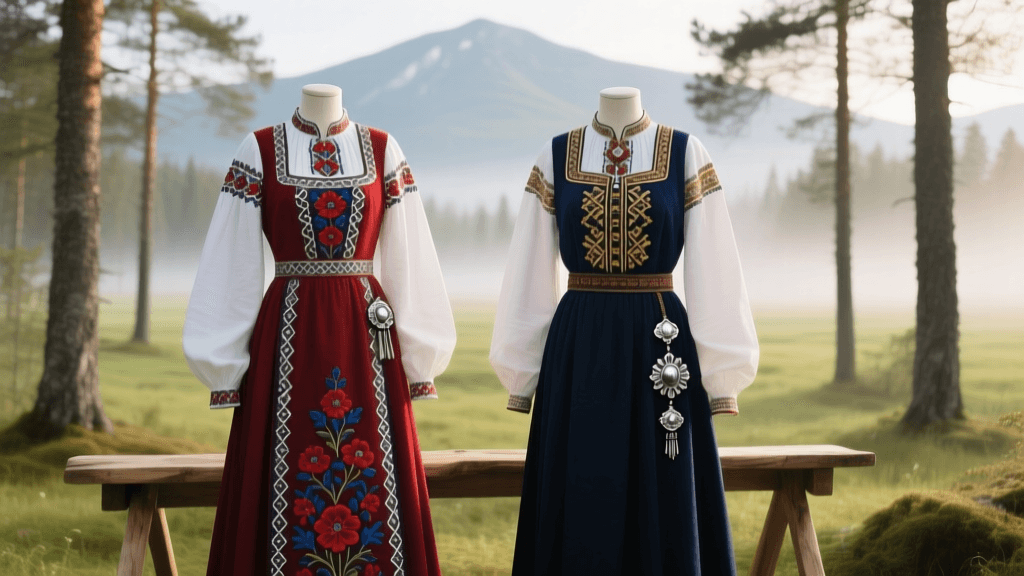
- Hardangerbunad: Often considered the first Bunad, originating from the Hardanger fjord region. It is characterized by its striking black wool base, white linen apron, and intricate cross-stitch embroidery in red, white, and yellow.
- Telemarkbunad: Renowned for its dramatic, dark blue or black wool and elaborate, colorful floral embroidery (rosebuds and vines) influenced by Rococo art. It is one of the most expensive and time-consuming Bunads to produce.
- Gudbrandsdalbunad: Features rich, multi-colored wool embroidery on a dark background, heavily inspired by 18th-century Norwegian tapestry weaving and woodcarving motifs.
2026 Sourcing Costs and Tailoring Timelines
Sourcing an authentic Bunad in 2026 requires patience and a significant financial investment. The premier destination for authentic materials and tailoring is Norsk Husflidslag (Husfliden), the Norwegian Folk Art and Craft Association. As of 2026, the waitlist for a fully hand-embroidered and custom-tailored Bunad from a certified Husfliden artisan ranges from 12 to 18 months.
Pricing reflects the intense manual labor involved. A complete women's Hardanger Bunad, including hand-woven silver jewelry (sølje), silk scarf, and embroidered shoes, currently averages between 45,000 and 60,000 NOK (approximately $4,200 to $5,600 USD). Men's Bunads, which require extensive tailoring for the wool breeches and woven vests, typically range from 35,000 to 50,000 NOK.
Bavarian and Alpine Tracht: Beyond the Oktoberfest Stereotype
When discussing Bavarian and Alpine folk dress, it is crucial to distinguish between Tracht (authentic, historically rooted regional dress) and Trachtenmode (commercialized, mass-produced festival wear). Authentic Tracht is governed by local Trachtenvereine (traditional costume associations) and regional customs, dictating everything from the weave of the linen to the specific shade of green used in the wool.
Authentic Dirndl and Lederhosen Construction
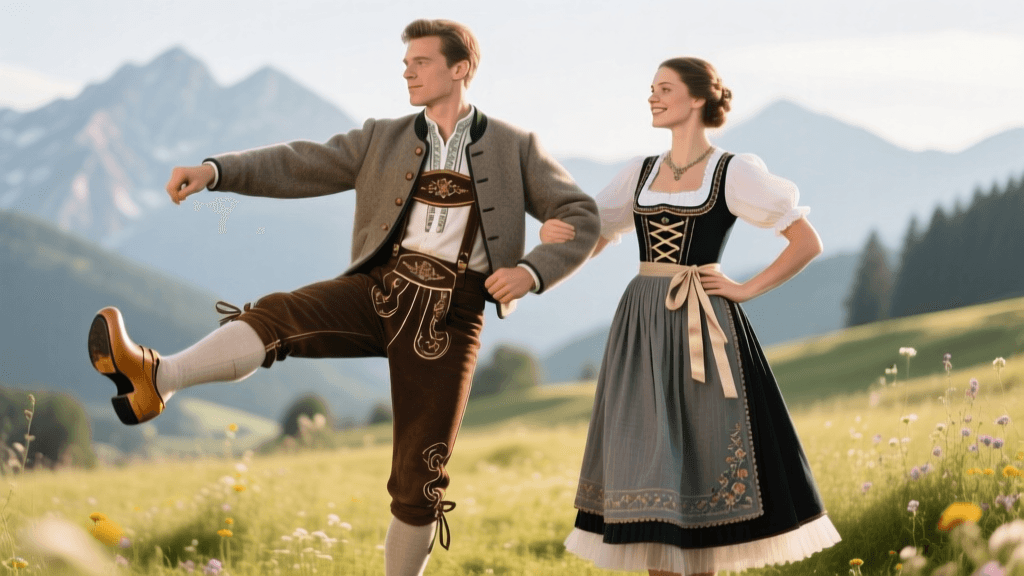
A true Alpine Dirndl is a marvel of structural tailoring. Unlike the flimsy, zippered costumes sold in tourist shops, an authentic 2026 Dirndl bodice is heavily interfaced, lined with cotton or linen, and fastened with traditional hooks, eyes, or a laced corsage. The skirt is meticulously pleated and attached to a separate waistband, designed to fall exactly to the mid-calf or ankle, depending on the specific regional code (e.g., Miesbacher Tracht vs. Werdenfelser Tracht).
Authentic Lederhosen are crafted from Hirschleder (deer leather) or Sämischleder (specially tanned chamois or sheepskin). The leather is tanned using traditional brain-tanning or vegetable-tanning methods, resulting in a buttery, breathable texture that molds to the wearer's body over time. The embroidery, known as Stickerei, is done entirely by hand using silk or heavy linen thread, featuring regional motifs like edelweiss, oak leaves, and alpine roses.
Material Sourcing and 2026 Pricing
According to textile archives and exhibitions at the Bayerisches Nationalmuseum, the preservation of traditional alpine textile techniques remains a priority in 2026. Hand-blocked linen from the Mühlviertel region in Austria and loden wool from the Steiermark are the gold standards for Tracht. A pair of bespoke, hand-embroidered Hirschleder Lederhosen from a master saddler in Upper Bavaria will cost between 900 and 1,600 EUR in 2026, while a fully bespoke, hand-sewn Dirndl ensemble (bodice, blouse, skirt, and silk apron) ranges from 800 to 1,400 EUR.
Comparative Analysis: Bunad vs. Tracht vs. Vyshyvanka
To understand where these garments sit within the broader scope of European folk dress, the following table compares the Norwegian Bunad, the Bavarian Tracht, and the Carpathian/Ukrainian Vyshyvanka across key textile and cultural metrics relevant in 2026.
| Feature | Norwegian Bunad | Bavarian Tracht | Ukrainian Vyshyvanka |
|---|---|---|---|
| Primary Base Material | Heavyweight woven wool, linen | Loden wool, Hirschleder (deer leather), linen | Hand-woven hemp, raw linen, cotton |
| Embellishment Technique | Cross-stitch, crewelwork, silver filigree | Hand-leather tooling, silk embroidery, horn buttons | Cross-stitch, satin stitch, cutwork (broderie anglaise) |
| 2026 Avg. Bespoke Cost | $4,200 - $5,600 USD | $900 - $1,600 EUR (per garment) | $150 - $450 USD |
| Cultural Governance | Strict (Bunad Council) | Moderate (Regional Trachtenvereine) | Fluid (Family/Regional traditions) |
Practical Fitting Guide and Measurements
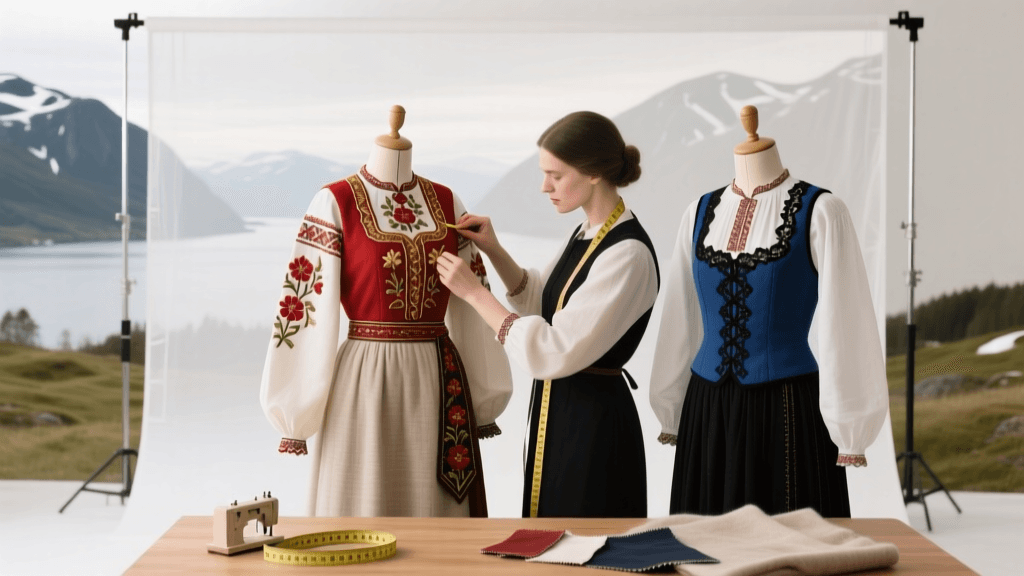
Ordering authentic European folk dress remotely or preparing for a fitting with a master tailor requires precise measurements. Standard modern clothing sizes are entirely useless for historical pattern drafting. Below is the actionable measurement guide used by heritage tailors in 2026.
Fitting the Authentic Dirndl Bodice
The Dirndl bodice must act almost like a corset, providing structure without restricting breathing. When taking measurements, wear the specific Dirndl blouse you intend to use, as the sleeve volume affects the armhole scye.
- Overbust: Measure around the fullest part of the bust, keeping the tape measure horizontal across the back.
- Underbust: Measure snugly directly beneath the bustline. This is critical for the structural seam of the bodice.
- Natural Waist: Measure 2 to 3 centimeters above the navel. The Dirndl waist sits higher than modern trousers or skirts.
- Back Width: Measure across the back from the edge of one shoulder blade to the other, approximately 10 cm below the base of the neck. This ensures the armholes do not gap.
Fitting Hirschleder Lederhosen
Leather does not stretch like modern elastane; it molds. A master leatherworker will draft the pattern slightly tighter than the final desired fit, knowing the deer leather will relax and form to the wearer's thighs and seat after approximately 20 hours of wear.
- Waist: Measure exactly where the Lederhosen waistband will sit, which is traditionally at the natural waist, not the modern hip.
- Hip/Seat: Measure around the absolute fullest part of the buttocks. This dictates the drop of the traditional 'Hosntürl' (the front flap).
- Thigh: Measure the thickest part of the upper thigh while standing with feet shoulder-width apart.
- Drop Length: For the traditional knee-bund style, measure from the waist down to 2 cm below the kneecap, where the leather cuff will button.
Fitting the Bunad Skirt
The most common mistake in Bunad fitting is the skirt length. A Bunad skirt must brush the top of the foot when wearing the specific traditional Bunad shoes, which often have a distinct heel height. Always take the 'waist-to-floor' measurement while wearing the exact heel height and undergarments (including the traditional linen underskirt) you plan to wear on the day of the event.
Care and Maintenance for Heritage Textiles
In 2026, the conservation of heritage textiles relies on eco-friendly, non-destructive methods. Never dry-clean a true Bunad or hand-embroidered Tracht; the harsh chemicals will strip the natural lanolin from the wool and degrade the silk embroidery threads.
- Wool Care: Air out the garments in a humid environment (such as a bathroom after a hot shower) to release odors and wrinkles. Use a specialized, pH-neutral wool detergent only for spot-cleaning stains.
- Leather Maintenance: Hirschleder should never be treated with modern synthetic shoe polishes. Use a pure, unmedicated neatsfoot oil or a traditional beeswax-based leather balm applied sparingly once a year to maintain the leather's breathability and water resistance.
- Silver Jewelry (Sølje): Norwegian Bunad silver is traditionally oxidized to highlight the intricate filigree patterns. Do not use aggressive liquid silver dips, which will strip the intentional black oxidation. Instead, polish only the raised surfaces with a soft, untreated microfiber cloth.
Conclusion
Investing in a Norwegian Bunad or Bavarian Tracht in 2026 is an investment in living history. By understanding the regional variations, respecting the strict tailoring requirements, and committing to the proper maintenance of these extraordinary textiles, you ensure that these European folk traditions continue to thrive. Whether you are commissioning a Telemark Bunad or sourcing bespoke Miesbacher Lederhosen, prioritize authentic materials, certified artisans, and precise historical fittings to honor the profound cultural legacy woven into every thread.