Authentic Bavarian Schuhplattler Tracht: 2026 Dance Festival Guide
The Mechanics of the Schuhplattler: Why Authentic Tracht Matters
When the rhythmic slapping of thighs and the stamping of hobnailed boots echo through the festival grounds of the 2026 European folk dance circuit, you are witnessing the Schuhplattler. Originating in the Alpine regions of Bavaria, Tyrol, and Salzburg, this traditional folk dance is a spectacular display of agility, stamina, and cultural pride. However, the true magic of the Schuhplattler does not lie solely in the choreography; it is inextricably linked to the garments worn by the dancers. For serious folk dance troupes and cultural enthusiasts attending regional Gaufeste (traditional festivals) in 2026, wearing authentic Tracht (traditional dress) is not merely a stylistic choice—it is a mechanical necessity.
Unlike static historical reenactments, folk dance demands rigorous physical exertion. The costumes must accommodate deep lunges, rapid spins, and percussive strikes. According to the Bavarian Tracht Association, the preservation of authentic regional dress codes is paramount for troupes competing or performing at sanctioned festivals. Commercialized, mass-produced costumes often fail the physical demands of the dance, restricting movement or tearing under stress. This comprehensive 2026 guide breaks down the anatomical requirements of dance-ready Bavarian Tracht, from the precise circumference of a spinning skirt to the specific tanning processes required for slap-ready leather.
Anatomy of the Dance-Ready Lederhosen (Kurze)
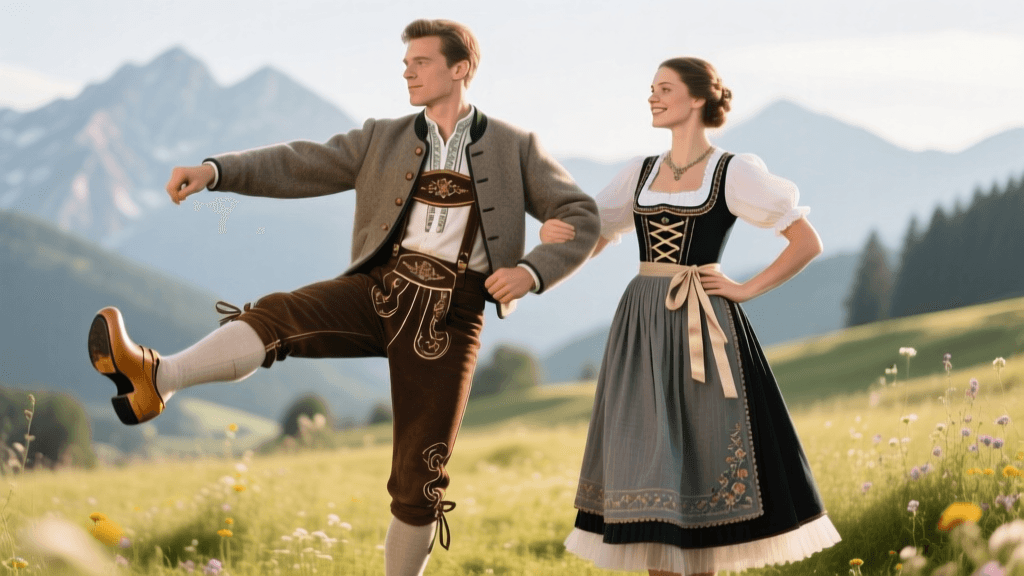
For male dancers, the foundation of the Schuhplattler is the kurze Lederhosen (short leather breeches). While long leather trousers (Bundhosen) are acceptable for certain alpine occasions, the short variant is mandatory for the traditional Plattler to allow the dancers to strike their bare thighs and calves. The construction of these garments in 2026 remains a revered artisanal craft, heavily regulated by regional guilds.
Leather Selection and Tanning
The most critical element of the Lederhosen is the leather. Authentic dance breeches are crafted from Hirschleder (deer leather) or Gamsleder (chamois). Deer leather is prized for its unique combination of durability and softness. It must be thick enough to protect the thigh from bruising during the vigorous plattln (slapping) sequences, yet supple enough to allow a full range of motion in the hips and knees. In 2026, the traditional Sämischgerbung (oil tanning) process using cod liver oil is still the gold standard, giving the leather its characteristic pale yellow hue and allowing it to be washed without losing its softness. Expect to pay between €800 and €1,400 for authentic, handmade Hirschleder breeches from master tailors in Miesbach or Garmisch-Partenkirchen.
The Cut and the Suspenders
Dance-ready Lederhosen feature a specific drop-front flap (Latz) and a snug, high-waisted cut that sits above the navel, preventing the garment from slipping during jumps. The suspenders (Hosenträger) are equally important. They are typically wide, heavily embroidered with floral or alpine motifs, and feature a cross-piece at the back that prevents them from sliding off the shoulders during energetic arm movements. The side lacing (Schnürung) at the knee allows the dancer to adjust the tightness of the cuff, ensuring the breeches do not ride up during high kicks.
The Tanzdirndl: Engineering the Perfect Spin
For female dancers, the Dirndl is far more than a festive dress; it is an instrument of visual rhythm. When a dancer executes a rapid pivot or is twirled by her partner, the skirt of a traditional Tanzdirndl (dance dirndl) flares out into a perfect, gravity-defying bell shape. Achieving this effect requires meticulous engineering that mass-market festival wear simply cannot replicate.
Skirt Circumference and Hem Weights
The defining characteristic of a 2026 festival-grade Tanzdirndl is the skirt circumference. While a standard commercial dirndl might feature a skirt width of 1.5 to 2 meters, an authentic dance dirndl requires a minimum of 3 to 4.5 meters of fabric, gathered tightly at the waistband. This immense volume is achieved through intricate cartridge pleating or deep box pleats. Furthermore, the hem is often weighted with a hidden cotton bias tape or a subtle cord sewn into the hemline. This weight pulls the skirt downward, maximizing the centrifugal flare during spins and ensuring the skirt drops back into place instantly when the dancer stops, maintaining modesty and elegance.
Bodice Structure and Fabric Choices
The bodice (Mieder) must provide core support without restricting diaphragmatic breathing. Authentic dance bodices are structured with internal boning and feature a deep, square or round neckline. In 2026, natural fibers remain the strict standard for dance troupes. High-quality cotton, linen, or lightweight wool blends are mandatory to manage perspiration during hours of continuous dancing. Polyester blends, common in tourist-shop costumes, trap heat and cause severe discomfort under the hot summer sun of outdoor European folk festivals.
Footwear: Haferl and Character Shoes
Footwear in the Schuhplattler serves a dual purpose: it provides the percussive beat of the dance and offers the necessary traction and support for alpine footwork.
- Men's Haferl Shoes: The traditional Haferlschuh is a sturdy leather shoe with a distinctive side-lacing system. The soles are often fitted with hobnails (Nagelschuhe) or specialized rubber grips to produce a sharp, resonant stamp on wooden stages and to provide grip on grassy festival grounds. In 2026, custom-fitted Haferl shoes with reinforced toe boxes cost approximately €250 to €350.
- Women's Character Shoes: Female dancers wear specialized Trachtenschuhe (character shoes) with a low, sturdy block heel (usually 2 to 3 centimeters). The leather uppers are soft to prevent blistering, and the soles are designed to allow the dancer to feel the floor for precise rhythmic stamping. They are typically paired with white, knee-high cotton stockings that feature subtle ribbed textures.
Accessories: The Finishing Touches of Regional Identity
No authentic Tracht is complete without its regional accessories, which serve as a visual language identifying the dancer's home valley or village.
- The Halstuch (Neckerchief): Men wear a silk or fine cotton neckerchief, typically in blood red or deep blue, tied in a specific knot that varies by region. It absorbs sweat and adds a striking pop of color against the pale leather.
- The Gamsbart (Hat Tuft): The traditional alpine hat (Trachtenhut) is adorned with a Gamsbart—a tuft of chamois hair. The size and quality of the Gamsbart denote the wearer's status and the formality of the occasion. A high-quality, hand-tied Gamsbart can easily exceed €300 in today's market.
- The Schürze (Apron): The dirndl apron is tied at the front. While the bow code (left for single, right for married, center for virgin, back for widowed) is widely known, for folk dance, the apron is often pinned discreetly at the side to prevent it from flying up and obscuring the dancer's skirt movements during complex choreography.
2026 Sourcing Guide: Commercial vs. Authentic Dance Tracht
As the 2026 festival season approaches, troupes and solo dancers must navigate a market flooded with fast-fashion Oktoberfest costumes. The official Oktoberfest Munich guidelines and regional heritage committees continuously emphasize the distinction between Trachtenmode (fashion inspired by tracht) and Gewachsene Tracht (authentic, historically rooted dress). Below is a comparative analysis to help buyers make informed investments.
Comparison Table: Festival Tracht vs. Authentic Dance Tracht
| Feature | Commercial Party Tracht | Authentic Tanztracht (2026 Standards) |
|---|---|---|
| Skirt Width (Dirndl) | 1.5 - 2 meters (A-line cut) | 3 - 4.5 meters (Deep pleated) |
| Primary Materials | Polyester blends, synthetic lace | 100% Cotton, Linen, Silk, Wool |
| Lederhosen Leather | Split cowhide, chrome-tanned | Hirschleder (Deer), oil-tanned |
| Embroidery | Machine-stamped, glued motifs | Hand-stitched regional Stickerei |
| Estimated Cost (Full Set) | €80 - €150 | €1,200 - €2,500+ |
| Lifespan and Durability | 1 - 2 seasons (Tears under dance stress) | Decades (Often passed down generations) |
Conclusion: Preserving the Rhythm of European Heritage
The Schuhplattler is a living, breathing artifact of European alpine culture. As we move through the 2026 folk dance festival season, the commitment to authentic Tracht represents a profound respect for the artisans, tailors, and ancestors who shaped these traditions. Whether you are a seasoned member of a Bavarian dance troupe or a cultural enthusiast preparing for your first regional Gaufest, investing in properly constructed, dance-ready garments ensures that you are not just wearing a costume, but actively participating in the preservation of European heritage. The slap of the deer leather, the flare of the weighted cotton skirt, and the stamp of the hobnailed boot are the true heartbeat of the Alps—a rhythm that demands authenticity to be truly felt.