Banarasi Brocade vs. Powerloom Imitations: 2026 Buyer's Guide
The Enduring Legacy of Banarasi Brocade in 2026
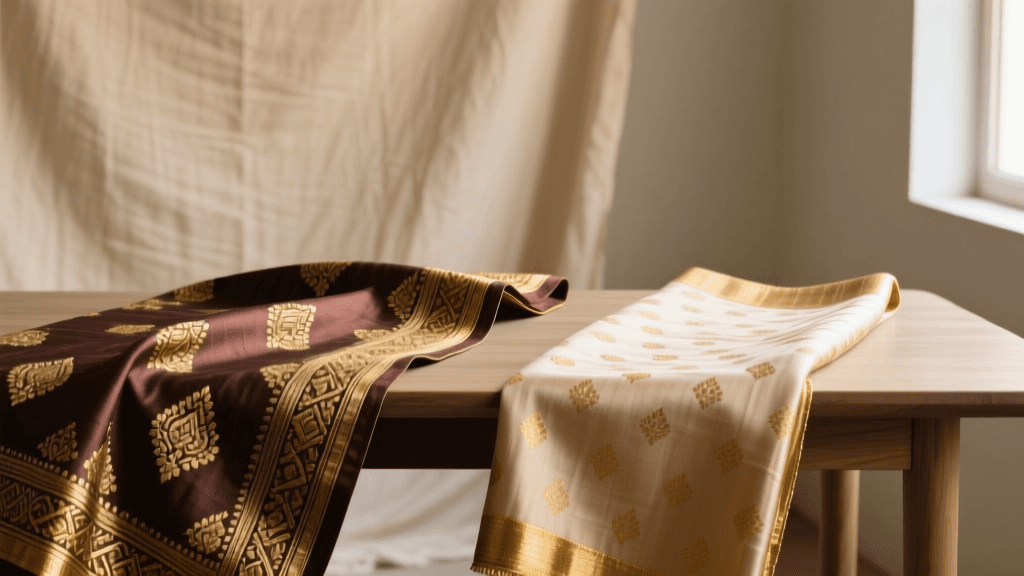
Banarasi brocade remains the undisputed zenith of South Asian ceremonial textiles. Originating from the ancient weaving hubs of Varanasi, India, these opulent garments are characterized by their intricate gold and silver zari work, dense silk bases, and Mughal-inspired motifs. As we navigate the traditional garment market in 2026, the demand for heritage textiles has reached an all-time high. Brides, collectors, and cultural preservationists are increasingly seeking authentic handloom pieces over mass-produced alternatives. However, this surge in demand has also led to a proliferation of powerloom imitations that mimic the visual aesthetic of Banarasi weaves without the structural integrity, cultural significance, or artisanal value. Understanding the textile nuances between authentic handwoven brocade and machine-made replicas is essential for any serious buyer or collector of Asian traditional garments today.
The Core Textile Differences: Handloom vs. Powerloom
The distinction between a genuine handloom Banarasi and a powerloom imitation goes far beyond the price tag. It is embedded in the very architecture of the fabric.
Zari Composition and Oxidation
Traditional Banarasi brocade utilizes real zari, which consists of a silk or cotton core thread wrapped in flattened silver wire and electroplated with pure gold. In 2026, authentic pure zari is a premium investment, often making up a significant portion of the garment's weight and cost. Over time, real gold and silver zari oxidizes gracefully, developing a rich, antique patina that enhances the textile's vintage appeal. Conversely, powerloom imitations rely on synthetic zari, typically made from metallic-coated polyester or nylon. This synthetic thread lacks the weight, drape, and breathability of real metal. While it may appear excessively shiny and uniform on the retail rack, synthetic zari is prone to peeling, tarnishing into a dull grey, and snapping under the tension of heavy embroidery or frequent draping.
The Architecture of the Weave: Kadwa vs. Phenkua
Authentic handloom weavers frequently employ the 'kadwa' technique, a painstakingly slow method where each motif is woven independently. This ensures that there are no loose float threads on the reverse side of the fabric, making the garment incredibly durable and comfortable against the skin. Powerlooms, optimized for speed and volume, predominantly use the 'phenkua' or 'katri' technique, where the weft thread runs continuously across the width of the fabric. This leaves long, loose threads on the reverse side. While some powerloom manufacturers now use a secondary lining to hide these floats, a close inspection of the reverse side remains one of the most reliable authentication methods available to buyers.
2026 Market Value and Textile Comparison Chart
To help buyers navigate the current market, we have compiled a comprehensive comparison of authentic handloom Banarasi brocade versus powerloom imitations based on 2026 industry data and artisan cooperative pricing.
| Feature | Authentic Handloom Banarasi | Powerloom Imitation |
|---|---|---|
| Zari Material | Pure gold/silver over silk/cotton core | Synthetic metallic polyester or nylon |
| Weave Technique | Kadwa (independent motifs) or intricate phenkua | Continuous weft phenkua (jacquard automated) |
| Reverse Side Finish | Clean, exact motif outline (if kadwa) | Long horizontal float threads or glued lining |
| Silk Base | Pure Katan silk or Ahimsa silk | Blended silk, rayon, or heavily weighted silk |
| Production Time | 15 days to 6+ months per garment | 2 to 5 hours per garment |
| 2026 Price Range (USD) | $800 - $5,000+ | $40 - $150 |
Advanced Identification Techniques for the Modern Buyer
When shopping for a Banarasi sari, lehenga, or dupatta, relying solely on visual inspection is no longer sufficient, as high-end powerlooms have become adept at replicating complex jacquard patterns. Here are actionable, tactile tests you can perform to verify textile authenticity.
The Reverse Side Float Test
Turn the fabric over and examine the reverse side of a dense motif. If you see long, uncut threads spanning horizontally across the back of the pattern, it is highly likely a powerloom product utilizing the continuous weft method. An authentic kadwa handloom piece will show the exact outline of the motif on the reverse side, with no long loose threads, allowing the fabric to lie flat and feel smooth against the skin.
The Pinhole and Selvedge Test
Handloom fabrics are woven on pit looms, which require the weaver to manually secure the edges. Consequently, authentic Banarasi textiles often feature slight, natural irregularities in the selvedge and tiny pinholes where the loom pins held the fabric in place. Powerloom fabrics, stretched on automated mechanical frames, possess razor-sharp, mathematically perfect edges devoid of these human imperfections.
The Weight and Drape Assessment
Katan silk, the traditional pure silk base used in Banarasi brocade, has a distinct, heavy drape that molds to the body while maintaining structural volume. A genuine handwoven sari can weigh between 800 grams to over 1.5 kilograms, depending on the density of the zari. Powerloom imitations often use lighter, blended silks or artificial silk that feel stiff, plasticky, or unnaturally light, failing to provide the regal silhouette required for traditional South Asian ceremonial wear.
Motif Analysis: Cultural Iconography in Textiles
Beyond the physical threads, the motifs woven into Banarasi brocade carry deep cultural significance. Authentic weavers spend years mastering the geometry of traditional patterns such as the 'Ambi' (paisley), 'Kalga' (mango motif), and intricate 'Jangla' (wild forest vine) designs. In genuine handloom pieces, these motifs exhibit a subtle asymmetry and organic flow that reflects human artistry. Powerloom imitations often feature perfectly symmetrical, pixelated, or flattened versions of these motifs due to the limitations of digital jacquard punch cards. Furthermore, authentic weavers frequently incorporate Hindu and Mughal iconography seamlessly, a hallmark of Varanasi's syncretic cultural history that mass-market mills rarely replicate with historical accuracy.
Ethical Sourcing and the GI Tag in 2026
The Geographical Indication (GI) tag is a legal certification that guarantees a product originates from a specific region and possesses qualities attributable to that origin. For Banarasi brocade, the GI tag is a vital shield against mass-produced counterfeits from other regions. According to the National Handloom Development Programme, the Indian government has continuously strengthened GI enforcement to protect artisan livelihoods and ensure fair trade practices. When purchasing in 2026, always demand a GI certificate and a unique holographic authenticity label from the retailer. Furthermore, the modern conscious buyer should look for weaving cooperatives that utilize Ahimsa (peace) silk or organically dyed bases, reflecting the current shift toward sustainable luxury in traditional Asian garments. Institutions like the Victoria and Albert Museum Asian Collections frequently highlight the historical importance of these regional weaving techniques, reinforcing the cultural imperative to support authentic artisans over industrial mills.
Preserving Your Handwoven Brocade
Investing in an authentic Banarasi textile requires meticulous care to ensure it becomes a multi-generational heirloom. Follow these expert preservation guidelines:
- Dry Cleaning Only: Never wash handwoven Katan silk or pure zari at home. Water can cause the silk to lose its natural gum and the zari to oxidize prematurely. Always use a specialized heritage textile dry cleaner.
- Muslin Storage: Store your garments wrapped in unbleached, acid-free muslin cloth. Avoid plastic covers, which trap moisture and cause the silk to rot and the metallic threads to tarnish black.
- Refolding Schedule: Refold your sareis and dupattas every three to four months. Leaving heavy brocade folded in the same position for years will cause the silk fibers to snap along the crease lines due to the weight of the zari.
- Climate Control: Keep your textile collection in a cool, dark environment with low humidity. Direct sunlight will rapidly fade the natural dyes used in high-end 2026 sustainable collections.
Conclusion
The choice between authentic Banarasi brocade and powerloom imitations is ultimately a decision between fast fashion and cultural preservation. While machine-made alternatives offer accessibility and lower price points, they cannot replicate the soul, durability, and structural brilliance of a handwoven masterpiece. By understanding the intricate textile choices, mastering authentication techniques, and supporting verified artisan cooperatives, buyers in 2026 can ensure their ceremonial garments are not just beautiful attire, but living pieces of Asian heritage.