Traditional Baltic Amber & Slavic Vinok Styles 2026
The 2026 Renaissance of Eastern European Folk Accessories
The year 2026 has ushered in a profound renaissance for Eastern European folk dress, moving far beyond the realm of historical reenactment and into the sphere of high-end cultural fashion and contemporary festival wear. At the heart of this revival are the intricate accessories that define the silhouette of traditional Slavic and Baltic garments: the luminous, fossilized resin known as Baltic amber, and the deeply symbolic floral headwear known as the vinok. For enthusiasts, collectors, and cultural practitioners, understanding how to source, authenticate, and style these heritage pieces in 2026 is essential. This comprehensive guide explores the modern market for authentic Baltic amber jewelry and the meticulous craftsmanship behind the traditional Slavic vinok, providing actionable advice for integrating these masterpieces into your contemporary folk wardrobe.
Baltic Amber: Sourcing, Authenticity, and 2026 Market Trends
Baltic amber, often referred to as the 'Gold of the North,' has been a cornerstone of European adornment for millennia. Formed over 40 million years ago from the resin of ancient coniferous forests, this organic gemstone is prized for its warmth, lightweight nature, and incredible diversity of color. In 2026, the market for Baltic amber has shifted significantly. Collectors and festival-goers are increasingly favoring raw, unpolished nuggets and minimalist silver settings over the heavily carved, highly polished beadwork that dominated the early 2000s. This trend reflects a broader 2026 movement toward organic, earth-bound aesthetics in European folk styling.
However, the surge in demand has also led to an influx of synthetic imitations and treated copal (young, semi-fossilized resin) on the market. According to the Gemological Institute of America (GIA), distinguishing true Baltic succinite from copal or modern plastics requires careful observation of inclusions, fluorescence under UV light, and specific gravity tests. When sourcing amber in 2026, it is critical to purchase from certified dealers who adhere to the International Amber Association's strict disclosure guidelines. Look for certificates of authenticity that specify the amber's origin—typically the Kaliningrad region, Lithuania, or the Polish coast—and confirm whether the stones have been subjected to heat treatment or autoclaving, processes that are common but must be transparently disclosed by ethical 2026 vendors.
The color palette of amber also plays a vital role in folk styling. While cognac and honey tones remain the most popular, 2026 has seen a massive spike in the popularity of 'butterscotch' (opaque yellow-white) and rare 'cherry' (deep reddish-brown) amber. These opaque and deeply saturated varieties are frequently used as statement pendants, paired with heavy, hand-forged silver chains that echo the metalwork traditions of the Carpathian Mountains.
The Slavic Vinok: Botanical Accuracy and Cultural Coding
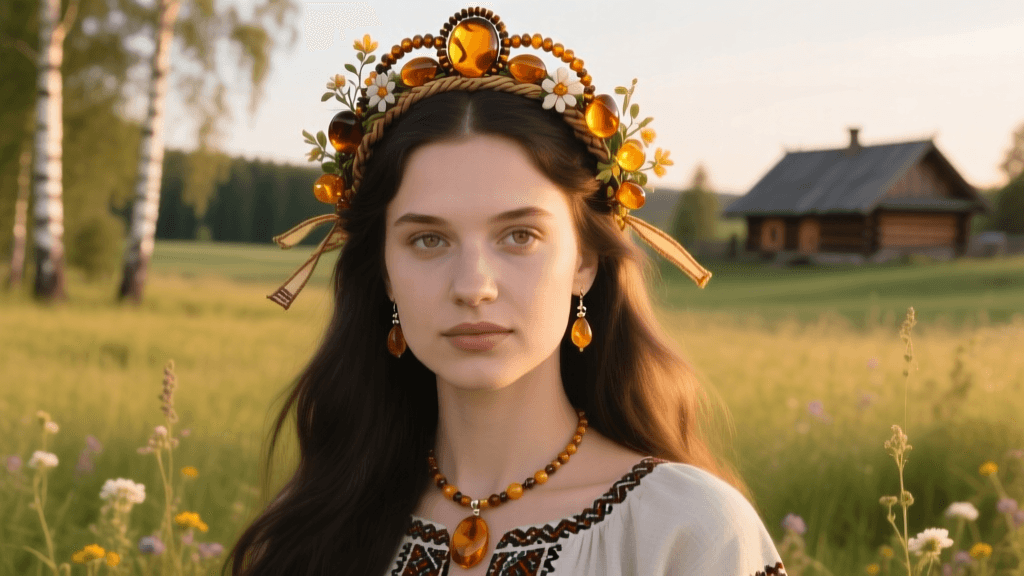
The vinok, the traditional Ukrainian and broader Slavic floral wreath, is perhaps the most recognizable element of Eastern European headwear. Far from being a simple 'flower crown,' the vinok is a complex, coded language of botanicals, ribbons, and regional identity. Historically worn by unmarried young women, the vinok served as a protective talisman and a visual indicator of the wearer's marital status, regional origin, and even her family's agricultural hopes for the season.
In 2026, the craftsmanship of the vinok has reached new heights of botanical accuracy and material quality. The Victoria and Albert Museum (V&A) notes that European headwear and adornments have historically functioned as vital markers of social and cultural identity, a tradition that modern artisans are fiercely protecting. Today's master crafters eschew the cheap plastic flowers of the mid-20th century, opting instead for high-grade mulberry silk, preserved natural botanicals, and hand-dyed linen. A traditional vinok incorporates up to twelve specific flowers and herbs, each carrying distinct symbolism. Yarrow represents resilience, oak leaves signify strength and family continuity, and periwinkle (barvinok) forms the eternal, unbroken base of the wreath, symbolizing life and immortality.
The trailing ribbons, known as svyachky, are equally important. In 2026 festival culture, the color and length of these ribbons are carefully curated. White ribbons denote purity and are often embroidered with silver thread, while vibrant red, blue, and gold ribbons are woven to protect the wearer from negative energy. Modern artisans are now incorporating custom embroidery into the ribbons, allowing wearers to embed their own family crests or regional motifs into the headwear.
2026 Sourcing and Pricing Guide
Navigating the 2026 market for heritage accessories requires an understanding of current pricing dynamics. Due to stricter environmental regulations on amber mining in the Baltic states and the rising cost of premium silk for textile arts, prices for authentic, handcrafted pieces have increased. Below is a comparative guide to help you budget for your 2026 folk dress investments.
| Accessory Type | Material & Origin | 2026 Average Price (USD) | Best For |
|---|---|---|---|
| Raw Amber Pendant | Unpolished Baltic Succinite, Lithuanian Origin | $85 - $150 | Everyday folk styling, minimalist linen shifts |
| Multi-Strand Amber Beads | Polished Cognac Amber, Silver Clasps | $300 - $650 | Festive wear, pairing with heavy wool vests |
| Silk Botanical Vinok | Mulberry Silk, Hand-wired, Custom Ribbons | $180 - $350 | Summer festivals, Kupala Night celebrations |
| Preserved Herb Vinok | Natural Dried Yarrow, Periwinkle, Oak | $120 - $250 | Autumn harvest festivals, historical accuracy |
Styling Amber and Vinok for Contemporary Folk Festivals
Integrating these heritage accessories into a 2026 wardrobe requires a balance of respect for tradition and modern aesthetic sensibility. The key to styling Baltic amber and the vinok is to let the accessories dictate the palette of the garment. For summer festivals celebrating Kupala Night, pair a vibrant, multi-colored silk vinok with a crisp, white linen vyshyvanka (embroidered shirt). The white linen acts as a canvas, allowing the intricate silk petals and trailing ribbons to take center stage. In this context, opt for a lighter, single-strand amber necklace in a bright honey tone to complement the warmth of the summer sun without overwhelming the neckline.
For autumn and winter events, the styling shifts toward richer, more grounded textures. Pair a heavy, multi-strand necklace of opaque butterscotch amber with a dark indigo or charcoal wool vest (keptar or kyptar). The contrast between the warm, glowing amber and the cool, deep tones of the hand-woven wool is visually striking and historically resonant. In colder months, the vinok is often replaced by a traditional wimple or a heavily embroidered wool shawl, allowing the amber jewelry to serve as the primary focal point of the ensemble.
Care and Maintenance of Heritage Accessories
Preserving these organic and textile-based accessories requires specific care protocols. Amber is a relatively soft organic gemstone (rating 2 to 2.5 on the Mohs scale) and is highly sensitive to chemicals and extreme temperatures. The Museum of Amber in Gdańsk advises collectors to store amber jewelry in soft cloth pouches, separate from harder gemstones or metals that could scratch the surface. Never expose Baltic amber to perfumes, hairsprays, or harsh cleaning solvents, as these can degrade the natural oils and cause the resin to cloud or crack over time. To clean amber, simply wipe it gently with a soft, damp cloth and dry it immediately.
The vinok, particularly those made from high-grade silk and preserved botanicals, requires careful storage to maintain its structural integrity. After wearing, gently brush off any dust or pollen using a soft makeup brush. Store the wreath in a rigid, circular hat box lined with acid-free tissue paper to prevent the wire armature from bending and the silk petals from being crushed. Keep the vinok in a cool, dark place, as prolonged exposure to direct sunlight will cause the natural dyes and botanical elements to fade rapidly.
Conclusion
The revival of European folk dress in 2026 is a testament to the enduring power of cultural heritage and artisanal craftsmanship. By investing in authentic Baltic amber and meticulously crafted Slavic vinoks, you are not merely purchasing accessories; you are participating in the living history of Eastern Europe. Whether you are attending a midsummer festival, a cultural exhibition, or simply incorporating elements of folk styling into your daily life, understanding the origins, symbolism, and proper care of these pieces ensures that these beautiful traditions will continue to thrive for generations to come.