Astana Tombs Silk Road Samite: 2026 Dye & Weave Analysis
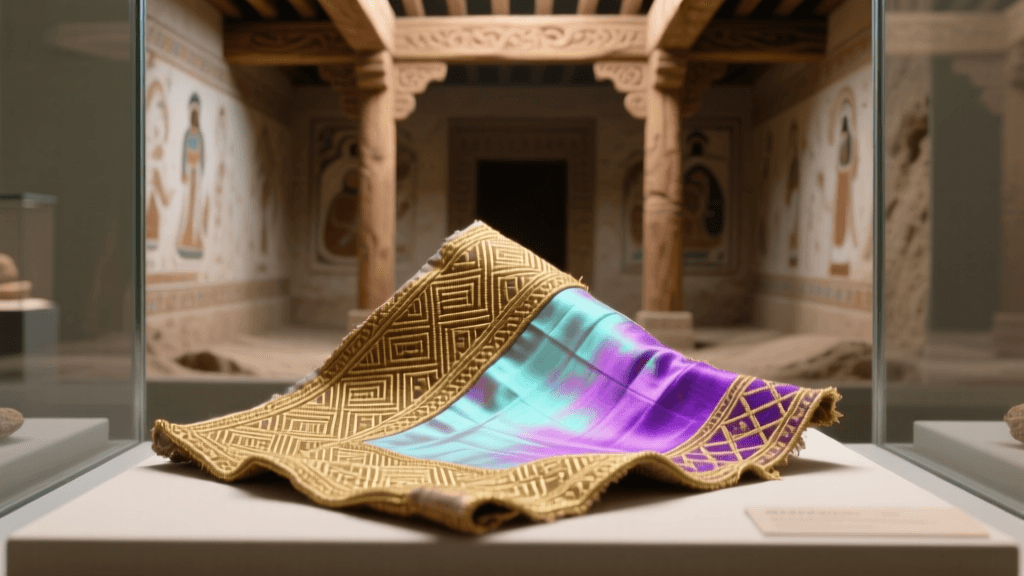
The Astana Tombs: A Time Capsule of Silk Road Exchange
The Astana Tombs, located in the Turfan Depression of Xinjiang, China, represent one of the most significant archaeological sites for understanding the material culture of the ancient Silk Road. Often referred to as the "Underground Museum," this cemetery complex served the Gaochang Kingdom and later the Tang Dynasty administration. Due to the extreme aridity of the Turfan Depression, organic materials that would have decomposed in more humid environments have survived in remarkable condition. Among the most spectacular finds are the silk textiles, which provide a tangible record of the vibrant transcontinental trade networks that connected East Asia, Central Asia, and the Persian Empire.
For textile historians and archaeologists, the year 2026 has brought unprecedented advancements in how we analyze these ancient fabrics. Moving beyond traditional visual inspection and destructive fiber sampling, modern researchers are now employing non-invasive multispectral imaging and portable Raman spectroscopy to decode the exact dye recipes and weave structures of Sogdian and Tang silks. This article explores the latest 2026 findings regarding Sogdian samite from the Astana Tombs, offering actionable insights for conservationists, weavers, and historians.
Decoding Sogdian Samite: The Architecture of the Weave
Samite, a term derived from the Greek hexamiton (meaning "six threads"), is a luxurious weft-faced compound twill. On the Silk Road, this textile was the ultimate status symbol, heavily traded by Sogdian merchants who acted as the primary commercial intermediaries between the Sasanian Empire, the Byzantine Empire, and Tang China. The Sogdians were not merely traders; they were master weavers who adapted Persian motifs and techniques to suit the tastes of the Chinese elite.
In a weft-faced compound twill, the warp threads are completely hidden by the weft threads on the surface of the fabric. This structure allows for highly complex, polychrome patterns without the floats that plague simpler weaves. The 2026 digital reconstructions of Astana samite fragments reveal a sophisticated binding system where a main warp and a binder warp work in tandem to secure multiple colored pattern wefts. This structural integrity is precisely why so many Astana fragments remain intact today, despite being over 1,300 years old.
Comparative Weave Analysis: Sogdian Samite vs. Tang Jin
Understanding the distinction between imported Sogdian samite and domestically produced Tang jin (brocade) is critical for archaeologists cataloging the Astana finds. Below is a structural comparison based on the latest 2026 textile analyses.
| Feature | Sogdian Samite (Weft-Faced) | Tang Chinese Jin (Warp-Faced) |
|---|---|---|
| Weave Structure | Weft-faced compound twill (Z-spun silk) | Warp-faced compound tabby or twill (S-spun silk) |
| Surface Appearance | Weft threads dominate; matte, dense finish | Warp threads dominate; high sheen, ribbed texture |
| Motif Execution | Curvilinear, smooth diagonal lines, large repeats | Geometric, stepped edges, smaller linear repeats |
| Primary Cultural Influence | Sasanian Persian & Central Asian | Indigenous Chinese & Steppe Nomadic |
The Pearl Roundel: A Motif of Transcontinental Exchange
The most iconic motif found on the Astana samite fragments is the "pearl roundel." This design features a circular border made of pearl-like dots enclosing a central figure, such as a confronting pair of ducks, a boar's head, or a senmurv (a mythical bird-dog). According to research highlighted by The Metropolitan Museum of Art's Heilbrunn Timeline, the pearl roundel originated in Sasanian Persia as a royal symbol of divine glory and authority.
As Sogdian merchants transported these textiles eastward, the motif was eagerly adopted by the Tang court. Chinese weavers began to replicate the pearl roundel, but they often infused it with local symbolism, replacing Persian boars with Chinese phoenixes or dragons. The Astana Tombs yield examples of both genuine Sogdian imports and high-quality Chinese imitations, providing a masterclass in how visual culture was negotiated, adapted, and localized along the Silk Road.
2026 Breakthroughs in Non-Invasive Multispectral Dye Analysis
Historically, identifying the dyes used in ancient textiles required extracting a physical sample of the thread, dissolving it in a solvent, and analyzing it via High-Performance Liquid Chromatography (HPLC). While accurate, this destructive method is increasingly unacceptable for rare, irreplaceable artifacts like the Astana silks.
In 2026, the integration of portable hyperspectral imaging and Surface-Enhanced Raman Spectroscopy (SERS) has revolutionized Silk Road textile analysis. Researchers can now map the chemical signatures of dyes across an entire garment without touching the fabric. Recent scans of Astana pearl roundel fragments have confirmed the presence of specific organic markers:
- Madder (Rubia tinctorum): Identified by the distinct fluorescent signatures of alizarin and purpurin, used to achieve the deep, rust-red backgrounds characteristic of Sogdian royalty.
- Indigo (Indigofera tinctoria): Detected through Raman shifts corresponding to indigotin, utilized for the vibrant blue outlines of the pearl roundels.
- Weld (Reseda luteola): Traces of luteolin have been mapped in the yellow accent threads, proving that Sogdian dyers favored weld over the more common safflower for its superior lightfastness.
These 2026 findings confirm that Sogdian dyers had access to a highly sophisticated, globally sourced botanical palette, further corroborating the UNESCO Silk Roads Programme data regarding the extensive trade of raw dyestuffs alongside finished textiles.
Advanced Conservation Protocols for Desert-Excavated Silks
While the arid climate of Turfan preserved the Astana textiles in the ground, excavating them exposes the fibers to modern atmospheric threats, including fluctuating humidity, oxygen, and ultraviolet radiation. In 2026, conservation standards for Silk Road organics have become highly rigorous, guided by frameworks established by institutions like the Getty Conservation Institute.
Museums housing Astana samite now utilize active anoxic display cases. These microclimates are flushed with humidified argon gas, reducing oxygen levels to below 0.1%, which effectively halts oxidative degradation and eliminates the risk of aerobic pest infestations. Furthermore, lighting protocols have been updated: LED arrays with strict UV filtration are capped at 50 lux, and cumulative exposure is tracked via dosimeters to ensure the fragile protein structure of the silk fibroin is not compromised by photochemical reactions.
Practical Guide for Textile Historians and Weavers in 2026
The wealth of data generated from the Astana Tombs is not just for archaeologists; it is highly actionable for contemporary weavers, textile designers, and historians looking to recreate or study Silk Road fabrics.
1. Utilizing Digital Loom Software
To truly understand the mechanics of Sogdian samite, modern weavers should utilize advanced CAD textile software such as NedGraphics or Pointcarré. By inputting the 2026 multispectral weave-maps of Astana fragments, weavers can simulate the weft-faced compound twill structure digitally. This allows for the calculation of exact warp-to-weft ratios (often 1:3 or 1:4 in samite) before committing to the physical loom.
2. Sourcing Authentic Z-Spun Silk
One of the defining characteristics of Sogdian samite is the use of Z-spun (clockwise twisted) silk for the warp, whereas traditional Chinese silks predominantly used S-spun (counter-clockwise) silk. For historical accuracy in reproduction, weavers must source custom Z-spun filament silk from specialized sericulture mills, as standard commercial silk yarns will not yield the correct drape or surface light refraction.
3. Accessing Open-Access Digital Archives
Researchers in 2026 have unprecedented access to high-resolution, multi-layered images of the Astana textiles. Platforms like the International Dunhuang Project (IDP) and the Silk Road digital archives allow users to zoom in on individual weave intersections. Historians should cross-reference these digital archives with extant Sasanian metalwork and Sogdian murals to trace the migration of the pearl roundel motif across different media.
Conclusion
The silk textiles of the Astana Tombs are far more than beautiful artifacts; they are complex data sets that record the economic, technological, and artistic exchanges of the ancient world. Through the lens of 2026's non-invasive dye analysis and digital weave mapping, the Sogdian samite fragments continue to reveal their secrets. By combining rigorous conservation protocols with modern digital tools, we ensure that the legacy of the Silk Road's master weavers remains vibrant and accessible for generations to come.