2026 Silk Road Archaeological Finds: Astana Brocade Revival
The Silk Road was never merely a conduit for spices, jade, and precious metals; it was the ancient world's most vibrant superhighway of sartorial and technological exchange. In 2026, a groundbreaking wave of archaeological analysis has fundamentally shifted our understanding of ancient textile production, specifically regarding the Astana Tombs in the Turfan Depression of the Tarim Basin. For decades, the harsh, arid climate of Xinjiang has acted as a natural preservative for organic materials, yielding some of the most pristine ancient garments on Earth. However, it is the recent application of 2026's non-invasive imaging technologies that has finally allowed researchers to decode the complex weaving structures of Sogdian samites and Tang dynasty jin (brocades) without risking damage to the fragile artifacts. This article explores the latest archaeological revelations from the Astana Tombs and examines how these ancient Silk Road exchanges are directly influencing the 2026 Xin Zhongshi (New Chinese Style) fashion movement and global museum exhibitions.
The 2026 Multispectral Breakthroughs at Turfan
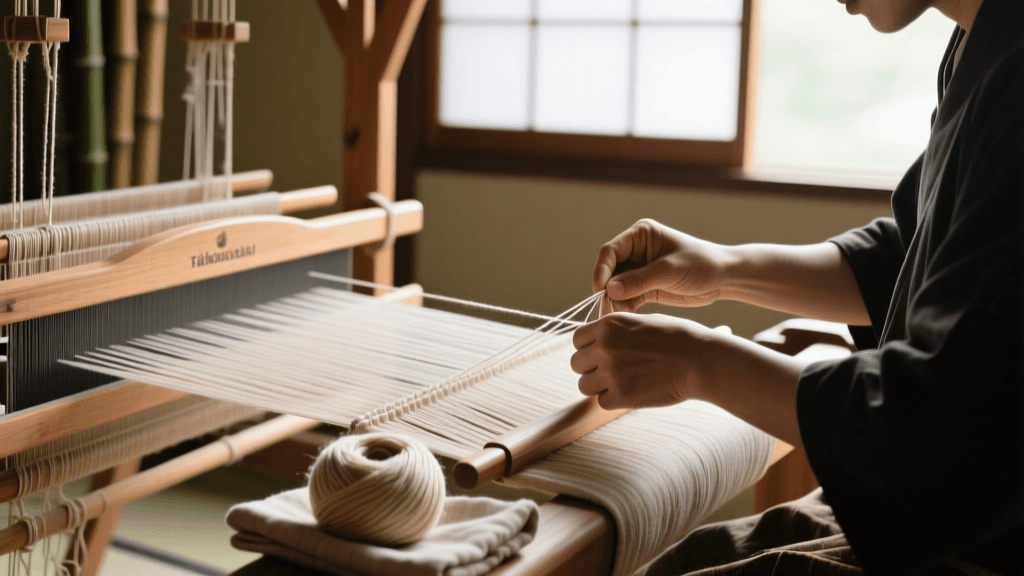
In early 2026, an international consortium of archaeologists, textile conservators, and materials scientists released the highly anticipated findings of a five-year multispectral imaging project focused on the silk fragments recovered from the Astana and Karakhoja cemeteries. Unlike the destructive carbon dating and chemical dye baths of previous decades, 2026's hyperspectral cameras and AI-driven thread-mapping algorithms have revolutionized textile archaeology. Researchers can now reconstruct the exact weave structures, thread counts, and dye compositions of decayed textiles in a three-dimensional digital space. According to the UNESCO Silk Roads Programme, this non-invasive approach is critical for preserving the integrity of heritage sites along the ancient trade routes while unlocking unprecedented data about cross-cultural artisan collaborations. The AI models successfully identified that many textiles previously assumed to be imported Persian goods were, in fact, woven locally in Turfan using a hybrid loom setup. This setup ingeniously combined traditional Chinese drawloom technology with Sasanian weft-faced patterning techniques, proving that the Silk Road was a zone of active technological synthesis, not just a retail corridor.
Decoding the Pearl-Roundel and Boar's Head Motifs
One of the most iconic visual markers of the Silk Road textile exchange is the pearl-roundel motif, often enclosing confronting peacocks, boars' heads, or winged horses. These motifs originated in Sasanian Persia and were heavily adopted by the Sogdians, the premier merchant class of the Silk Road. The 2026 digital reconstructions of the Astana finds revealed astonishing details about how these motifs were adapted for Chinese aristocratic tastes. While the structural geometry of the pearl-roundel remained intact, the internal motifs were frequently hybridized with indigenous Chinese auspicious symbols, such as the baoxiang flower or the cloud collar. The digital thread-mapping showed that weavers utilized a complex system of memory-threads to manage the pattern repeats, a precursor to the punch-card systems that would eventually spark the Industrial Revolution millennia later.
Sogdian Samite vs. Tang Jin Brocade: A Structural Comparison
To understand the magnitude of the 2026 Astana revelations, one must understand the fundamental differences between the dominant weaving traditions of the era. The collision of these two traditions in the Tarim Basin birthed entirely new textile categories. Below is a structural comparison based on the latest 2026 archaeological data:
| Feature | Sogdian/Persian Samite | Tang Chinese Jin Brocade | 2026 Astana Hybrid Reconstruction |
|---|---|---|---|
| Weave Structure | Weft-faced compound twill | Warp-faced compound tabby/twill | Weft-faced with warp-bound edges |
| Pattern Visibility | Identical on both sides | Distinct front and back | Reversible with floating wefts |
| Thread Count (per cm) | High weft density (40-60) | High warp density (80-120) | Balanced density (50 warp / 50 weft) |
| Primary Material | Z-spun silk | S-twist silk | Mixed Z and S twist for texture |
| Loom Technology | Heddle and pattern rod | Complex drawloom | Modified drawloom with Sogdian rods |
The Chemistry of Color: 2026 Dye Spectroscopy
The vibrant colors of the Astana silks have long baffled historians, particularly the brilliant crimsons and deep lapis lazuli blues that have survived for over a millennium. The 2026 spectroscopic analysis has finally mapped the exact chemical signatures of these ancient dyes. Researchers discovered that the brilliant reds were derived from madder root (Rubia tinctorum), but the longevity of the color was due to a highly specific, dual-mordant process utilizing both alum and tannin-rich local desert shrubs. The blues, previously thought to be exclusively imported indigo, were found to contain trace amounts of woad, suggesting a localized cultivation of dye plants in the Turfan oasis. This revelation has sent shockwaves through the modern sustainable fashion industry. In 2026, heritage dye houses are experimenting with these exact dual-mordant botanical recipes, achieving colorfastness that rivals synthetic aniline dyes without the use of heavy metals or toxic runoff.
The Xin Zhongshi Movement Meets Archaeology
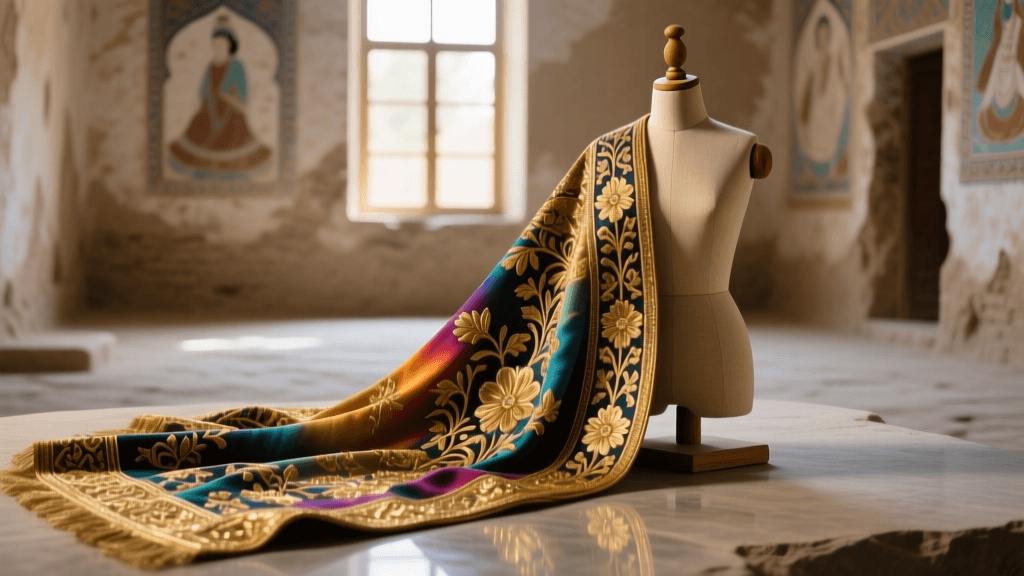
The Xin Zhongshi (New Chinese Style) movement has evolved dramatically by 2026. Moving far beyond the superficial application of Qing-dynasty frog buttons or generic dragon embroidery, contemporary avant-garde designers are now looking directly to the archaeological record for structural and aesthetic inspiration. The 2026 Astana brocade revival has become a defining trend in high-end Asian fashion. Designers are utilizing state-of-the-art digital jacquard looms to replicate the complex 6-color weft structures of the Sogdian-Tang hybrid silks. Instead of heavy, stiff brocades suited for ancient court robes, modern textile engineers are blending these ancient weave structures with lightweight, high-tenacity mulberry silk and recycled cellulose fibers. The result is a new generation of Xin Zhongshi garments—such as structured, wide-legged trousers and deconstructed wrap jackets—that feature the iconic pearl-roundel motifs but drape with the fluidity required for modern urban life. This synthesis of ancient archaeological data and 2026 material science represents a profound reclamation of Silk Road heritage.
Experiencing the Silk Road in 2026
For textile enthusiasts, historians, and fashion professionals, 2026 offers unprecedented access to these ancient masterpieces. The Victoria and Albert Museum's Asian Collections have recently integrated high-resolution, interactive 3D models of their Central Asian silk fragments, allowing users to virtually manipulate the textiles and examine the weave structures under simulated raking light. Furthermore, the Xinjiang Uygur Autonomous Region Museum in Urumqi has unveiled a revolutionary climate-controlled, haptic-feedback textile gallery. Visitors in 2026 can use specialized haptic gloves to 'feel' the digital reconstructions of the Astana silks, experiencing the distinct ridges of the weft-faced samite and the smooth warp-dominance of the jin brocades. For those traveling the physical Silk Road, the Turfan Museum has expanded its conservation laboratories, offering guided viewings where guests can watch conservators apply 2026's laser-cleaning technologies to newly excavated fragments.
Conclusion
The 2026 archaeological findings from the Astana Tombs have irrevocably altered our understanding of the Silk Road. It was not a simple East-meets-West transaction, but a crucible of intense technological innovation, where Chinese drawlooms and Persian weaving philosophies merged to create textiles of unparalleled complexity. As the Xin Zhongshi movement continues to mine this rich historical vein, the boar's heads and pearl-roundels of the Sogdians are being reborn in the wardrobes of the 21st century. Through the marriage of cutting-edge multispectral imaging and sustainable modern weaving, the ancient threads of the Tarim Basin continue to weave their way into the future of global fashion.