Mastering Japanese Traditional Looms & Weaving in 2026
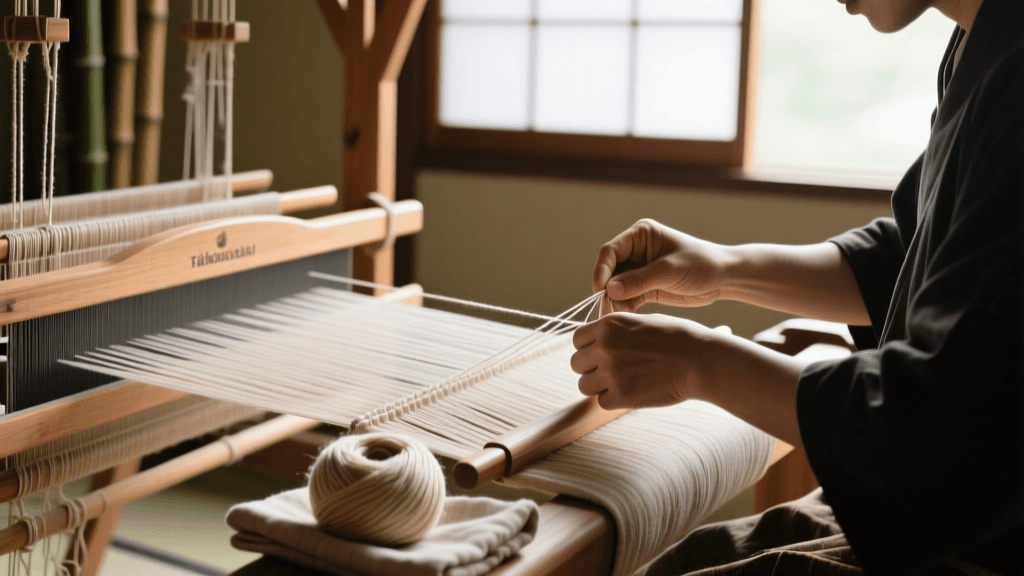
The 2026 Renaissance of Japanese Hand-Weaving
As the global textile industry pivots toward hyper-artisanal, sustainable, and culturally rooted fashion in 2026, the mastery of Japanese traditional looms has experienced a profound renaissance. Contemporary weavers, preservationists, and fashion designers are increasingly turning to the historic methods of the Jibata (traditional floor loom) and the Takahata (treadle loom) to create garments that possess a soul and tactile richness impossible to replicate with modern industrial machinery. The Japanese government's recently expanded 2026 Heritage Artisan Grant has further catalyzed this movement, providing funding for apprenticeships and the restoration of antique wooden looms across Kyoto, Fukui, and Ishikawa prefectures.
For the modern textile artist, understanding the mechanical nuances, sourcing authentic equipment, and mastering the sensory experience of Japanese hand-weaving is essential. This comprehensive guide explores the technical specifications of traditional Japanese looms, the intricate methods of Tsumugi and Kasuri weaving, and actionable advice for setting up your own traditional weaving studio in 2026.
Understanding the Jibata: The Intimacy of the Floor Loom
The Jibata is the quintessential Japanese traditional floor loom, characterized by its low profile and the unique way the weaver interacts with the warp tension. Unlike Western looms that rely on heavy mechanical ratchets and frame-based tensioning, the Jibata utilizes a back-strap system. The weaver sits on a low wooden stool, with a strap wrapped around their lower back, connecting directly to the cloth beam (maku). The weaver's own body weight and subtle shifts in posture dictate the tension of the warp threads.
This intimate physical connection is not merely a historical quirk; it is a vital technical requirement for weaving Tsumugi (pongee silk). Tsumugi yarns are spun from silk waste and cocoons, resulting in a beautifully irregular, slubbed thread that is highly prone to snapping under rigid, mechanical tension. By feeling the tension through their spine, a master weaver can instantly adjust their posture to accommodate a thick slub in the silk, preventing breakage. The rhythmic, full-body engagement required by the Jibata is recognized as a cornerstone of Japanese textile heritage, a fact underscored by its inclusion on the UNESCO Intangible Cultural Heritage list, which specifically honors traditions like Yuki-tsumugi.
Anatomy of the Jibata
- Chikiri (Warp Beam): The rear wooden cylinder where the un-woven warp threads are stored. In 2026, many restored antique chikiri are being fitted with discreet digital tension sensors to help apprentices learn the 'feel' of correct warp tension.
- Osa (Reed/Batten): A meticulously crafted bamboo or metal comb that spaces the warp threads and is used to beat the weft into place. The osauchi (beating) motion on a Jibata is a sweeping, full-arm arc that requires significant core strength.
- Himo (Back-strap): Traditionally made of hemp or thick cotton, modern weavers often use ergonomically padded leather straps to reduce lumbar strain during long weaving sessions.
The Takahata: Evolution of the Treadle Loom
While the Jibata excels in rustic, slubbed silks and rural cottons, the Takahata (treadle loom) represents the evolution of Japanese weaving for complex, high-thread-count textiles. Introduced and refined during the Edo period to meet the demands of the samurai and aristocratic classes, the Takahata elevates the weaver off the ground and utilizes foot treadles (fumiki) to lift the harnesses, creating the shed.
This mechanical shedding frees the weaver's hands to focus entirely on throwing the shuttle and beating the reed, allowing for significantly faster production and the management of complex multi-shaft patterns. The Takahata is the loom of choice for Nishijin-ori (Kyoto brocade) and intricate twill weaves. In 2026, advanced Takahata setups often incorporate hikibata (drawloom) attachments, where a second person (or a modernized jacquard punch-card system) controls the pattern harnesses from above, allowing for the creation of breathtaking, multi-colored pictorial brocades.
Comparison: Jibata vs. Takahata in 2026
Choosing between these two looms depends entirely on the textile you wish to produce, your available studio space, and your budget. Below is a structured comparison for artisans evaluating their options this year.
| Feature | Jibata (Floor Loom) | Takahata (Treadle Loom) |
|---|---|---|
| Tension Control | Body weight (back-strap) | Mechanical frame & ratchets |
| Shedding Mechanism | Manual heddle rods | Foot treadles (2 to 8+ shafts) |
| Primary Textiles | Tsumugi, Kasuri, rural cottons | Brocade, complex twills, fine silks |
| Weaver Posture | Seated low on a stool | Seated elevated on a bench |
| 2026 Avg. Restored Cost | ¥250,000 - ¥450,000 | ¥600,000 - ¥1,200,000 |
| Studio Footprint | Approx. 1.5m x 2m | Approx. 2m x 3.5m |
Sourcing Authentic Looms and Materials in 2026
Acquiring an authentic, functional Japanese loom requires navigating a specialized market. In 2026, the export of registered cultural properties is strictly regulated by the Japanese government. Before purchasing an antique loom for international shipping, you must verify that it does not hold a protected national or prefectural heritage status, which would prohibit its export.
The best avenues for sourcing include the renowned Toji Temple antique markets in Kyoto, specialized architectural salvage dealers in Kanazawa, and direct commissions from master woodworkers in Fukui who build new Takahata frames using traditional joinery (sashimono) and sustainably harvested hinoki cypress. For materials, the 2026 silk harvest has seen a surge in organic, pesticide-free sericulture in Gunma prefecture. Artisans are increasingly sourcing raw silk directly from these cooperatives, utilizing traditional zaguri (hand-reeling) methods to maintain the natural sericin coating that gives hand-woven silk its distinctive luster and crisp hand-feel.
Mastering Kasuri and Tsumugi Techniques
The loom is merely the instrument; the true magic of Japanese weaving lies in the preparation of the yarn. Two techniques stand out as the pinnacle of the craft: Kasuri and Tsumugi.
The Mathematical Precision of Kasuri (Ikat)
Kasuri is the Japanese iteration of ikat, where threads are resist-dyed before weaving to create blurred, geometric, or pictorial patterns. The hallmark of authentic Japanese Kasuri is the microscopic precision of the pattern alignment. In 2026, while the dyeing and tying remain entirely manual, many weaving studios have adopted low-level laser guides mounted above the Takahata. These lasers project a grid onto the warp, helping the weaver align the dyed Kasuri splashes perfectly during the beating process, reducing the margin of error without compromising the hand-made integrity of the textile.
The Soul of Tsumugi (Pongee Silk)
Tsumugi weaving transforms what was once considered silk waste into some of the most expensive and revered textiles in the world. The process begins with mawata (silk floss), which is hand-stretched and spun into yarn. The resulting thread is uneven, possessing a nubby texture that catches the light beautifully. When weaving Tsumugi on a Jibata, the weaver must employ a lighter, more forgiving beat with the osa (batten) to prevent crushing the delicate slubs. The resulting fabric is incredibly durable, breathable, and develops a richer patina with decades of wear.
Warping, Dressing, and Loom Maintenance
For artisans setting up a Japanese loom, the warping process (seihin) is where the foundation of the textile is laid. Unlike Western warping mills, traditional Japanese warping often utilizes a vertical kase-age (swift) and a series of wooden pegs arranged in a specific geometric pattern on the studio wall to measure the exact length and cross of the warp. Maintaining the perfect cross (kousa) is critical; a single misplaced thread in a 1,200-thread warp can ruin the tensioning of the entire piece.
Maintenance of the wooden loom is a daily ritual. The bamboo dents of the osa (reed) must be kept pristine. Weavers in 2026 continue to use traditional tsubaki-abura (camellia oil) applied with a soft cloth to condition the wooden batten and the shuttle race, ensuring the wooden shuttle (hi) glides frictionlessly across the warp. The oil prevents the hinoki wood from drying out and splintering, which could otherwise snag and destroy delicate silk threads.
The Sensory Experience and Modern Application
To weave on a Japanese traditional loom is to engage in a deeply sensory meditation. The studio fills with the earthy scent of raw silk, indigo, and camellia oil. The auditory landscape is dominated by the rhythmic clack-thump of the wooden shuttle hitting the receiver, followed by the heavy, resonant thud of the batten beating the weft into the cloth. This rhythm becomes a heartbeat for the artisan, dictating the pace of work and the flow of breath.
In 2026, contemporary fashion houses are increasingly collaborating with these traditional weavers, integrating Kasuri and Tsumugi textiles into modern silhouettes that transcend the traditional kimono. By understanding the deep historical context preserved in institutions like the Victoria and Albert Museum's Asian textile archives, modern designers can honor the lineage of these garments while pushing the boundaries of sustainable, slow fashion.
Conclusion: Preserving the Thread of Heritage
The survival of the Jibata and Takahata in 2026 is a testament to the enduring value of human touch in an increasingly automated world. Whether you are a seasoned textile artist looking to incorporate Japanese tensioning methods into your practice, or a preservationist working to restore a century-old treadle loom, the journey requires patience, physical endurance, and a profound respect for the materials. By mastering these traditional hand-weaving methods, today's artisans ensure that the vibrant, tactile legacy of Japanese textiles will continue to drape, move, and inspire for generations to come.