Astana Tombs Silk Road Textiles: 2026 Archaeological Revival
Unearthing the Threads of the Ancient Silk Road
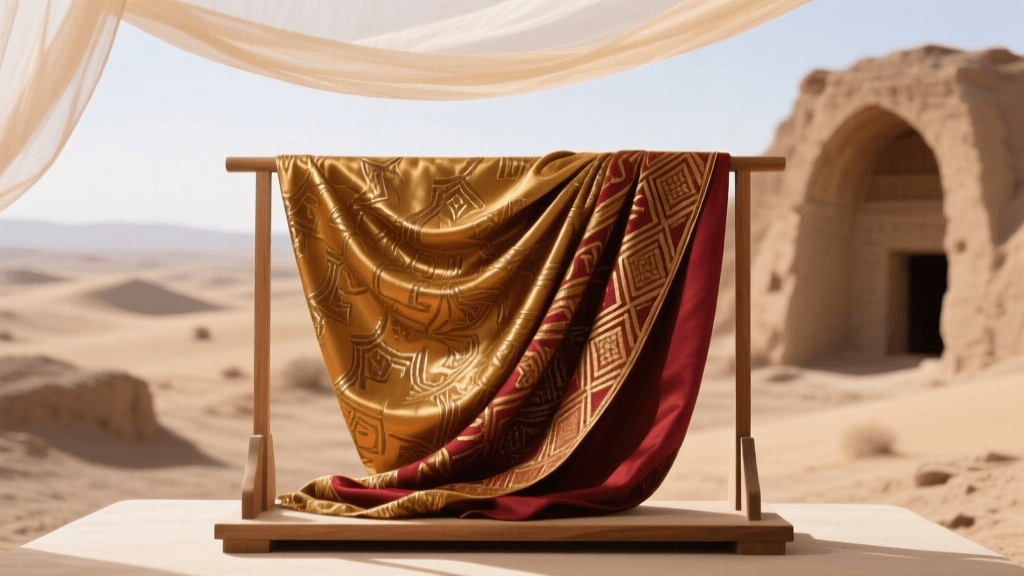
The Silk Road was never merely a conduit for the exchange of goods; it was a vibrant artery of cultural, artistic, and technological cross-pollination. Among the most breathtaking remnants of this ancient global network are the textiles preserved in the arid sands of the Taklamakan Desert. In 2026, a renewed wave of archaeological focus and advanced conservation technologies has brought the magnificent samite silks of the Astana Tombs back into the global spotlight. These extraordinary finds are not only rewriting our understanding of ancient Eurasian weaving techniques but are also serving as the foundational inspiration for the booming Xin Zhongshi (New Chinese Style) fashion movement.
For historians, conservators, and textile enthusiasts, the Astana Tombs in Turpan (Xinjiang) represent an unparalleled time capsule. The extreme dryness of the Turpan Depression has miraculously preserved organic materials that would have rotted away centuries ago in more humid climates. Today, as we explore the intersection of ancient craftsmanship and 2026 digital conservation, we uncover how the pearl-roundel motifs and complex weft-faced structures of Sogdian and Tang dynasty weavers are being reborn.
The Astana Tombs: A Desert Time Capsule
Located near the ancient oasis city of Gaochang, the Astana Tombs served as the burial ground for the region's elite from the Western Jin to the Tang Dynasty (roughly the 3rd to the 8th centuries CE). Because of the region's hyper-arid climate, the tombs yielded perfectly preserved garments, tapestries, and silk banners. According to the UNESCO Silk Roads Programme, these sites provide some of the most critical physical evidence of the syncretism between Chinese, Sogdian, Sasanian, and Hellenistic artistic traditions.
In early 2026, the Xinjiang Uygur Autonomous Region Museum, in collaboration with international textile conservation institutes, unveiled a new wing dedicated entirely to the digital mapping and physical restoration of fragile Silk Road organics. This initiative has allowed researchers to study the microscopic dye structures of unearthed samite without exposing the fragile artifacts to destructive light or oxygen.
Understanding Samite: The Pinnacle of Silk Road Weaving
To appreciate the Astana finds, one must understand the textile technique that defines them: samite. Derived from the Greek word hexamiton (meaning six threads), samite is a weft-faced compound twill. Unlike standard plain weave or simple twill, samite utilizes a complex system of multiple warp and weft threads, allowing weavers to create dense, heavy, and highly lustrous fabrics with intricate, multi-colored patterns.
During the height of the Silk Road exchanges, Sogdian weavers from Central Asia were the undisputed masters of samite. They introduced iconic motifs to the Chinese market, which were rapidly adopted and adapted by Tang dynasty imperial workshops. The structural integrity of samite made it highly prized for heavy outer garments, equestrian trappings, and diplomatic gifts. In 2026, academic textile analysis using AI-assisted thread-counting algorithms has revealed that some of the finest Astana samites boast an astonishing density of up to 120 weft threads per centimeter, a feat that challenges even modern computerized jacquard looms.
2026 Breakthroughs in Multispectral Textile Conservation
One of the greatest challenges in studying excavated Silk Road textiles is the fading of ancient organic dyes. What appears to the naked eye as a dull, monochromatic brown fragment may have once been a vibrant tapestry of madder red, indigo blue, and weld yellow. This year, conservators have deployed advanced multispectral imaging and Raman spectroscopy to virtually "re-dye" these artifacts in digital space.
By capturing the fluorescent signatures of degraded dye molecules, researchers at the Victoria and Albert Museum's Asian Collections and partner labs have successfully reconstructed the original palettes of the Astana silks. This non-invasive 2026 technology has revealed that Sogdian weavers utilized complex mordanting techniques, combining alum and iron to create subtle color gradients within a single weft thread—a level of sophistication previously thought to be a later European invention.
Key Silk Road Motifs and Their 2026 Revival
The iconography found on the Astana samites is a visual dictionary of Silk Road syncretism. Below is a breakdown of the most prominent motifs discovered in the tombs and how they are being translated into contemporary design this year.
| Motif | Cultural Origin | Ancient Symbolism | 2026 Xin Zhongshi Application |
|---|---|---|---|
| Pearl Roundel | Sasanian / Sogdian | Divine glory, cosmic boundary, protection | Structured outerwear lapels, luxury streetwear jackets |
| Confronting Cocks | Tang / Sogdian | Yang energy, the dawn, martial vigilance | Home textiles, silk scarves, gender-fluid blouses |
| Boar Head | Sogdian | Martial prowess, royal hunting rights | Menswear embroidery, leather goods hardware |
| Lion with Ribbons | Hellenistic / Persian | Royalty, solar power, Buddhist guardian | Haute couture evening wear, ceremonial robes |
The Xin Zhongshi Movement: Ancient Looms Meet Modern Streetwear
The Xin Zhongshi (New Chinese Style) movement has dominated Asian fashion weeks in 2026, moving beyond simple mandarin collars and traditional embroidery to embrace deep, historically accurate textile structures. Independent designers in Shanghai and Chengdu are collaborating directly with archaeological institutes to license the digital multispectral scans of the Astana samites.
Using state-of-the-art electronic jacquard looms, these designers are recreating the weft-faced compound twill structure of Sogdian samite, but utilizing modern, sustainable fibers like lotus silk, recycled cupro, and cruelty-free peace silk. The result is a garment that carries the exact visual and tactile weight of an 8th-century diplomatic robe, but tailored for the modern urbanite. As highlighted by cultural initiatives like The Silkroad Project, this modern revival is not mere appropriation; it is a profound continuation of the Silk Road's original spirit of cross-cultural adaptation and innovation.
Museum-Grade Storage for Modern Silk Replicas
Whether you are a collector of high-end Xin Zhongshi replica samites or a curator managing historical textiles, proper storage is paramount. The complex protein structure of silk makes it highly susceptible to light degradation, moisture-induced mold, and protein-eating pests. In 2026, the standard for archival textile storage has become highly digitized and precise.
1. Climate Control and Smart Monitoring
Silk must be stored in a stable environment. The ideal temperature is between 18°C and 20°C (64°F - 68°F), with a relative humidity (RH) strictly maintained between 45% and 55%. Fluctuations in humidity cause the silk fibers to expand and contract, leading to micro-fractures in the weft threads. We recommend utilizing 2026 smart hygrometer systems, such as the SensorPush HX or Govee Wi-Fi Thermometer, which send real-time alerts to your smartphone if the RH deviates by more than 2%.
2. Archival Enclosures and Acid-Free Buffers
Never store samite or heavy silk garments on wire hangers or in standard plastic garment bags, which can off-gas volatile organic compounds (VOCs) that yellow the silk. Instead, garments should be padded with unbleached, washed muslin and stored flat in acid-free, lignin-free archival boxes. For heavily embroidered or raised weft-faced textiles, use custom-carved Ethafoam supports to prevent the weight of the fabric from crushing the intricate three-dimensional weave structures over time.
3. Light Mitigation
Ultraviolet (UV) and even high-lux visible light will permanently sever the amino acid chains in silk proteins. When displaying or inspecting your textiles, use LED lighting with a UV output of zero microwatts per lumen, and keep the lux level below 50. When stored, textiles must be kept in complete darkness. If framing a fragment of replica Astana samite, always use Optium Museum Acrylic, which provides 99% UV filtration and an anti-static surface that prevents fibers from pulling away from the weave.
Conclusion: A Continuous Thread
The Silk Road was never a static historical event; it is an ongoing dialogue between East and West, past and present. The 2026 archaeological advancements at the Astana Tombs have done more than just preserve fragile threads; they have provided a vibrant, data-rich palette for a new generation of designers and historians. By understanding the complex engineering of samite and respecting the rigorous conservation methods required to protect it, we ensure that the legacy of the ancient Silk Road continues to weave its way through the fabric of modern culture.