Silk Road Samite Weaves: 2026 Archaeological Textile Revivals
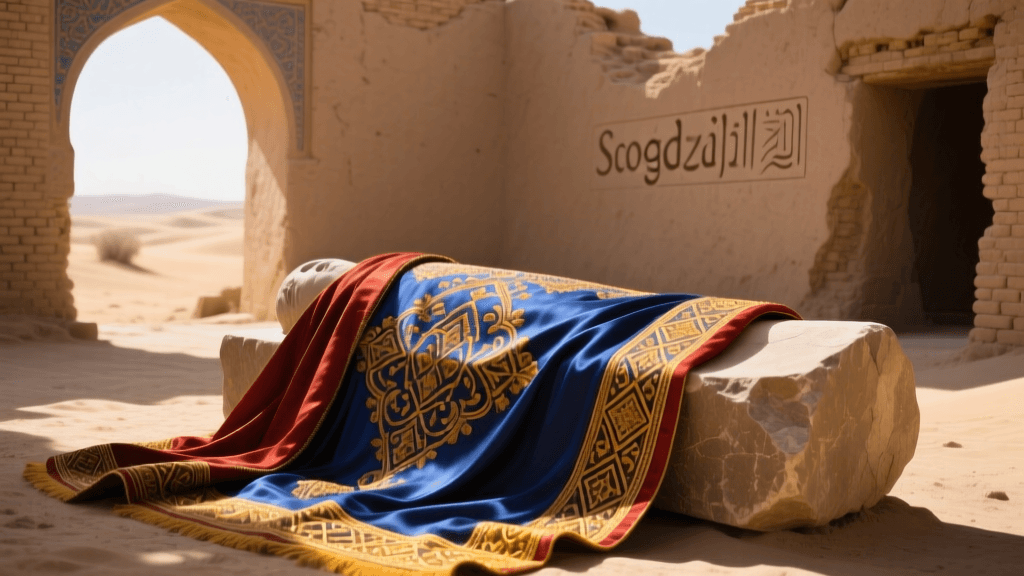
The Renaissance of Silk Road Textiles in 2026
The Silk Road was not merely a conduit for spices, precious metals, and philosophy; it was the ultimate ancient superhighway for textile innovation. In 2026, a monumental renaissance in archaeological textile analysis has brought the magnificent Sogdian samite weaves of the Astana Tombs back into the global spotlight. Thanks to unprecedented collaborations between international material scientists and traditional artisans, the lost techniques of Central Asian weft-faced compound twills are being meticulously reconstructed. For collectors, historians, and fashion archivists, the 2026 revival of these Silk Road textiles represents a watershed moment in the intersection of ancient heritage and cutting-edge technology.
The Astana Tombs and the Sogdian Legacy
Located in the arid Turpan Depression of Xinjiang, the Astana Tombs have long served as a time capsule for the Silk Road. The extreme dryness of the Taklamakan Desert’s edge has preserved organic materials that would have rotted away in more humid climates. Among the most prized artifacts recovered from these burial sites are the Sogdian silks, dating primarily from the 6th to the 8th centuries. The Sogdians, an Eastern Iranian people, were the premier merchants of the Silk Road. According to the UNESCO Silk Roads Programme, the Sogdians were instrumental in facilitating the exchange of sericulture techniques and textile motifs between the Sasanian Empire, the Byzantine world, and Tang Dynasty China.
The hallmark of Sogdian textile artistry was samite, a luxurious weft-faced compound twill. Unlike the warp-faced silks traditionally produced in Han Dynasty China, samite allowed weavers to create complex, multi-colored curvilinear designs, such as the famous 'Pearl Roundel' motif, which featured confronting animals enclosed in borders of pearls. These designs were heavily influenced by Sasanian Persian art and became highly sought after by the Tang elite.
2026 Breakthroughs: Micro-CT and AI Thread Mapping
For decades, the extreme fragility of the Astana silks meant that physical analysis was limited to non-invasive surface observation. However, in early 2026, the 'Digital Silk Road Textile Initiative' unveiled a revolutionary methodology. By utilizing high-resolution micro-CT (computed tomography) scanning combined with advanced AI thread-mapping algorithms, researchers can now visualize the internal structure of desiccated, millennia-old silk threads without unrolling or touching the garments.
This 2026 technological leap has allowed conservators to calculate the exact twist-per-meter, tension, and thread count of 7th-century z-spun and s-twisted silk fibers. The AI models have successfully decoded the complex lifting sequences required to weave the intricate pearl roundels on traditional drawlooms. As noted by the Metropolitan Museum of Art's Heilbrunn Timeline of Art History, the transmission of these complex weaving structures fundamentally altered the trajectory of global textile production, eventually influencing the development of European jacquard weaving centuries later. Today, modern artisans in Hangzhou and Kyoto are using these 2026 AI-generated weave matrices to program modern electronic jacquard looms, producing historically accurate revival fabrics that mirror the exact drape and structural integrity of the Tang Dynasty originals.
Comparative Analysis of Ancient Silk Road Weaves
To understand the uniqueness of the Sogdian samite revival, it is essential to distinguish it from other prominent historical weaves. The table below outlines the structural differences between the major textile types exchanged along the Silk Road.
| Weave Type | Structural Basis | Primary Era of Exchange | Key Visual & Tactile Traits |
|---|---|---|---|
| Sogdian Samite | Weft-faced compound twill | 6th - 8th Century | Heavy drape, elaborate curvilinear motifs, distinct diagonal ribbing on the reverse. |
| Han Jin | Warp-faced compound tabby | 2nd Century BCE - 3rd Century CE | Lightweight, geometric or cloud motifs, colors determined by warp threads. |
| Tang Taquete | Weft-faced compound tabby | 7th - 9th Century | Smooth surface, bold block colors, often used for intricate floral and bird patterns. |
| Sasanian Damask | Warp-faced satin/twill contrast | 5th - 7th Century | Subtle tone-on-tone patterns, highly reflective surface, lighter weight than samite. |
Actionable Guide: Sourcing Authentic 2026 Revival Samite
With the surge in interest surrounding the 2026 Astana Tomb exhibitions, the market has seen an influx of fabrics marketed as 'Silk Road Revivals.' For serious collectors, museum curators, and high-end fashion designers, distinguishing a genuine structural reconstruction from a mere digital print on satin is critical. Here is your actionable guide to authenticating and sourcing true Sogdian samite revivals in 2026.
1. Verify the Weave Structure and Thread Count
True samite is a weft-faced compound twill. When examining a revival piece, use a 2026-standard digital thread counter loupe (widely available from textile conservation suppliers). Authentic reconstructions based on the latest Astana AI models should exhibit a dense warp count of approximately 140 to 160 ends per inch, with multiple weft systems (often three or more colors) bound in a twill structure. If the pattern is printed onto a flat satin ground, it is not a structural revival. The reverse side of true samite will show a distinct, textured diagonal ribbing and floating weft threads, whereas printed satin will show the pattern faintly bleeding through a smooth back.
2. Assess the Silk Weight and Degumming
Ancient Sogdian silks were remarkably heavy and durable, designed to withstand the rigors of transcontinental trade and to provide structural warmth. When commissioning or purchasing 2026 revival samite, insist on a minimum weight of 24 momme (approximately 92 grams per square meter). Furthermore, the silk must be fully degummed. The 2026 micro-CT scans revealed that ancient sericin (the natural gum of the silk worm) was meticulously boiled off using alkaline ash solutions before weaving to ensure the fibers could be tightly packed. Modern 24-momme degummed mulberry silk will possess a supple, heavy drape that closely mimics the archaeological specimens.
3. Demand Elemental Dye Verification
The color palette of the Astana silks was derived from specific botanical and mineral sources. The vibrant reds were achieved using madder root (Rubia tinctorum) mordanted with alum, while the deep blues relied on indigo. In 2026, high-end textile galleries and authentication labs utilize portable XRF (X-ray fluorescence) scanners to verify the elemental markers of natural mordants on the fabric. A genuine revival piece dyed with traditional methods will show specific aluminum and iron signatures consistent with historical madder dyeing processes, whereas synthetic 2026 azo dyes will lack these elemental markers and exhibit uniform fluorescence under UV light. Always request an XRF dye certificate when purchasing investment-grade revival textiles.
4. Inspect the Selvedge Finishing
Archaeological fragments often retain their selvedges, which provide clues about the loom width and finishing techniques. The 2026 AI reconstructions indicate that Sogdian weavers utilized tightly twisted, multi-ply silk threads for the selvedge to prevent the heavy weft-faced fabric from fraying. When evaluating a modern revival, check the edges: authentic artisanal reproductions will feature a reinforced, tightly woven tubular or multi-ply selvedge, rather than the serged or heat-cut edges typical of mass-produced modern jacquards.
Where to Experience the 2026 Silk Road Exhibitions
For those wishing to view the archaeological originals alongside their 2026 modern reconstructions, several major institutions are hosting landmark exhibitions this year. The China National Silk Museum in Hangzhou has launched the 'Threads of the Tarim: 2026' interactive pavilion, which features live demonstrations of the AI-mapped drawloom techniques. Visitors can observe master weavers translating the digital matrices into physical samite in real-time. Similarly, the Victoria and Albert Museum in London has integrated the new Astana micro-CT visualizations into their permanent Central Asian textile galleries, allowing visitors to use augmented reality interfaces to 'unroll' and inspect the fragile tomb silks in stunning three-dimensional detail.
Conclusion
The 2026 revival of Sogdian samite is more than a triumph of archaeological conservation; it is a resurrection of a lost material language. By leveraging micro-CT scanning, AI thread mapping, and rigorous historical dyeing practices, modern artisans are bridging a millennium-long gap in textile history. For the discerning collector, understanding the structural and elemental hallmarks of these weaves ensures that the legacy of the Silk Road is preserved not just in museum archives, but in the living, breathing drape of authentic, historically accurate garments.