Astana Silk Road Textiles: 2026 Archaeological Finds
The Crossroads of Threads: Unearthing Sogdian Samite in 2026
The Silk Road was never merely a conduit for the exchange of goods; it was a vibrant artery of cultural, technological, and artistic synthesis. Nowhere is this more evident than in the astonishing textile fragments recovered from the Astana Cemetery in Turpan, Xinjiang. As we move through 2026, a new wave of archaeological analysis and multispectral imaging has revitalized our understanding of these ancient fabric exchanges. The Astana tombs, exceptionally preserved by the arid Taklamakan Desert climate, continue to yield secrets about the Sogdian merchants who acted as the primary intermediaries of the Silk Road between the 4th and 8th centuries.
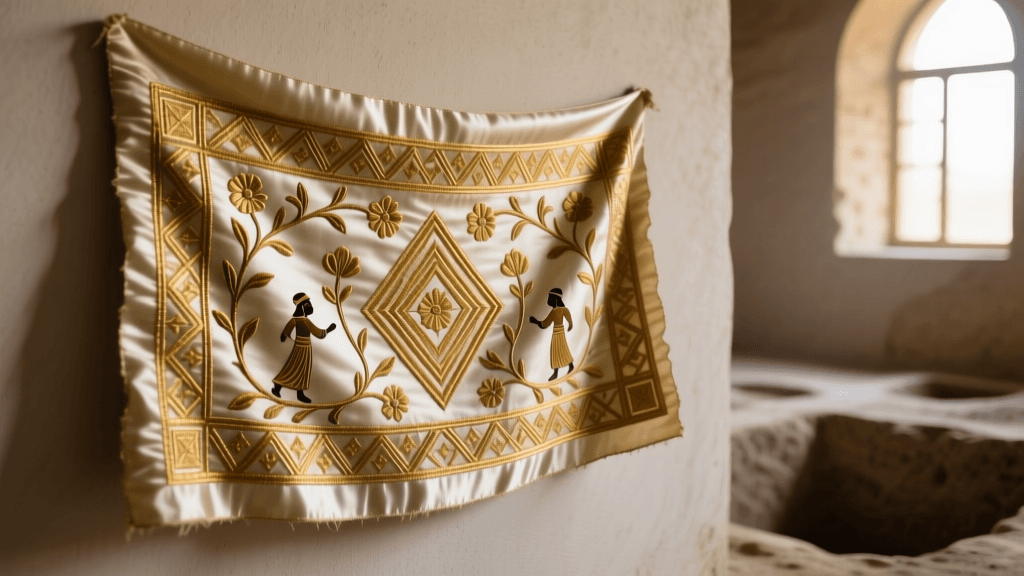
In 2026, the focus of the archaeological community has shifted toward the intricate samite silks found in these tombs. Samite, a luxurious weft-faced compound twill, represents a fascinating technological cross-pollination. Originally developed in Sasanian Persia and mastered by Sogdian weavers in Central Asia, this complex weaving technique was eventually adopted and adapted by Chinese artisans during the Tang Dynasty. The recent 2026 conservation initiatives led by regional heritage authorities have successfully stabilized dozens of previously fragile samite fragments, revealing vibrant pearl-roundel motifs and Sogdian inscriptions that had faded from the naked eye over the past millennium.
Decoding the Weft: The Technical Marvel of Samite Silk
To truly appreciate the 2026 Astana findings, one must understand the mechanical brilliance of samite. Unlike traditional Chinese warp-faced silks, where the warp threads dominate the surface and dictate the pattern, samite relies on a complex system of multiple weft threads. According to the Metropolitan Museum of Art's Heilbrunn Timeline of Art History, the transmission of weft-faced weaving technologies from West to East fundamentally altered the trajectory of Chinese textile production.
Sogdian samite required an advanced drawloom setup. The weaver had to manage a main warp, a binding warp, and several sets of colored wefts. This allowed for incredibly dense, polychrome patterns that were highly resistant to wear, making them ideal for the rugged conditions of Silk Road travel and the high-status burial garments of the Turpan elite. The 2026 digital reconstruction projects utilizing 3D loom simulations have demonstrated that weaving a single meter of high-quality Astana samite would have taken an ancient artisan several weeks of painstaking labor.
2026 Multispectral Imaging Breakthroughs
One of the most thrilling developments in Silk Road archaeology this year is the application of non-invasive multispectral imaging. Many of the textile fragments excavated in the mid-20th century appeared monochromatic or heavily degraded due to centuries of light exposure and oxidative stress. However, the 2026 imaging protocols deployed at the Xinjiang Regional Museum have mapped the chemical signatures of ancient organic dyes, effectively "re-coloring" the textiles in digital space.
- Madder Root (Rubia tinctorum): Imaging revealed deep, complex reds in the pearl-roundel borders, indicating a sophisticated mordanting process using alum, likely imported from the Iranian plateau.
- Indigo (Indigofera tinctoria): Traces of indigo were found in the background wefts of equestrian motifs, proving that Central Asian dyeing practices were fully integrated into Turpan's local workshops by the 7th century.
- Safflower (Carthamus tinctorius): Delicate pink hues, previously invisible to the naked eye, were detected in the lotus motifs, showcasing the use of highly fugitive dyes reserved exclusively for burial garments.
Table: Key Silk Road Textile Motifs Found at Astana
| Motif | Cultural Origin | Symbolic Meaning | 2026 Conservation Status |
|---|---|---|---|
| Pearl Roundel | Sasanian / Sogdian | Royalty, divine protection, cosmic boundaries | Stabilized via nano-cellulose; digitally reconstructed |
| Confronted Boars | Persian | Martial prowess, hunting nobility | Fragile; kept in argon-gas climate enclosures |
| Lotus Blossom | Indian / Chinese | Purity, spiritual rebirth, Buddhist influence | Fully restored; on display in Hangzhou |
| Paired Ducks | Central Asian | Marital fidelity, harmony, water abundance | Undergoing active dye-consolidation treatment |
Modern Conservation Meets Ancient Looms
The physical preservation of these ancient textiles is a monumental task. The UNESCO Silk Roads Programme has continuously emphasized the importance of preserving the tangible heritage of these transcontinental routes. In 2026, conservationists are moving away from synthetic adhesives that were popular in the 1990s, which often caused long-term yellowing and fiber embrittlement. Instead, the current standard involves the application of bacterial cellulose nanofibers. This biomaterial mimics the structure of the original silk fibroin, providing structural support to shattered weft threads without altering the fabric's microscopic drape or chemical composition.
Furthermore, the Chinese National Silk Museum in Hangzhou has partnered with international textile engineers to physically recreate Astana samite using historically accurate replica drawlooms. These 2026 physical reproductions are not merely museum curiosities; they are vital academic tools. By attempting to weave the exact Sogdian patterns found in Turpan, modern weavers have uncovered lost tensioning techniques and loom-weight configurations that were previously misunderstood in academic literature.
How to Experience the Silk Road Textile Exhibitions in 2026
For textile enthusiasts, historians, and travelers, 2026 offers unprecedented access to these Silk Road marvels. If you are planning to trace the threads of the Sogdian merchants, here is your actionable guide to experiencing the Astana textile heritage this year.
1. Visit the Xinjiang Regional Museum in Urumqi
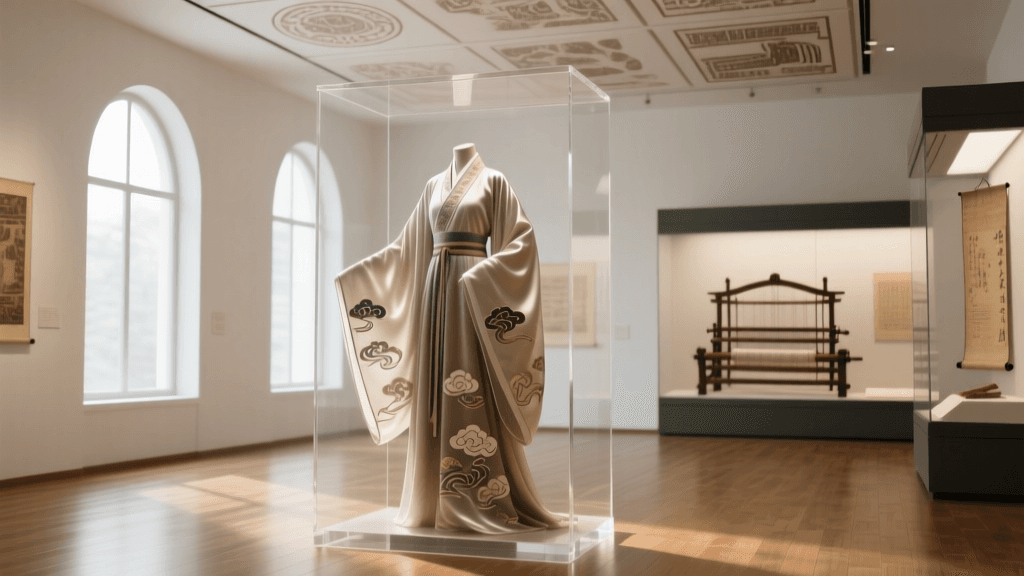
While the Astana site itself is an active archaeological zone and largely closed to casual tourism, the Xinjiang Regional Museum in Urumqi houses the primary collection. In 2026, the museum unveiled a dedicated, climate-controlled "Silk Road Textile Pavilion." Actionable Tip: Book your entry via the official WeChat mini-program at least two weeks in advance. The pavilion limits daily foot traffic to 400 visitors to maintain strict humidity controls (kept precisely at 50% RH to prevent silk desiccation). Visit on a Tuesday morning for the lowest crowd density and optimal viewing of the multispectral digital displays.
2. Trace the Route to Turpan
Turpan is accessible via a swift high-speed rail journey from Urumqi (approximately 1.5 hours). While you cannot enter the Astana tombs, the Turpan Museum offers a localized, intimate collection of wooden loom parts and raw silk cocoons recovered from the surrounding oasis settlements. Actionable Tip: The best time to visit Turpan is late September 2026. The brutal summer heat has subsided, and the local grape harvest festivals provide a vibrant cultural backdrop that mirrors the bustling oasis markets of the 7th century.
3. The Hangzhou Connection: Chinese National Silk Museum
To see the physical 2026 samite reconstructions and the finished conservation work, you must visit the Chinese National Silk Museum in Hangzhou. As documented in the broader context of Asian textile preservation by institutions like the Victoria and Albert Museum, cross-institutional knowledge sharing has elevated Hangzhou to the global epicenter of silk conservation. Actionable Tip: Attend the "Loom of the Sogdians" interactive workshop held on the first Saturday of every month. Here, visitors can operate a miniature drawloom and attempt to weave a basic weft-faced twill, gaining a profound, tactile appreciation for the sheer physical endurance required by ancient Silk Road weavers.
Conclusion
The 2026 archaeological and conservation updates from the Astana Cemetery remind us that textiles are not mere garments; they are complex historical documents woven from the threads of multiple civilizations. The Sogdian samite silks of Turpan stand as a testament to an era where borders were porous, and innovation was driven by the relentless exchange of ideas across the Eurasian steppe. As modern technology continues to illuminate the faded dyes and hidden inscriptions of the past, the Silk Road continues to speak to us, one weft at a time.