Astana Tomb Textiles: 2026 Silk Road Finds & Museum Exhibits
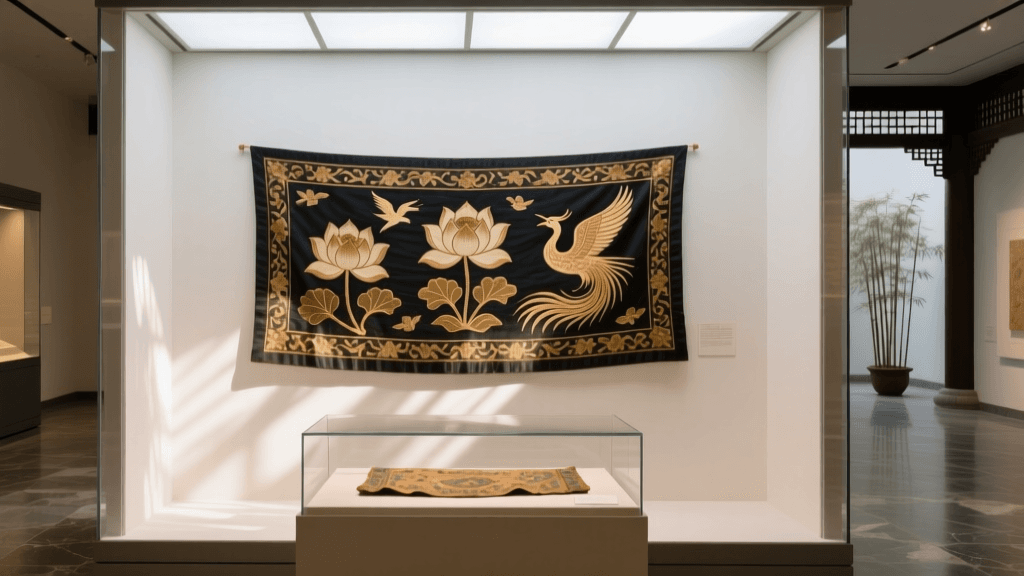
The Astana Tombs: A Time Capsule of Silk Road Fashion
The Silk Road was not merely a conduit for spices, jade, and precious metals; it was the ultimate ancient superhighway for fashion, textile technology, and cultural synthesis. Among the most breathtaking archaeological treasures to emerge from this vast transcontinental network are the textiles of the Astana Tombs. Located near the ancient oasis city of Gaochang in modern-day Turfan, Xinjiang, the Astana Tombs served as the primary burial ground for the region’s elite from the Western Jin to the Tang Dynasty (3rd to 8th centuries CE). As of 2026, these archaeological finds continue to reshape our understanding of early globalized fashion and cross-cultural weaving techniques.
The extreme aridity of the Taklamakan Desert’s edge has acted as a natural desiccant, preserving organic materials that would have perished in more humid climates. When archaeologists first excavated the site, they uncovered mummies adorned in vibrant, intricately patterned silks, hemp, and wool garments. Today, the UNESCO Silk Roads Programme highlights the Astana finds as some of the most critical physical evidence of the sartorial exchanges between Han Chinese, Sogdian merchants, and Persian artisans. For textile historians and enthusiasts in 2026, the Astana textiles offer an unparalleled, high-fidelity window into the wardrobes of the ancient Silk Road elite.
Decoding Sogdian Samite and the Pearl Roundel Motif
To truly appreciate the Astana finds, one must understand the technical and aesthetic revolution brought about by Sogdian weavers. The Sogdians, an Eastern Iranian people who dominated Silk Road commerce, introduced Central and East Asian markets to samite—a luxurious, weft-faced compound twill silk. Unlike traditional Chinese jin (warp-faced compound tabby), which relied on the warp threads to create patterns, samite allowed for much larger, more complex, and vibrantly colored weft patterns.
The most iconic design to emerge from this cross-cultural exchange is the "pearl roundel" motif. Found extensively in the Astana Tombs, these designs feature pairs of facing animals (such as boars, peacocks, or winged horses) enclosed within borders of pearl-like dots. This motif has its roots in Sasanian Persia but was adapted by Sogdian and Chinese weavers to suit local tastes. In 2026, advanced dye analysis of these roundels has revealed the use of imported indigo and madder, alongside locally sourced desert plant dyes, proving that Gaochang was not just a transit point, but a thriving, localized hub of textile manufacturing.
Warp-Faced vs. Weft-Faced: A Technical Comparison
- Chinese Jin (Warp-Faced): The pattern is created by the warp threads. It produces a denser, more rigid fabric with intricate, smaller-scale geometric or cloud motifs. It was the dominant luxury silk in China prior to heavy Western influence.
- Sogdian Samite (Weft-Faced): The pattern is created by the weft threads. This technique allows for broader, more fluid designs, larger repeat patterns (like the pearl roundels), and a heavier, more drapable fabric ideal for the flowing caftans favored by Central Asian nobility.
2026 Breakthroughs in Archaeological Textile Conservation
Handling textiles that are over a millennium old requires extraordinary care. In 2026, the field of archaeological textile conservation has undergone a paradigm shift, moving away from invasive physical backing and toward non-destructive, high-tech stabilization. The fragile silk fragments pulled from the Astana Tombs are highly susceptible to light degradation, fluctuating humidity, and mechanical stress.
This year, leading conservation labs have standardized the use of AI-assisted multispectral fragment matching. Because many Astana garments were fragmented or repurposed as burial shrouds and paper-mache coffin accoutrements, reassembling them physically is often impossible. AI algorithms now scan thousands of micro-fragments, analyzing weave density, dye spectra, and thread twist angles to digitally reconstruct the original garments in 3D space. This allows museums to display a "complete" digital hologram of a Tang Dynasty caftan alongside the fragile, stabilized physical fragments.
Furthermore, nano-cellulose consolidation has become the gold standard for physical stabilization in 2026. Conservators apply a microscopic, reversible layer of bacterial nano-cellulose to brittle silk fibers. This provides structural integrity without altering the textile's hand-feel, drape, or optical properties, a massive improvement over the synthetic polymers used in the late 20th century. Institutions like the Victoria and Albert Museum's textile archives have been instrumental in sharing these conservation protocols globally, ensuring that regional museums in Xinjiang have access to cutting-edge preservation tech.
Must-See 2026 Silk Road Textile Exhibitions
For scholars, fashion historians, and cultural tourists, 2026 offers unprecedented access to these ancient masterpieces. Several major institutions have unveiled newly curated, climate-controlled wings dedicated specifically to Silk Road organic artifacts. Below is a guide to the most significant exhibitions currently running.
| 2026 Exhibition Venue | Key Textile Focus | Conservation Tech Featured | 2026 Admission & Access |
|---|---|---|---|
| Xinjiang Regional Museum (Urumqi) | Astana Tomb Samite, Hemp Shoes, and Tang Silks | AI Fragment Matching & Holographic Drape Simulation | Free (Passport & Advance Booking Required) |
| Dunhuang Academy Visitor Center | Mogao Cave Banner Silks & Astana Replicas | Multispectral Dye Analysis Interactive Displays | ¥238 (Includes Digital Cave Immersive Tour) |
| V&A Museum (London) | Sogdian Pearl Roundels & Central Asian Caftans | Nano-Cellulose Consolidation Live Lab Demos | £22 (Advance Online Booking Mandatory) |
| National Museum of China (Beijing) | Silk Road Trade: Weights, Measures, and Textiles | Non-Invasive X-Ray Fluorescence (XRF) Scanning | Free (ID/Passport Required) |
Practical Guide for Textile Researchers and Travelers in 2026
If you are planning to study or view these textiles in person in 2026, preparation is key. The climate in Turfan and Urumqi, as well as the strict preservation protocols of modern museums, requires specific planning. Here is actionable advice for researchers and dedicated textile tourists.
Securing Research Access
For academic researchers wishing to view the Astana archives in Urumqi, standard tourist access is insufficient. You must apply for a Special Archival Research Permit through the Xinjiang Cultural Relics Bureau at least 90 days before your 2026 travel date. Your application must include a letter of affiliation from your university or institution, a detailed proposal of the specific weave structures or dye analyses you intend to study, and proof of ethical research compliance. Note that flash photography and the use of non-LED lighting are strictly prohibited in all archival viewing rooms.
Packing for a Turfan Field Trip
While the Astana Tombs themselves are largely excavated and closed to casual public entry to preserve the micro-climate, visiting the surrounding Gaochang ruins and the Turfan Museum provides vital geographical context. The Turpan depression is one of the hottest places on earth. If traveling in the summer of 2026, pack the following:
- UV-Protective Field Gear: The sun exposure is intense. Bring UPF 50+ long-sleeved linen shirts and wide-brimmed hats. (Linen is historically appropriate and highly breathable).
- Macro Photography Lenses: If you are documenting modern traditional weavers in the Turfan oasis who still use heritage wooden looms, a 90mm or 100mm macro lens is essential for capturing thread twist and weave density without disturbing the artisan.
- Hydration and Electrolytes: The arid climate dehydrates you rapidly. Carry a minimum of 3 liters of water per day, supplemented with electrolyte tablets.
- Climate-Controlled Storage: If you are purchasing modern Silk Road-inspired textiles or raw silk yarns in local bazaars, bring silica gel packets and airtight, UV-blocking storage bags to protect your acquisitions from the extreme heat and dust during transit.
Understanding the 2026 Museum Environment
Modern museums housing Silk Road textiles maintain strict environmental controls. Expect the temperature in the Astana textile galleries to be kept at a crisp 18°C (64°F) with a relative humidity of exactly 50%. The lighting is heavily restricted to low-lux LED arrays (usually below 50 lux) to prevent photo-oxidation of the ancient dyes. Give your eyes at least five minutes to adjust to the dim lighting when entering these galleries; you will be rewarded by seeing the subtle, shimmering differences between the warp and weft threads that have survived for over a thousand years.
Conclusion
The textiles of the Astana Tombs are far more than fragile remnants of the past; they are the woven DNA of the ancient world. Through the cross-pollination of Sogdian aesthetics, Persian motifs, and Chinese weaving technology, these garments tell a story of a deeply interconnected world. Thanks to the miraculous preservation of the desert and the cutting-edge, non-invasive conservation technologies of 2026, the vibrant silks of the Silk Road continue to drape, shimmer, and inspire a new generation of designers, historians, and global citizens.