Astana Tomb Silks: 2026 Digital Archive & Study Guide
The Archaeological Miracle of the Astana Tombs
The Silk Road was not merely a conduit for spices and precious metals; it was the ancient world's most vibrant highway for textile exchange, technological transfer, and sartorial evolution. Nowhere is this more vividly preserved than in the Astana-Karakhoja tombs near Turfan, in the Xinjiang region of China. Serving as the necropolis for the ancient Gaochang Kingdom, these tombs have yielded some of the most spectacular organic artifacts in archaeological history. Thanks to the extreme aridity of the Taklamakan Desert's Turfan Depression, textiles that would have decomposed centuries ago in humid climates remain remarkably intact.
For researchers, historians, and fashion designers in 2026, the Astana finds offer an unprecedented window into the cross-cultural pollination of the 5th to 8th centuries. From Han dynasty warp-faced silks to Sasanian-inspired weft-faced samites, the garments and fabric fragments recovered here map a complex network of trade involving Sogdian merchants, Chinese artisans, and Central Asian nomads. Today, advanced digital preservation and AI-enhanced multispectral imaging have democratized access to these treasures, allowing global scholars to study thread counts, dye compositions, and weave structures without physically handling the fragile artifacts.
Decoding the Weaves: Samite, Jin, and Taqueté
To effectively utilize the digital archives, one must first understand the technical vocabulary of Silk Road textiles. The Astana tombs are particularly famous for showcasing the transition and coexistence of distinct weaving technologies:
- Jin (Warp-Faced Compound Tabby): A traditional Chinese weave where the warp threads create the pattern. Early Han and Jin dynasty silks found in the tombs often feature cloud motifs, mythical beasts, and auspicious Chinese characters woven directly into the fabric structure.
- Samite (Weft-Faced Compound Twill): Introduced to China via Central Asian and Sasanian Persian influences, samite relies on the weft threads to form the pattern. This technique allowed for larger, more complex, and rounded motifs, most notably the famous "pearl roundel" designs enclosing confronting animals like boars, peacocks, and winged horses.
- Taqueté (Weft-Faced Compound Tabby): Often found in wool and cotton, but occasionally in silk, this weave was heavily utilized by Sogdian weavers and represents a crucial technological bridge between Eastern and Western loom traditions.
In 2026, the integration of algorithmic pattern-reconstruction tools within major digital repositories allows users to upload a fragmented photograph of a deteriorated samite collar, and the AI will extrapolate the complete, symmetrical Sasanian roundel based on known mathematical ratios of the era's drawlooms.
Dye Analysis and Botanical Origins
Beyond the weave, the color palette of the Astana silks tells a story of vast botanical and mineral trade networks. Recent spectrometry data integrated into the 2026 archive updates reveal the precise origins of the dyes used. Vibrant reds were frequently derived from madder root (Rubia tinctorum) and safflower, while deep blues were achieved using indigo. The presence of specific mordants, such as alum and iron, indicates a sophisticated understanding of chemistry among Gaochang dyers. By studying these dye recipes, modern textile artists participating in the Xin Zhongshi (New Chinese Style) movement are reviving historically accurate, eco-friendly dyeing processes that perfectly match the hues of the 7th-century Tang frontier.
Navigating the 2026 Digital Silk Road Archives
Accessing these archaeological finds no longer requires a grant-funded expedition to Central Asia or a supervised visit to a museum vault. The digital infrastructure supporting Silk Road studies has seen massive overhauls leading into 2026. Here is how you can navigate the primary databases:
1. The International Dunhuang Project (IDP)
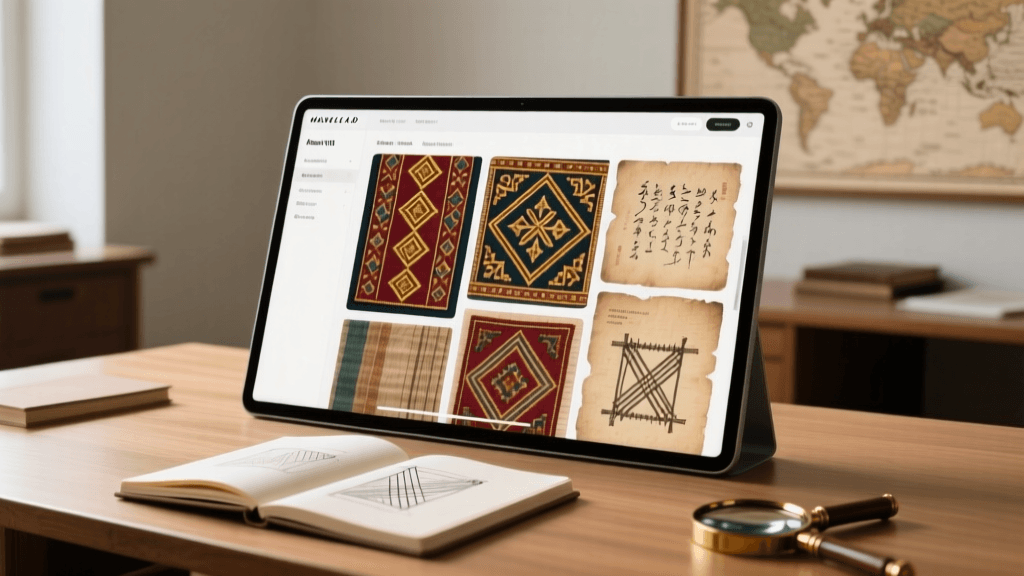
The International Dunhuang Project remains the gold standard for Silk Road manuscript and textile research. In 2026, their portal features a dedicated "Textile & Material Culture" filter. Users can search specifically for "Astana" or "Turfan" and filter by weave type, century, and even specific motif keywords like "pearl roundel" or "hunting scene." The high-resolution zoom now supports thread-level inspection, crucial for weavers attempting to replicate the exact ends-per-inch (EPI) of ancient samites.
2. UNESCO Silk Roads Programme
For broader contextual research, the UNESCO Silk Roads Programme provides interactive mapping that overlays archaeological find-sites with historical trade routes. This is invaluable for understanding how a specific textile motif found in the Astana tombs might share lineage with artifacts discovered in Palmyra or Nara.
3. Global Museum Collections
Many Astana and broader Tarim Basin textiles were dispersed globally during early 20th-century expeditions. The British Museum Collection database, for instance, holds significant Aurel Stein finds. Utilizing their advanced 2026 semantic search, you can cross-reference Turfan textiles with contemporaneous Sogdian metalwork to understand how 3D motifs were translated into 2D silk weaves.
Comparative Guide to Global Silk Road Repositories
To streamline your research, below is a comparison of the top three digital repositories for Silk Road textile analysis available in 2026:
| Repository | Primary Location | Key Textile Types | 2026 Digital Features |
|---|---|---|---|
| International Dunhuang Project | UK / Global Network | Jin silks, hemp, manuscript bindings | AI pattern reconstruction, thread-count overlays |
| Berlin Turfan Collection | Germany | Sogdian samites, wool taqueté, felt | 3D artifact scanning, multispectral dye maps |
| Shosoin Repository Archives | Japan | Tang-dynasty gifts, brocades, resist-dyed silks | High-res macro photography, provenance tracking |
Archaeological Lessons for Modern Textile Preservation
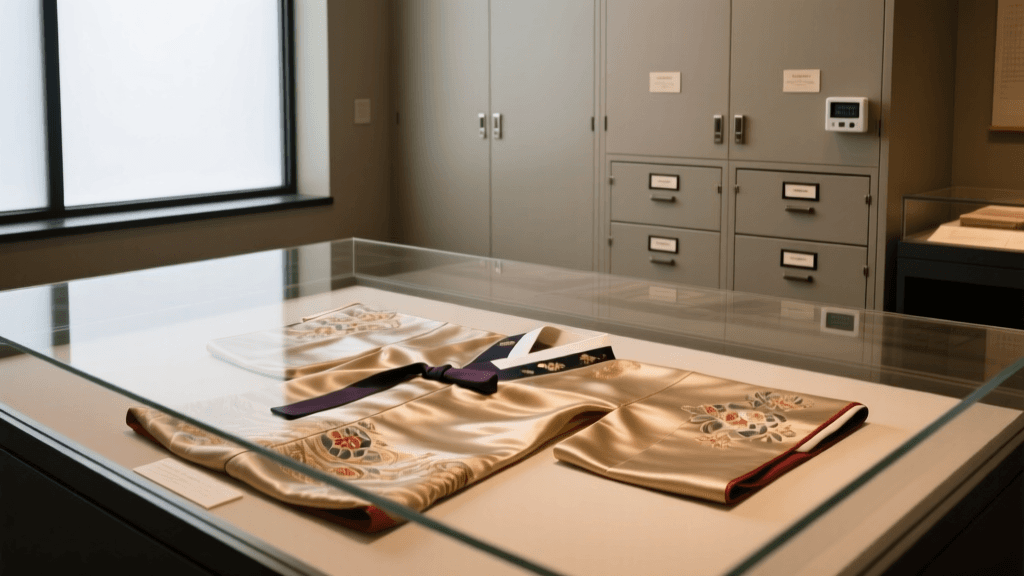
The survival of the Astana silks is entirely due to their environment: pitch-black, anoxic (oxygen-deprived), and consistently dry. Modern conservation science in 2026 mimics these exact tomb conditions to preserve excavated textiles and protect contemporary heirloom garments. If you are managing a historical textile collection or preserving high-end Xin Zhongshi silk garments, apply these archaeological lessons:
- Anoxic Storage: Use Escal™ barrier films combined with oxygen scavengers to create a micro-environment with less than 0.1% oxygen. This halts the oxidative degradation of protein fibers (silk and wool) and prevents insect infestation without the use of toxic chemical pesticides.
- Lighting Limits: The Astana tombs were in total darkness for over a millennium. When displaying or studying these silks, illumination must never exceed 50 lux, and UV radiation must be entirely filtered out. Prolonged exposure to standard LED lighting in 2026 showrooms has been shown to cause irreversible photo-yellowing in ancient madder-dyed silks.
- Humidity Stability: While the Turfan desert is dry, modern museum standards dictate a stable 45-55% relative humidity (RH) for mixed organic collections to prevent the embrittlement of fibers. Fluctuations in RH are far more damaging than a static, slightly sub-optimal level.
Reviving Ancient Motifs in 2026 Xin Zhongshi Fashion
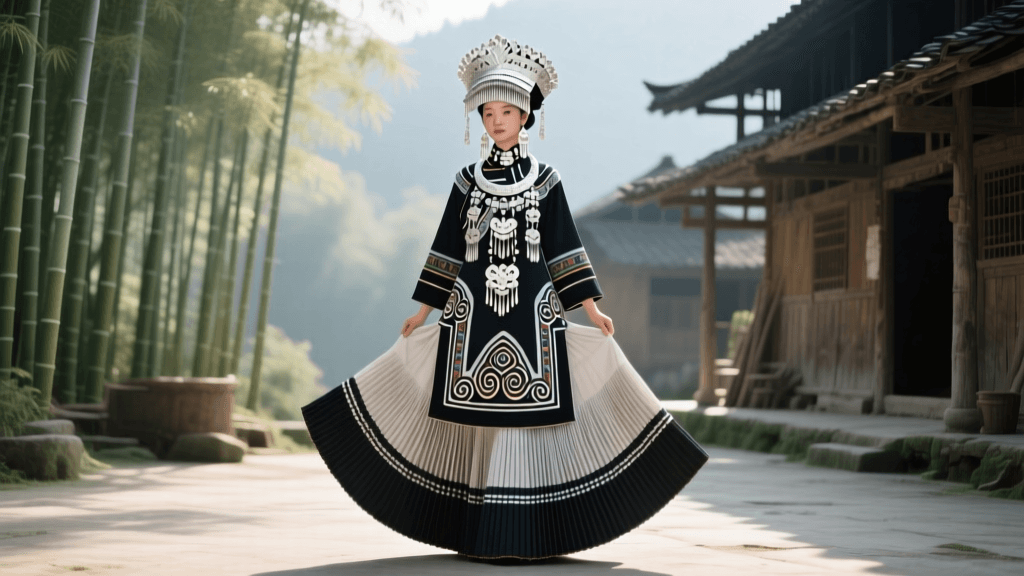
The archaeological finds of the Silk Road are not merely academic curiosities; they are the lifeblood of the 2026 Xin Zhongshi (New Chinese Style) movement. Contemporary designers are moving beyond superficial Qing dynasty aesthetics, looking instead to the cosmopolitan Tang era and the Gaochang Kingdom for inspiration. By accessing the digital archives, designers are accurately recreating the drape and structure of weft-faced samites, utilizing the bold, symmetrical pearl roundels to craft modern outerwear that honors the diverse, multi-ethnic reality of the ancient Silk Road. This fusion of rigorous archaeological data with modern sartorial tailoring represents the cutting edge of Asian traditional fashion, proving that the deepest roots of style are found in the sands of the Turfan Depression.