Silk Road Textiles: 2026 AI Reconstruction of Astana Tomb Silks
The Legacy of the Astana Cemetery: A Desert Time Capsule
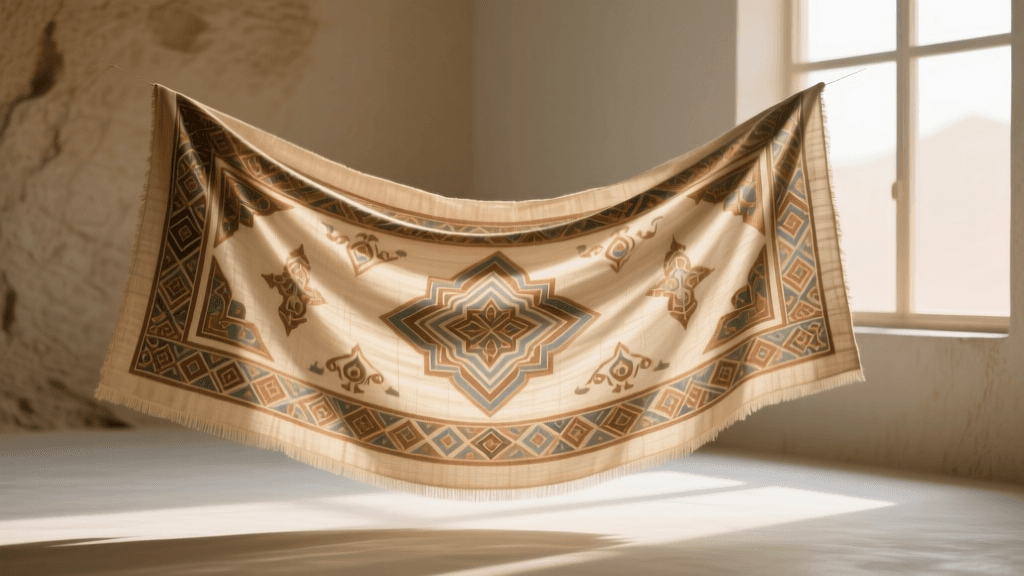
The Silk Road was not merely a conduit for spices, precious metals, and philosophy; it was a vibrant, sprawling artery of textile exchange that connected the East and West. Among the most significant archaeological sites for understanding this ancient global trade is the Astana Cemetery, located in the Turpan Depression of Xinjiang, China. Serving as the burial ground for the ancient city of Gaochang, the Astana Tombs have yielded thousands of artifacts, including remarkably preserved textiles dating from the Tang Dynasty and the era of the Sogdian merchants. The extreme aridity of the Turpan climate acted as a natural desiccant, halting the decay of organic materials that would have otherwise perished in more humid environments.
For decades, archaeologists and textile historians have marveled at the intricate weaves and structural complexity of the Astana silks. However, centuries of exposure to trace UV light, shifting subterranean temperatures, and oxidative degradation left many of the most exquisite garments looking like dull, brownish fragments. The vibrant reds, deep indigos, and brilliant yellows that once defined the cosmopolitan fashion of the Silk Road were lost to the naked eye. That is, until the groundbreaking technological advancements of 2026.
The 2026 Breakthrough: AI Multispectral Imaging in Textile Archaeology
In early 2026, a collaborative initiative between the Chinese Academy of Sciences and leading international conservation labs unveiled a non-invasive method for analyzing degraded historical textiles: AI-assisted multispectral imaging. This technology represents a monumental leap forward in archaeological textile analysis. By capturing light across hundreds of narrow spectral bands—ranging from ultraviolet to short-wave infrared—researchers can now detect the microscopic chemical signatures of ancient dyes and mordants that remain embedded in the silk fibers, even when the visible color has completely faded.
The true innovation of the 2026 methodology lies in the integration of deep learning neural networks. These AI models have been trained on vast databases of known historical dye recipes, botanical sources, and degradation patterns. When the multispectral camera scans an Astana silk fragment, the AI cross-references the chemical residue with its database to accurately predict and digitally reconstruct the garment's original color palette. According to the UNESCO Silk Roads Programme, this non-destructive approach allows historians to visualize the exact aesthetic of Sogdian-Tang fashion without risking damage to the fragile, millennia-old fibers through physical sampling or chemical testing.
Reconstructed Textile Profiles: 2026 Findings
The 2026 AI reconstructions have revealed a highly sophisticated dyeing and weaving culture that heavily incorporated Central Asian motifs and techniques. Below is a summary of three major textile fragments from the Astana Tombs that have been digitally restored using the new multispectral protocols, with data cross-referenced with the International Dunhuang Project (IDP).
| Textile Fragment Designation | Reconstructed Original Dye Palette | Weaving Technique | Cultural Origin & Exchange Route |
|---|---|---|---|
| AST-2026-04: Pearl Roundel Boar | Safflower Red, Weld Yellow, Iron-black outlines | Weft-faced compound twill (Samite) | Sogdian design, woven in Tang imperial workshops |
| AST-2026-12: Interlocking Floral Brocade | Indigo Blue, Madder Red, Unbleached Silk base | Warp-faced compound tabby | Persian Sassanid influence, adapted for Gaochang elite |
| AST-2026-27: Hunter on Horseback Tapestry | Pomegranate Rind Yellow, Walnut Brown, Indigo | Wool and Silk Tapestry weave | Central Asian nomadic origin, traded via the Northern Silk Road |
Decoding Ancient Dyes and Mordants
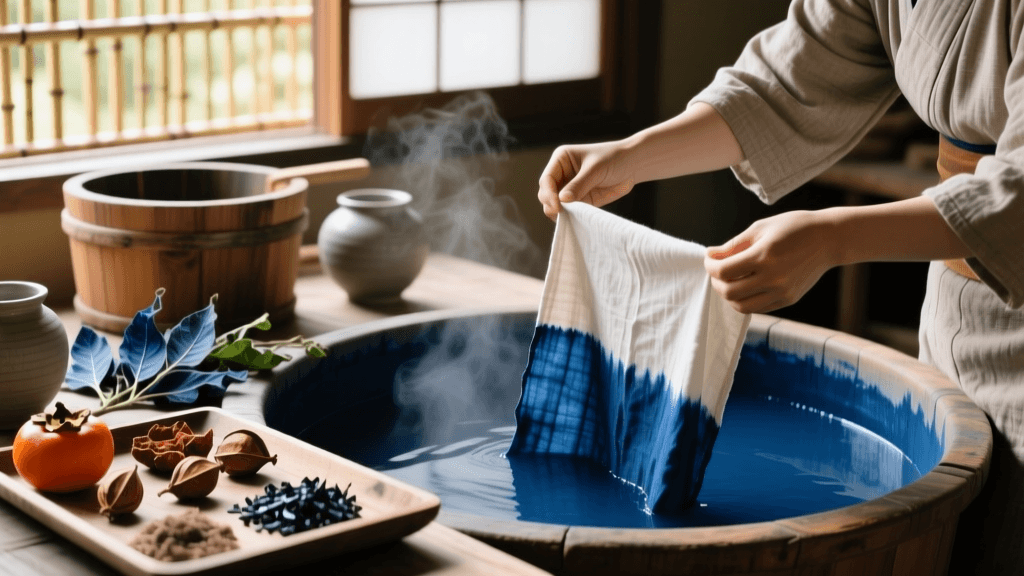
The 2026 spectral analysis provided unprecedented insight into the chemical mastery of ancient dyers. For instance, the vibrant reds seen in the AST-2026-04 fragment were identified as safflower (Carthamus tinctorius). Safflower red is notoriously fugitive, meaning it fades rapidly when exposed to light, which explains why these garments appeared dull brown upon excavation. The AI mapping revealed that the dyers used a complex mordanting process involving alum and specific acidic fermentations to bind the safflower pigment to the silk protein.
Furthermore, the analysis of the AST-2026-12 brocade highlighted the use of weld (Reseda luteola) for brilliant yellows, often over-dyed with woad or indigo to create the rich, fast greens favored by Tang dynasty aristocrats. Understanding these exact chemical pathways has allowed modern conservationists to create perfectly matched, historically accurate display mounts that do not clash with the original aesthetic intent of the garments.
2026 Preservation Protocols for Silk Road Garments
For museum curators, private collectors, and archivists handling Silk Road textiles or their modern reproductions in 2026, preservation standards have become increasingly stringent. The insights gained from the Astana AI project have directly influenced the updated guidelines published by global conservation bodies, aligning closely with the practices recommended by the Victoria and Albert Museum Asian Collections. If you are managing a collection of historical Asian garments, adhere to the following 2026 protocols:
- Lighting Restrictions: Limit exhibition lighting to a maximum of 50 lux for original silk artifacts. Use LED fixtures with zero UV emission. For the 2026 AI-reconstructed digital displays, utilize high-contrast OLED screens to showcase the original colors without exposing the physical artifact to light.
- Climate Control: Maintain a strict Relative Humidity (RH) of 45% to 55%. Fluctuations beyond this range cause the silk fibroin to expand and contract, leading to micro-fractures in the ancient threads.
- Archival Storage: Store garments flat in custom-built, unbuffered acid-free tissue boxes. Never use buffered (alkaline) tissue for protein-based fibers like silk and wool, as the alkalinity can degrade the fibers over time.
- Pest Management: Implement anoxic (oxygen-depleted) display cases or use localized nitrogen gas flushing for storage vaults to eliminate the risk of webbing clothes moths and carpet beetles without the use of toxic chemical pesticides.
The Xin Zhongshi Movement and Archaeological Accuracy
The ripple effects of the 2026 Astana Tomb reconstructions extend far beyond the walls of museums and academic journals; they have profoundly influenced the contemporary fashion landscape, particularly the Xin Zhongshi (New Chinese Style) movement. In recent years, Xin Zhongshi has evolved from a niche aesthetic into a dominant force in Asian fashion, blending traditional silhouettes with modern tailoring. However, early iterations of the movement often relied on synthetic, hyper-saturated colors that lacked historical authenticity.
Armed with the 2026 AI multispectral data, contemporary designers are now pivoting toward archaeological accuracy. The reconstructed palettes from the Astana Tombs—featuring muted safflower pinks, deep oxidized indigos, and earthy pomegranate yellows—are being translated into modern, sustainable dyeing practices. Designers participating in the 2026 International Design Weeks in Shanghai and Tokyo are showcasing collections that utilize natural, plant-based dyes formulated to match the exact spectral signatures of the Tang-Sogdian artifacts.
The integration of AI and multispectral imaging has not just restored the colors of the past; it has provided a scientifically verified color library for the future of traditional Asian fashion design.
This marriage of ancient heritage and cutting-edge 2026 technology ensures that the legacy of the Silk Road continues to inspire, educate, and influence. As we continue to unlock the secrets hidden within the fibers of the Astana Tombs, we gain a richer, more vibrant understanding of the interconnected world of ancient Asia, proving that the threads of history are far more colorful than we ever imagined.