2026 Silk Road Finds: Astana Silks Inspire Xin Zhongshi Fashion
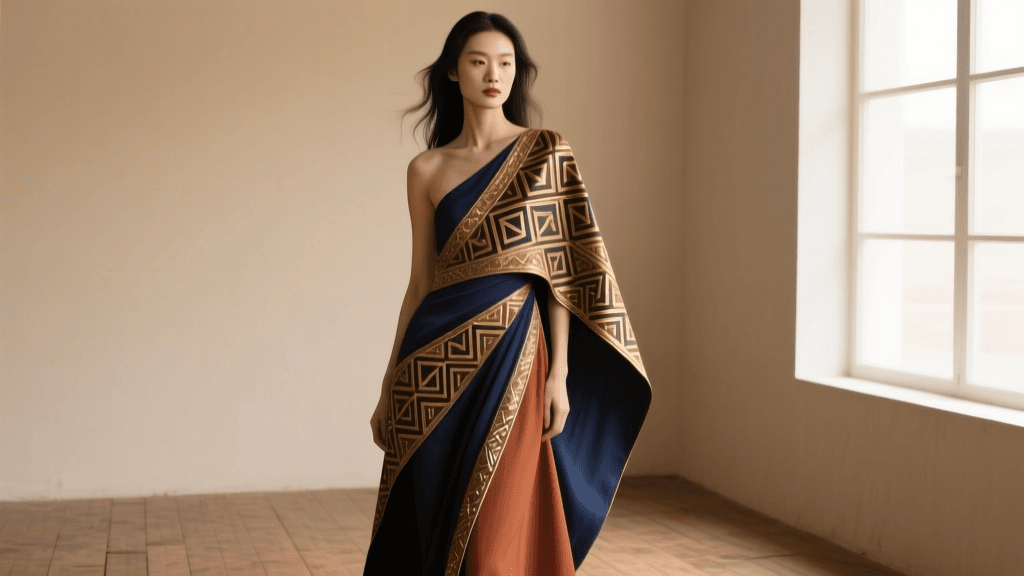
The Silk Road was never merely a conduit for spices and precious metals; it was the world’s first great superhighway of textile innovation. In 2026, a groundbreaking wave of archaeological analyses focusing on the Astana cemetery in Turpan, Xinjiang, has fundamentally shifted our understanding of ancient Eurasian fabric exchanges. These new discoveries are not just confined to academic journals and museum archives. Instead, they have sparked a vibrant renaissance in the Xin Zhongshi (New Chinese Style) movement, with contemporary designers translating 8th-century Sogdian samite weaves into cutting-edge, wearable fashion for the modern consumer.
The 2026 Multispectral Breakthrough at Astana
For decades, the textiles excavated from the Astana cemetery—often referred to as the 'Underground Museum' of the Silk Road—were limited by the fading of their once-vibrant organic dyes. However, in early 2026, a collaborative initiative utilizing advanced portable X-ray fluorescence (pXRF) and Raman spectroscopy allowed researchers to map the chemical signatures of degraded fibers without causing physical damage to the artifacts. This non-invasive multispectral imaging revealed the precise mordanting techniques used by Sogdian and Tang Dynasty weavers to achieve colorfastness in harsh desert climates.
According to data published by the UNESCO Silk Roads Programme, these 2026 analyses confirmed the widespread use of a specific weld and madder combination to create a unique 'sunset crimson' that was previously thought to be a product of synthetic 19th-century restoration. This revelation has provided modern textile engineers with an exact biochemical recipe to recreate these historical hues using sustainable, plant-based dyes.
Sogdian Samite: The Technical Marvel of the 8th Century
To understand the current fashion trend, one must understand the base fabric. The Astana finds heavily feature samite, a luxurious weft-faced compound twill silk. Unlike standard satin or charmeuse, samite utilizes a complex multi-warp structure that allows for dense, heavy patterns with a matte, structured drape. The Sogdian merchants, acting as the primary intermediaries of the Silk Road, popularized the 'pearl-roundel' motif—circular borders of pearls enclosing facing animals like boars, ducks, or lions.
In 2026, the structural integrity of these ancient weaves is being replicated using AI-assisted digital jacquard looms. By feeding the high-resolution 2026 multispectral scans into weaving software, modern mills in Hangzhou and Suzhou are producing samite reproductions that perfectly mimic the tensile strength and 140gsm weight of the original archaeological specimens, but with the softness required for modern apparel.
Xin Zhongshi 2026: Ancient Motifs Meet Modern Silhouettes
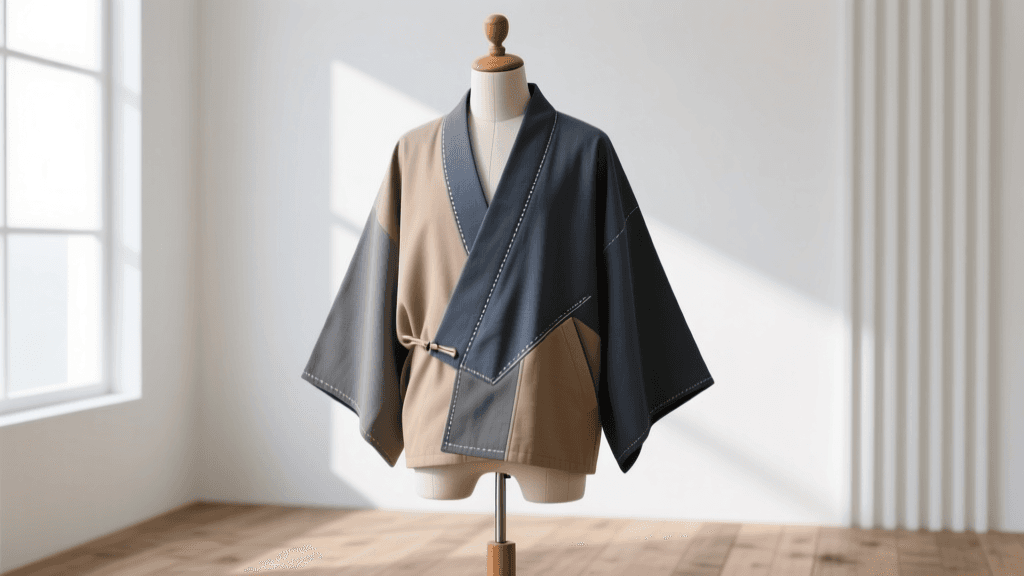
The Xin Zhongshi movement has evolved significantly by 2026. Moving away from the literal, costume-like interpretations of the early 2020s, today’s designers are focusing on structural integration. The pearl-roundel motifs found in the Astana silks are being deconstructed and applied to modern tailored garments. Imagine a structured, oversized blazer featuring a subtle, tone-on-tone jacquard weave of the Sogdian boar motif, or a flowing raw-silk midi skirt that utilizes the ancient warp-tension techniques to create a natural, architectural pleat.
At the 2026 Shanghai Design Week, several avant-garde labels showcased collections entirely based on the Astana textile cache. The garments featured traditional Chinese cross-collars (jiaoling youren) merged with Western utilitarian tailoring, proving that the Silk Road’s historical ethos of cultural blending is perfectly aligned with modern globalized fashion.
Comparative Textile Analysis: Ancient vs. 2026 Reconstructions
Below is a technical comparison of the original Astana archaeological textiles and their 2026 commercial Xin Zhongshi counterparts, highlighting how historical accuracy is balanced with modern wearability.
| Feature | 8th-Century Astana Original | 2026 Xin Zhongshi Reconstruction |
|---|---|---|
| Weave Structure | Weft-faced compound twill (Samite) | Digital Jacquard compound twill with elastane blend |
| Primary Dyes | Madder root, Indigo, Weld, Lapis Lazuli | Bio-fermented indigo, synthetic madder equivalent (eco-certified) |
| Weight / Drape | Heavy (approx. 160gsm), stiff drape | Medium (120gsm), fluid drape with memory retention |
| Motif Focus | Pearl-roundels, confronting boars, ducks | Deconstructed roundels, abstract geometric pearl borders |
| Retail Price (2026) | N/A (Museum Archive) | $280 - $650 USD (Designer Ready-to-Wear) |
Buyer’s Guide: Sourcing Authentic Astana-Inspired Silk
As the Xin Zhongshi trend surges, the market has seen an influx of cheap, digitally printed polyester imitations masquerading as historical reproductions. For enthusiasts and collectors looking to invest in genuine 2026 Silk Road-inspired garments, here is what you need to look for:
- Check the Reverse Side: True jacquard samite and compound twills will show a distinct, albeit inverted, pattern on the reverse side. If the back is a solid, flat color with no visible weave structure, it is a digital print, not a woven textile.
- The 'Crunch' Test: Authentic silk samite, even when blended with modern cellulose fibers for drape, will emit a distinct 'crunching' sound when compressed in the hand, due to the high-density warp threads.
- Selvedge Inspection: High-end 2026 reconstructions from heritage mills in Zhejiang province will often feature finished selvedges with micro-woven mill marks or traditional red boundary threads, a nod to ancient weaving guild practices.
- Price Benchmarking: A genuine, custom-loomed jacquard silk jacket utilizing natural dyes will typically retail between $450 and $800 USD in 2026. Garments priced under $100 are almost certainly synthetic prints.
Archival Care for Modern Silk Road Reproductions
The very reason the Astana textiles survived for over a millennium is the arid, anaerobic environment of the Turpan desert. Replicating this preservation at home requires specific storage maintenance. Modern bio-dyed silks are highly sensitive to UV degradation and alkaline detergents.
For routine maintenance in 2026, avoid standard commercial dry cleaning, which uses harsh perc solvents that strip natural mordants. Instead, utilize professional 'wet cleaning' services that specialize in heritage textiles. For storage, wrap your Xin Zhongshi garments in unbleached, acid-free cotton muslin. Never use plastic garment bags, as the off-gassing of polyurethane will cause the natural indigo and madder dyes to yellow and degrade over time. Store the garments flat in a cedar-lined drawer to maintain the structural integrity of the complex twill weaves.
Travel Packing for Silk Road Heritage Tours
With the resurgence of Silk Road tourism in 2026, many travelers are visiting the Xinjiang Uyghur Autonomous Region and the Dunhuang caves while wearing their Xin Zhongshi attire for photography and cultural immersion. When packing these structured silk garments, utilize the 'bundle wrapping' technique. Wrap your silk jackets around a soft core (like a cotton t-shirt) to prevent hard creases from forming along the intricate jacquard patterns. Upon arrival at your hotel, hang the garments in the bathroom while running a hot shower; the ambient steam will naturally release any minor travel wrinkles without the need for a direct-heat iron, which can scorch the dense compound twill.
The Future of Archaeological Fashion
The intersection of archaeology and fashion has never been more potent. By leveraging the 2026 multispectral data from the Astana cemetery, the Xin Zhongshi movement is doing more than just creating beautiful clothing; it is engaging in a form of wearable preservation. Institutions like the International Dunhuang Project and the Metropolitan Museum of Art's Silk Road archives continue to provide the foundational research that allows these ancient threads to be woven into the fabric of modern life. As we move further into 2026, the Silk Road proves that true style, much like the desert sands that preserved it, is entirely timeless.