Mastering Traditional Japanese Footwear: Geta & Zori 2026
The Renaissance of Traditional Japanese Footwear in 2026
The rhythmic karankoron of wooden soles striking stone pathways is a sensory hallmark of Japan's rich cultural tapestry. In 2026, traditional Japanese footwear—specifically geta and zori—is experiencing a remarkable global and domestic renaissance. No longer relegated solely to summer festivals or formal tea ceremonies, these masterfully crafted pieces have been embraced by contemporary fashion enthusiasts, sustainability advocates, and heritage preservationists alike. As the world shifts toward slow fashion and artisanal craftsmanship, the meticulous art of Japanese footwear making stands out as a beacon of functional beauty and cultural endurance.
According to the Ministry of Foreign Affairs of Japan, the preservation of traditional crafts has seen a significant surge in government and private funding as of 2026, aiming to pass down intangible cultural properties to a new generation of artisans. This article delves deep into the anatomy, material innovations, and bespoke commissioning process of geta and zori, providing a comprehensive guide for collectors, practitioners, and admirers of Asian traditions.
The Anatomy of Geta and Zori
To truly appreciate the craftsmanship, one must understand the structural components that define these distinct styles of footwear. While both utilize the iconic hanao (thong) to secure the foot, their bases serve entirely different purposes.
The Dai (Base) and Ha (Teeth)
The dai is the main board or sole of the footwear. In geta, the dai is typically carved from a single piece of solid wood and elevated by one to three ha (teeth). The most common style is the two-toothed geta, which elevates the wearer above mud, snow, and the damp streets of the Edo period. Conversely, zori feature a flat dai, historically woven from rice straw but now frequently crafted from compressed EVA foam, leather, cork, or brocade-covered synthetic cores for formal occasions.
The Hanao (Thong)
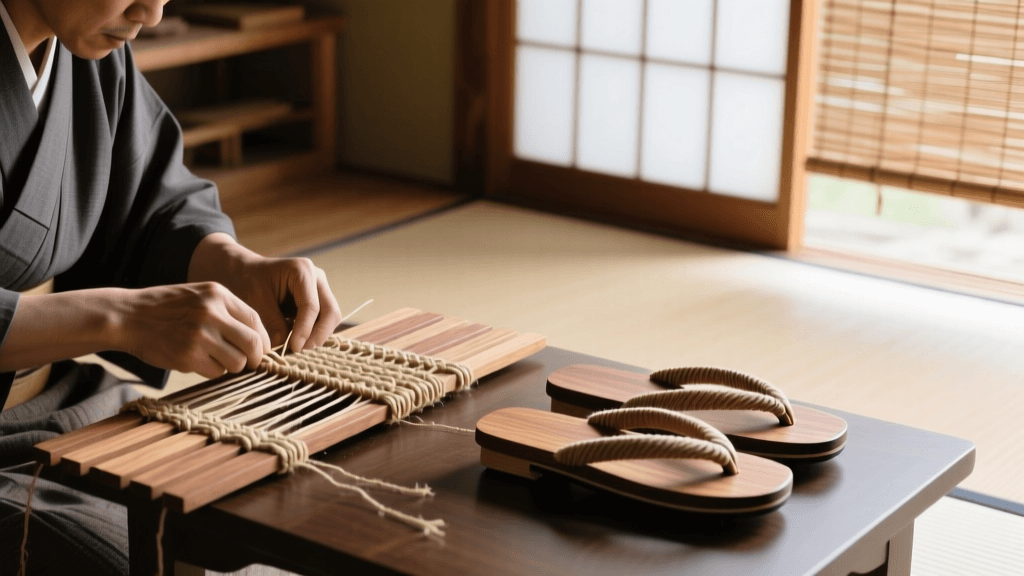
The hanao is the fabric cord that passes between the big toe and the second toe, anchoring the foot to the sole. Far from a simple strap, the hanao is a marvel of textile engineering. It consists of an inner core (traditionally hemp or cotton cord, now often high-tensile synthetic fibers for longevity) wrapped in velvet, silk, or upcycled kimono fabric. The tension and placement of the hanao are critical; as noted by experts at the Victoria and Albert Museum, the historical evolution of the hanao reflects shifts in Japanese textile production and social class distinctions.
Geta vs. Zori: A 2026 Buyer's Comparison
Choosing between geta and zori depends heavily on the occasion, the weather, and the accompanying garment. Below is a structured comparison to guide your selection in 2026.
| Feature | Geta (Wooden Clogs) | Zori (Flat Sandals) |
|---|---|---|
| Base Material | Solid Wood (Paulownia, Hinoki Cypress) | Rice straw, EVA foam, leather, cork, brocade |
| Elevation | Elevated with 'Ha' (teeth) | Flat, uniform sole thickness |
| Formality | Casual to semi-formal (Yukata, casual Kimono) | Semi-formal to highly formal (Tomesode, Furisode) |
| Best Season | Summer festivals, rainy seasons, hot springs | Year-round, especially winter and formal events |
| Acoustic Profile | Distinctive, rhythmic clacking | Soft, virtually silent |
| Modern Variants | Urethane-coated for rain resistance | Setta (leather-soled zori) for men's daily wear |
Sustainable Material Sourcing and Innovations
The year 2026 has brought sustainability to the forefront of traditional Japanese craftsmanship. The preferred wood for high-quality geta is Kiri (Paulownia). Paulownia is prized for its lightweight nature, beautiful pale grain, and natural resistance to moisture and warping. However, due to overharvesting in previous decades, 2026 has seen a strict pivot toward FSC-certified Paulownia plantations and the increased use of Hinoki (Japanese Cypress), which offers a luxurious, aromatic alternative that naturally repels insects and bacteria.
Furthermore, the hanao crafting community in Tokyo's Asakusa district has pioneered the use of upcycled vintage silks. Artisans are carefully deconstructing damaged, unsalvageable Showa-era kimonos to harvest high-quality silk and brocade, giving new life to historical textiles while reducing the carbon footprint associated with manufacturing new synthetic velvets.
The Asakusa Hanao Craft: Tying and Fitting
The true mark of bespoke Japanese footwear lies in the hanao-suge (thong-tying) process. Unlike mass-produced footwear where the strap is glued or machine-stitched, a master craftsman pulls the hanao through the three holes of the dai and secures it using a complex, proprietary knotting technique hidden beneath a wooden or leather plug.
'The hanao is the soul of the footwear; it must embrace the foot like a gentle handshake, not a vice. A master adjusts the tension based on the exact width of the client's toe gap and the arch of their instep.' — Master Artisan, Asakusa Footwear Guild, 2026.
This bespoke fitting ensures that the wearer's weight is distributed evenly, preventing the fatigue and blisters commonly associated with poorly fitted flip-flops or sandals. The Japan National Tourism Organization frequently highlights Asakusa as the premier destination for travelers seeking to witness this meticulous fitting process firsthand.
How to Commission Bespoke Footwear in 2026
Commissioning a custom pair of geta or zori is an intimate and rewarding experience. If you are planning to order bespoke footwear in 2026, here is what you can expect regarding process, timeline, and investment.
Step 1: Consultation and Measurement
Whether visiting a shop in Tokyo or ordering via a specialized international concierge service, the process begins with a precise foot tracing. The artisan measures not just the length and width, but the distance between the big toe and second toe, the height of the instep, and the wearer's typical stride length. The sole is traditionally carved slightly smaller than the actual foot, allowing the heel to overhang by about 5 to 10 millimeters—a hallmark of proper Japanese footwear aesthetics.
Step 2: Material and Hanao Selection
Clients select their wood grain preference, the height of the geta teeth (standard is around 4-5 cm), and the fabric for the hanao. In 2026, popular hanao choices include deep indigo-dyed cotton for casual geta, and gold-threaded Nishijin-ori brocade for formal zori.
Step 3: Carving, Assembly, and Pricing
The lead time for bespoke footwear typically ranges from 3 to 6 weeks. Below is a breakdown of current 2026 pricing for authentic, artisan-made pieces:
- Standard Ready-to-Wear Paulownia Geta: ¥12,000 – ¥18,000 ($80 – $120 USD)
- Bespoke Carved Geta with Custom Silk Hanao: ¥25,000 – ¥45,000 ($165 – $300 USD)
- Formal Brocade Zori (Tatami-omote or EVA core): ¥20,000 – ¥35,000 ($130 – $230 USD)
- Men's Leather Setta (Hand-stitched soles): ¥30,000 – ¥55,000 ($200 – $365 USD)
Specialized Styles: Tengu-Geta and Oiran-Geta
For collectors and avant-garde fashion enthusiasts, 2026 has seen a revival of highly specialized, dramatic geta styles. The Tengu-geta, featuring a single, exceptionally high central tooth, requires immense core strength and balance to walk in. Originally worn by mountain ascetics and later by festival performers, it is now a sought-after piece for high-fashion editorial shoots. Similarly, the Oiran-geta (or Mitsu-ashi), characterized by three teeth and a height exceeding 15 centimeters, was historically worn by high-ranking courtesans. Today, master carvers produce lightweight, reinforced versions of these dramatic pieces for dedicated collectors and theatrical productions.
Care, Maintenance, and Storage
Proper care ensures that artisan-crafted geta and zori can last for decades. Wood is a living material that reacts to humidity and temperature.
- Oiling the Wood: Once a year, apply a thin layer of tsubaki abura (camellia oil) or a specialized beeswax blend to raw Paulownia or Hinoki wood. This prevents cracking and enhances the natural grain.
- Moisture Management: If your geta become soaked in the rain, allow them to dry naturally in a well-ventilated, shaded area. Never place them near direct heat sources or in direct sunlight, as rapid drying will warp the dai and split the wood.
- Hanao Replacement: Even with high-quality materials, the hanao will eventually fray or stretch. A key benefit of traditional construction is that the hanao can be replaced by an artisan without damaging the wooden base, effectively giving the footwear an infinite lifespan.
- Storage: Store footwear in a breathable cotton bag (often provided by the artisan) in a climate-controlled environment. Avoid plastic bins, which can trap moisture and encourage mold growth on natural fibers and wood.
Conclusion
The enduring appeal of geta and zori lies in their perfect synthesis of ergonomics, artistry, and cultural philosophy. In 2026, as the global fashion industry grapples with issues of mass production and environmental degradation, the traditional Japanese footwear craft offers a compelling alternative. By supporting the master artisans of Asakusa and beyond, enthusiasts are not merely purchasing a pair of sandals; they are investing in a living heritage, ensuring that the poetic karankoron continues to echo through the streets for generations to come.