2026 Archival Storage Guide for Silk Kimonos & Hanboks
The Science of Silk Degradation in Heritage Garments
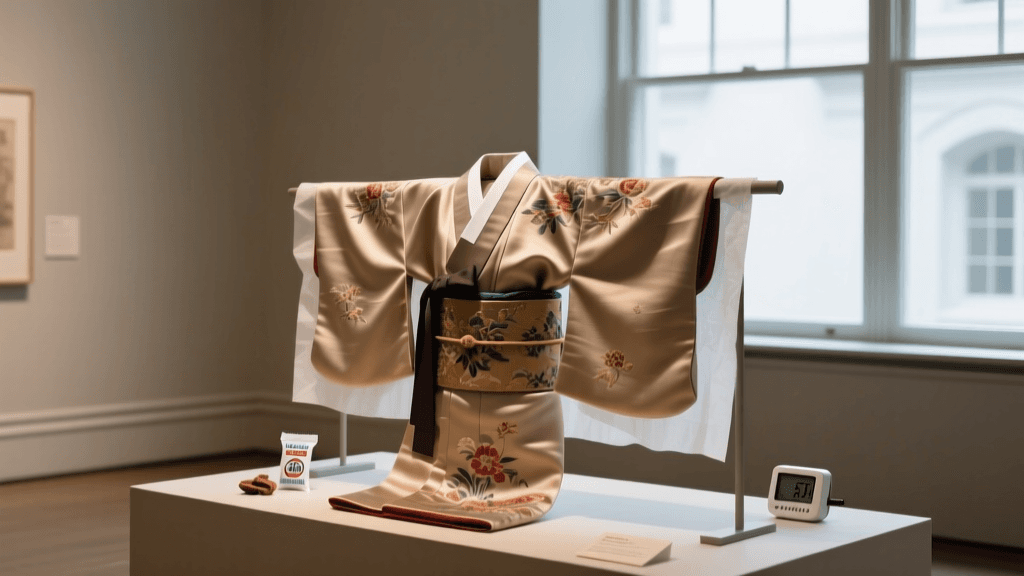
Preserving East Asian heritage garments, particularly vintage silk kimonos and intricately embroidered hanboks, requires a profound understanding of textile chemistry. Silk is a natural protein fiber composed primarily of fibroin, which is exceptionally strong but highly vulnerable to environmental stressors. As of 2026, global climate fluctuations have made standard indoor HVAC systems less reliable for maintaining the strict 45-55% relative humidity (RH) required for protein fibers. Consequently, collectors, archivists, and private owners have pivoted toward creating localized micro-climates to protect these invaluable cultural artifacts.
The primary enemies of vintage silk are ultraviolet (UV) light, fluctuating humidity, acidic off-gassing from improper storage materials, and biological threats like clothes moths and carpet beetles. When silk is exposed to prolonged high humidity, the protein chains begin to hydrolyze, leading to a catastrophic condition known as 'shattering,' where the fabric becomes brittle and tears under its own weight. Conversely, low humidity causes the sericin coating to dry out and crack. According to the Canadian Conservation Institute, maintaining a stable micro-environment is the single most critical factor in preventing irreversible structural degradation in historical Asian textiles.
2026 Standards for Archival Storage Materials
In 2026, the standard for museum-grade archival storage has evolved beyond simple acid-free cardboard. Modern conservation relies on inert, UV-inhibiting polyethylene and polypropylene enclosures that do not off-gas harmful volatile organic compounds (VOCs). The market has seen a stabilization in the pricing of these advanced materials; a standard museum-grade polyethylene storage box now averages between $110 and $140, reflecting the integration of advanced resin stabilizers introduced in late 2025.
The Critical Distinction: Unbuffered vs. Buffered Tissue
One of the most common and devastating mistakes made by amateur collectors is using the wrong type of archival tissue paper. Archival tissue comes in two forms: buffered and unbuffered. Buffered tissue contains an alkaline reserve (usually calcium carbonate) designed to neutralize acids over time, making it ideal for plant-based cellulose fibers like cotton and linen. However, this alkaline reserve is highly destructive to protein fibers. When buffered tissue is used on silk kimonos or wool hanbok trims, the alkaline environment breaks down the amino acids in the silk, accelerating yellowing and fiber weakening. You must exclusively use unbuffered, acid-free, lignin-free tissue paper for all silk and wool components of traditional Asian garments.
Step-by-Step Archival Folding and Padding
Traditional Japanese folding methods, such as tatami-datami, are designed for everyday storage in a tansu (chest of drawers) but are not ideal for long-term archival preservation. The sharp, repeated creases created by traditional folding will eventually cause the silk fibers to snap along the fold lines. In 2026, conservationists advocate for a modified, padded rolling or loose-folding technique that eliminates hard creases.
- Step 1: Surface Cleaning. Before storage, gently brush the garment with a soft, natural-bristle conservation brush to remove microscopic dust and particulate matter, which can harbor pest eggs and acidic pollutants.
- Step 2: The Core Roll. For heavily embroidered hanbok skirts or thick winter kimonos, rolling is preferred over folding. Use an archival-grade polyethylene tube wrapped in several layers of unbuffered tissue. Roll the garment loosely, ensuring the embroidered side faces outward to prevent crushing the metallic threads.
- Step 3: Padding the Folds. If the garment must be folded to fit in a standard archival box, create 'snakes' or 'sausages' by twisting sheets of unbuffered tissue paper into soft tubes. Place these tissue tubes inside every fold, sleeve, and collar. This creates a gentle curve rather than a sharp crease, distributing the tension across the silk fibers.
- Step 4: The Outer Wrap. Wrap the entire folded or rolled garment in a final layer of unbuffered tissue or an unbleached, washed cotton muslin sheet. Never use plastic bags or polyvinyl chloride (PVC) covers, as these trap moisture and emit plasticizers that will melt into the silk.
Comparison of 2026 Archival Storage Solutions
Selecting the right enclosure depends on your budget, space, and the specific vulnerabilities of your garment. Below is a comparison of the most prevalent storage solutions utilized by collectors and institutions in 2026.
| Storage Method | Material Composition | Pros | Cons | 2026 Avg. Cost |
|---|---|---|---|---|
| Coroplast Polyethylene Box | Extruded twin-wall polyethylene | Inert, waterproof, rigid, stackable, blocks UV light. | Bulky, requires dedicated shelving space. | $110 - $140 |
| Blue/Grey Barrier Board Box | Lignin-free cellulose, metal-edge | Breathable, traditional museum aesthetic, customizable sizes. | Vulnerable to water damage, less rigid over decades. | $85 - $115 |
| Anoxia Escal Bag | Oxygen-barrier fluoropolymer film | 100% pest-proof, halts oxidation, creates a sealed micro-climate. | Requires oxygen absorbers, single-use seal, not for frequent viewing. | $45 - $60 |
| Traditional Cedar Chest | Aromatic Eastern Red Cedar | Readily available, pleasant scent, cultural familiarity. | Wood acids stain silk, cedar oil degrades proteins, attracts moisture. | N/A (Avoid) |
Advanced Pest Prevention: Anoxia Treatment
Historically, the textile industry relied on toxic chemical fumigants like naphthalene (mothballs) or methyl bromide to eradicate clothes moths and carpet beetles. Today, these chemicals are recognized as severe health hazards and are known to cause irreversible discoloration to the delicate natural dyes used in vintage kimonos, such as indigo and safflower. As detailed by the Victoria and Albert Museum, modern conservation strictly prohibits the use of chemical pesticides on heritage textiles.
In 2026, the gold standard for pest eradication and prevention is anoxia treatment (oxygen deprivation). This involves sealing the garment inside a specialized oxygen-barrier bag, such as an Escal bag, along with calculated quantities of iron-based oxygen absorbers and a humidity buffer like Prosorb. The absorbers reduce the oxygen level inside the sealed envelope to below 0.1%, effectively suffocating adult insects, larvae, and eggs at all stages of their life cycle without introducing any toxic residues to the silk. This method is entirely safe for metallic threads, natural dyes, and fragile protein fibers, making it the preferred protocol for high-value Asian garments.
Managing Humidity with Phase-Change Materials
While anoxia bags protect against pests, they must be paired with precise humidity control to prevent mold growth or desiccation. Silica gel was once the standard desiccant, but it requires frequent re-conditioning and can over-dry a space if not perfectly monitored. The 2026 standard utilizes Phase-Change Materials (PCMs) and conditioned silica cassettes, such as Art-Sorb or Prosorb beads. These materials are pre-conditioned to a specific RH (usually 50%) and possess a dual-action capability: they absorb excess moisture when the ambient humidity rises, and release moisture back into the micro-climate when the air becomes too dry. Placing a 400-gram Prosorb cassette inside a polyethylene archival box ensures that a vintage silk hanbok remains in a perfectly stable 50% RH environment, even if the room's humidity swings wildly between 30% and 70% throughout the seasons.
Identifying the Need for Professional Restoration
Even with impeccable archival storage, antique garments may exhibit signs of historical damage that require professional intervention. It is vital to distinguish between issues that can be safely managed at home and those that require a certified textile conservator. The American Institute for Conservation strongly advises against amateur washing, ironing, or the application of commercial stain removers on heritage silks.
You should seek a professional textile conservator if you observe any of the following conditions:
- Silk Shattering: If the fabric sounds like crisp paper when handled or shows micro-fractures along fold lines, the structural integrity is compromised. A conservator can apply a stabilizing backing using reversible, conservation-grade adhesives and sheer silk crepeline.
- Dye Bleeding or Crooking: If colors are transferring to adjacent areas or to the unbuffered tissue paper, the dyes are unstable. Professional stabilization requires specialized localized humidification and dye-fixing techniques.
- Metallic Thread Tarnish: The gold and silver leaf applied to lacquered threads in traditional kumihimo braiding or hanbok embroidery can tarnish or flake. Conservators use specialized micro-vacuums and non-abrasive solvents to clean these elements without stripping the delicate metal leaf.
By adhering to these 2026 museum-grade protocols—utilizing unbuffered tissue, polyethylene enclosures, phase-change humidity buffers, and anoxia pest control—you ensure that the rich cultural heritage woven into every silk kimono and hanbok is preserved flawlessly for future generations to study and admire.