Kimono Storage Preservation 2026: Archival Silk Care Guide

Introduction to Kimono Preservation in 2026
The preservation of traditional Japanese garments, particularly vintage and antique silk kimonos, requires a meticulous balance of historical reverence and modern conservation science. As we navigate 2026, the intersection of smart-home environmental controls and time-honored Japanese textile practices has created new paradigms for collectors, archivists, and enthusiasts. Whether you are safeguarding a fragile Meiji-era uchikake (wedding kimono) or a contemporary Yuzen-dyed piece, proper storage is the definitive factor in preventing irreversible degradation.
Silk is a protein fiber that is inherently sensitive to its environment. Fluctuations in humidity, exposure to ultraviolet light, and improper physical handling can lead to shattered fibers, permanent creasing, and dye migration. This comprehensive guide outlines the most effective, up-to-date methodologies for kimono storage preservation and collection management, ensuring these masterpieces of Asian textile art survive for future generations.
The Science of Silk Degradation
To effectively preserve a kimono, one must first understand the vulnerabilities of silk. Unlike plant-based fibers such as cotton or linen, silk is composed of fibroin, a protein that is highly susceptible to hydrolysis and photo-oxidation. When exposed to high humidity, the hydrogen bonds within the fibroin structure weaken, leading to a loss of tensile strength. Conversely, excessively dry environments cause the fibers to become brittle and prone to shattering along fold lines.
Furthermore, the metallic threads (kinran and ginran) often used in formal kimonos present unique challenges. These threads typically consist of a lacquered paper or synthetic core wrapped in thin metal foil. In 2026, conservationists note that fluctuations in relative humidity cause the core and the metal wrap to expand and contract at different rates, leading to the flaking and loss of the metallic finish. Therefore, maintaining a strictly stable microclimate is non-negotiable for mixed-media garments.
Optimal Climate Parameters for 2026 Collections
The foundation of any successful textile preservation strategy is environmental stability. According to guidelines established by leading conservation institutions, the ideal storage environment for silk kimonos maintains a temperature of 65°F (18°C) and a relative humidity (RH) of 50%, with allowable fluctuations of no more than ±5% within a 24-hour period. For an in-depth look at international textile conservation standards, the American Institute for Conservation's Textiles Wiki provides exhaustive environmental parameters.
In 2026, achieving this stability is easier than ever thanks to advanced IoT (Internet of Things) environmental sensors. Modern collectors utilize Bluetooth-enabled data loggers, such as the Onset HOBO MX1102 series, placed directly inside storage enclosures. These devices push real-time temperature and humidity data to cloud dashboards, alerting collection managers via smartphone if the microclimate deviates from the safe zone. Pairing these sensors with smart dehumidifiers and HVAC systems ensures that seasonal shifts do not compromise the archive.
Material Selection: Tansu vs. Modern Archival Enclosures
Historically, kimonos were stored in tansu (traditional Japanese wooden chests), often crafted from paulownia wood (kiri). Paulownia is prized for its natural fire resistance, light weight, and ability to absorb and release moisture, thereby buffering the internal humidity of the chest. However, as wood ages, it can off-gas acidic compounds that accelerate the deterioration of silk.
Today, museum-grade archival enclosures offer a chemically inert alternative. Below is a comparison of common storage materials used in kimono preservation:
| Storage Material | Pros | Cons | Best Use Case |
|---|---|---|---|
| Traditional Paulownia Tansu | Aesthetic, natural humidity buffering, pest-resistant | Can off-gas acids over decades, heavy, susceptible to wood-boring insects | Display pieces, short-term storage, active rotation collections |
| Archival Coroplast Boxes | Chemically inert, lightweight, customizable sizes, stackable | Lacks aesthetic appeal, does not buffer humidity naturally | Long-term archival storage, museum vaults, high-value antiques |
| Acid-Free Cardboard Boxes | Inexpensive, breathable, widely available | Degrades over time, vulnerable to water damage and pests | Budget-conscious collectors, temporary storage |
| Vacuum-Sealed Plastics | Space-saving, blocks oxygen | Crushes fibers, traps moisture, causes permanent creasing | NEVER use for silk or structured traditional garments |
For long-term preservation in 2026, corrugated polypropylene (Coroplast) boxes lined with unbleached, washed cotton muslin are the gold standard. The Victoria and Albert Museum's conservation guidelines strongly advocate for inert plastic enclosures for protein fibers, as they prevent the acidic migration associated with aging paper and wood products.
The Art of Folding and the Tatoshi Tradition
How a kimono is folded is just as critical as the box it resides in. The traditional Japanese folding method, known as sode-datami or hon-datami, is designed to align the garment's seams and distribute the bulk evenly, preventing stress on the silk fibers. Never fold a kimono haphazardly or hang it on standard wire or wooden hangers for long periods, as the weight of the fabric will distort the shoulders and stretch the delicate silk.
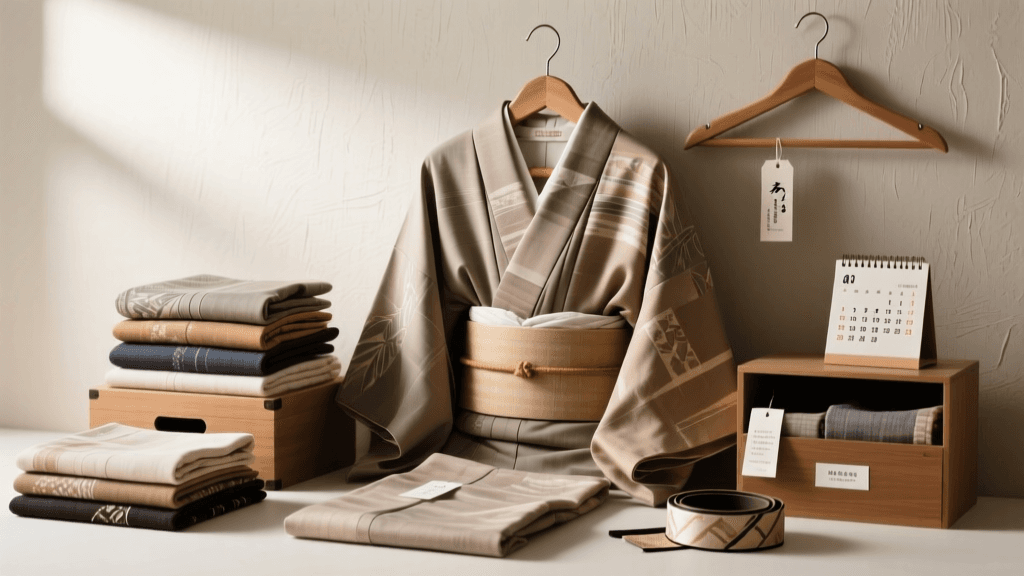
Once folded, the kimono must be wrapped in a tatoshi (or tatou-shi). Traditionally, this was a large sheet of thick, handmade washi paper. In modern archival practice, collectors use acid-free, unbuffered tissue paper or custom-sewn enclosures made from pre-washed, unbleached cotton muslin. The tissue or muslin acts as a physical barrier against dust, light, and abrasion. It is crucial to stuff the folds loosely with crumpled acid-free tissue to create soft, rounded edges rather than sharp creases, which can lead to fiber breakage over time.
Integrated Pest Management (IPM) for Silk
Textile pests, such as the webbing clothes moth (Tineola bisselliella) and the black carpet beetle, are the natural enemies of protein-based fibers. A single infestation can devastate a kimono collection in a matter of weeks. Modern preservation relies on Integrated Pest Management (IPM), a proactive strategy that prioritizes prevention over chemical intervention.
The first line of defense is isolation and inspection. Every new acquisition must be quarantined and inspected under bright, raking light before entering the main archive. If pests are suspected, the standard non-toxic treatment in 2026 is deep freezing. The Canadian Conservation Institute recommends sealing the textile in a polyethylene bag and freezing it at -20°C (-4°F) for a minimum of 72 hours to ensure all life stages of the pest, including eggs, are eradicated. After freezing, the garment must thaw slowly at room temperature while still sealed to prevent condensation from forming on the silk.
Chemical mothballs containing naphthalene or paradichlorobenzene are strictly forbidden in modern conservation. These chemicals off-gas toxic fumes that not only pose severe health risks to humans but also react with metallic threads and degrade silk proteins. Instead, use pheromone traps to monitor for adult male moths, and maintain rigorous housekeeping protocols in the storage area.
Digital Collection Management in 2026
As collections grow, managing the physical and historical data associated with each kimono becomes a complex logistical challenge. In 2026, digital collection management has evolved beyond simple spreadsheets. Professional collectors and small museums utilize cloud-based collection management systems (CMS) integrated with passive RFID (Radio Frequency Identification) technology.
By attaching a micro-RFID tag to the exterior of the kimono's archival box (never directly to the garment), curators can track the location, condition reports, and exhibition history of each piece using a handheld scanner. The digital profile for each kimono should include high-resolution macro photography of the weave and dye, detailed condition maps highlighting areas of weakness or discoloration, and provenance documentation. This digital twin not only aids in insurance valuation but also minimizes the need to physically handle the fragile garment for research or cataloging purposes.
Conclusion
Preserving a kimono is an act of cultural stewardship. The intricate weaving, dyeing, and embroidery techniques embodied in these garments represent centuries of Asian artistic tradition. By embracing the environmental controls, inert storage materials, and digital management tools available in 2026, collectors can halt the march of time. Remember that preservation is not a one-time task, but an ongoing commitment to monitoring, adjusting, and respecting the delicate protein fibers that make these garments so breathtaking. Through diligent care, your kimono collection will remain a vibrant, tangible link to the past for centuries to come.