2026 Kimono Storage Preservation: Archival Tansu & Climate Control
The Evolution of Kimono Preservation in 2026
Preserving a traditional Japanese kimono is not merely about keeping a garment clean; it is an active practice of cultural stewardship. Woven from delicate protein fibers like silk, and often adorned with metallic threads, natural dyes, and intricate yuzen paste-resist designs, these garments are highly susceptible to environmental degradation. As we navigate 2026, the intersection of Edo-period wisdom and modern conservation science has reached new heights. Today’s collectors, archivists, and enthusiasts are moving away from outdated, chemical-heavy storage methods in favor of precision micro-climate management and archival-grade materials.
Whether you are safeguarding a single family heirloom or managing a museum-level collection of vintage chirimen (crepe silk) and rinzu (satin damask), understanding the current 2026 protocols for kimono storage preservation is essential. This comprehensive guide details the exact materials, folding techniques, and environmental controls required to ensure your textiles survive for generations.
The Archival Tansu: Paulownia Wood and Modern Seals
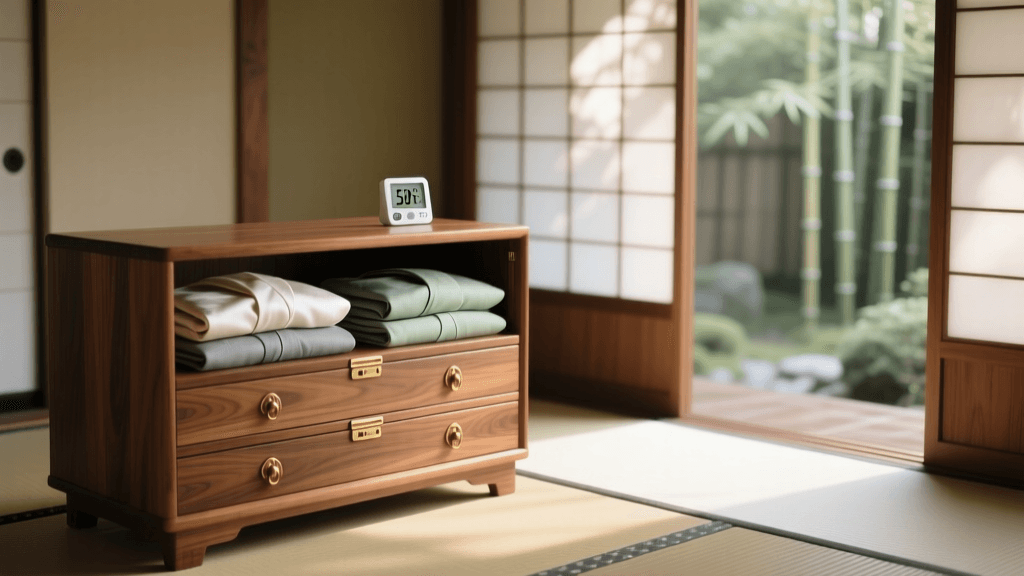
The kiri-tansu (paulownia wood chest) remains the undisputed gold standard for kimono storage. Paulownia is uniquely suited for textile preservation due to its hygroscopic properties—it naturally absorbs and releases moisture to buffer internal humidity fluctuations. Furthermore, it is naturally fire-resistant and contains compounds that deter common household pests.
In 2026, master woodworkers and conservation suppliers have begun integrating hidden, breathable silicone gaskets into traditional tansu drawers. These gaskets create a near-hermetic seal against ambient humidity spikes and airborne pollutants without altering the chest's historical aesthetic. When sourcing a tansu for long-term collection management, ensure the wood is unfinished on the interior. Varnishes or synthetic lacquers can off-gas volatile organic compounds (VOCs) that degrade silk proteins and tarnish metallic surihaku (gold and silver leaf) threads over time.
Essential Archival Interleaving Materials
Direct contact with non-archival materials is a primary cause of textile deterioration. The natural acidity found in standard wood, cardboard, and tissue paper will cause silk to yellow and become brittle.
- Acid-Free Tissue Paper: Use only unbuffered, acid-free tissue paper (pH 7.0 to 8.5) for interleaving. Buffered tissue, which contains an alkaline reserve to combat acidity, is suitable for plant-based fibers like cotton or linen, but can damage protein-based silk fibers over prolonged periods.
- Unbleached Muslin: For wrapping entire garments before placing them in drawers, washed, unbleached cotton muslin is highly recommended. It allows the textile to breathe while protecting it from dust and light exposure.
- Polyester Film (Mylar): For garments with highly delicate metallic embroidery or fragile surihaku that might snag on tissue, use archival-grade polyester film as a non-stick barrier layer.
Climate Control: Temperature and Humidity Targets
The most critical factor in kimono preservation is maintaining a stable environment. Fluctuations in temperature and relative humidity (RH) cause silk fibers to expand and contract, leading to structural fatigue and the eventual shattering of the fabric. In 2026, collectors utilize Bluetooth Low Energy (BLE) micro-sensors placed discreetly inside tansu drawers to monitor conditions via smartphone applications, receiving instant alerts if the micro-climate drifts outside safe parameters.
Consistency is more important than perfection. A stable environment at 55% RH is vastly superior to an environment that fluctuates daily between 45% and 60%, even if the average is ideal.
| Metric | 2026 Archival Target | Danger Zone | Risk to Silk Garments |
|---|---|---|---|
| Relative Humidity (RH) | 50% - 55% | > 65% or < 40% | Mold growth, dye bleeding, or fiber shattering and desiccation. |
| Temperature | 65°F - 68°F (18°C - 20°C) | > 75°F (24°C) | Accelerated chemical decay, increased pest activity, and dye fading. |
| Light Exposure (Lux) | 0 Lux (Darkness) | > 50 Lux | Irreversible photochemical degradation and severe fading of natural dyes. |
Step-by-Step Kimono Folding and Tansu Loading
Improper folding creates hard creases that stress the silk fibers, eventually causing them to split along the fold lines. The traditional hon-datami (standard fold) is designed specifically to align with the garment's seams, minimizing stress on the woven fabric.
- Preparation: Lay the kimono face down on a clean, padded surface. Ensure your hands are clean and free of lotions or oils.
- The Hon-Datami Fold: Fold the garment strictly along its existing seam lines. Never fold across the middle of a fabric panel.
- Padding the Creases: This is a crucial 2026 preservation step. Roll small, loose 'snakes' of acid-free tissue paper and place them inside every major fold. This prevents the silk from creasing sharply upon itself.
- Layering: Place the heaviest garments (like lined winter kimonos or uchikake) at the bottom of the tansu drawer. Lighter, unlined summer garments (hitoe or ro) should rest on top. Do not overpack the drawer; garments should rest gently without compression.
Pest Management and Chemical-Free Deterrents
Historically, collectors relied on chemical mothballs containing naphthalene or paradichlorobenzene (PDB) to protect their wool and silk garments. Modern conservation science strictly forbids these chemicals. Not only are they toxic to humans, but their off-gassing reacts chemically with metallic threads, causing irreversible blackening and tarnishing. Furthermore, these chemicals can melt certain synthetic linings used in mid-century kimonos.
In 2026, integrated pest management (IPM) relies on exclusion and natural deterrents. Ensure your storage room is regularly vacuumed and free of food sources. Inside the tansu, use blocks of sugi (Japanese cedar) or hinoki (cypress), which naturally repel insects with their aromatic oils. Sand the wood blocks lightly every six months to refresh the scent. Additionally, place non-toxic pheromone traps in the corners of the storage room to monitor for the presence of webbing clothes moths or carpet beetles before they can reach your collection.
Collection Management: Cataloging Your Kimono
Managing a collection of dozens or hundreds of kimonos requires meticulous documentation. Repeatedly opening drawers and unfolding garments to identify them exposes the textiles to unnecessary light, handling stress, and environmental fluctuations.
Leading collectors in 2026 are adopting passive NFC (Near Field Communication) or RFID tagging systems. A tiny, inert, archival-safe tag is sewn into the jibari (inner lining) or attached to the storage wrapper's tie. By scanning the drawer's exterior or the wrapper with a specialized tablet, collectors can instantly pull up high-resolution photographs, provenance records, weaving techniques, and conservation notes without ever touching the physical silk. This digital inventory approach drastically reduces physical handling, extending the lifespan of the collection.
Authoritative Guidelines and Further Reading
For collectors and archivists seeking to deepen their understanding of textile conservation, it is vital to consult established heritage organizations. The protocols outlined in this guide align with the global standards set by leading conservation institutions. We highly recommend reviewing the comprehensive preventive conservation resources provided by the National Park Service Museum Handbook, which offers exhaustive guidelines on storing organic artifacts. Additionally, the research and publications available through the Getty Conservation Institute provide peer-reviewed insights into the chemical aging of silk and natural dyes. For specific case studies on historic garment care, the Victoria and Albert Museum Conservation Department remains an invaluable resource for best practices in textile handling and environmental monitoring.
By embracing these 2026 standards for kimono storage preservation, you ensure that the artistry, history, and spirit woven into these magnificent garments remain vibrant and intact for the centuries to come.