Kimono Storage Preservation And Archival Care 2026
Introduction to Kimono Collection Management
Preserving a collection of traditional Japanese garments requires a delicate balance between honoring historical practices and utilizing modern archival science. As we move through 2026, the intersection of traditional Japanese textile care and contemporary museum-grade preservation has evolved significantly. Whether you are managing a private family heirloom collection, curating a vintage kimono archive, or simply protecting a single high-value silk uchikake, understanding the precise environmental and material needs of these garments is critical. Silk is a highly sensitive protein fiber that reacts aggressively to fluctuations in humidity, ultraviolet light, and improper physical support. This comprehensive guide outlines the most effective kimono storage preservation strategies, collection management techniques, and archival materials available in 2026 to ensure your textiles survive for generations.
Understanding the Vulnerability of Silk Textiles
Before selecting storage enclosures, it is essential to understand the chemical and physical nature of the garments. Traditional kimono are predominantly crafted from silk, a protein fiber composed of fibroin and sericin. Unlike plant-based cellulose fibers such as cotton or linen, silk is highly susceptible to hydrolysis (degradation caused by water and moisture) and photodegradation (damage from light exposure). Furthermore, the metallic threads used in obi sashes and the organic dyes applied to yuzen-painted silk can tarnish, bleed, or become brittle if exposed to acidic environments or volatile organic compounds (VOCs). Modern preservation science dictates that all materials coming into direct contact with a silk kimono must be chemically inert, acid-free, and physically supportive to prevent permanent creasing and fiber fracture.
Traditional Kiri (Paulownia) Wood vs. Modern Archival Enclosures
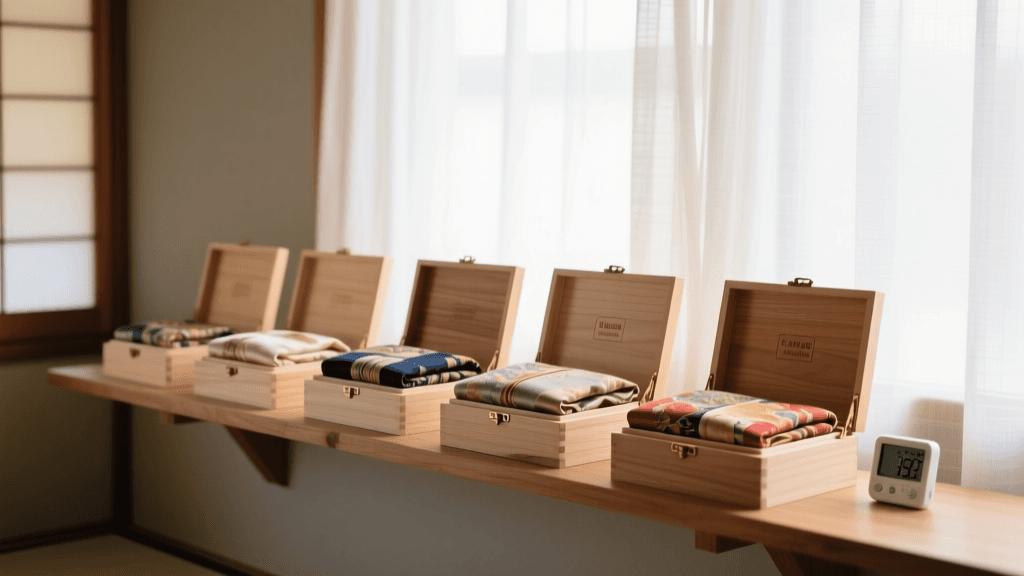
Historically, kimono were stored in tansu (chests) crafted from Kiri (Paulownia) wood. Kiri wood is renowned in Japanese tradition for its natural ability to regulate humidity; the wood swells during high-humidity seasons to seal the drawers and shrink during dry periods to allow airflow. In 2026, a high-quality, custom-joined Kiri tansu remains a premium investment, with market prices ranging from $1,800 to over $4,500 depending on the craftsmanship and hardware. While Kiri wood is excellent for general household storage, museum conservators often point out that raw wood naturally emits acidic vapors and peroxides over time, which can degrade silk over decades.
For strict archival preservation, modern conservators recommend using acid-free, lignin-free corrugated cardboard or polypropylene archival boxes. These enclosures, often referred to in modern adaptations of the traditional tatou (paper wrapping) method, provide a stable, off-gassing-free microclimate. A standard museum-grade kimono storage box (typically measuring 36 x 14 x 12 inches) costs between $65 and $95 in 2026. For collectors who prefer the aesthetic of a Kiri tansu, the current best practice is to store the kimono in archival boxes first, and then place those boxes inside the wooden drawers, thereby combining traditional beauty with modern chemical stability.
The Art of Sode-Tatami: Folding and Tissue Buffering
Improper folding is the leading cause of structural damage in stored kimono. The traditional folding method, known as sode-tatami, is designed to align the seams and distribute the fabric's weight evenly, minimizing stress on any single point. However, folding alone is not enough for long-term preservation. Every fold creates a hard crease that can eventually lead to fiber breakage.
To mitigate this, collectors must use unbuffered, acid-free tissue paper to pad the folds. It is crucial to use unbuffered tissue for silk. Buffered tissue contains a calcium carbonate reserve (an alkaline buffer) designed to neutralize acids in plant-based fibers, but this alkalinity can actively damage protein fibers like silk and wool. In 2026, archival suppliers offer specialized unbuffered tissue sheets (typically 24 x 36 inches) that are gently rolled into small tubes and placed inside the sleeves (sode) and along the major fold lines of the garment to create soft, rounded curves rather than sharp creases.
Climate Control and Smart Monitoring in 2026
The environment surrounding your collection is just as important as the storage enclosure. The ideal storage climate for silk kimono is a stable temperature of 65°F to 68°F (18°C to 20°C) and a relative humidity (RH) of 50% to 55%. Fluctuations in humidity cause the silk fibers to expand and contract, leading to mechanical fatigue and the distortion of metallic threads.
To maintain these parameters, private collectors in 2026 rely heavily on smart home integration. Devices like the Govee Wi-Fi Thermo-Hygrometer H5179 allow collectors to place small, unobtrusive sensors directly inside storage closets or tansu drawers. These sensors push real-time data to a smartphone application, triggering automated alerts if the RH drops below 45% or spikes above 60%. For dedicated collection rooms, integrating a smart HVAC system with a dedicated ultrasonic humidifier and desiccant dehumidifier ensures the microclimate remains perfectly stable year-round, regardless of external seasonal changes.
Pest Management: Anoxia and Freezing Protocols
Webbing clothes moths and carpet beetles are the natural enemies of silk and wool textiles. Traditional Japanese preservation involves mushiboshi (annual airing out and inspection), typically performed during the dry, breezy days of late autumn. During this process, garments are unfolded, inspected for frass (insect droppings), and allowed to breathe.
If an infestation is suspected, modern archival protocols strictly prohibit the use of chemical mothballs (naphthalene or paradichlorobenzene), which are highly toxic to both human health and silk fibers. Instead, the 2026 standard for eradication is the freezing method. The affected kimono is sealed in an airtight polyethylene bag with an oxygen absorber (creating an anoxic environment) and placed in a deep freezer at -20°C (-4°F) for a minimum of 72 hours. The garment is then thawed slowly at room temperature while still sealed to prevent condensation from forming on the silk. This process effectively kills all life stages of the pest without introducing harmful chemicals to the textile.
Digital Cataloging for Private Kimono Archives
As collections grow, physical preservation must be paired with rigorous digital collection management. Relying on memory to track the provenance, condition, and storage location of dozens of garments is a recipe for mismanagement. In 2026, private collectors and small institutions utilize cloud-based relational databases like Airtable or specialized museum CMS platforms to catalog their archives.
A comprehensive digital record for each kimono should include high-resolution photographs (taken under color-calibrated LED lighting), detailed condition reports noting any stains, weak seams, or tarnished metallic threads, and precise metadata such as the era (e.g., Taisho, early Showa), weaving technique (e.g., Nishijin-ori, Yuzen), and current physical location (e.g., Room 2, Kiri Tansu, Drawer 3). This digital inventory minimizes the need to physically handle the garments, thereby reducing the risk of accidental damage from oils and friction.
Storage Material Comparison Chart
| Storage Material | Pros | Cons | 2026 Avg. Cost | Best Use Case |
|---|---|---|---|---|
| Kiri (Paulownia) Tansu | Traditional aesthetic, natural humidity buffering, durable. | Heavy, expensive, raw wood can emit mild acidic vapors over decades. | $1,800 - $4,500 | Display rooms, heirloom storage, secondary outer layer. |
| Archival Corrugated Board | Chemically inert, acid-free, lightweight, customizable sizes. | Lacks aesthetic appeal, vulnerable to water damage, requires flat shelving. | $65 - $95 per box | Long-term museum-grade storage, off-site archiving. |
| Food-Grade Polypropylene Bins | Waterproof, pest-proof, inexpensive, stackable. | Traps moisture if not conditioned, off-gasses if not strictly food-grade. | $25 - $40 per bin | Basement storage, flood-prone areas (with internal desiccants). |
| Unbleached Cotton Bags | Breathable, washable, protects from dust and light. | Provides no structural support, cotton can harbor pests if untreated. | $15 - $30 per bag | Short-term transport, active rotation wardrobes. |
Authoritative Guidelines and Further Reading
When establishing a kimono preservation protocol, it is vital to align your methods with internationally recognized conservation standards. The Library of Congress Textile Preservation Guidelines provide exhaustive details on the hazards of light exposure, the proper selection of unbuffered tissue papers, and the structural risks associated with hanging heavy silk garments on standard hangers. Furthermore, the Victoria and Albert Museum Textile Care Guide offers exceptional insights into the handling of metallic threads and the precise environmental parameters required for mixed-media garments, such as heavily embroidered obi sashes. By combining these institutional standards with traditional Japanese care practices, collectors can ensure their kimono remain vibrant, structurally sound, and historically intact for the future.