Kimono Storage Preservation & Archival Care in 2026
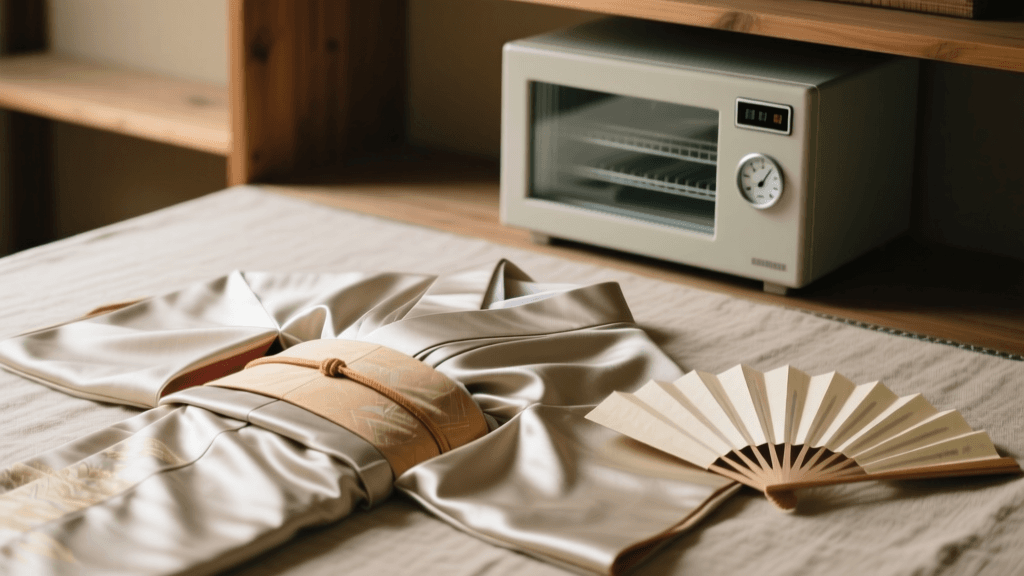
The Rising Value of Vintage Silk in 2026
As we navigate the collector's market in 2026, the appreciation for vintage Meiji, Taisho, and early Showa era kimonos has reached unprecedented heights. Garments featuring intricate yuzen dyeing, metallic thread embroidery, and hand-painted motifs are no longer just cultural artifacts; they are highly sought-after investment pieces. However, the organic nature of silk makes these garments incredibly vulnerable to environmental degradation. Proper kimono storage preservation and collection management are no longer optional—they are essential practices for any serious collector, archivist, or fashion historian looking to maintain the structural integrity and vibrancy of their textiles.
Understanding Silk Degradation: Why Kimonos Shatter
To effectively manage a kimono collection, one must first understand the enemy: silk degradation. Silk is a protein fiber composed primarily of fibroin and sericin. In the late 19th and early 20th centuries, many silk threads were 'weighted' with metallic salts (such as tin or iron) to increase the fabric's drape and luster. Over decades, these heavy metals catalyze a chemical reaction that causes the silk to become brittle and eventually shatter, a phenomenon known as 'silk shattering' or 'dry rot.' Once this structural failure begins, it is irreversible. Furthermore, exposure to ultraviolet light fades organic dyes, while high humidity invites mold and pest infestations. Modern preservation in 2026 focuses on mitigating these risks through strict environmental controls and archival-grade storage materials.
Traditional vs. Modern Archival Materials
Historically, kimonos were stored in tansu (traditional wooden chests) made from Paulownia wood (kiri). Paulownia is naturally lightweight, fire-resistant, and possesses excellent hygroscopic properties, meaning it absorbs and releases moisture to buffer the interior climate. While a well-maintained antique kiri tansu remains a beautiful and functional storage option, modern archival science offers supplementary materials that provide superior chemical stability.
For direct contact with the silk, collectors must avoid standard tissue paper or plastic bags. Plastic traps moisture and emits off-gassing chemicals that accelerate fiber breakdown. Instead, the gold standard for 2026 is the use of tatoushi (traditional Japanese kimono wrapping paper) or unbuffered, acid-free archival tissue. Unlike cotton or linen, which benefit from buffered (slightly alkaline) tissues, protein-based fibers like silk and wool require unbuffered or neutral pH materials to prevent alkaline hydrolysis.
2026 Storage Material Comparison Chart
| Material | Best Use Case | Pros | Cons | Estimated 2026 Cost |
|---|---|---|---|---|
| Paulownia Wood (Kiri Tansu) | Primary outer storage, buffering humidity. | Natural moisture regulation, pest-resistant, culturally authentic. | Extremely expensive, heavy, requires periodic maintenance. | $1,500 - $4,500+ |
| Unbuffered Acid-Free Tissue | Padding folds, direct silk contact. | Prevents crease stress, chemically stable for protein fibers. | Must be replaced every 3-5 years as it absorbs ambient pollutants. | $15 - $30 per pack |
| Tatoushi (Archival Kimono Paper) | Wrapping folded garments, secondary barrier. | Custom-sized for standard kimono folds, breathable, traditional. | Harder to source outside of Japan, susceptible to tearing. | $8 - $15 per sheet |
| Archival Corrugated Board Boxes | Long-term vault storage, stacking. | Rigid protection, light-proof, standardized sizing. | Lacks natural moisture buffering, requires external climate control. | $40 - $85 per box |
| Washed Unbleached Muslin | Dust covers, breathable wrapping. | Reusable, washable, excellent for short-term airing. | Can harbor pests if not laundered regularly, not acid-free. | $10 - $20 per yard |
Climate Control: 2026 Smart Monitoring Standards
According to conservation guidelines outlined by institutions like the Victoria and Albert Museum's Conservation Department, fluctuations in humidity are often more damaging to textiles than a steady, slightly suboptimal baseline. For silk kimonos, the ideal storage environment in 2026 is a temperature of 65°F (18°C) with a Relative Humidity (RH) strictly maintained between 45% and 55%. If the RH drops below 40%, silk becomes brittle; if it rises above 65%, the risk of mold spore germination increases exponentially.
Modern collectors utilize smart home ecosystems to maintain these parameters. Wi-Fi-enabled hygrometers and thermometers, such as the latest 2026 models from Govee or SwitchBot, can be placed directly inside tansu drawers or archival boxes. These devices send real-time push notifications to your smartphone if the microclimate deviates from your preset thresholds. To manage humidity, avoid placing silica gel packets directly against the fabric, as they can over-desiccate the silk. Instead, use conditioned Art-Sorb or Pro-Sorb cassettes, which are designed to buffer RH at a specific 50% target, releasing moisture when the air is dry and absorbing it when the air is damp.
The Art of Tatami: Proper Folding Techniques
How a kimono is folded is just as critical as what it is stored in. Sharp, permanent creases will eventually cause the silk threads to snap along the fold lines. The traditional folding method, known as hon-datami or sode-datami, is designed to distribute fold lines across different areas of the garment and align with the structural seams of the kimono, minimizing stress on the decorative panels.
- Preparation: Lay the kimono flat on a clean, smooth surface. Ensure your hands are clean and free of oils or lotions. Wearing white cotton archival gloves is recommended for handling heavily embroidered or metallic-threaded pieces.
- The Collar and Sleeves: Fold the left side of the kimono over the right, aligning the center back seam. Tuck the sleeves back neatly so they do not extend beyond the body of the garment.
- Length Folds: Fold the bottom hem up towards the collar. To prevent sharp creases, insert rolled 'snakes' of unbuffered acid-free tissue paper into the fold channels. This creates a soft, rounded curve rather than a hard, damaging edge.
- Wrapping: Once folded into a neat rectangle, wrap the kimono in tatoushi paper or a clean muslin cloth. Never use rubber bands, string, or adhesive tape to secure the bundle.
Pest Management Without Toxic Chemicals
Webbing clothes moths and carpet beetles are the natural predators of protein fibers. In the past, collectors relied heavily on naphthalene or paradichlorobenzene (traditional mothballs). Today, these chemicals are strictly avoided in professional conservation. They are not only toxic to humans but also cause severe yellowing and chemical degradation to silk and gold leaf accents.
For specialized guidance on protein-based fibers, the American Institute for Conservation's Textile Specialty Group provides ongoing research advocating for integrated pest management (IPM). In 2026, the preferred method for deterring pests in kimono storage is natural camphor (shounou), derived from the camphor laurel tree. Camphor must be placed in small, breathable muslin bags and kept in the corners of the storage drawer, never touching the silk directly. Additionally, pheromone traps should be deployed in the storage room to monitor for adult male moths, providing an early warning system before an infestation can take hold.
Light Exposure and Display Limitations
While storage is paramount, collectors occasionally wish to display their pieces. The Canadian Conservation Institute emphasizes that light exposure must be strictly limited to under 50 lux for dyed silk, and UV radiation should be entirely eliminated. When displaying a kimono in 2026, use LED lighting with zero UV emission and install UV-filtering film on all nearby windows. Limit the display time of any single vintage garment to a maximum of three months per year, after which it should be returned to dark, climate-controlled storage to 'rest' and allow the fibers to recover from the tension of being mounted on a display stand (ikko).
Routine Maintenance and Inspection Schedule
Kimonos are not meant to be sealed away and forgotten. A rigorous collection management schedule requires airing out the garments at least twice a year, ideally during dry, mild weather in the spring and autumn. Unwrap the kimonos, gently refold them along different seam lines to prevent permanent crease memory, and inspect the fabric with a magnifying glass for early signs of frass (insect droppings), mold, or silk shattering. By combining the wisdom of traditional Japanese tansu storage with 2026's advanced climate monitoring and archival materials, collectors can ensure these magnificent woven narratives survive for centuries to come.