Áo Dài Styling 2026: Mix Vietnamese Tunics With Modern Denim
The 2026 Neo-Heritage Movement: Redefining the Áo Dài
As we navigate the global fashion landscape of 2026, the contemporary wardrobe is increasingly defined by a desire for authenticity, cultural storytelling, and sustainable practices. The 'neo-heritage' movement has taken center stage, encouraging fashion enthusiasts to look beyond fast fashion and integrate meaningful, historically rich garments into their daily rotation. Among the most versatile and striking pieces leading this charge is the Vietnamese Áo Dài. While traditionally reserved for weddings, lunar new year celebrations, and formal ceremonies, the modern styling of the Áo Dài has undergone a radical transformation. Today, style icons and urban professionals are seamlessly blending these elegant tunics with modern workwear, raw denim, and technical streetwear, creating a sartorial dialogue between East and West, past and present.
The Áo Dài, characterized by its form-fitting bodice, high mandarin collar, and flowing front and back panels, is a masterclass in structural elegance. According to the Metropolitan Museum of Art's Heilbrunn Timeline of Art History, the garment has continuously evolved since the 18th century, absorbing influences from French tailoring and indigenous Cham aesthetics. In 2026, this evolution continues with the widespread adoption of the Áo Dài cách tân (modernized Áo Dài), which features shorter hemlines, relaxed fits, and innovative fabric choices that make it perfectly suited for the demands of modern urban life.
Core Styling Principles: Balancing Silk and Structure
Mixing a highly traditional, often delicate garment like a silk tunic with rugged or structured modern pieces requires a keen eye for proportion and texture. The fundamental rule for 2026 is contrast. If your Áo Dài is crafted from a lustrous, delicate fabric like silk charmeuse or lightweight chiffon, your bottom half should provide visual weight and matte contrast. Conversely, if you are wearing a modernized tunic in a heavier, structured fabric like cotton drill or linen, you can pair it with softer, more fluid trousers.
Proportion is equally critical. The traditional Áo Dài falls to the ankles and is worn over wide-legged silk trousers. However, when integrating this piece into a modern Western wardrobe, we manipulate the hemline and the under-layer. Cropped tunics that end at the mid-thigh or knee are currently dominating the streets of Hanoi and Ho Chi Minh City, allowing the wearer to showcase high-quality denim or tailored wool trousers underneath without the outfit looking like a costume. The goal is to make the tunic read as a sophisticated, elongated overshirt or a structured duster coat.
Look 1: The Corporate Creative (Silk Tunic and Tailored Wool)
For the modern office environment, the Áo Dài can serve as a powerful alternative to the standard blazer. Start with a midi-length Áo Dài cách tân in a solid, muted tone—think slate grey, deep navy, or olive green. The fabric should be a mid-weight crepe or a matte silk blend that resists wrinkling during the workday. Pair this with high-waisted, wide-leg wool trousers in a complementary neutral shade. The wide leg of the trouser mimics the traditional silk pants worn under the tunic, but the crisp drape of Italian milled wool firmly grounds the outfit in contemporary corporate wear.
To complete this look, cinch the tunic with a thin, minimalist leather belt worn over the front panel. This breaks up the vertical line just enough to provide structure and prevents the tunic from overwhelming your frame. Roll the sleeves to the forearm for a relaxed, approachable vibe, and opt for pointed-toe leather loafers. This ensemble commands respect in a boardroom while subtly broadcasting a deep appreciation for Asian sartorial heritage.
Look 2: Urban Streetwear (Cropped Tunic and Raw Selvedge Denim)
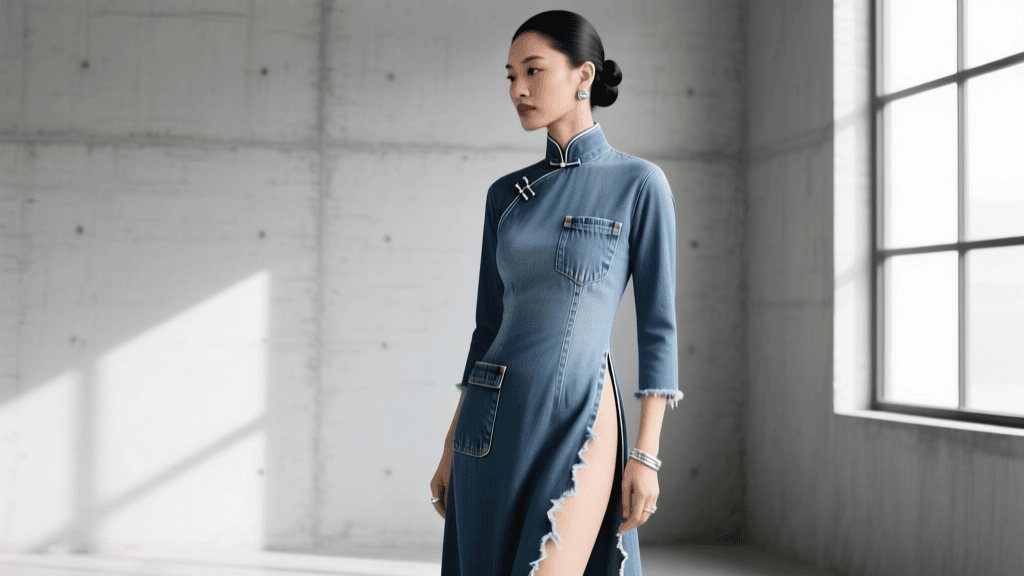
The intersection of heritage garments and streetwear is arguably the most exciting trend of 2026. To achieve this, you will need a cropped Áo Dài, typically ending just below the hips, featuring a relaxed, boxy fit rather than the traditional skin-tight silhouette. Look for tunics crafted from washed cotton, lightweight canvas, or even upcycled denim. The mandarin collar and the iconic side-snap or hidden front placket provide a unique structural element that standard streetwear jackets lack.
Pair this cropped tunic with heavy, raw selvedge denim. The rigid, textured nature of Japanese or American selvedge denim provides a brilliant counterpoint to the fluidity of the tunic. A pair of 14oz to 16oz straight-leg jeans, cuffed at the hem to showcase the selvedge ID, works perfectly. Underneath the tunic, wear a crisp, heavyweight white cotton t-shirt to add a layer of casual depth. This look is ideal for gallery openings, weekend coffee runs, or creative workspaces. It takes the rugged Americana of denim and elevates it with the refined, architectural lines of Vietnamese design.
Look 3: Weekend Ease (Linen Áo Dài and Technical Chinos)
For weekend travel or outdoor events in warmer climates, breathability is paramount. The 2026 summer season has seen a massive resurgence in premium linen blends. A sleeveless or short-sleeved linen Áo Dài in a natural, undyed hue (such as oatmeal or sand) is an exceptional layering piece. Linen offers a beautiful, organic drape and a slightly wrinkled texture that speaks to relaxed luxury.
Instead of traditional trousers, pair this linen tunic with modern technical chinos or lightweight cargo pants made from nylon-cotton ripstop blends. The utilitarian details of the pants—such as subtle side pockets or articulated knees—create a fascinating 'high-low' dynamic with the elegant, sweeping lines of the linen tunic. This combination is highly functional, offering the comfort and mobility required for a day of exploring, while maintaining a highly curated, intentional aesthetic.
Fabric Pairing Matrix: Traditional Tops and Modern Bottoms
To help you navigate the complexities of mixing these distinct garment types, refer to the styling matrix below. This guide ensures that your fabric choices harmonize rather than clash.
| Traditional Fabric | Modern Pairing | Best Occasion | 2026 Styling Tip |
|---|---|---|---|
| Heavy Silk Brocade | Raw Selvedge Denim | Evening / Gallery Events | Let the matte, rugged denim provide a grounding contrast to the brocade's reflective sheen. |
| Lightweight Chiffon | High-Waisted Wool Trousers | Office / Formal Meetings | Ensure the wool trousers have a sharp front crease to maintain a professional, structured silhouette. |
| Washed Linen | Ripstop Technical Chinos | Weekend / Travel | Leave the tunic unbuttoned at the top and roll the sleeves for an effortless, layered appearance. |
| Cotton Drill | Pleated Tailored Shorts | Summer / Casual Dining | Tuck the front panel of the tunic into the shorts to define the waist and show off the pleats. |
Footwear and Accessories: Anchoring the Look
The footwear you choose will ultimately dictate the formality of your mixed-heritage outfit. In 2026, the trend leans heavily towards 'technical tailoring' and elevated comfort. For streetwear and casual denim pairings, retro-running sneakers are the undisputed champion. Models like the New Balance 1906R or the Asics Gel-Kayano series offer the chunky, dynamic silhouette needed to balance the flowing panels of the Áo Dài. The complex paneling of these sneakers visually echoes the intricate construction of the tunic.
For office and formal wear, avoid traditional heels or stiff oxfords. Instead, opt for modern, architectural loafers or split-toe derbies. Brands that focus on hand-welted construction and unique leather patinas will complement the artisanal nature of the Áo Dài. When it comes to accessories, minimalism is key. The high mandarin collar of the tunic draws the eye directly to the face, rendering long necklaces redundant. Instead, focus on statement eyewear, structured leather tote bags, and subtle metallic jewelry, such as a single, sculptural silver cuff or a pair of geometric drop earrings.
Care and Maintenance: Preserving Heritage Textiles
Integrating delicate traditional garments into a rigorous modern wardrobe means they will be subjected to more wear, environmental pollutants, and frequent cleaning than if they were kept in a closet for special occasions. Proper care is essential to maintain the structural integrity and color vibrancy of your Áo Dài. The Victoria and Albert Museum's Textile Care Guide emphasizes that light, dust, and improper storage are the primary enemies of historical and delicate textiles.
For silk and brocade tunics, dry cleaning is generally recommended, but limit this to once or twice a season to prevent the chemical degradation of the fibers. Between wears, air the garment out in a shaded, well-ventilated area. Never hang heavy silk or brocade Áo Dài on thin wire hangers; the weight of the wet or heavy fabric will distort the shoulder seams. Use padded, wide-shoulder hangers to support the structure. For cotton and linen modernized tunics, gentle machine washing on a cold, delicate cycle with a pH-neutral detergent is acceptable. Always lay these garments flat to dry to prevent the elongated panels from stretching out of shape. When ironing, always use a pressing cloth between the iron and the fabric, particularly when dealing with synthetic blends or delicate silk weaves, to avoid scorching and shine marks.
Conclusion: A Living Tradition
The integration of the Áo Dài into the modern 2026 wardrobe is more than just a fleeting fashion trend; it is a profound celebration of cultural continuity. By thoughtfully pairing these historic tunics with contemporary denim, technical fabrics, and modern tailoring, we ensure that these garments remain living, breathing elements of our daily lives. As the Victoria and Albert Museum's Asian Collections demonstrate, Asian textiles have always been dynamic, influencing and absorbing global trends. By mixing the traditional with the modern, you are not just getting dressed; you are participating in the ongoing, beautiful evolution of Asian sartorial heritage.