2026 Hanfu Guide: Dressing for Tropical, Desert & Cold Climates
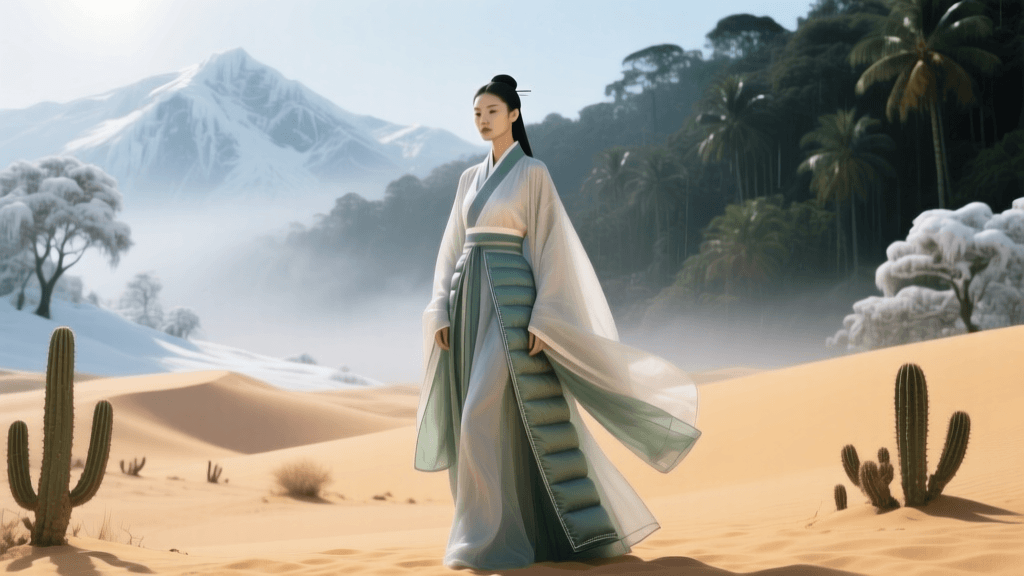
The Global Hanfu Movement Meets Extreme Weather
As the traditional Chinese clothing revival accelerates in 2026, Hanfu is no longer confined to the temperate seasons of spring and autumn. Enthusiasts across the globe are proudly wearing these historical garments in some of the most unforgiving environments on Earth. From the sweltering, high-humidity streets of Singapore to the arid, sun-baked deserts of the Middle East, and the sub-zero, wind-swept winters of Northern Europe, the demand for climate-adapted Hanfu has never been higher. Historically, Chinese textile artisans were masters of environmental adaptation, utilizing complex weaving techniques and strategic layering to combat regional extremes. Today, modern material science has merged with ancient silhouettes. By referencing historical records and leveraging 2026's advanced bio-textiles, wearers can maintain historical accuracy while achieving maximum comfort. According to UNESCO's Intangible Cultural Heritage registry, the traditional sericulture and silk craftsmanship of China laid the groundwork for some of the most breathable and insulating natural fibers known to humanity. This guide explores how to authentically dress in Hanfu for tropical, desert, and cold climates in 2026.
Tropical and High-Humidity Climates: Beating the Heat
Wearing multiple layers of traditional clothing in tropical climates—where temperatures regularly exceed 32°C (90°F) with humidity levels above 80%—requires a strategic approach to fabric and silhouette. The historical solution lies in the Song Dynasty's minimalist aesthetics and specialized summer weaves. The premier garment for tropical heat is the Beizi, an open-front, long-sleeved jacket that creates a natural bellows effect, allowing air to circulate against the body as the wearer moves. In 2026, the most sought-after fabrics for tropical Hanfu are modern interpretations of Luo (gauze) and Sha (crepe). As documented in The Metropolitan Museum of Art's historical textile archives, these complex leno-weave silks feature microscopic pores that facilitate rapid moisture evaporation.
For the inner layers (Zhongyi), pure silk can sometimes cling uncomfortably when damp. The 2026 standard is a Tencel-ramie blend. Ramie, historically known as Xia Bu (summer cloth), possesses natural antibacterial properties and a stiff, cool drape that keeps the fabric away from the skin. When blended with Tencel, the resulting textile is moisture-wicking, incredibly lightweight, and resistant to wrinkling. For the lower half, the Baiku (silk trousers) or a lightweight, single-layer Qun (skirt) made from washed linen are ideal. Avoid heavy brocades (Zhijin) and dense embroidery, which trap heat and add unnecessary weight.
Desert and Arid Climates: Sun Protection and Thermal Shifts
Desert environments present a dual challenge: intense, direct UV radiation during the day and rapid, drastic temperature drops at night. Furthermore, wind-blown sand and dust require protective barriers. The Tang Dynasty, heavily influenced by Silk Road exchanges, offers the perfect historical blueprint for desert wear. The Yuanlingpao (round-collar robe) is an excellent outer layer. Its high collar and secure closures protect the neck and chest from sun exposure, while the sweeping sleeves shield the hands.
In 2026, textile mills in Hangzhou have perfected UV-blocking organza and tightly woven linen-cotton blends that mimic the structure of historical hemp but offer UPF 50+ protection. To manage the diurnal temperature shifts, layering is essential. A lightweight, breathable inner robe of Luo gauze can be paired with a mid-layer of structured cotton. When the desert sun sets and temperatures plummet, a Doupeng (hooded cloak) woven from a dense, wind-resistant wool-silk blend can be thrown over the shoulders. Historically, travelers also utilized the Weimao, a wide-brimmed hat with a sheer veil that protected the face and neck from both the harsh sun and biting sandstorms. Modern 2026 reproductions of the Weimao utilize photochromic threads that darken in intense sunlight, providing dynamic glare reduction while maintaining the romantic, flowing silhouette of the ancient Silk Road merchants.
Cold and Freezing Regions: Historical Layering and Modern Tech
Surviving sub-zero temperatures in Hanfu requires embracing the structured, insulated styles of the Ming Dynasty. The quintessential cold-weather ensemble is the Ao Qun, consisting of a lined or padded Ao (jacket) worn over a Qun (skirt). The Ao typically features a high collar (Liling) and tight-fitting cuffs (Huwan) designed specifically to trap body heat and block freezing winds. The Victoria and Albert Museum's Asian collections highlight numerous surviving Ming garments that showcase the intricate quilting and fur-lining techniques used by historical elites to combat northern winters.
In 2026, Hanfu enthusiasts in regions like Canada and Scandinavia rely on hidden technological integrations to supplement historical designs. The outer shell of the Ao remains historically accurate—often crafted from heavy silk damask or wool crepe—but the inner linings now feature aerospace-grade aerogel insulation or ultra-thin graphene heating pads powered by discreet, rechargeable battery banks hidden in the pockets. For the lower body, the Mamianqun (horse-face pleated skirt) is remarkably well-suited for winter. Its overlapping pleated panels create natural dead-air spaces that act as thermal barriers. In 2026, wearers pair their Mamianqun with fleece-lined, opaque thermal tights or custom-tailored merino wool Ku (trousers) worn beneath the skirt. To complete the ensemble, a heavily embroidered Pifeng (cape) lined with faux rabbit fur provides luxurious warmth for the shoulders and upper back.
2026 Climate-Specific Hanfu Wardrobe Matrix
| Climate Zone | Primary Garment Style | Recommended 2026 Fabric | Key Accessory |
|---|---|---|---|
| Tropical / Humid | Song Dynasty Beizi & Baiku | Tencel-Ramie Blend, Luo Gauze | Bamboo-weave folding fan |
| Desert / Arid | Tang Yuanlingpao & Doupeng | UPF 50+ Linen-Cotton, Windproof Wool-Silk | Weimao (Veil Hat) |
| Cold / Freezing | Ming Ao Qun & Pifeng | Aerogel-lined Damask, Merino Wool | Plush hand muff (Shoulong) |
Footwear and Accessories for the Extremes
Footwear is often the most challenging aspect of wearing Hanfu in extreme climates, as traditional cloth shoes (Buxie) offer little weather resistance. For tropical regions, 2026 has seen the rise of woven rattan and breathable hemp sandals that mimic historical straw footwear but feature ergonomic, arch-supporting cork footbeds. In desert environments, ankle-wrapping techniques using lightweight cotton puttees (Xingdeng) protect the lower legs from sand and scrub brush while allowing sweat to evaporate.
For freezing regions, modern Hanfu boots are a revelation. Crafted from weather-treated vegan leather or traditional felt, these boots feature hidden memory-foam insoles and aggressive rubber treads for navigating ice and snow. They are designed to sit seamlessly beneath the hem of a long Mamianqun or over the top of Ku trousers. Accessories also play a vital functional role: jade and bead jewelry should be swapped for woven silk lanyards and insulated fabric pouches in the cold, while UV-blocking silk parasols remain an indispensable tool for both desert and tropical sun protection.
Conclusion
The beauty of Hanfu lies not just in its visual elegance, but in its profound historical adaptability. As we navigate the diverse climates of 2026, the fusion of ancient Chinese tailoring wisdom with cutting-edge textile science allows enthusiasts to wear their heritage anywhere on the planet. Whether you are seeking the cooling embrace of Song Dynasty ramie in the tropics, the protective veil of Tang Dynasty organza in the desert, or the insulated warmth of a Ming Dynasty cloak in the snow, there is a historically grounded, climate-appropriate Hanfu solution waiting to be discovered.