Top Korean Marketplaces for Custom Hanbok in 2026
The 2026 Renaissance of Bespoke Korean Traditional Dress
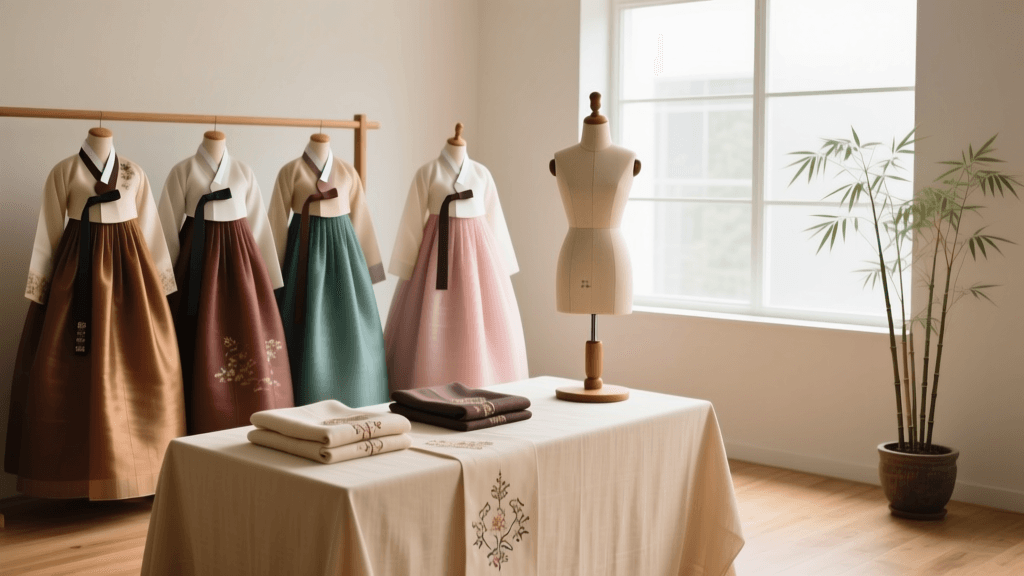
The global appreciation for traditional Asian garments has reached a pivotal moment in 2026. No longer confined to the synthetic racks of tourist rental shops in Seoul or Busan, the hanbok has firmly established itself as a highly sought-after bespoke garment for international collectors, cultural practitioners, and modern fashion enthusiasts. As the demand for authentic, historically accurate, and high-quality traditional Korean clothing surges, navigating the online marketplace requires a nuanced understanding of Korean e-commerce, textile grades, and bespoke tailoring processes.
According to The Metropolitan Museum of Art's Heilbrunn Timeline of Art History, the structural integrity and philosophical underpinnings of Korean dress are deeply tied to its flat-pattern construction and natural fabrics. Preserving these traditional techniques in the modern e-commerce era means knowing exactly where to look. This comprehensive 2026 buyer's guide will walk you through the most reliable online marketplaces for sourcing authentic custom hanbok, decoding fabric grades, and taking precise measurements for your bespoke commission.
Top Online Marketplaces for Authentic Hanbok in 2026
Finding a genuine artisan online requires looking past mass-produced cosplay retailers. In 2026, the most discerning buyers utilize a mix of domestic Korean platforms accessed via proxy, curated global marketplaces, and direct-to-consumer atelier websites.
1. Naver Smart Store (via Proxy Services)
Naver remains the undisputed search engine and e-commerce hub of South Korea. Many of the finest traditional hanbok artisans operate exclusively through Naver Smart Stores. Because these storefronts rarely offer direct international shipping or English interfaces, global buyers in 2026 rely on advanced proxy shopping services like Delivered Korea or Gmarket Global's proxy purchasing tools. By searching specific Korean terms such as '맞춤 한복' (custom hanbok) or '전통 명주' (traditional Myeongju silk), you can uncover hidden ateliers in the Jeonju Hanok Village or Seoul's Bukchon district that cater to domestic clients seeking museum-quality garments.
2. Direct Artisan Ateliers (Hwaon & Sonjjang)
For buyers who prefer a seamless English-language experience without sacrificing authenticity, established heritage brands have upgraded their international bespoke portals. Brands like Sonjjang Hanbok and modern-traditional fusion houses like Hwaon now offer virtual consultations via video call. These platforms allow you to select from their 2026 seasonal silk collections, choose your goreum (tie) colors, and submit custom measurements directly to master tailors in South Korea.
3. Etsy (Filtered for Domestic Korean Makers)
While Etsy is flooded with mass-produced, overseas imitations, it remains a viable platform if you know how to filter correctly. In 2026, the key is to filter the shop location strictly to 'South Korea' and look for sellers who provide detailed photographs of their flat-felled seams and traditional dongjeong (removable white collar). Artisans based in Hwaseong and Gyeongju frequently use Etsy to reach international clients, offering semi-custom options where you select pre-designed silk brocades and provide your measurements.
Decoding Fabric Grades and 2026 Pricing
The price of a custom hanbok is dictated almost entirely by the textile. The Victoria and Albert Museum's Asian Collections highlights the historical importance of natural fibers like silk, ramie, and hemp in Korean sartorial culture. Today, while modern blends exist, true collectors seek out traditional weaves. Below is a comparison of the primary fabric grades available for custom orders in 2026.
| Fabric Type | Traditional Name | 2026 Price (Per Yard) | Full Garment Cost (Est.) | Best Use Case |
|---|---|---|---|---|
| Pure Woven Silk | Myeongju | $85 - $140 USD | $600 - $1,200 USD | Weddings, Ceremonial, Heirloom |
| Silk-Blend Brocade | Samhyeop | $45 - $70 USD | $350 - $600 USD | Festivals, Formal Gatherings |
| Woven Ramie | Mosi | $60 - $90 USD | $400 - $750 USD | Summer Wear, Breathable Formal |
| High-Grade Polyester | Synthetic Yangdan | $15 - $25 USD | $120 - $250 USD | Daily Wear, Dance, Performance |
Pro Tip for 2026 Buyers: Always ask the artisan for the 'composition breakdown' of brocades. Many modern brocades marketed as silk are actually 40% silk and 60% metallic synthetic threads. While beautiful, they lack the drape and breathability of 100% Myeongju silk.
How to Measure Yourself for a Bespoke Hanbok
Unlike Western tailoring, which relies on complex darting and three-dimensional draping, traditional hanbok is constructed using flat, straight lines. The fit is achieved through the gathering of the skirt (chima) and the precise cut of the jacket (jeogori). When submitting your measurements to a Korean tailor in 2026, you must provide the following specific data points:
- Hwa-jang (Sleeve Length): Measured from the prominent bone at the base of your neck, across your shoulder, down to your wrist bone. This determines the elegant, sweeping curve of the baerae (the curved bottom line of the sleeve).
- Jeogori Length: Traditionally, women's jeogori are quite short, ending just below the bust. However, modern bespoke tailors will ask for your preference. Provide the measurement from the base of your neck down to your desired hemline (usually 20-25 cm for modern wear, longer for historical accuracy).
- Chest/Bust Circumference: Measured around the fullest part. Because the jeogori does not have darts, the tailor will add significant ease (usually 10-15 cm) to allow for the traditional overlapping front closure.
- Chima-jang (Skirt Length): Measured from your natural waist (where the skirt will sit, which is often higher than the Western natural waist) down to your ankle bone. The traditional rule is that the hem should just brush the top of the foot when wearing traditional hwa (shoes).
- Shoulder Width: Measured from the edge of one shoulder to the other. This ensures the collar sits flat against the collarbones without pulling.
Navigating International Shipping and Customs
Shipping bespoke garments from South Korea in 2026 is highly efficient, but requires an understanding of current logistics. Most ateliers ship via EMS (Express Mail Service) or DHL Express.
- EMS (Korea Post): Takes 7-14 days to most Western countries. It is the most cost-effective method (averaging $35-$50 USD for a boxed hanbok set) and generally has more lenient customs clearance processes for personal garments.
- DHL/FedEx Express: Takes 3-5 days but costs upwards of $80-$120 USD. Be aware that private couriers act as their own customs brokers, which can sometimes trigger unexpected import duty processing fees depending on your country's 2026 textile import thresholds.
- Customs Declarations: Ensure the artisan declares the package accurately as 'Bespoke Traditional Clothing (Personal Use)'. Undervaluing garments to avoid taxes is a practice that has been heavily penalized by global customs agencies in 2026, and it risks your package being seized or delayed.
Spotting the Fakes: An Authenticity Checklist
When shopping on global marketplaces, it is crucial to distinguish between a genuine, traditionally constructed hanbok and a mass-produced costume. Use this checklist before finalizing your purchase:
- The Dongjeong (White Collar): Authentic hanbok feature a removable, stiffened white collar that is basted onto the neckline. Costumes often have the white collar sewn permanently into the seam or printed onto the fabric.
- The Goreum (Ties): Traditional goreum are long, wide, and tied in a specific, asymmetrical knot. They are structurally integrated into the garment's seams. Fakes often use short, thin ribbons that are merely glued or tacked onto the outside of the jacket.
- Seam Construction: Look closely at the photos of the garment's interior or hem. True traditional garments utilize flat-felled seams to prevent fraying and ensure longevity, a hallmark of Korean textile heritage.
- Symmetry and Pattern Placement: High-end artisans will carefully align brocade patterns, such as cranes or peonies, across the front panels of the jeogori. Mass-produced items cut fabric randomly to save costs.
Final Thoughts on Sourcing Traditional Garments
Investing in a custom hanbok in 2026 is an investment in living history. By utilizing domestic Korean proxy services, verifying textile compositions, and providing meticulous measurements, you can secure a garment that honors the deep cultural legacy of the Korean peninsula. Whether you are commissioning a vibrant hwalot (bridal robe) or a subdued, elegant daily-wear jeogori, the digital bridges built by modern e-commerce have made the mastery of Korean artisans more accessible than ever before.