Antique Silk Kimono Storage & Pest Prevention in 2026
The Vulnerability of Antique Silk to Pests and Decay
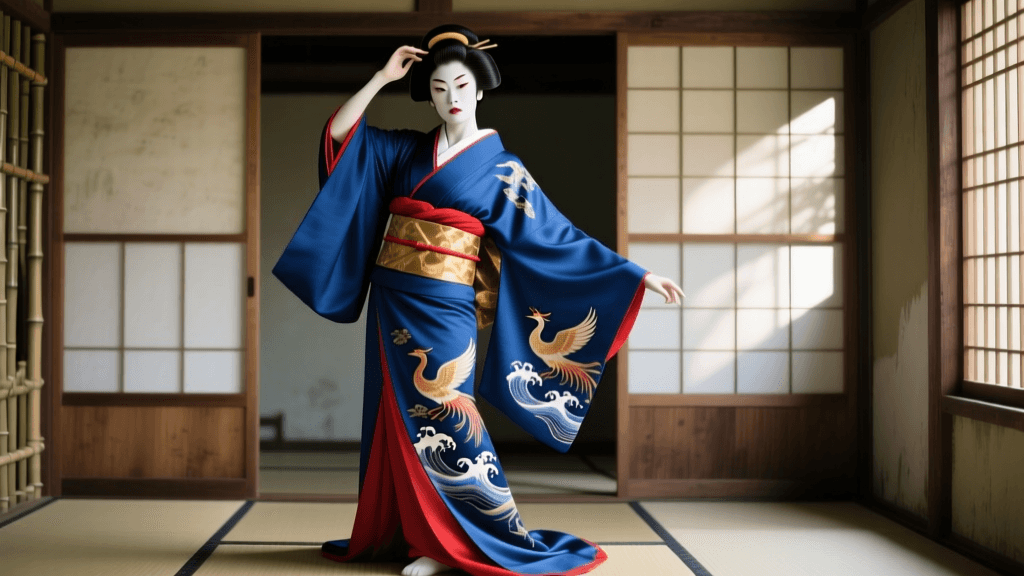
Preserving an antique silk kimono—whether a vibrant Meiji-era uchikake or a subtle Taisho-era komon—requires a meticulous approach to environmental control and pest management. As we navigate 2026, the intersection of traditional Japanese preservation techniques and modern archival science offers collectors and heritage custodians unprecedented tools to protect these fragile textiles. Unlike synthetic fibers, natural protein fibers like silk are highly susceptible to environmental fluctuations, photo-oxidation, and biological threats. While the webbing clothes moth (Tineola bisselliella) is notorious for devouring wool, it is actually the silverfish (Lepisma saccharina) and the carpet beetle (Dermestidae) that pose the most severe threats to antique silk. Silverfish are attracted to the starch-based sizing agents historically used in silk weaving, as well as microscopic organic residues from sweat and food. Carpet beetles, meanwhile, will readily chew through silk to reach adjacent wool linings or simply to clear a path, leaving devastating irregular holes in the honbu (main body) of the garment.
Essential 2026 Climate Control for Kimono Preservation
The foundation of any textile conservation strategy is strict climate control. According to guidelines maintained by the Library of Congress, fluctuations in relative humidity (RH) are far more damaging to silk than a steady, slightly suboptimal environment. For antique silk kimonos, the ideal storage environment in 2026 remains a stable temperature of 65°F (18°C) with a relative humidity of 45% to 50%. High humidity encourages mold growth and accelerates the hydrolysis of silk proteins, leading to the dreaded 'silk shattering' where the fabric becomes brittle and fractures along fold lines. Conversely, humidity below 30% desiccates the fibers, stripping them of their natural moisture and elasticity.
To maintain these parameters, modern collectors rely on smart environmental monitors. The 2026 iteration of the SwitchBot Indoor/Outdoor Thermo-Hygrometer, featuring Wi-Fi 6 connectivity and cloud-based data logging, allows custodians to track micro-climate fluctuations inside archival cabinets in real-time. If the RH spikes above 55%, integrating a smart plug with a compact desiccant dehumidifier ensures automated correction before mold spores can germinate on the silk.
Archival Storage Materials: What to Use and Avoid
Storing a kimono on standard wooden hangers or in plastic garment bags is a recipe for disaster. Wood off-gasses acidic vapors that degrade silk, while plastic traps moisture and emits plasticizers that cause irreversible yellowing. The Victoria and Albert Museum strongly advises against long-term hanging for heavy or antique textiles due to the gravitational stress placed on the shoulder seams. Flat storage in archival boxes is the gold standard for 2026 preservation.
| Material | Purpose | 2026 Recommended Product | Estimated Cost |
|---|---|---|---|
| Unbuffered Acid-Free Tissue | Padding folds to prevent sharp creases and fiber breakage | Talas Archival Unbuffered Tissue | $28.00 / 100 sheets |
| Drop-Front Archival Box | Light and dust barrier; allows easy removal without lifting | Lineco Drop-Front Textile Box (40x24x6) | $55.00 / box |
| Tatoushi (Mulberry Paper) | Traditional Japanese wrapping; breathable and pH neutral | Kyoto Crafted Washi Tatou Set | $42.00 / set |
| Activated Charcoal Packs | Passive humidity buffering and odor absorption | Bambù Earth 2026 Linen Charcoal Pods | $18.00 / 4-pack |
When folding the kimono, unbuffered acid-free tissue paper must be rolled into 'sausages' and placed inside every fold, particularly at the sleeves and the hem. This prevents sharp creases that will eventually snap the antique silk fibers. The wrapped garment is then placed inside a tatou envelope or directly into the drop-front archival box, ensuring the textile is never subjected to the friction of being pulled from a tight lid.
Advanced Pest Prevention Strategies for 2026
Historically, Japanese households relied on camphor or strong aromatic woods to deter insects. In the mid-20th century, chemical mothballs containing naphthalene or paradichlorobenzene became common. However, the Environmental Protection Agency (EPA) strictly warns against the misuse of these pesticides, and modern conservators universally condemn them for textile storage. These chemicals sublime into heavy gases that not only pose severe respiratory risks to humans but also react with the metallic threads (kinran) in brocade kimonos, causing rapid tarnishing and blackening. Furthermore, the chemical residue can melt into the silk, creating permanent, greasy stains.
In 2026, integrated pest management (IPM) for textile archives focuses on non-toxic, proactive deterrents:
- Pheromone Traps: Dr. Killigan's 2026 Dual-Lure Pheromone Traps are essential for monitoring. They attract and trap male webbing moths and carpet beetles, breaking the mating cycle and providing an early warning system if an infestation breaches your storage area.
- Eastern Red Cedar: Cedar blocks naturally repel silverfish and moths. However, the aromatic oils evaporate over time. To maintain efficacy, cedar blocks must be lightly sanded every six months to expose fresh wood, and they must never touch the silk directly—always separate them with a layer of acid-free tissue.
- Freezing Protocol: If you acquire a vintage kimono of unknown provenance, quarantine it immediately. Place the garment in a sealed polyethylene bag and freeze it at -20°C (-4°F) for 72 hours to kill any dormant eggs or larvae. Allow it to thaw slowly at room temperature before unsealing to prevent condensation from forming on the silk.
The Traditional 'Mushiboshi' (Airing Out) Technique
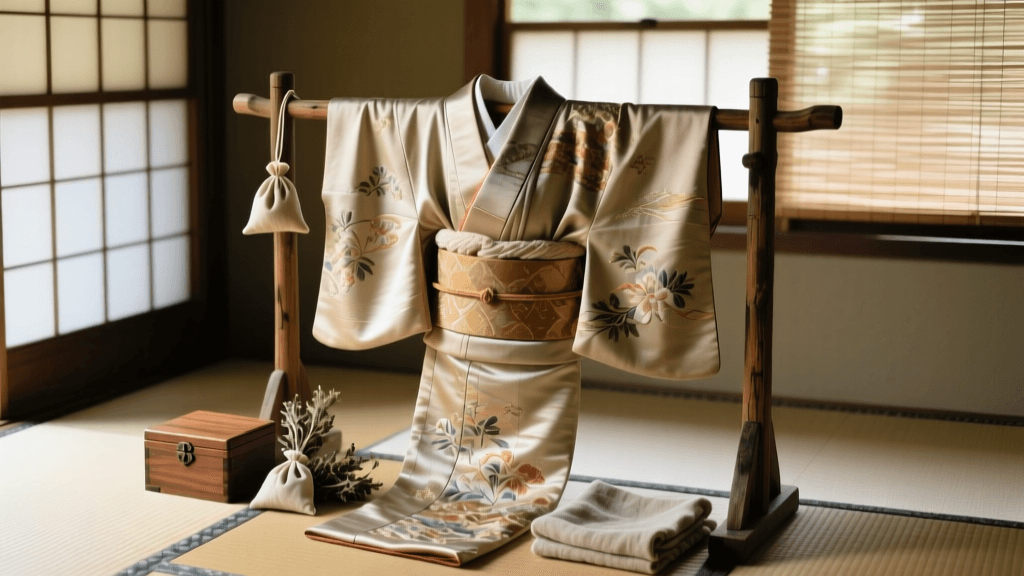
In Japan, the practice of mushiboshi (literally 'insect airing') is traditionally performed in late autumn when the air is dry and crisp. This involves taking kimonos out of storage, unfolding them, and allowing them to breathe. This practice is just as vital in 2026 for Western collectors as it is in Kyoto. Storing silk in complete darkness for years can lead to the accumulation of trapped off-gassing and localized humidity pockets.
To perform a modern mushiboshi, select a dry, overcast day with low humidity (below 50%). Lay the kimono flat on a clean, cotton-covered bed or hang it on a specialized, wide-shouldered kimono hanger (emono) in a shaded, well-ventilated room. Never expose antique silk to direct sunlight. Ultraviolet radiation causes irreversible photo-oxidation, fading the delicate plant-based dyes (like safflower red and indigo) and degrading the protein structure of the silk within minutes. Allow the garment to air out for four to six hours, gently brushing away any surface dust with a soft, natural-bristle brush before carefully refolding and returning it to its archival box.
Step-by-Step Folding and Storing Routine
Proper folding, known as sode-tatami, is designed to distribute stress evenly across the garment and align with the original weaving tensions. Follow these steps for safe storage:
- Lay the kimono face down on a clean, flat surface covered with washed, unbleached cotton.
- Fold one side of the body panel back toward the center seam.
- Fold the sleeve back diagonally or parallel to the body, depending on the specific tatami style dictated by the garment's era and cut.
- Repeat on the opposite side, creating a long, narrow rectangle.
- Roll unbuffered tissue paper into soft cylinders and place them along the remaining horizontal fold lines (the waist and the hem).
- Fold the bottom third up, and the top third down, cushioning every new crease with more tissue.
- Wrap the folded bundle in acid-free tissue or traditional tatoushi paper, securing it with a plain cotton tie or twill tape. Never use rubber bands or adhesive tapes.
When to Seek Professional Restoration
Despite meticulous care, antique kimonos may suffer from historical damage, such as shattering silk, oxidized metallic threads, or deep-set organic stains. Attempting DIY wet cleaning on antique silk is highly discouraged; water can cause dyes to bleed and can permanently alter the hand and drape of the fabric by washing out the original stiffening agents. If a garment requires intervention, seek a certified textile conservator. In 2026, professional conservation labs utilize advanced techniques like localized humidification to relax stubborn creases without wetting the fibers, and custom-dyed, sheer silk crepeline overlays to stabilize shattering areas invisibly. By combining the wisdom of traditional Japanese garment care with the precision of modern archival science, collectors can ensure these masterpieces of Asian textile heritage survive for generations to come.