Tracing Kimono Textile Trade Routes: 2026 Collector Guide
The Global Threads of Japanese Fashion
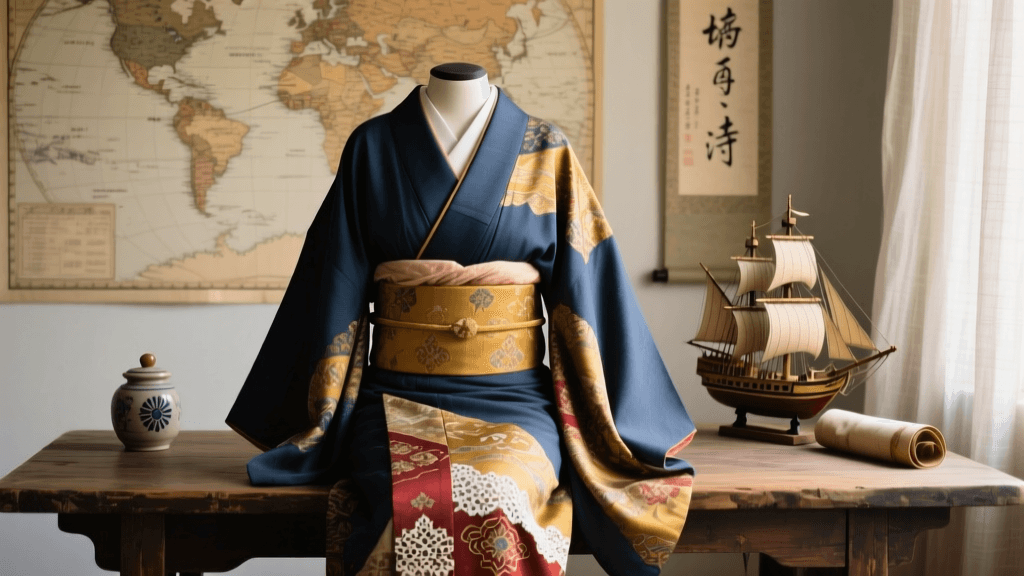
When we envision the traditional Japanese kimono, it is easy to imagine a garment born entirely from isolated, indigenous craftsmanship. However, the true history of Japanese dress is a vibrant tapestry woven with threads from across the globe. From the ancient overland caravans of the Silk Road to the maritime spice routes of the Indian Ocean, international trade has profoundly dictated the evolution of Japanese textiles. For modern collectors, curators, and enthusiasts in 2026, understanding these historical import routes is essential for authenticating, valuing, and preserving antique garments. This comprehensive guide explores the foreign fibers, dyes, and motifs that transformed Japanese fashion, offering actionable market insights and preservation protocols for today's collectors.
The Shosoin Repository and Early Silk Road Imports
The earliest evidence of global trade influencing Japanese garments is housed in the Shosoin repository in Nara. Dating back to the 8th century, this imperial treasure house contains textiles that highlight the vast reach of the ancient Silk Road. According to the UNESCO Silk Roads Programme, the exchange of goods between East Asia, Central Asia, and the Mediterranean allowed Japanese elites to acquire Persian brocades, Chinese silks, and Indian cottons. These early imports were not used for everyday wear but were reserved for Buddhist ceremonial robes and the highest echelons of court dress. The iconic karakusa (arabesque) motif, deeply embedded in Japanese textile design, traces its lineage directly back to Hellenistic and Persian art, traveling via Chinese weavers to the Japanese archipelago.
Key Historical Imports in Japanese Garments
To identify trade-influenced textiles in your collection, it is crucial to understand the specific materials that entered Japan through various historical eras. The following table outlines the most significant imported textiles that shaped kimono and accessory design.
| Material | Origin | Primary Era of Import | Common Garment Application |
|---|---|---|---|
| Nishiki (Silk Brocade) | Ming/Qing China | Muromachi to Edo | Obi, Noh theater costumes, Kosode |
| Sarasa (Chintz) | Coromandel Coast, India | Edo Period | Kosode linings, Shifu (pouches), Tea ceremony ware |
| Rasha (Woolen Broadcloth) | Netherlands / Europe | Edo to Meiji | Haori, Winter Kimono, Samurai Jinbaori |
| Kasuri (Ikat Cotton) | Southeast Asia / Ryukyu | Edo Period | Everyday Kimono, Workwear, Futon covers |
The Maritime Spice Routes and Indian Sarasa
During the Edo period (1603–1867), Japan enacted the sakoku (closed country) policy, severely restricting foreign contact. However, trade did not cease; it was merely funneled through highly controlled channels. The maritime routes connecting India, Southeast Asia, and the Dutch East Indies brought Indian chintz, known in Japan as sarasa, to Nagasaki. Because import volumes were strictly limited, sarasa became an ultra-luxury commodity. Wealthy merchants and samurai used small fragments of this vibrant, colorfast cotton to line the interior of their otherwise subdued kosode (early kimono), or crafted them into small drawstring pouches for tea ceremony utensils. In 2026, authentic Edo-period sarasa fragments remain highly sought after by textile historians and are frequently featured in specialized exhibitions at institutions like the Kyoto National Museum.
Dejima and the Dutch Wool Trade
Perhaps the most surprising import in the history of Japanese winter garments is rasha, a heavy woolen broadcloth imported from the Netherlands via the artificial island of Dejima. While silk and cotton dominated Japanese weaving, wool was entirely foreign and highly prized for its windproof and insulating qualities. During the late Edo and early Meiji periods, rasha was adopted by the samurai class for jinbaori (surcoats worn over armor) and later by Meiji gentlemen for Western-influenced haori jackets. The deep reds, blacks, and navy blues of Dutch wool were often accented with traditional Japanese silk crests (kamon), creating a striking fusion of European utility and Japanese heraldry.
2026 Collector’s Market: Sourcing and Pricing
The market for trade-influenced antique kimono has evolved significantly by 2026, driven by a surge in global interest in cross-cultural fashion history. Collectors are increasingly moving beyond standard silk Yuzen kimono to hunt for garments that tell a story of international exchange. When sourcing these pieces, the Toji Temple Antique Market in Kyoto and specialized online auction houses remain the premier destinations.
Below is a snapshot of 2026 market valuations for authentic, well-preserved trade-influenced garments:
- Meiji Period Rasha Haori (Wool): $450 – $850 USD. Pricing peaks for pieces featuring intact silk lining and crisp, embroidered family crests.
- Edo Period Sarasa Pouches (Shifu): $150 – $300 USD per piece. Condition of the original indigo and madder dyes heavily dictates value.
- Chinese Silk Brocade (Nishiki) Obi: $600 – $1,200 USD. Maru obi woven with imported gold-wrapped threads and Chinese phoenix motifs command premium prices.
- Ryukyu Kasuri Kimono: $800 – $1,500 USD. Authentic indigo-dyed bashofu or cotton kasuri from the southern islands are increasingly rare due to fiber degradation.
Authentication Checklist for Trade-Influenced Textiles
Distinguishing a genuine historical import from a later reproduction requires a trained eye and an understanding of historical manufacturing techniques. Use this checklist when evaluating potential acquisitions:
- Fiber Burn Test (on loose threads only): Genuine Dutch rasha will smell of burning hair and leave a crushable ash, whereas modern synthetic replicas will melt and form hard plastic beads.
- Dye Analysis: Authentic Indian sarasa utilizes mordant-dyeing techniques where colors are chemically bonded to the cotton. If the color is only surface-printed and cracks sharply when folded, it is likely a late 20th-century reproduction.
- Weave Irregularities: Early Chinese tribute silks often feature slight slubs and irregularities in the warp threads, unlike the machine-perfect uniformity of modern Jacquard loom brocades.
- Lining Inspection: Many Edo-period wool and cotton garments were lined with recycled silk or hemp. Hand-spun hemp linings with visible weave variations indicate pre-industrial origins.
2026 Preservation Protocols for Mixed-Origin Fibers
Preserving garments that combine imported materials with domestic fibers presents unique challenges. The Victoria and Albert Museum's Asia Collections department notes that mixed-fiber garments (such as wool haori with silk linings) react differently to environmental stress, leading to internal tearing if not stored correctly. In 2026, collectors utilize smart-climate control units to maintain micro-environments within storage chests.
Actionable Preservation Steps & Costs
- Climate Control: Maintain a strict relative humidity (RH) of 45-55% and a temperature of 18-20°C (64-68°F). Fluctuations cause wool to expand and silk to contract, shredding the interior seams.
- Acid-Free Buffering: Never fold imported wool directly against silk. Use unbuffered, acid-free tissue paper to stuff sleeves and bodices, preventing sharp creases that snap brittle historical fibers.
- Pest Management: Wool and animal-based dyes are highly susceptible to webbing clothes moths. Utilize pheromone traps and cedar-lined storage rooms rather than chemical mothballs, which will permanently taint the garment and degrade metallic threads.
- Professional Conservation: If you acquire a piece with shattered silk linings or fraying wool hems, budget between $350 and $600 USD for professional textile stabilization. Do not attempt to machine-stretch or wash historical imports; dry cleaning solvents used in standard commercial operations will strip 18th-century natural dyes instantly.
Conclusion
The kimono is far more than a symbol of isolated Japanese tradition; it is a historical ledger of global commerce, diplomacy, and artistic exchange. By understanding the trade routes that brought Persian motifs, Indian cottons, and Dutch wools to Japan, collectors in 2026 can build more nuanced, historically significant archives. Whether you are bidding on a Meiji wool haori or preserving a fragment of Edo-period chintz, honoring the global journey of these textiles ensures their survival for generations to come.