Vintage Kimono Auctions & Value Appraisal Guide 2026
The 2026 Landscape of Secondhand Kimono Auctions
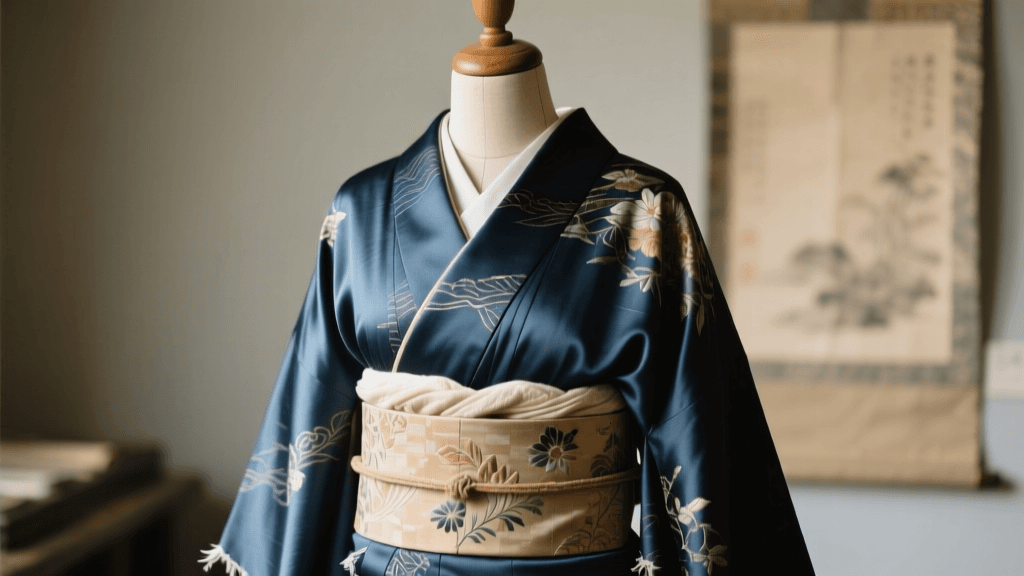
As we move through 2026, the global secondary market for traditional Japanese garments has experienced a profound renaissance. Driven by a growing international appreciation for sustainable fashion, artisanal craftsmanship, and the upcycling movement, vintage kimono auctions have transformed from niche collector circles into highly competitive digital marketplaces. Platforms like Yahoo! Auctions Japan remain the undisputed titan of this space, processing thousands of antique and mid-century textile listings daily. Meanwhile, specialized auction houses in Kyoto and Tokyo have expanded their digital footprints, offering curated lots of museum-quality garments to a global audience.
For collectors, fashion archivists, and cultural historians, understanding the nuances of kimono value appraisal is no longer optional; it is essential. The sheer volume of secondhand silk garments entering the market means that while incredible bargains can be found, the market is also saturated with mass-produced, late-Showa era synthetic blends masquerading as high-end antiques. Navigating this landscape requires a sharp eye for weaving techniques, dyeing methods, and historical provenance.
Core Criteria for Kimono Value Appraisal
Appraising a vintage kimono requires looking far beyond the surface-level beauty of the garment. True value in 2026 is determined by a matrix of material quality, artisanal technique, historical era, and structural condition.
Fabric and Weaving Techniques
The foundation of any high-value kimono is its textile. Hand-woven silks command the highest premiums at auction. Oshima Tsumugi, originating from Amami Oshima, is highly sought after. This pongee silk is dyed using iron-rich mud and the bark of the teechi tree, resulting in a subtle, deep brown-black hue and intricate kasuri (ikat) patterns. Authentic Oshima Tsumugi is incredibly labor-intensive, and vintage pieces in excellent condition frequently trigger bidding wars among international collectors.
Similarly, Nishijin-ori (Nishijin brocade) from Kyoto represents the pinnacle of Japanese weaving. Characterized by its heavy, richly textured silk and the use of gold or silver leaf threads woven directly into the fabric, Nishijin-ori obi and formal kimono are staples of high-end antique auctions. According to the Japan's Database of National Cultural Properties, the preservation of these complex weaving techniques is a matter of national heritage, which inherently bolsters the market value of surviving antique examples.
Dyeing Methods and Artistic Provenance
Hand-painted and resist-dyed garments hold immense value, particularly those featuring Yuzen techniques. Kyo Yuzen (from Kyoto) is celebrated for its opulent, stylized motifs and generous use of gold leaf and embroidery. In contrast, Kaga Yuzen (from Kanazawa) is prized for its hyper-realistic depictions of nature, utilizing a strict palette of five signature colors (indigo, crimson, ochre, green, and purple) and distinctive 'bleeding' edges on the dyed motifs. Collectors in 2026 are increasingly using digital magnification tools to inspect auction photos for the tiny, hand-painted brushstrokes that distinguish authentic Kaga Yuzen from modern stencil-printed imitations.
Era and Historical Significance
The historical era of the garment heavily dictates its auction trajectory. Garments from the Taisho Roman period (1912-1926) are currently the most coveted among fashion archivists. These pieces often feature bold, art-deco inspired geometric patterns, large-scale floral motifs, and vibrant, contrasting colors that reflect Japan's rapid modernization and Western cultural integration during the era. The Metropolitan Museum of Art's Asian Art collection frequently highlights the Taisho period as a pivotal moment of artistic rebellion in Japanese textiles, a sentiment that is heavily mirrored in current auction premiums.
Assessing Condition: The Language of Flaws
When reading Japanese auction descriptions, understanding the terminology of textile degradation is critical. Unlike Western vintage clothing, where 'patina' is often celebrated, the traditional Japanese aesthetic demands pristine preservation. Flaws significantly impact the final hammer price.
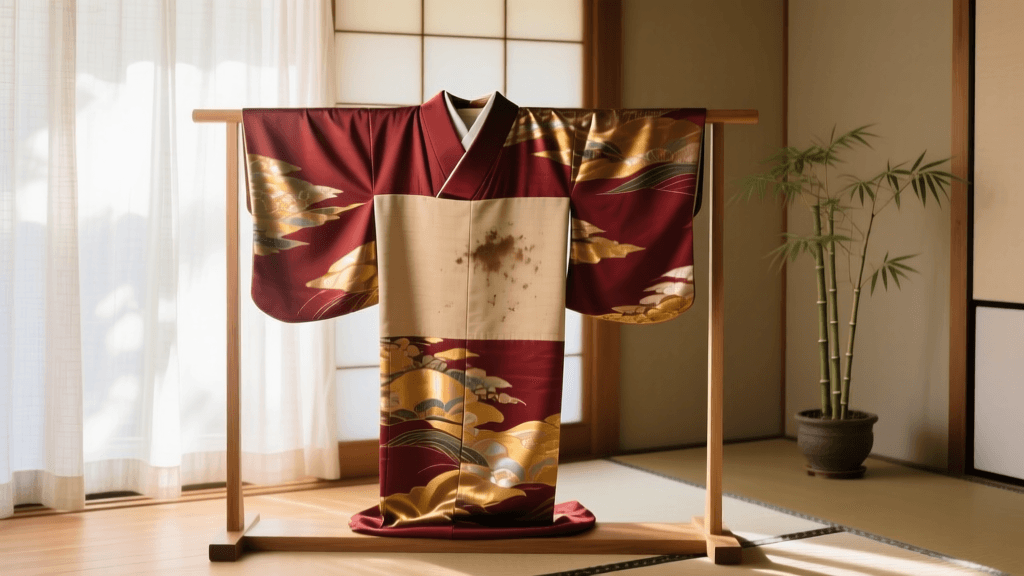
- Shimi (Age Spots): Brownish spots caused by the oxidation of natural oils or old starch paste. While small shimi on the inner lining (jura) are forgivable, shimi on the main body or hem (suso) of a silk kimono can reduce its value by up to 60%.
- Yake (Sun Fading): Silk is highly susceptible to UV damage. 'Sode-yake' refers to fading on the tops of the sleeves and shoulders where the garment was exposed to light while displayed or worn. Severe yake renders a garment largely unwearable for formal occasions, relegating it to upcycling material.
- Kabi (Mold/Mildew): Japan's humid summers are the enemy of stored silk. Kabi presents as white or grey powdery spots and carries a distinct, musty odor. While surface mold can sometimes be professionally cleaned by specialist 'shimi-nuki' artisans, deep-set mildew permanently weakens the silk fibers.
- Kusari (Dry Rot): The most devastating flaw. Kusari occurs when the metallic threads (often used in Nishijin brocade or heavy embroidery) oxidize and chemically burn through the surrounding silk, causing the fabric to disintegrate. Any mention of kusari in an auction listing is an immediate red flag for collectors.
2026 Kimono Auction Value Comparison Table
The following table outlines the average auction values for highly sought-after vintage kimono categories in 2026, assuming good to excellent condition with no major shimi or yake.
| Garment Type | Defining Characteristic | 2026 Avg. Auction Value (USD) | Collector Demand |
|---|---|---|---|
| Taisho Roman Meisen | Ikat-woven silk, bold art-deco motifs | $350 - $1,200 | Extremely High |
| Oshima Tsumugi | Mud-dyed pongee silk, intricate kasuri | $800 - $3,500+ | High |
| Edo Period Kosode | Pre-1868, hand-painted, rare survival | $2,500 - $10,000+ | Museum/Archival |
| Showa Era Kurotomesode | Black silk, 5 family crests, hem motifs | $150 - $600 | Moderate |
| Vintage Haori (Men's) | Hidden silk linings (hiyoku), subtle exteriors | $200 - $900 | High (Global Fashion) |
Navigating Proxy Bidding and Authentication
For international buyers participating in 2026, direct bidding on domestic Japanese platforms is rarely possible due to strict residency and banking requirements. Consequently, proxy bidding services have become an indispensable part of the appraisal and acquisition pipeline. When utilizing these services, the golden rule is to never bid blindly based on a single thumbnail image.
Expert bidders routinely request 'shashin tsuika' (additional photos) through the proxy service's inquiry system before the auction enters its final 24 hours. Specifically, you must request high-resolution images of the hiyoku (the inner lining), the okumi (the front overlapping panels), and the erimoto (the area right below the collar). These high-friction areas are where hidden stains, sweat damage, and fabric weakness are most likely to occur. Furthermore, understanding the 'yuki' measurement (the distance from the center back seam to the edge of the sleeve) is crucial. In 2026, global buyers often seek out vintage kimono with a yuki of 68cm or greater to accommodate modern, taller frames, making these specific measurements highly competitive at auction.
Post-Auction Preservation and Archival Care
Winning the auction is only the first step; preserving the textile is an ongoing responsibility. Upon receiving a vintage silk kimono, it must immediately be removed from any plastic shipping materials, which trap moisture and accelerate mold growth. The garment should be gently aired out in a climate-controlled, dark room for 48 hours.
For long-term storage, collectors must adhere to traditional Japanese archival methods, which align perfectly with modern conservation science. The kimono should be folded along its original seams and wrapped in tatoushi—traditional, acid-free, breathable paper made from high-quality mulberry fibers. The Victoria and Albert Museum's Asian textile archives emphasize the importance of avoiding acidic materials and synthetic plastics when storing historic silks, as off-gassing can cause irreversible yellowing and fiber degradation. Finally, the wrapped garments should be stored in a kiri tansu (paulownia wood chest). Paulownia wood naturally regulates humidity and contains compounds that repel insects, making it the ultimate archival vessel for protecting your auction acquisitions for generations to come.
Conclusion
The 2026 kimono auction market offers an unprecedented opportunity to own a piece of wearable Asian history. By mastering the terminology of textile flaws, recognizing the hallmarks of elite weaving and dyeing techniques, and employing strategic bidding practices, collectors can build extraordinary archives. Whether you are hunting for a vibrant Taisho Roman Meisen or a subdued, masterfully woven Oshima Tsumugi, the key to success lies in meticulous appraisal and a deep respect for the artisans who originally brought these silk masterpieces to life.