Ancient Greek Chiton Guide 2026: Doric vs Ionic Draping Techniques
The Renaissance of Classical Garments in 2026
As we navigate the historical reenactment and experimental archaeology landscape of 2026, the study and reconstruction of ancient Greek and Roman garments have reached unprecedented levels of accuracy. Moving far beyond the theatrical, synthetic costumes of the past century, modern classicists, textile historians, and participants in the Mediterranean Heritage Festivals are embracing authentic materials, precise mathematical draping ratios, and historically verified natural dyes. At the center of this classical revival is the chiton, the foundational garment of ancient Greece that influenced Roman dress and continues to captivate historians today.
According to the Metropolitan Museum of Art's Heilbrunn Timeline of Art History, the chiton was not merely a piece of clothing but a complex, uncut textile that relied entirely on the art of draping, folding, and pinning to achieve its iconic silhouette. In 2026, the European Folk Dress and Classical Antiquity societies have standardized guidelines for reconstructing these garments, emphasizing the distinct differences between the heavy, structured Doric chiton and the lightweight, flowing Ionic chiton. This comprehensive guide will walk you through the precise measurements, fabric sourcing, and draping techniques required to recreate these ancient masterpieces today.
The Doric Chiton: Heavy Linen and the Peplos Fold
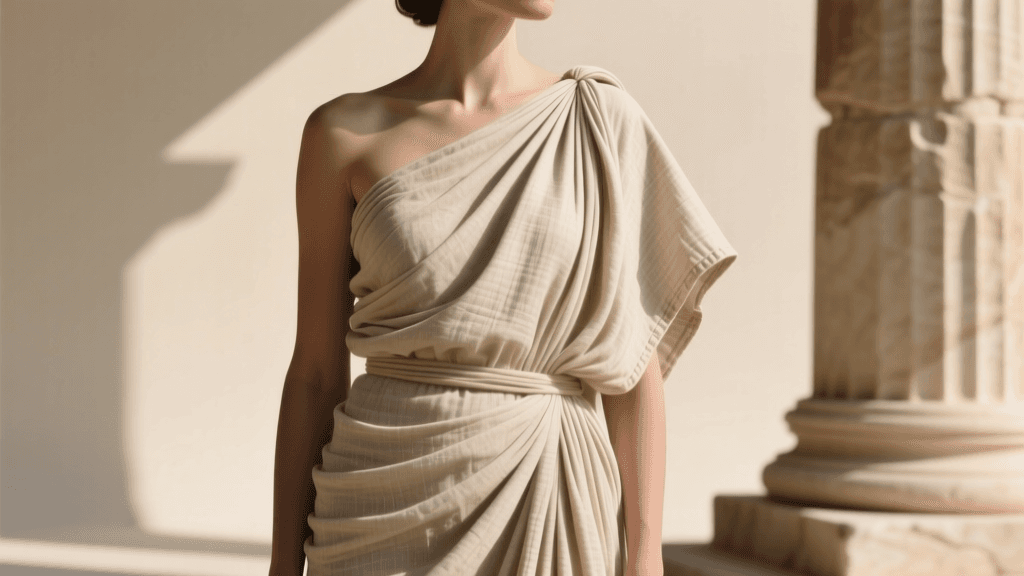
The Doric chiton (often associated with the woolen peplos worn by women) is characterized by its heavier weight, structured drape, and the signature apoptygma—an overfold that cascades down the chest and back. Historically, this garment was ubiquitous during the Archaic and early Classical periods. For modern reenactors in 2026, achieving the correct drape requires a deep understanding of textile weight and gravity.
Fabric Sourcing and Measurements
To recreate an authentic Doric chiton, you must source a heavyweight, tightly woven linen or a lightweight worsted wool. In the current 2026 textile market, organic Belgian linen weighing between 280 and 320 grams per square meter (GSM) is the gold standard for this garment. The width of the fabric should be approximately 1.5 to 2 times the wearer's maximum circumference (usually the hips or chest), plus an additional 30 centimeters to allow for the side overlap.
- Length: Cut the fabric to the wearer's height plus 40 centimeters. This extra length is crucial for creating the kolpos, the bloused effect achieved by pulling the fabric up through a belt.
- The Apoptygma (Overfold): Before folding the garment in half vertically, fold the top edge down by 30 to 45 centimeters. This creates the double-layered chest panel visible in classical marble statuary.
- Fastening: The Doric style typically requires only two large, heavy fibulae (brooches) at the shoulders. Modern 2026 reproductions of bronze arched fibulae, cast using traditional lost-wax methods, are highly recommended to support the weight of the heavy linen without tearing.
The Ionic Chiton: Lightweight Linen and Sleeve Construction
Emerging later and gaining immense popularity during the 5th century BCE, the Ionic chiton represents a shift toward lighter, more voluminous textiles. As noted by the World History Encyclopedia, the Ionic chiton was traditionally made of fine linen or even imported silk for the elite, featuring multiple fastenings along the arms to create a delicate, pleated sleeve effect.
Pinning Techniques and Fibulae Selection
Unlike the Doric variant, the Ionic chiton does not typically feature the heavy apoptygma overfold. Instead, its complexity lies in the shoulder and arm fastenings. The fabric tube is significantly wider—often 2.5 times the wearer's width—allowing for deep, luxurious folds.
Instead of two heavy brooches, the Ionic chiton is secured along the upper arms using a series of small pins or simple tied knots spaced roughly 8 to 10 centimeters apart. This creates a faux-sleeve that drapes elegantly over the bicep. In 2026, experimental archaeologists frequently use small, replica silver or bronze peronai (straight pins) with decorative bead heads to secure these points. The waist is then cinched with a zoni (cord or woven belt), and the fabric is bloused over the belt to hide the waistline and adjust the hemline to the ankles or knees, depending on the wearer's gender and social role.
Step-by-Step Draping Guide for the Modern Hellenic Revivalist
Draping a chiton is an active process that requires a partner and a bit of patience. Follow these steps for a historically accurate Ionic drape:
- Form the Tube: Sew the vertical edges of your wide linen rectangle together to form a cylinder, leaving the top 15 centimeters unsewn to allow for arm movement.
- Establish the Shoulder Line: Have the wearer step into the tube. Gather the top edge at the front and back, pinching them together at the outer edges of the collarbone. Secure with your first pair of pins.
- Create the Sleeves: Move outward along the arm, gathering equal amounts of front and back fabric every 10 centimeters, pinning them together until you reach the middle of the upper arm.
- Belt and Blouse: Tie a woven wool or linen cord tightly around the natural waist. Pull the fabric up and over the belt evenly all the way around the body until the hem grazes the floor (for women) or the knees (for men).
- Adjust the Kolpos: Ensure the blousing is even, allowing the fabric to cascade gracefully over the belt, hiding it completely.
Comparative Analysis: Doric vs. Ionic Chiton
The table below outlines the primary differences between the two styles, including current 2026 market estimates for sourcing authentic, high-quality materials from specialized European heritage weavers.
| Feature | Doric Chiton | Ionic Chiton |
|---|---|---|
| Primary Material | Heavyweight Linen or Worsted Wool (280+ GSM) | Fine, Lightweight Linen or Silk (120-150 GSM) |
| Overfold (Apoptygma) | Yes, prominent chest/back panel | No, or very minimal |
| Shoulder Fastening | 2 large, heavy Fibulae | Multiple small pins or knots along the arm |
| Sleeve Effect | Sleeveless, open sides | Creates a pleated, faux-sleeve |
| 2026 Material Cost Estimate | €60 - €90 (based on 4m of heavy heritage linen) | €80 - €140 (based on 5m of fine linen/silk blends) |
Dyeing and Embroidery: Historical Accuracy in the 2020s
A common misconception perpetuated by 19th-century neoclassical art is that ancient Greeks wore exclusively stark white garments. Modern archaeological textile analysis has thoroughly debunked this. The ancients loved vibrant colors, and the 2026 reenactment community has fully embraced natural, botanical dyeing to replicate these hues.
For a historically accurate wardrobe, consider the following natural dye sources that have seen a massive resurgence among European artisan dyers over the last few years:
- Madder Root (Rubia tinctorum): Produces a range of brick reds, terracottas, and deep oranges. It was widely used across the Mediterranean and requires an alum mordant to bind to linen fibers effectively.
- Weld (Reseda luteola): The premier source for brilliant, colorfast yellows in antiquity. Often used to dye the chitons of priestesses and young women.
- Woad and Indigo: While true indigo was an expensive import, woad was cultivated in Europe to produce deep blues, often reserved for the borders and hems of higher-status garments.
Embroidery on the chiton was generally restricted to the paraphes (decorative borders) at the hem and neckline. Geometric patterns, meanders (Greek keys), and stylized floral motifs were woven directly into the fabric on the loom or embroidered using fine wool threads. According to Encyclopedia Britannica, the status of the wearer was often communicated not just by the volume of fabric used, but by the complexity and color of these woven borders.
Sourcing Accessories for the Complete Ensemble
The chiton was rarely worn alone. To complete your 2026 classical ensemble, you must consider the outerwear and accessories that defined ancient Greek daily life. The himation (a large, heavy rectangular cloak) was draped over the chiton for warmth and modesty, often serving as a marker of civic status and philosophical leaning. Men engaged in physical labor or athletic pursuits might wear the exomis, a variation of the chiton fastened over only one shoulder to allow complete freedom of movement for the right arm.
Footwear is equally important. While many went barefoot indoors, the krepides (leather sandals with intricate strapping up the calf) and the kothornoi (soft leather boots) are essential for outdoor festivals. In 2026, several specialized cobblers in Greece and Italy offer bespoke, historically accurate vegetable-tanned leather sandals constructed using ancient lasting techniques, ensuring your ensemble is accurate from the drape of the linen to the stitching on the leather.
Conclusion
Reconstructing the ancient Greek chiton in 2026 is a deeply rewarding exercise in experimental archaeology and cultural appreciation. Whether you choose the structured, architectural lines of the Doric style or the fluid, voluminous elegance of the Ionic variant, the key to success lies in respecting the mathematics of the drape and the integrity of the natural materials. By sourcing high-quality linens, utilizing historically accurate fibulae, and embracing the vibrant reality of ancient botanical dyes, modern revivalists can step out of the pages of history and into the living, breathing textile traditions of the classical world.