Complete Ancient Greek Chiton and Peplos Draping Guide 2026
Introduction to Classical Hellenic Dress in 2026
As we navigate the cultural and historical reenactment landscape of 2026, the revival of classical antiquity in modern wardrobes, theatrical productions, and Hellenic heritage festivals has reached new heights of authenticity. Moving away from the synthetic, mass-produced costumes of the past decade, today's enthusiasts and scholars prioritize historical accuracy, sustainable textiles, and traditional draping techniques. Understanding the foundational garments of ancient Greece—specifically the Doric peplos and the Ionic chiton—is essential for anyone looking to authentically represent European folk dress from the classical era. This comprehensive guide will walk you through the history, modern fabric sourcing, and precise draping methods required to master these iconic garments today.
The Foundations of Hellenic Dress: Peplos vs. Chiton
The ancient Greek wardrobe was fundamentally based on the principle of draping rather than tailoring. Unlike modern clothing, which is cut and sewn to fit the body's contours, classical garments were constructed from large, rectangular pieces of woven fabric that were wrapped, pinned, and belted around the wearer. According to the Metropolitan Museum of Art's Heilbrunn Timeline of Art History, the two primary garments for women were the Doric peplos and the Ionic chiton, each reflecting different regional influences, climates, and eras of Greek history.
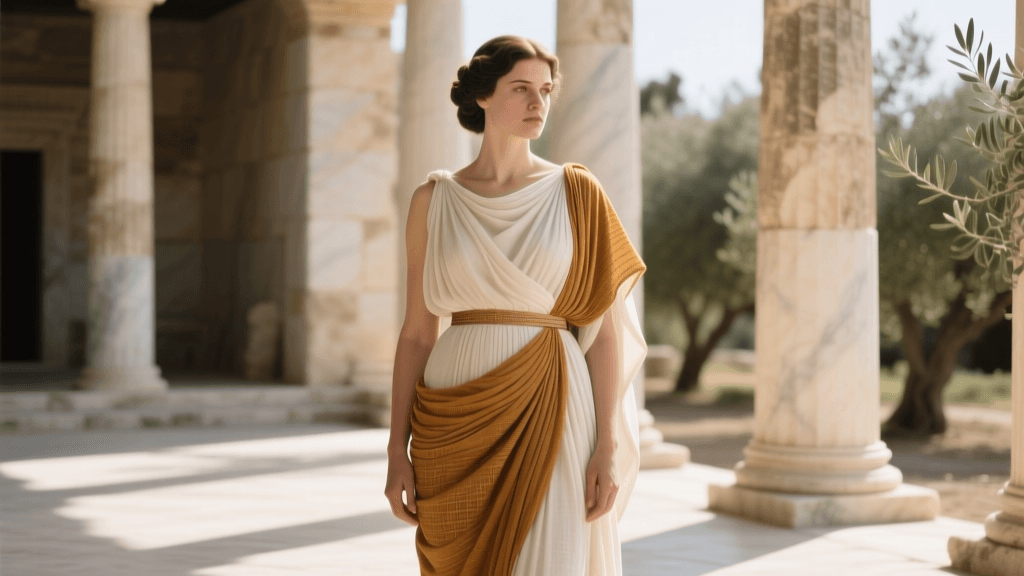
The Doric peplos is the older, heavier garment, originating in the Archaic period. It was typically made of thick wool and featured a distinctive overfold (the apoptygma) at the top. It was fastened at the shoulders with large, singular pins (fibulae). In contrast, the Ionic chiton emerged later, influenced by Eastern and Ionian styles. It was made of much lighter, wider linen and was fastened at the shoulders and along the arms with multiple smaller pins or sewn seams, creating a sleeved effect. By the Classical and Hellenistic periods, the chiton had become the dominant everyday garment, though the peplos remained a vital ceremonial and religious staple, particularly associated with the goddess Athena.
Sourcing Authentic Textiles in 2026
Achieving an authentic drape is impossible without the correct fabric weight and fiber content. The historical textile community in 2026 has seen a massive shift toward heritage weaving cooperatives and natural fiber purists. For the Doric peplos, you must source 100% heavyweight wool. Look for wool flannel, melton, or lightly fulled wool twill weighing between 10 to 14 ounces per yard. This weight is crucial; lighter wools will not hold the structured folds of the apoptygma and will fail to mimic the heavy, vertical fluting seen in classical marble statuary.
For the Ionic chiton, medium-to-lightweight linen is mandatory. A 5 to 7-ounce pure linen fabric provides the necessary fluidity and translucency. In 2026, European linen cooperatives in Belgium and France have introduced 'heritage slub' linens that replicate the slight irregularities of ancient hand-woven textiles, avoiding the overly uniform, machine-perfected look of modern commercial linens. Avoid all cotton blends, polyesters, and rayons, as they lack the historical memory and structural integrity required for proper classical draping.
The 2026 Resurgence of Natural Dyes
Color in ancient Greece was vibrant, not the stark white often mistakenly associated with classical ruins. Modern reenactors are increasingly utilizing historically accurate natural dyes. Weld (Reseda luteola) is currently the gold standard for achieving the bright, classical yellows, while madder root (Rubia tinctorum) provides rich, authentic reds and terracottas. Indigo and woad remain the most accurate choices for blues. When sourcing your yardage in 2026, seek out artisan dyers who use alum mordants, ensuring the colors are both historically accurate and colorfast for modern festival environments.
Step-by-Step Draping Instructions
Draping these garments requires patience, a full-length mirror, and ideally, a helper. The beauty of classical dress lies in its adjustability; the same piece of fabric can be styled in dozens of ways depending on the placement of the belt and pins.
Draping the Doric Peplos
- Step 1: The Overfold. Lay your rectangular wool fabric flat. Fold the top edge down by 12 to 18 inches, depending on your height and desired torso length. This creates the apoptygma.
- Step 2: Wrapping. Wrap the fabric around your body, starting from the back, bringing the two vertical edges together at your side (usually the left side, though historical variations exist).
- Step 3: Pinning. Pull the top layers (both the back and the folded-over front) up over your shoulders. Secure them at the collarbones using heavy, historically accurate disc or bow fibulae. Ensure the pins catch all layers of the overfold.
- Step 4: Belting. Tie a woven wool zonē (belt) around your waist. You can wear it over the apoptygma or hidden beneath it, allowing the overfold to blouse out elegantly over the belt.
Draping the Ionic Chiton
- Step 1: Preparation. The linen rectangle for a chiton is significantly wider than the peplos—often up to 3 yards wide. Hem all four edges before draping.
- Step 2: Arm Fastening. Fold the fabric in half widthwise. Starting at the folded edge, pinch the top layers together at intervals of 3 to 4 inches along the arms, securing them with small, decorative pins or temporary basting stitches. Leave a larger gap in the center for the head.
- Step 3: Wearing. Slip the garment over your head, letting the pinned seams form short sleeves.
- Step 4: The Kolpos (Blousing). Tie a linen belt around your waist. Pull the excess fabric up and over the belt to create the kolpos, a bloused effect that allows the hem to fall perfectly at the ankles while providing freedom of movement.
Measurement and Fabric Comparison Chart
Use the following table to determine the correct yardage and material requirements based on the specific garment you are recreating for the 2026 historical season.
| Garment Type | Primary Fabric | Estimated Width | Estimated Length | Fastening Method | 2026 Sourcing Cost (Approx.) |
|---|---|---|---|---|---|
| Doric Peplos | Heavy Wool (10-14oz) | Height + 6 inches | Height x 1.5 | Shoulder Fibulae | $90 - $160 |
| Ionic Chiton | Light Linen (5-7oz) | Arm span + 12 inches | Height x 1.75 | Multiple Pins / Sewn | $70 - $130 |
| Himation (Cloak) | Wool / Linen Blend | Height x 1.5 | Height x 2.5 | Draped (No Pins) | $80 - $150 |
Essential Accessories for a Complete Ensemble
No classical Greek ensemble is complete without its accompanying accessories. The himation is a large, heavy rectangular cloak worn over the chiton or peplos, especially in cooler weather or when modesty and public decorum required full coverage. As noted by the World History Encyclopedia, the himation was draped without pins, relying entirely on the tension of the fabric and the wearer's posture to stay in place, often wrapped around the left arm to secure it.
Footwear is equally important. While many classical depictions show bare feet, everyday ancient Greeks wore krepides (leather sandals with intricate crisscross lacing up the calf) or embades (closed leather boots for winter and travel). For 2026 reenactments, custom leatherworkers specializing in historical footwear highly recommend vegetable-tanned leather dyed with natural walnut hulls for an authentic, unobtrusive finish. Finally, jewelry should be kept to gold or bronze replicas of Hellenistic designs, featuring motifs like Herakles knots, acorns, and rosettes.
Caring for Natural Fibers in Modern Climates
Maintaining historical garments requires abandoning modern laundry habits. Wool peplos garments should rarely be washed; instead, rely on airing them out in the shade and using a soft bristle brush to remove dust and dirt. If a deep clean is necessary, hand-wash in cold water using a specialized wool wash containing lanolin, and lay flat to dry to prevent felting and shrinking.
Linen chitons are more forgiving but should still be hand-washed or machine-washed only on a delicate, cold cycle. Avoid modern tumble drying, as it breaks the linen fibers and destroys the natural crispness required for sharp pleating. Iron your linen while it is still slightly damp using a high-heat steam press to achieve the crisp, structured pleats favored in classical iconography. By respecting the materials and the ancient techniques of draping, you ensure that the legacy of European folk dress continues to thrive with authenticity and elegance in 2026 and beyond.