Ancient Greek Chiton Guide 2026: Draping Doric and Ionic Styles
Introduction to the Chiton in 2026 Classical Reenactment
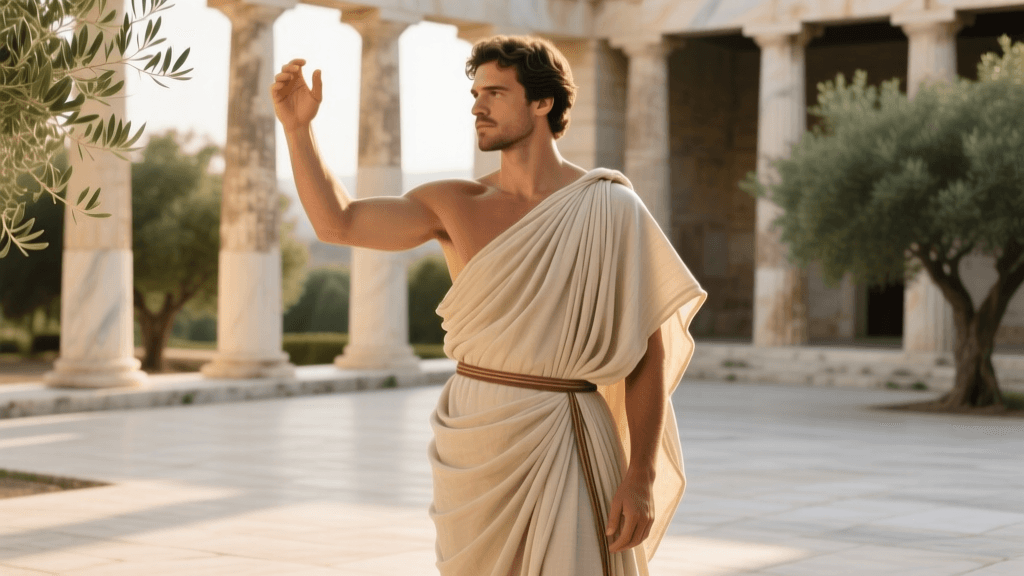
As we navigate the historical reenactment and classical studies landscape in 2026, the demand for authentic, meticulously researched ancient garments has never been higher. The chiton, the foundational tunic of ancient Greece, remains a focal point for historians, theatrical costumers, and living history enthusiasts. Unlike modern clothing, which relies on complex tailoring and sewn seams, the chiton is a masterclass in geometric draping. It transforms simple rectangles of woven textile into elegant, flowing silhouettes through the strategic use of pins, girdles, and gravity.
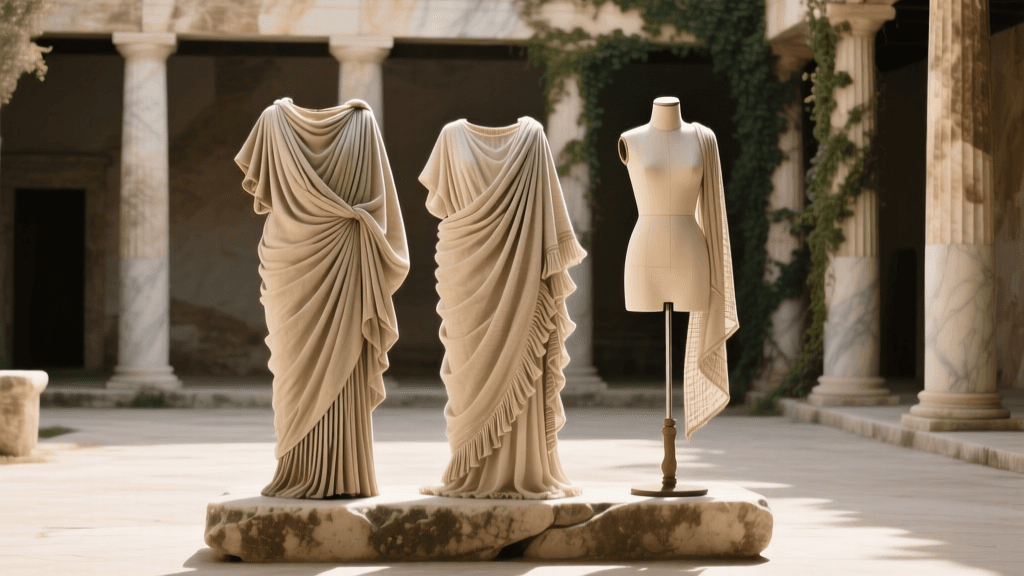
In this comprehensive 2026 guide, we will explore the two primary variants of this iconic garment: the heavy, structured Doric chiton (often overlapping with the peplos) and the lightweight, intricately pinned Ionic chiton. Whether you are preparing for a major Mediterranean heritage festival this summer or contributing to academic research, understanding the precise mechanics of these garments is essential.
The Doric Chiton: Heavy Wool and Structural Draping
The Doric chiton, closely related to the woolen peplos, originated in the Peloponnese and represents the older, more austere aesthetic of the Archaic and Early Classical periods. It is characterized by its substantial weight, which allows the fabric to fall in deep, sculptural folds reminiscent of the fluting on a Doric column.
Sourcing Authentic Textiles in 2026
For a historically accurate Doric chiton, you must avoid modern synthetic blends. In 2026, the gold standard for reenactors is undyed or naturally dyed heavyweight wool, typically ranging from 250 to 350 grams per square meter (gsm). Artisan weavers in Greece and Italy have recently revived traditional warp-weighted loom techniques, producing wool with a slightly fulled texture that grips itself when draped, preventing the garment from slipping off the shoulders.
Measurements and Step-by-Step Draping Technique
To construct a Doric chiton, you do not sew a tunic; you prepare a single, massive rectangle of fabric. Follow these precise measurements and steps:
- Width: Measure your bust or chest circumference and add 20 to 30 centimeters for ease and overlap.
- Height: Measure from your shoulder to your ankle, then add 40 centimeters. This extra length is crucial for creating the apoptygma (the overfold) and the kolpos (the bloused effect at the waist).
- Step 1: Fold the top edge of the fabric down by about 30 centimeters to create the apoptygma.
- Step 2: Wrap the fabric around your body, with the fold facing outward and the open edge of the wrap falling at your side or back.
- Step 3: Pin the top layers together at the shoulders using heavy bronze fibulae. The pins should catch both the back layer and the folded front layer.
- Step 4: Tie a woven wool cord around your waist. Pull the fabric above the cord up and over the belt to create the kolpos, adjusting the hemline so it falls gracefully at the calves or ankles.
The Ionic Chiton: Lightweight Linen and Complex Folds
Emerging from the Greek cities of Asia Minor, the Ionic chiton represents a shift toward luxury, lightness, and complex surface detail. By the Classical and Hellenistic periods, it had become a staple for both men and women, prized for its ability to create delicate, crinkled folds and faux sleeves.
Material Recommendations for the Ionic Style
The Ionic chiton demands lightweight, semi-sheer fabrics. In 2026, historical costumers favor high-quality, hand-loomed linen or organic hemp-cotton blends in the 120 to 180 gsm range. According to textile analyses documented by The Metropolitan Museum of Art, ancient Ionian linens were often treated with olive oil or pressed with heated stones to achieve a permanent, fine crinkle. Modern reenactors can replicate this by tightly twisting the damp linen and allowing it to dry before draping.
Pinning and Sleeve Construction
Unlike the Doric style, the Ionic chiton rarely features an overfold. Its complexity lies in the shoulder fastenings.
- Width: The fabric width should be equal to your full arm span plus 40 centimeters, allowing for extensive draping.
- Height: Measure from shoulder to ankle, adding only 20 centimeters for the waist blousing.
- Step 1: Wrap the wide rectangle around the body, pinning it at the back neck or simply overlapping it at the side seam.
- Step 2: Instead of a single pin at the shoulder, gather the front and back top edges and pin them together at 5 to 7 centimeter intervals along the top of the arm. This creates the iconic Ionic 'sleeve'.
- Step 3: Use a thin leather or linen cord to girdle the waist, pulling the excess fabric up to form a deep, multi-layered kolpos that hides the belt entirely.
The elegance of the classical Greek silhouette relies not on tailored seams, but on the mathematical precision of the drape and the tension of the fibulae.
Comparative Analysis: Doric vs. Ionic Chiton
Understanding the functional and aesthetic differences between these two garments is vital for accurate historical representation. The table below summarizes the core distinctions based on current 2026 academic consensus and primary source translations available via the Perseus Digital Library at Tufts University.
| Feature | Doric Chiton / Peplos | Ionic Chiton |
|---|---|---|
| Primary Material | Heavy Wool (250-350 gsm) | Lightweight Linen (120-180 gsm) |
| Fastening Method | Single large pin or fibula per shoulder | Multiple small pins creating a faux sleeve |
| Sleeve Style | Sleeveless, open armhole | Continuous draped sleeve formed by pinned edge |
| Overfold (Apoptygma) | Common, especially in womens wear | Rare, relies on vertical kolpos blousing |
| Historical Prominence | Archaic and Early Classical periods | Classical and Hellenistic periods |
Essential Accessories: Zoning, Fibulae, and Footwear
A chiton is never worn entirely alone in a formal or public context. The accessories you choose will anchor the garment in its proper historical and social context.
The Zone (Girdle)
The zone is the belt used to gather the chiton. For men, the zone was often tied higher, around the natural waist or even the chest, to allow for freedom of movement in athletic or martial contexts. Women typically wore the zone lower, just beneath the bust or at the natural waist, emphasizing the vertical drape. In 2026, braided wool cords and tablet-woven linen bands are the most historically accurate choices, replacing the anachronistic leather belts often seen in mid-20th-century cinema.
Fibulae and Pins
The fibula (brooch) is both a functional necessity and a status symbol. For the Doric chiton, large, heavy bronze or iron bow fibulae are required to support the weight of the wool. For the Ionic chiton, smaller, delicate pins—sometimes made of bone, silver, or gold for the elite—are used. Modern maker spaces and specialized historical jewelers now offer 3D-scanned and lost-wax cast replicas of museum-grade fibulae, ensuring perfect historical fidelity without damaging fragile original textiles.
Footwear and Outerwear
Complete the ensemble with pedila (simple leather sandals strapped to the ankle) or go barefoot for indoor, domestic portrayals. In cooler weather, a himation (a large rectangular woolen cloak) is draped over the chiton. The himation should never be pinned; it is held in place entirely by the tension of the drape and the weight of the fabric, a skill that requires practice to master.
Maintenance and Storage for Historical Garments
Proper care of your historically accurate textiles ensures their longevity. According to conservation guidelines echoed by institutions like the World History Encyclopedia, ancient garments were rarely washed with harsh chemicals. In 2026, the best practice for maintaining your wool and linen chitons is to use traditional, olive oil-based soaps, such as authentic Marseille or Castile soap.
- Washing: Hand wash in lukewarm water. Never wring or twist the wool, as this will cause it to felt and shrink. Press the water out gently by rolling the garment in a clean, dry towel.
- Drying: Lay flat to dry in the shade. Direct sunlight can fade natural dyes like madder root and woad.
- Storage: Do not hang your chitons on modern wire hangers, which will distort the fibers and stretch the shoulder points. Instead, fold them loosely with acid-free tissue paper and store them in a breathable cotton or linen storage box.
Conclusion
Mastering the ancient Greek chiton is a rewarding journey into the intersection of geometry, textile arts, and classical history. By understanding the distinct characteristics of the Doric and Ionic styles, sourcing appropriate materials, and employing authentic draping techniques, you can bring the elegance of antiquity to life. As the historical reenactment community continues to prioritize accuracy and sustainability in 2026, the timeless drape of the chiton remains a powerful testament to the ingenuity of ancient European folk dress.