Ainu and Ryukyuan Dress: Japan's Indigenous Textiles
Introduction to Japan's Indigenous Garments
When the world thinks of traditional Japanese clothing, the image of the silk kimono and the intricately tied obi almost universally comes to mind. However, the Japanese archipelago is home to diverse indigenous populations with profoundly distinct textile traditions that predate and exist entirely outside the mainstream Yamato Japanese fashion paradigm. At the northern and southern extremes of the country, the Ainu people of Hokkaido and the Ryukyuan people of Okinawa have cultivated unique sartorial cultures shaped by their respective climates, spiritual beliefs, and historical trade networks.
Understanding Ainu and Ryukyuan traditional dress requires looking beyond mere aesthetics. These garments are deeply embedded in animistic spiritual practices, social hierarchies, and a profound respect for the natural environment. For collectors, cultural enthusiasts, and ethical fashion advocates, exploring these indigenous textiles offers a fascinating glimpse into Japan's diverse heritage. This comprehensive guide explores the craftsmanship behind Ainu attus and Ryukyuan bingata, providing actionable advice for those looking to ethically source, wear, and preserve these extraordinary garments.
Ainu Traditional Dress: The Art of Attus and Moreu
The Ainu, the indigenous people of Hokkaido, Sakhalin, and the Kuril Islands, developed a textile culture uniquely adapted to the harsh, sub-arctic environment of northern Japan. Unlike the silk-weaving traditions of mainland Japan, traditional Ainu clothing was born from the forests and flora of the north.
The Craftsmanship of Attus
The most iconic Ainu textile is attus, a durable, breathable fabric woven from the inner bark fibers of the Manchurian elm tree (ohyo) or the Japanese lime tree. The creation of attus is an arduous, time-intensive process. Artisans harvest the bark in early summer, peel away the rough outer layers, and soak the soft inner bast fibers in hot spring water or rivers to soften them. The fibers are then hand-torn into fine, continuous threads and dried.
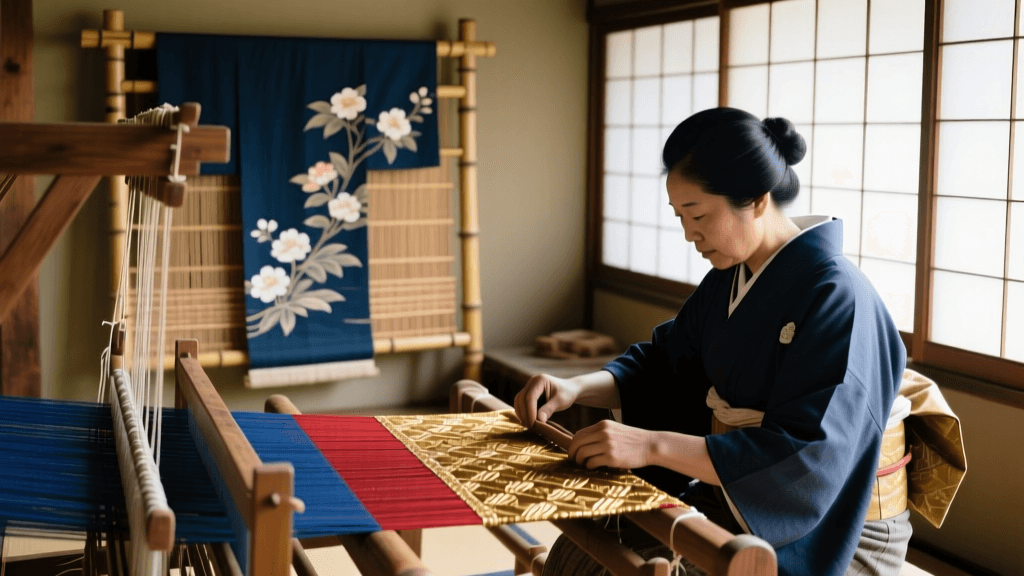
Weaving is traditionally done on a backstrap loom, known as an emush. The weaver sits on the ground, using the tension of their own body to hold the warp threads taut. The resulting fabric is remarkably strong, water-resistant, and softens beautifully with wear. According to the National Ainu Museum and Park (Upopoy), the creation of a single full-sized attus robe can take several months of dedicated labor, reflecting the Ainu belief that spiritual energy (ramat) is infused into objects through the time and care invested in their making.
Embroidery and Spiritual Protection
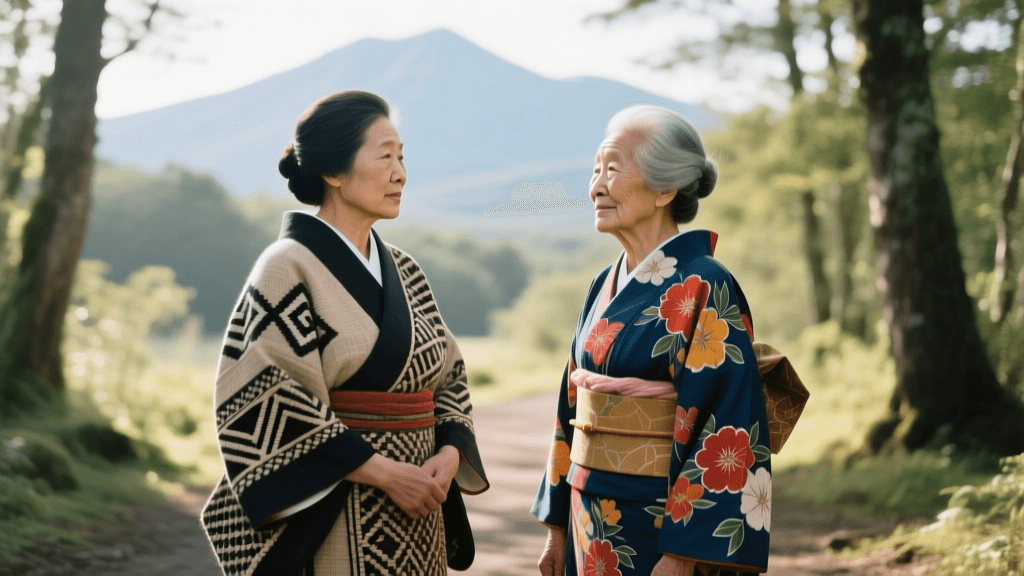
Ainu garments are rarely left plain. Over the attus base, or on later cotton robes acquired through trade with the Japanese (chikarkarpe), Ainu women apply intricate appliqué and chain-stitch embroidery known as moreu. These swirling, thorn-like patterns are not merely decorative; they are deeply spiritual. The motifs, often resembling flowing water or brambles, are strategically placed at the vulnerable openings of the garment—the collar, cuffs, and hem—to ward off evil spirits (wen-kamuy) from entering the wearer's body.
Ryukyuan Traditional Dress: The Vibrancy of Bingata and Ryusou
Traveling over 1,500 kilometers south to the subtropical Ryukyu Islands (modern-day Okinawa), the textile traditions shift dramatically. The Ryukyuan Kingdom, an independent trading hub from the 15th to the 19th century, developed a vibrant textile culture heavily influenced by maritime trade with China, Southeast Asia, and mainland Japan.
The Bingata Dyeing Process
Bingata is the premier resist-dyeing technique of Okinawa, renowned for its explosive, high-contrast colors and dynamic motifs. Unlike the subdued elegance of mainland Japanese yuzen dyeing, bingata embraces the vivid palette of the subtropics: brilliant yellows derived from the fukugi tree, deep reds from cochineal and sappanwood, and rich blues from Ryukyu indigo.
The process begins with carving intricate stencils (katagami) from mulberry paper treated with persimmon tannin. A thick resist paste made from soybeans and rice bran is pushed through the stencil onto the fabric. Once dry, artisans apply vibrant pigments by hand using stiff brushes, rubbing the color deep into the fibers. After steaming to set the dye, the resist paste is washed away in the clear waters of Okinawan rivers, revealing the striking, unblemished patterns beneath. The Okinawa Prefectural Museum & Art Museum houses some of the finest historical examples of royal bingata, showcasing motifs of dragons, peonies, and ocean waves that once denoted strict social classes within the Ryukyuan Kingdom.
Ryusou: The Garment of the Ryukyus
The traditional Ryukyuan garment is the ryusou. While it shares a basic T-shaped structure with the Japanese kimono, the ryusou is distinctly adapted for a hot, humid climate. It features much wider, open sleeves to allow for air circulation, and a wider, looser body. Crucially, the ryusou does not use the thick, restrictive obi knot of mainland Japan. Instead, it is secured with a simple, thin silk sash tied at the front or side, prioritizing comfort and breathability. Undergarments and outer layers are often made from bashofu (banana fiber cloth) or lightweight silk ro.
Comparative Guide: Ainu vs. Ryukyuan Textiles
To understand the distinct functional and cultural differences between these two indigenous traditions, refer to the comparison chart below:
| Feature | Ainu Traditional Dress (Hokkaido) | Ryukyuan Traditional Dress (Okinawa) |
|---|---|---|
| Primary Climate | Sub-arctic, cold winters, mild summers | Subtropical, hot, highly humid, typhoon season |
| Core Material | Elm bark fiber (attus), animal pelts, traded cotton | Silk, banana fiber (bashofu), ramie, cotton |
| Primary Technique | Backstrap weaving, chain-stitch embroidery, appliqué | Stencil resist-dyeing (bingata), kasuri weaving |
| Motif Symbolism | Thorns, swirls, and water (spiritual protection) | Dragons, peonies, phoenixes (status and nature) |
| Fastening Method | Simple woven sash or leather belt | Thin silk sash tied loosely at the front/side |
Practical Guide: Sourcing, Cost, and Wearing Indigenous Garments
For collectors and practitioners of traditional arts, acquiring authentic Ainu or Ryukyuan garments requires careful navigation. Mass-produced souvenirs often appropriate these designs without benefiting indigenous communities. Here is an actionable guide to ethical sourcing, pricing, and garment care.
Sourcing Authentic Pieces
- Ainu Attus and Embroidery: The most ethical place to purchase authentic Ainu crafts is directly through indigenous cooperatives or the official shops at the Upopoy National Ainu Museum and Park in Shiraoi, Hokkaido. Look for the 'Ainu Craft' certification mark.
- Ryukyuan Bingata: In Okinawa, visit established studios such as the Eiichi Shiroma Studio or Chinen Bingata in Naha. These multi-generational workshops offer authentic, hand-dyed pieces and often host weaving and dyeing workshops for visitors.
Cost and Investment Expectations
Authentic, handcrafted indigenous garments are significant investments due to the sheer labor involved.
- Ainu Attus Robe: A genuine, hand-woven elm bark robe with traditional moreu embroidery typically ranges from ¥80,000 to ¥250,000 ($550 - $1,700 USD), depending on the complexity of the embroidery and the fineness of the bark thread.
- Ryukyuan Bingata Ryusou: A custom or high-quality ready-made silk bingata ryusou starts around ¥150,000 and can exceed ¥500,000 ($1,000 - $3,500 USD) for pieces featuring multiple layers of dye and gold leaf accents.
- Vintage/Antique Pieces: Early 20th-century bingata or antique Ainu trade-cloth robes can be found at specialized antique textile dealers in Kyoto and Tokyo, often priced between ¥300,000 and ¥1,000,000+ based on condition and provenance.
Sizing and Measurements
Unlike Western clothing, traditional Japanese and indigenous garments are generally constructed from straight bolts of fabric, making them highly adjustable.
- Ryusou Sizing: The standard body width (mi-haba) is usually around 32-35 cm per panel, allowing the garment to wrap comfortably over various body types. Sleeve length (sode-take) is typically shorter than mainland kimono, averaging 45-50 cm to prevent dragging in humid environments.
- Ainu Robe Sizing: Ainu robes are designed to be loose and layered. They are generally one-size-fits-most, relying on the waist sash to gather the excess fabric and create a comfortable, insulating silhouette.
Timing Your Visit for Workshops
If you wish to study these crafts firsthand, timing is crucial. For Okinawa, plan your trip between October and April. This avoids the intense humidity and typhoon season of the summer months, providing a comfortable environment for multi-day bingata dyeing workshops. For Hokkaido, visit Upopoy in late spring (May-June) to witness the traditional harvesting of elm bark, or in February to see how heavy winter attus and animal-skin garments were historically utilized during snow festivals.
Garment Care and Preservation
Indigenous textiles require specialized care to maintain their structural integrity and vibrant pigments.
Crucial Care Rule: Never machine wash or dry clean authentic attus or bingata. The harsh chemicals in standard dry cleaning will strip the natural oils from elm bark and dissolve the soybean resist base in vintage bingata.
- For Attus: Spot clean with a damp cloth and mild, pH-neutral soap. If the entire garment must be washed, submerge in cool water, gently agitate, and never wring. Roll the garment in a clean towel to press out moisture, then lay flat to dry in the shade. Sunlight will brittle the natural bark fibers.
- For Bingata Silk: Air out the garment in a shaded, well-ventilated area after wearing. Store folded with acid-free tissue paper in a breathable cotton storage box (called a tatou). Include natural camphor wood blocks to deter insects, avoiding chemical mothballs which can react with natural dyes and cause staining.
Ethical Considerations and Cultural Respect
As global interest in indigenous fashion grows, so does the risk of cultural appropriation. The Ainu people have historically faced severe assimilation policies, and the Ryukyuan people have endured centuries of cultural marginalization. Wearing or collecting these garments carries a responsibility to respect their origins.
Always verify that the artisans you purchase from are recognized members of their respective communities or officially sanctioned heritage preservation societies. Furthermore, while it is entirely appropriate to wear a bingata yukata to a summer festival in Okinawa, or to don an attus jacket in a casual, respectful setting, these garments should never be treated as mere costumes. Understanding the spiritual weight of the Ainu embroidery and the historical rank associated with specific Ryukyuan dragon motifs ensures that your engagement with these textiles remains deeply respectful and culturally enriching.
Conclusion
The textile traditions of the Ainu and Ryukyuan peoples offer a profound counter-narrative to the homogenized view of Japanese fashion. From the spiritually fortified, forest-born attus of Hokkaido to the sun-drenched, ocean-inspired bingata of Okinawa, these garments are living testaments to human adaptation and artistic brilliance. By approaching these textiles with an understanding of their complex histories, and by supporting the indigenous artisans who keep these techniques alive, collectors and enthusiasts can help ensure that Japan's diverse indigenous sartorial heritage continues to thrive for generations to come.