Ainu Attush and Ryukyuan Bashofu: Indigenous Textile Guide
Japan's Hidden Indigenous Textiles
While the mainstream silk kimono, yukata, and hakama dominate global perceptions of Japanese fashion, the archipelago's indigenous and ethnic minority groups possess profoundly distinct, deeply spiritual textile traditions. The Ainu people of the northern island of Hokkaido and the Ryukyuan people of the southern Okinawa prefecture have cultivated unique garment-making techniques adapted to their extreme climates. Today, as cultural revival movements gain momentum following legislative milestones like the 2019 Ainu Recognition Act, collectors, historians, and fashion enthusiasts are turning their attention to these remarkable textiles. This guide explores the craftsmanship of Ainu attush and Ryukyuan bashofu, providing actionable advice on sourcing, pricing, and caring for these indigenous masterpieces.
The Ainu Attush: Elm Bark Cloth of the North
The traditional everyday garment of the Ainu people is the attush, a robust, breathable robe woven from the inner bark of the Manchurian elm (ohyo). According to the National Ainu Museum and Park (Upopoy), the creation of an attush is a labor-intensive process that begins with harvesting elm branches in the spring. The bark is peeled, soaked in rivers or hot springs to soften, and then split into fine threads using the fingernails. These threads are woven on a traditional backstrap loom, resulting in a textile that is highly durable, water-resistant, and insulating against the harsh Hokkaido winters.
Spiritual Embroidery and Appliqué
While the base attush is plain, formal garments and trade robes were heavily decorated. The Ainu believe that evil spirits can enter the body through its openings. Therefore, the collar, cuffs, and hem of the robe are adorned with intricate cotton appliqué (moreu) and chain-stitch embroidery (shin). The iconic thorn-like swirling patterns are not merely decorative; they serve as spiritual barbed wire to protect the wearer. The Tokyo National Museum houses some of the finest surviving examples of 19th-century Ainu ceremonial robes, showcasing the heavy use of traded Japanese and Chinese cottons layered over the elm bark base.
Practical Guide: Sourcing and Pricing Ainu Garments
For collectors and cultural enthusiasts looking to acquire authentic Ainu textiles, understanding the market is crucial. True vintage elm-bark attush robes from the Meiji era (1868-1912) are rare museum pieces. However, later cotton robes and contemporary artisan works are accessible, especially through craft cooperatives in Biratori and Nibutani.
- Vintage Cotton Appliqué Robes (Chikarkarpe): Expect to pay between $1,200 and $4,500 USD at specialized antique textile galleries in Kyoto or Tokyo. Ensure the cotton is hand-spun and the appliqué features traditional asymmetrical thorn motifs.
- Modern Artisan Jackets: Contemporary Ainu artisans create modern jackets using traditional embroidery techniques on modern cotton or wool blends. These typically cost between $400 and $900 USD.
- Matanpushi (Headbands) and Tekunpe (Bracelets): For entry-level collectors, these accessories are ideal. A standard modern matanpushi measures approximately 70 cm long by 15 cm wide and costs between $60 and $150 USD. They are excellent for incorporating Ainu patterns into modern wardrobes or framing as textile art.
Ryukyuan Bashofu: Banana Fiber Weaving of the South
In stark contrast to the heavy, insulating garments of the snowy north, the Ryukyuan people of Okinawa developed textiles suited for a humid, subtropical climate. The crown jewel of Ryukyuan weaving is bashofu, a remarkably lightweight, crisp fabric made from the fibers of the Japanese fiber banana (ito-basho). The Okinawa Prefectural Museum & Art Museum frequently highlights bashofu as a pinnacle of indigenous engineering, noting its ability to wick moisture and allow air circulation while maintaining a structured, elegant drape.
The Kijoka Bashofu Tradition
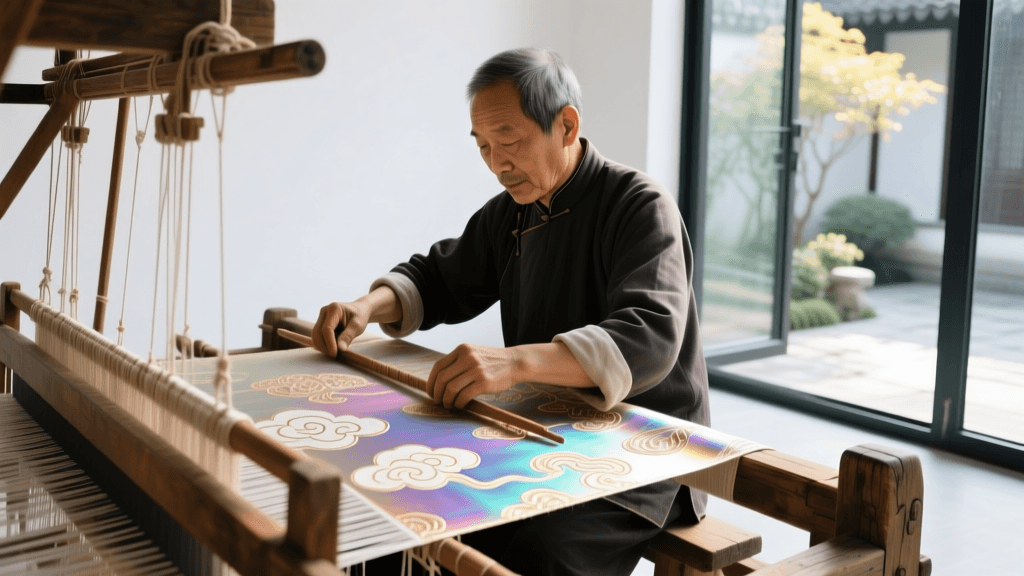
The village of Kijoka in Ogimi is the historic center of bashofu production. The process involves over twenty meticulous steps. The banana plants are harvested, boiled in wood ash lye, and stripped. Only the innermost, finest fibers are used for high-quality kimono cloth. The threads are tied and dyed using traditional Ryukyuan kasuri (ikat) techniques before being woven on a treadle loom. It takes roughly 200 banana plants to produce enough fiber for a single standard kimono bolt (tanmono).
Practical Guide: Investing in Bashofu Kimono
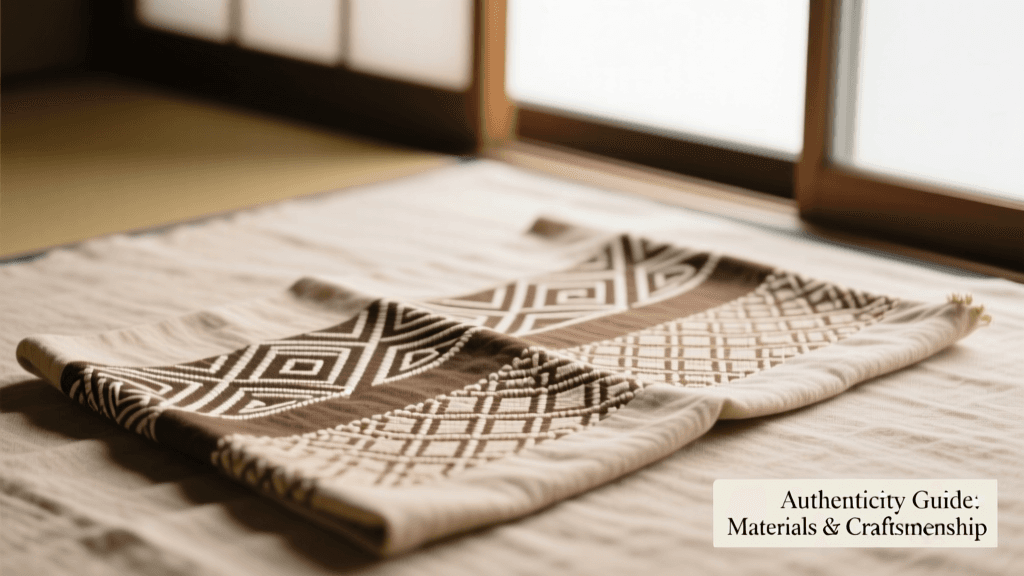
Authentic Kijoka bashofu is designated as an Important Intangible Cultural Property of Japan. Because of the immense labor involved, it is one of the most expensive and sought-after textiles in the country. Buyers should also note the difference between pure woven kasuri and yushiki (stencil dyeing on bashofu), with the latter offering vibrant subtropical motifs at a slightly lower price point.
- Full Tanmono (Kimono Bolt): A brand-new, hand-woven Kijoka bashofu bolt (standard dimensions: 38 cm wide by 12 meters long) costs between $5,000 and $15,000 USD. Custom tailoring will add another $800 to $1,500 USD.
- Vintage Bashofu Kimono: Mid-20th-century bashofu garments can be found at high-end vintage kimono dealers for $1,500 to $3,500 USD. Look for the subtle, uneven slub of the banana fiber and the characteristic pale amber or natural cream color.
- Bashofu Obi and Accessories: For a more budget-friendly option, woven bashofu obi (sashes) or fukusa (silk covers) range from $200 to $800 USD and can be worn beautifully with standard mainland linen or cotton yukata.
Comparison Chart: Attush vs. Bashofu
| Feature | Ainu Attush | Ryukyuan Bashofu |
|---|---|---|
| Origin | Hokkaido, Northern Japan | Okinawa, Southern Japan |
| Primary Material | Manchurian Elm inner bark | Japanese fiber banana |
| Climate Suitability | Cold, snowy, damp winters | Hot, humid, subtropical summers |
| Standard Garment Type | Robe (Attush), Jacket (Chikarkarpe) | Kimono, Summer Yukata-style robes |
| Modern Price (Full Robe) | $1,200 - $4,500 (Vintage Cotton) | $5,000 - $15,000 (New Bashofu) |
| Primary Decoration | Cotton appliqué, chain-stitch embroidery | Kasuri (ikat) dyeing, woven patterns |
Care and Maintenance for Ethnic Minority Textiles
Preserving these indigenous textiles requires specialized care, as their natural fibers react differently than mainland silk or synthetic blends.
Caring for Ainu Elm Bark and Cotton
- Storage: Store elm bark garments flat in a cool, dark place. Never hang heavy vintage attush robes on standard wire hangers, as the weight of the bark and cotton appliqué will warp the shoulders and stress the historic fibers.
- Cleaning: Do not wash vintage elm bark. Spot clean the cotton appliqué areas with a slightly damp microfiber cloth. For modern cotton Ainu jackets, hand wash in cold water with a pH-neutral detergent and lay flat to dry.
Caring for Ryukyuan Bashofu
- Washing: Bashofu is remarkably strong when wet, unlike delicate silks. Hand wash in lukewarm water using a specialized kimono detergent. Do not wring or twist the fabric; gently press the water out between two clean, dry towels.
- Drying and Ironing: Dry strictly in the shade. Direct sunlight will yellow the natural banana fibers over time. Iron on a low setting with a pressing cloth while the garment is still slightly damp to maintain the crisp, linen-like structure of the weave.
Conclusion: Wearing History with Respect
The garments of the Ainu and Ryukyuan peoples are far more than historical curiosities; they are living testaments to indigenous resilience, environmental adaptation, and profound spiritual beliefs. Whether you are investing in a meticulously woven Kijoka bashofu bolt, collecting a spiritually guarded Ainu matanpushi, or integrating a vintage bashofu obi into your modern summer wardrobe, understanding the craftsmanship and cultural context is essential. By supporting indigenous artisans and adhering to proper preservation techniques, collectors and enthusiasts play a vital role in ensuring these extraordinary Asian textile traditions continue to thrive in the modern era.