Ainu Attus and Ryukyuan Bashofu: Japan's Indigenous Textiles
Beyond the Silk Kimono: Japan’s Indigenous Textile Heritage
Japan's sartorial history is globally synonymous with the silk kimono, yet the archipelago's indigenous and ethnic minority groups possess equally profound, vastly different textile traditions. From the rugged elm-bark cloth of the Ainu in the northern island of Hokkaido to the gossamer banana-fiber weaves of the Ryukyuan people in the southern Okinawa prefecture, these garments tell stories of resilience, deep ecological connection, and distinct cultural identities. For textile collectors, anthropologists, and fashion historians, understanding these minority dress traditions offers a vital counter-narrative to the mainstream Wajin (ethnic Japanese) silk weaving centers like Kyoto and Nishijin. This guide explores the craftsmanship, cultural significance, and practical acquisition of Japan's most remarkable indigenous textiles.
Ainu Attus: The Resilient Bark Cloth of the North
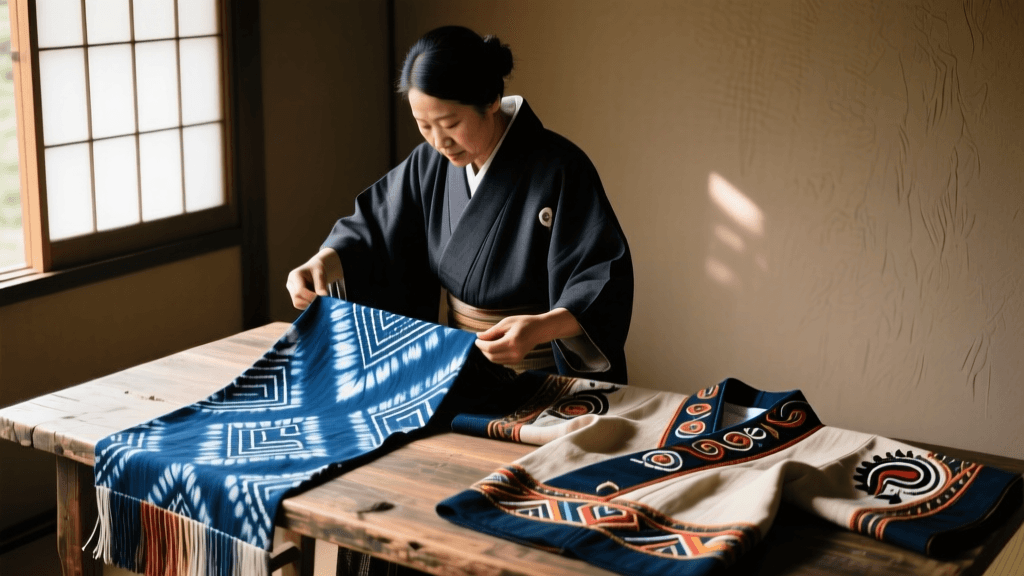
The Ainu, the indigenous people of Hokkaido, Sakhalin, and the Kuril Islands, developed a unique material culture adapted to harsh, sub-arctic winters. The cornerstone of their everyday workwear and undergarments was Attus, a thick, durable cloth woven from the inner bark (bast fibers) of the Manchurian elm (Ulmus pumila) or the Japanese linden tree. The process of creating Attus is intensely laborious. Artisans harvest the bark in spring when the sap flows, soak it in water or hot springs to soften, and peel it into thin layers. These layers are then split into fine threads using the fingernails and woven on an emush, a traditional backstrap loom that allows the weaver to control the tension with their own body weight.
Motifs, Trade, and Spiritual Armor
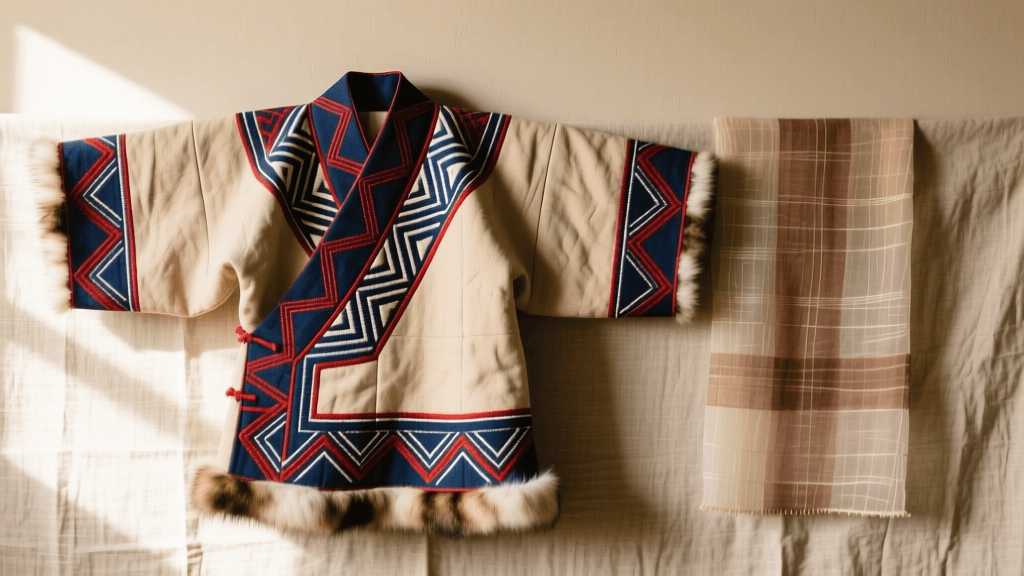
While everyday Attus was left undyed and unadorned, formal and ceremonial garments incorporated traded cotton and silk. Through the Santan trade with the Nivkh people and the Qing dynasty, the Ainu acquired Chinese silk, Russian trade beads, and Japanese cotton. They applied intricate appliqué and embroidery over the bark cloth base. According to the Upopoy National Ainu Museum and Park, these motifs were not merely decorative; they served a profound spiritual function. Swirling patterns known as moreu and thorn-like shapes called aiushi were strategically placed at vulnerable openings—such as the collar, cuffs, and hem—to ward off evil spirits from entering the body. The placement and complexity of these motifs often denoted the wearer's regional origin and social standing.
Sourcing and Collecting Ainu Garments
For collectors looking to acquire authentic Ainu textiles, the town of Nibutani in Hokkaido remains the cultural epicenter. When starting a collection, avoid immediately purchasing full ceremonial robes (kosode), which are heavily contested by museums and increasingly rare. Instead, look for vintage attus obi (sashes), which typically measure around 15 cm in width and 300 cm in length, or small embroidered pouches. Prices for mid-20th-century Attus obi range from $150 to $400, depending on the complexity of the cotton appliqué. Full, antique 19th-century ceremonial robes featuring Japanese silk brocade trade goods can command $2,500 to $8,000 at specialized antique textile dealers in Kyoto or Tokyo. Always request provenance documentation, as mass-produced tourist souvenirs from the mid-Showa era often mimic traditional patterns using synthetic threads.
Ryukyuan Bashofu: The Gossamer Banana Fiber of the South
Over 2,000 kilometers south of Hokkaido, the subtropical Ryukyu Islands (modern-day Okinawa) birthed an entirely different textile marvel: Bashofu. Woven from the fibers of the basho (Japanese fiber banana plant), Bashofu is celebrated for its incredible lightness, breathability, and crisp texture, making it the ultimate luxury fabric for the sweltering Ryukyuan summer. The traditional Ryukyuan garment, the Ryusou, is characterized by its wider sleeves, looser fit, and lighter weight compared to the mainland Japanese kimono, allowing for essential air circulation in a humid, tropical climate.
The Painstaking Process of Bashofu
The creation of Bashofu is a staggering feat of patience and precision. It requires approximately 200 to 250 banana trees to produce enough fiber for a single adult's kimono. The stalks are harvested, boiled in wood ash lye, scraped to remove impurities, and split into hair-thin threads. These threads are tied and dyed using traditional Ryukyuan techniques, such as Ryukyu indigo or the vibrant yellow extracted from the fukugi tree. As highlighted by the Japan National Tourism Organization's guide to Kijoka Bashofu, the village of Kijoka in Ogimi remains the last bastion of this craft, where elderly master weavers continue to operate traditional treadle looms. The Ryukyu Kingdom's historical tribute trade with Ming and Qing China heavily influenced the Ryusou silhouette and the introduction of the bingata resist-dyeing technique, which is occasionally paired with fine Bashofu for royal and aristocratic garments.
Acquiring Ryukyuan Textiles and Ryusou
Acquiring authentic, newly woven Bashofu is a significant financial investment. Due to the severe shortage of successors and the sheer man-hours required (often over a year for a single bolt of cloth), a modern, master-woven Bashofu kimono can cost between $8,000 and $20,000. For enthusiasts and interior decorators, a more practical entry point is purchasing Bashofu furoshiki (wrapping cloths) measuring 70x70 cm, or framed textile fragments, which typically cost between $100 and $350. When purchasing, always request a certificate of authenticity from the Kijoka Bashofu Preservation Society, as synthetic imitations from overseas are prevalent in tourist markets. If commissioning a custom Ryusou, expect a lead time of 12 to 18 months and be prepared to provide precise measurements, as the wide, unstructured sleeves require custom yardage calculations.
Comparative Guide: Ainu vs. Ryukyuan Textiles
Understanding the distinct environmental and cultural drivers of these two textiles is essential for collectors and historians. The following table outlines the primary differences between Ainu Attus and Ryukyuan Bashofu.
| Feature | Ainu Attus | Ryukyuan Bashofu |
|---|---|---|
| Primary Material | Manchurian Elm / Linden inner bark | Japanese fiber banana plant stalks |
| Climate Adaptation | Insulating, wind-resistant, layered for sub-arctic cold | Highly breathable, moisture-wicking for subtropical heat |
| Loom Type | Emush (Backstrap loom) | Jibata (Traditional treadle floor loom) |
| Primary Motifs | Moreu (swirls), Aiushi (thorns) via appliqué | Kasuri (ikat) patterns, flora/fauna via dyeing |
| Average Cost (Full Garment) | $2,500 - $8,000 (Antique/Vintage) | $8,000 - $20,000 (Modern/Commissioned) |
| Garment Silhouette | Narrow sleeves, heavily layered, worn with wide obi | Wide sleeves, loose unstructured fit, lightweight |
Archival Care and Preservation
Preserving these minority textiles requires specialized archival knowledge. Mainland silk kimono care protocols do not apply here, and improper handling can lead to irreversible degradation. According to conservation guidelines referenced by institutions like the National Museum of Ethnology, bast and leaf fibers require highly specific environmental controls.
- Attus Care: Attus, being a bast fiber, is highly susceptible to mold in high humidity but will become brittle and snap if the environment is too dry. Maintain a strict relative humidity (RH) of 45% to 55% and a temperature of 18°C to 20°C. Never fold Attus along the same lines repeatedly, as the thick bark fibers will crease and eventually break. Instead, roll it around an acid-free, pH-neutral cardboard tube covered in unbleached muslin.
- Bashofu Care: Bashofu is remarkably strong when dry but loses up to 50% of its tensile strength when wet. Never attempt to wash or spot-clean a Bashofu garment with water. If dust accumulates, use a soft, natural-bristle brush and gently sweep in the direction of the warp threads. Store Ryusou garments flat in custom-made tatou (paper folders) made from alkaline-buffered, acid-free tissue paper to prevent the banana fibers from degrading or yellowing over time.
- Avoid Cedar: Unlike silk kimono, which are often stored in cedar chests (tansu), both Attus and Bashofu should be kept away from raw cedar. The acidic oils and volatile organic compounds emitted by cedar wood can stain and weaken the delicate plant threads over decades of storage.
"The survival of Japan's indigenous textile arts relies not just on museum preservation, but on the continued, albeit fragile, transmission of ecological knowledge from elder artisans to a new generation of weavers who understand the land from which these fibers are born."
By recognizing the distinct material realities of Ainu and Ryukyuan dress, collectors and enthusiasts can help support the living heritage of Japan's indigenous and minority communities, ensuring that the looms of Hokkaido and Okinawa do not fall silent.