Beyond Kimono: Guide to Ainu Attus and Ryukyu Bingata
Japan’s Hidden Sartorial Heritage
When the world thinks of Japanese traditional clothing, the kimono immediately comes to mind. However, the Japanese archipelago is home to a rich tapestry of indigenous and ethnic minority groups whose sartorial traditions are equally profound, yet frequently overshadowed by mainstream Yamato Japanese fashion. From the rugged, spiritually fortified bark cloth of the Ainu in the northernmost island of Hokkaido, to the vibrant, trade-influenced resist-dyed silks of the Ryukyuan people in the southern Okinawa prefecture, these garments tell stories of survival, international trade, and deep ecological harmony.
For collectors, cultural enthusiasts, and sustainable fashion advocates, understanding and acquiring authentic Ainu and Ryukyuan textiles offers a unique opportunity to engage with Japan’s diverse heritage. This comprehensive guide explores the craftsmanship, cultural significance, and practical buying advice for Ainu Attus and Ryukyuan Bingata.
Ainu Attus: The Resilient Bark Cloth of the North
The Ainu are the indigenous people of Hokkaido, the Kuril Islands, and Sakhalin. Historically marginalized, their culture has experienced a vital renaissance in recent years, culminating in official government recognition in 2019. Central to Ainu material culture is Attus, a durable, breathable fabric woven from the inner bark of the Japanese elm tree (ohyo).
The Spiritual and Physical Fabric
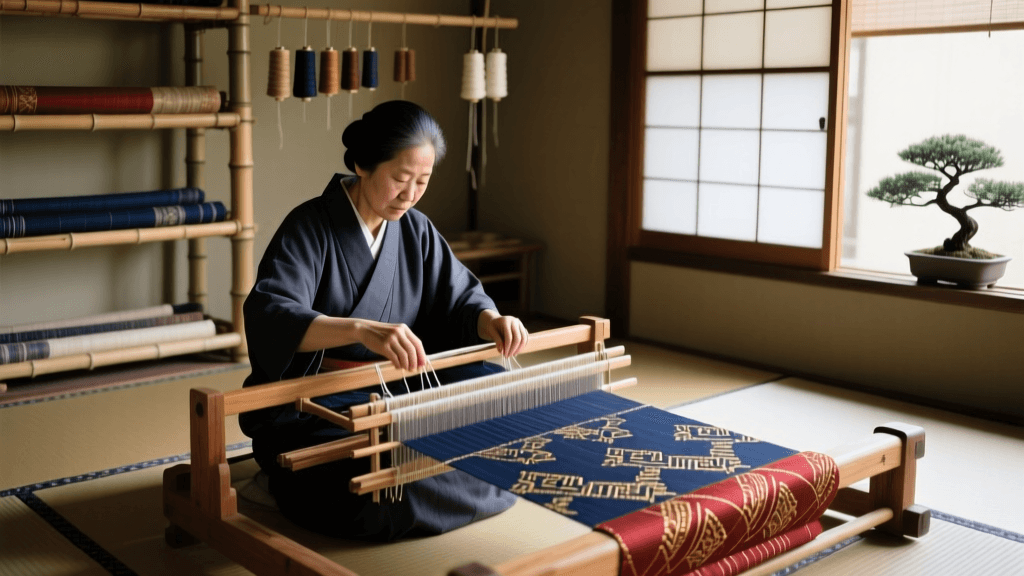
Creating Attus is a labor-intensive process that demands deep ecological knowledge. Harvesters carefully peel the bark from elm trees in early summer, ensuring the tree's survival. The bark is then soaked in hot springs or rivers for days to soften the fibers, which are painstakingly split into fine threads by hand and woven on a backstrap loom. The resulting fabric is remarkably strong, water-resistant, and insulating—perfect for Hokkaido’s harsh winters and humid summers.
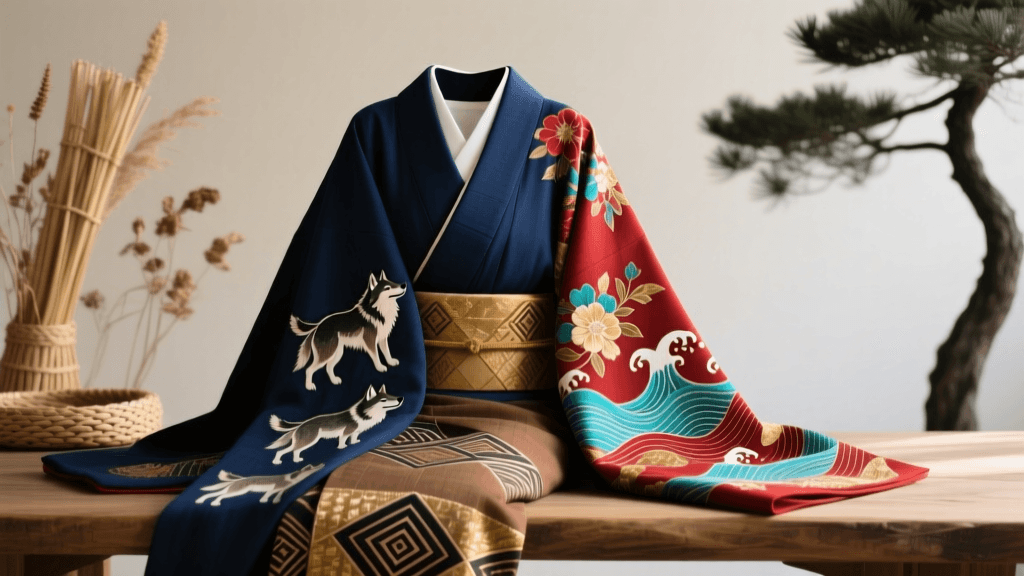
However, an Ainu garment is never just fabric; it is a spiritual armor. Ainu cosmology dictates that evil spirits can enter the body through its openings. Consequently, the hems, cuffs, and necklines of Attus garments are heavily decorated with moreu (embroidery) and upshoro (appliqué). These intricate, swirling thorn-like patterns are not merely decorative; they are believed to catch and repel malevolent spirits, protecting the wearer.
Practical Guide: Sourcing, Pricing, and Care
Acquiring authentic Attus requires navigating a niche market. Mass-produced 'Ainu-style' souvenirs often use cotton or synthetic blends, lacking the cultural and material integrity of true bark cloth.
- Where to Buy: The most reliable source for authentic, artisan-made Attus is the National Ainu Museum and Park (Upopoy) in Shiraoi, Hokkaido. Additionally, the Biratori region (specifically Nibutani) is renowned for its master weavers. Look for pieces certified by the local Ainu cooperative.
- Cost Expectations: A small, authentic Attus pouch or coaster typically ranges from $30 to $60 USD. A fully woven, hand-embroidered traditional chikarkarpe (robe) is a museum-quality investment, often starting at $800 and exceeding $2,500 USD depending on the complexity of the moreu embroidery.
- Garment Measurements: Traditional Ainu robes are generally cut straight and loose, similar to a kimono but wider in the sleeves. Expect a standard length of 110-120 cm from the nape, designed to be belted tightly at the waist.
- Care Instructions: Never machine wash Attus. The natural elm fibers will shrink and stiffen. Spot clean with a damp cloth or consult a specialist dry cleaner experienced with natural bast fibers. Store flat in a breathable cotton bag to prevent the rigid fibers from snapping along fold lines.
Ryukyuan Bingata: The Vibrant Resist-Dye of the South
At the opposite end of the archipelago lies Okinawa, the heart of the former Ryukyu Kingdom. As a major maritime trading hub connecting China, Japan, Korea, and Southeast Asia, the Ryukyu Kingdom developed a highly sophisticated textile culture. The crown jewel of this heritage is Bingata, a spectacular stencil-resist dyeing technique characterized by bold, saturated colors and dynamic motifs inspired by subtropical flora and fauna.
A Royal Legacy of Color and Stencil
Historically, Bingata was strictly regulated by the Ryukyuan royal court. The color yellow, derived from the rare orko (gamboge) pigment imported from Southeast Asia, was reserved exclusively for the king and his immediate family. Commoners and lower-ranking nobles were restricted to indigo and paler shades. Following the annexation of the Ryukyu Kingdom by Japan in the late 19th century, and the devastating losses of World War II, the craft nearly vanished. Today, it is fiercely protected and recognized by the Ministry of Economy, Trade and Industry (METI) as a Traditional Craft Product.
The process involves carving intricate patterns into mulberry paper stencils (katagami), applying a thick rice-paste resist through the stencil onto silk or cotton, and then painting the dyes into the exposed areas by hand using stiff brushes. The fabric is finally steamed, washed in the river to remove the paste, and stretched to dry in the Okinawan sun.
Practical Guide: Authenticating and Styling Bingata
Bingata is highly sought after in the Japanese fashion world, but buyers must be wary of printed imitations.
- Authentication: Genuine hand-dyed Bingata will show slight variations in color saturation and minute bleeding at the edges of the motifs. The reverse side of the fabric will also show faint traces of the dye penetrating the silk or cotton. Look for the official METI Traditional Craft seal on high-end pieces.
- Pricing Tiers: A hand-dyed Bingata scarf or hanhaba obi (half-width sash) costs between $150 and $400 USD. A full, custom-tailored silk Bingata kimono requires months of labor and starts around $3,000 USD, easily reaching $10,000 USD for master-dyer creations.
- Styling Advice: Because Bingata patterns are incredibly loud and vibrant, they are best styled with restraint. Pair a Bingata haori (jacket) with a solid-colored, muted linen or wool hakama or modern wide-leg trousers. For formal kimono wear, use a solid-color silk obi to let the Bingata motifs breathe.
- Maintenance: Bingata dyes are highly sensitive to UV light, which can cause the vibrant reds and yellows to fade. Store garments away from direct sunlight and rotate their display if hung in a room. Dry cleaning is mandatory for silk Bingata.
Comparative Analysis: Northern Resilience vs. Southern Vibrancy
Understanding the distinct characteristics of these two minority textiles helps collectors and enthusiasts appreciate their unique places in Asian fashion history.
| Feature | Ainu Attus (Hokkaido) | Ryukyuan Bingata (Okinawa) |
|---|---|---|
| Primary Material | Elm tree inner bark (bast fiber) | Silk, cotton, or bashofu (banana fiber) |
| Core Technique | Backstrap loom weaving & appliqué | Stencil-resist dyeing & hand-painting |
| Aesthetic Profile | Earthy, textured, monochromatic with dark embroidery | Vibrant, high-contrast, colorful nature motifs |
| Climatic Function | Insulating, wind-resistant for cold northern climates | Lightweight, breathable for humid subtropical climates |
| Entry-Level Cost | $30 - $60 USD (Accessories) | $150 - $250 USD (Scarves/Obi) |
| Care Level | High (prone to snapping if folded improperly) | Medium (highly sensitive to UV fading) |
Ethical Collecting and Cultural Preservation
When integrating indigenous and minority textiles into your collection or wardrobe, ethical sourcing is paramount. The Ainu and Ryukyuan peoples have historically faced assimilation policies that threatened to erase their languages and crafts. Purchasing directly from indigenous cooperatives, recognized master artisans, or official cultural institutions ensures that your financial support aids in the continuation of these endangered practices.
For modern fashion integration, consider how these textiles challenge the homogeneity of global fast fashion. An Ainu Attus bag or a Ryukyuan Bingata scarf is not merely an accessory; it is a conversation piece that bridges centuries of indigenous resilience and ecological mastery.
'Our embroidery is not just art; it is a map of our world and a shield for our souls. When you wear the thorns of the moreu, you are walking with the ancestors.' — Ainu Elder and Master Embroiderer, Shiraoi.
Whether you are drawn to the rugged, spiritual protection of the northern Attus or the sun-drenched, royal elegance of southern Bingata, exploring Japan's minority dress traditions offers a profoundly richer understanding of the archipelago's true cultural atlas. For further research, consult the archives of the Foundation for Ainu Culture and regional Okinawan craft guilds to deepen your appreciation of these magnificent textiles.