Ainu Attus & Okinawan Ryusou: Sourcing Indigenous Garments
Beyond the Kimono: Japan's Indigenous Sartorial Heritage
When discussing traditional Japanese clothing, the mainstream kimono, yukata, and hakama often dominate the global conversation. However, the Japanese archipelago is home to rich, distinct indigenous cultures with their own profound sartorial traditions. In the northernmost island of Hokkaido, the Ainu people have cultivated resilient garments suited for harsh winters, while in the southernmost prefecture of Okinawa, the Ryukyuan people developed lightweight, vibrant textiles perfect for a subtropical climate. For collectors, cultural enthusiasts, and practitioners of traditional Asian fashion, understanding and sourcing authentic Ainu and Ryukyuan garments offers a deeper connection to Japan’s diverse heritage.
This comprehensive guide explores the craftsmanship behind Ainu attus and Okinawan ryusou, providing actionable advice on where to source authentic pieces, how to measure for them, and how to care for these irreplaceable textiles.
The Ainu Attus: Elm Bark Weaving of Hokkaido
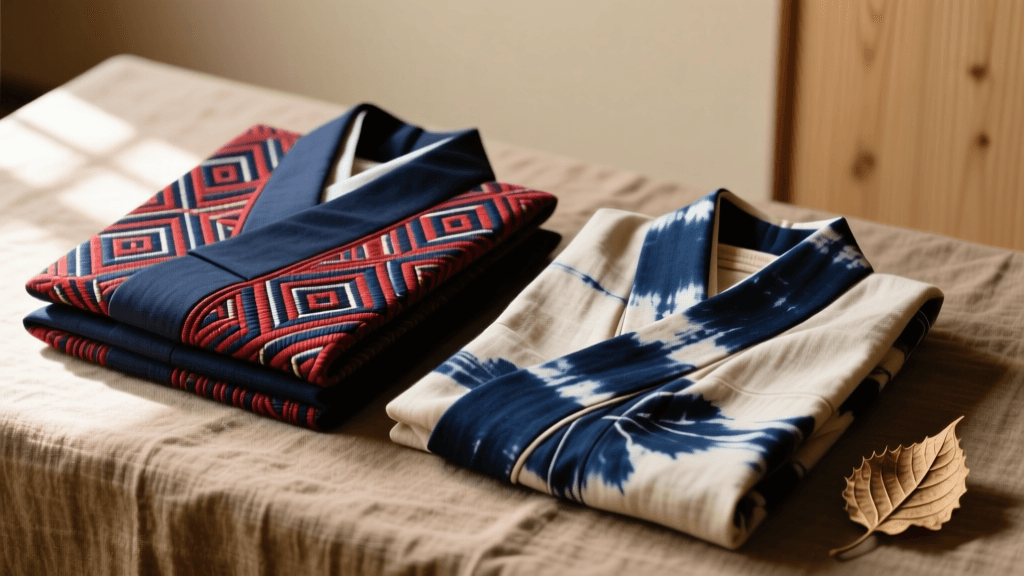
The traditional garment of the Ainu people is deeply intertwined with the natural environment of Hokkaido. The most iconic and historically significant textile is attus, a durable cloth woven from the inner bark of the elm tree (ohyo). The creation of attus is a labor-intensive process that requires stripping the bark, soaking it in water for several days, peeling it into thin layers, and drying it before it is spun into thread. The weaving is traditionally done on a backstrap loom called an emush, resulting in a fabric that is remarkably water-resistant, breathable, and durable.
While plain attus was used for everyday workwear, ceremonial garments were heavily decorated with uporpe (cotton applique) and chinpiri (embroidery). These intricate, swirling thorn-like patterns were not merely decorative; they were believed to protect the wearer from evil spirits by closing the gaps in the garment where malevolent forces could enter.
Sourcing Authentic Ainu Textiles
Acquiring authentic, newly woven attus garments requires connecting directly with Ainu artisans or authorized cultural cooperatives. The town of Biratori, specifically the Nibutani district in Hokkaido, is the historic epicenter of attus weaving. According to the Upopoy National Ainu Museum and Park, preserving these traditional crafts is a cornerstone of modern Ainu cultural revitalization.
- Where to Buy: Visit the Nibutani Ainu Culture Museum shop or authorized cooperatives in Biratori. For vintage pieces, specialized antique textile dealers in Kyoto and Tokyo (such as those in the Jimbocho book and antique district) occasionally carry early 20th-century robes.
- Cost Expectations: Modern, hand-woven attus coin cases and small pouches start around $40 to $80 USD. Full ceremonial robes (attus-amip) with extensive cotton applique and embroidery are museum-quality investments, typically ranging from $1,500 to $4,500 USD depending on the artisan and the complexity of the chinpiri.
- Timing: Because the bark must be harvested in early summer (June to July) and weaving is done throughout the year, commissioning a custom piece from an artisan in Nibutani can take anywhere from 6 to 12 months.
Okinawan Ryusou and Bingata: The Tropical Elegance of the Ryukyu Kingdom
Traveling over 1,500 kilometers south to Okinawa, the traditional dress shifts dramatically to accommodate the subtropical climate. The ryusou is the traditional garment of the Ryukyuan people. While it shares a superficial silhouette with the Japanese kimono, the ryusou is constructed with lighter fabrics, wider sleeves, and a more relaxed fit to allow for air circulation. Instead of a tightly bound, restrictive obi, the ryusou is often secured with a simple, wide sash or tied internally.
The crown jewel of Ryukyuan textile arts is bingata, a vibrant resist-dyeing technique that flourished during the Ryukyu Kingdom era (15th to 19th centuries). Bingata utilizes stencils made from mulberry paper and a soybean milk resist to apply brilliant pigments—traditionally derived from local plants, minerals, and even imported Chinese dyes. The motifs heavily feature Ryukyuan flora and fauna, such as hibiscus, peonies, swallows, and ocean waves.
Another highly prized textile is bashofu, a remarkably fine cloth woven from the fibers of the Japanese fiber banana tree. Recognized by Japan Traditional Crafts (Densan) as a premier heritage craft, bashofu is incredibly lightweight and breathable, making it the ultimate luxury summer fabric.
Sourcing Ryusou and Bingata
Authentic bingata is strictly guarded by a few historic dyeing families, most notably the Chinen, Shiroma, and Kamakura families, who trace their lineage back to the royal dyers of the Ryukyu Kingdom.
- Where to Buy: For authentic bingata, visit the family studios in Naha, Okinawa, such as the Chinen Bingata Studio or Shiroma Bingata. The Okinawa Prefectural Museum also hosts annual exhibitions where contemporary artisans sell their work.
- Cost Expectations: A hand-dyed bingata obi (sash) typically costs between $800 and $2,500 USD. Full custom ryusou sets, including the inner garments and outer bingata robe, can easily exceed $5,000 to $8,000 USD. Mass-produced, screen-printed 'bingata-style' shirts are available for $50 to $100, but these lack the cultural and material authenticity of hand-resisted pieces.
- Product Names to Look For: When sourcing, ask for hon-bingata (authentic traditional bingata) to ensure the piece was made using traditional stencils and pigments, rather than modern chemical dyes and digital printing.
Comparative Sourcing and Wearing Chart
To help collectors and enthusiasts understand the practical differences between these two indigenous traditions, refer to the comparison table below:
| Feature | Ainu Attus (Hokkaido) | Ryukyuan Ryusou / Bingata (Okinawa) |
|---|---|---|
| Primary Material | Elm tree inner bark (cotton for applique) | Silk, Bashofu (banana fiber), Ramie |
| Climate Suitability | Cold, harsh winters; water-resistant | Hot, humid subtropical; highly breathable |
| Fastening Method | Wrapped and tied with a woven sash (pon-tara) | Wrapped, tied internally or with a soft sash |
| Entry-Level Cost | $40 - $80 (Small pouches, coasters) | $150 - $300 (Furoshiki, small stoles) |
| Full Garment Cost | $1,500 - $4,500 (Ceremonial robes) | $3,000 - $8,000+ (Full custom Ryusou) |
| Care Requirements | Keep dry, avoid prolonged direct sunlight | Dry clean only, store with acid-free tissue |
Practical Sizing and Measurement Guide
Unlike Western clothing, traditional Japanese and indigenous garments are rarely sized by standard S/M/L metrics. They are constructed from bolts of fabric and tailored to the individual’s specific body measurements. If you are commissioning a piece or buying vintage, you must understand these key measurements:
1. Yuki (Center Back to Wrist)
This is the most critical measurement for both Ainu and Ryukyuan garments. It is measured from the prominent vertebra at the base of the neck, across the shoulder, and down to the wrist bone. For a traditional Ryusou, the yuki is often slightly longer than a standard kimono to allow the fabric to drape elegantly over the hands in formal settings.
2. Mitake (Back Length)
Measured from the base of the neck to the desired hemline. For Ainu robes, the hemline traditionally falls to the mid-calf or just above the ankle to prevent the heavy elm bark from dragging in the snow. For Okinawan Ryusou, the length is often full, grazing the ankle bone to protect the legs from the sun and insects while maintaining a breezy interior.
3. Sodehaba (Sleeve Width)
Ryukyuan sleeves are notably wider and more open than mainland Japanese kimono sleeves. When commissioning a Ryusou, specify a wider sodehaba (often 40cm to 50cm) to ensure maximum airflow, which is essential for the garment’s cooling effect in Okinawa’s humid climate.
Care and Maintenance for Indigenous Textiles
Preserving these garments requires an understanding of their unique organic materials. Mainstream kimono care advice does not always apply to indigenous textiles.
Caring for Ainu Attus
Because attus is made from tree bark, it is highly susceptible to extreme dryness (which can cause the fibers to snap) and prolonged moisture (which can lead to mold). Store attus garments in a climate-controlled room with a humidity level between 45% and 55%. Never fold an attus robe along the same crease lines for extended periods, as the stiff bark fibers will permanently weaken and break. Instead, roll the garment around an acid-free cardboard tube.
Caring for Bingata and Bashofu
Authentic bingata utilizes organic pigments that can fade if exposed to harsh UV light. Never display a bingata garment in direct sunlight. Bashofu, while incredibly strong, can become brittle if subjected to modern chemical dry-cleaning solvents. Seek out a specialist textile cleaner who understands traditional Ryukyuan fibers. When storing, wrap bashofu and bingata pieces in unbleached, acid-free muslin cloth to allow the natural fibers to breathe while protecting them from dust and pests.
Conclusion: Wearing with Cultural Respect
Investing in Ainu attus or Okinawan ryusou is more than a fashion statement; it is an act of cultural preservation. Both the Ainu and Ryukyuan peoples have faced centuries of assimilation policies that threatened to erase their languages, crafts, and identities. By sourcing directly from indigenous artisans, understanding the profound meaning behind the motifs, and caring for these garments with the respect they command, collectors and wearers play a vital role in keeping these extraordinary Asian traditions alive for future generations.