Ahimsa vs Mulberry Silk for Indian Bridal Saris: 2026 Guide
The Evolution of Silk in Indian Bridal Wear
As we navigate the bridal fashion landscape of 2026, the conversation surrounding Indian traditional garments has shifted dramatically. Brides are no longer solely focused on the weight of the gold zari or the sheer volume of the lehenga; the foundational textile itself has become a statement of values, heritage, and environmental consciousness. At the heart of this textile revolution is a fascinating debate: the centuries-old dominance of traditional Mulberry silk versus the rapidly rising popularity of Ahimsa (peace) silk.
Choosing the right fabric for a Kanjeevaram sari, a Banarasi lehenga, or a Patola dupatta requires a deep understanding of how these fibers behave, drape, and age. In this comprehensive 2026 guide, we break down the structural, aesthetic, and ethical differences between Mulberry and Ahimsa silk, empowering you to make an informed decision for your bridal trousseau.
Understanding Mulberry Silk: The Heritage Standard
Mulberry silk is the undisputed heavyweight champion of traditional Indian bridal wear. Produced by the Bombyx mori silkworm, which feeds exclusively on the leaves of the mulberry plant, this textile is renowned for its uniformity, brilliant sheen, and incredible tensile strength.
The Production and Characteristics
In traditional sericulture, the silkworm spins a continuous filament cocoon. To harvest the silk, the cocoons are boiled with the pupae inside, allowing the unbroken filament to be reeled into a single, remarkably long thread. This continuous filament is what gives Mulberry silk its signature glass-like luster and smooth, frictionless texture.
- Sheen: Highly reflective, offering a luxurious, jewel-like brilliance under wedding lights.
- Texture: Exceptionally smooth and soft against the skin.
- Drape: Heavy and structured, allowing for crisp, sharp pleats in sarees and voluminous, stiff silhouettes in lehengas.
- Dye Affinity: Takes on vibrant, deep synthetic and natural dyes with unparalleled clarity, making it the preferred canvas for the rich reds, magentas, and emeralds of Indian bridal wear.
For brides planning a grand, indoor evening reception in 2026, a heavy Mulberry silk Kanjeevaram or a densely woven Banarasi brocade remains the ultimate symbol of opulence and traditional grandeur.
The Rise of Ahimsa (Peace) Silk in 2026
Ahimsa silk, often referred to as peace silk, has transitioned from a niche eco-textile to a mainstream luxury fabric in the 2026 bridal market. Rooted in the principle of non-violence (Ahimsa), this silk is harvested without harming the silkworm.
The Production and Characteristics
Ahimsa silk is typically produced using the Eri (Samia cynthia ricini) or Tussar (Antheraea mylitta) silkworms. Unlike the Bombyx mori, these moths are allowed to complete their metamorphosis and naturally pierce their cocoons to emerge. Because the cocoon is broken, the silk filament is no longer continuous. The fibers must be collected and spun together, much like cotton or wool.
This spinning process fundamentally alters the fabric's characteristics:
- Sheen: Matte to semi-lustrous. It lacks the mirror-like shine of Mulberry silk, offering instead a sophisticated, understated glow.
- Texture: Slightly textured, often compared to raw linen or fine cotton, providing a beautiful organic feel.
- Drape: Fluid, breathable, and exceptionally lightweight. It drapes softly around the body rather than standing away from it.
- Thermal Regulation: Highly breathable and temperature-regulating, making it the premier choice for 2026 daytime, outdoor, and destination weddings.
"The modern bride in 2026 is redefining luxury. It is no longer just about visual weight; it is about the narrative of the garment, the comfort of the wearer, and the ecological footprint of the weave."
Head-to-Head Comparison: Mulberry vs. Ahimsa Silk
To help you visualize how these two magnificent textiles stack up against each other for bridal garments, we have compiled a detailed comparison based on 2026 market standards and textile engineering data.
| Feature | Traditional Mulberry Silk | Ahimsa (Peace) Silk |
|---|---|---|
| Fiber Structure | Continuous reeled filament | Broken, spun filament |
| Visual Finish | High, reflective sheen | Matte, textured, earthy luster |
| Weight & Drape | Heavy, structured, crisp pleats | Lightweight, fluid, soft draping |
| Breathability | Moderate (can trap heat) | Excellent (highly porous) |
| Avg. 2026 Cost (per meter) | ₹1,200 - ₹3,500 ($14 - $42 USD) | ₹1,500 - ₹4,000 ($18 - $48 USD) |
| Embellishment Suitability | Heavy Zardozi, dense copper/silver Zari | Resham (thread) work, light sequins, aari |
| Environmental Impact | High water usage, chemical degumming | Lower water footprint, often organic dyes |
Note: Pricing reflects raw, unembellished fabric costs in early 2026. Finished bridal garments will vary significantly based on artisan labor and zari purity.
Styling and Drape: How They Behave in Garments
The choice between these silks drastically alters the final silhouette of your traditional garment.
The Saree Pleat Test
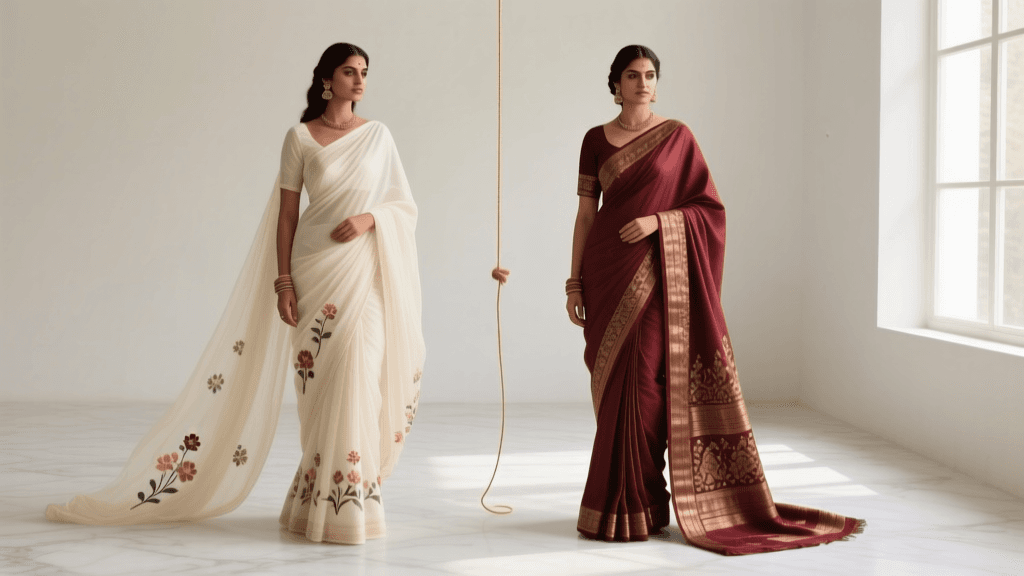
When styling a traditional sari, the pallu and the pleats are the focal points. Mulberry silk, due to its stiffness and weight, holds razor-sharp pleats that fan out beautifully and stay in place throughout hours of dancing. Ahimsa silk, being softer and more fluid, creates relaxed, cascading pleats. For brides who prefer a structured, architectural drape, Mulberry is essential. For those favoring a romantic, Grecian-style fluid drape adapted to the sari silhouette, Ahimsa is unparalleled.
Lehenga Silhouettes
In 2026, the trend for bridal lehengas has bifurcated. The classic, heavily can-can-supported A-line lehenga relies on the structural integrity of Mulberry silk to hold its shape without looking deflated. Conversely, the trending 'saree-gown' hybrids and flowing, empire-waist lehengas utilize Ahimsa silk to achieve a breezy, ethereal movement that mimics chiffon but retains the richness of pure silk.
Embellishments: Zari, Zardozi, and Thread Work
The textile you choose dictates the type of embroidery it can support. Mulberry silk's tight weave and high tensile strength can bear the weight of dense Zardozi (metallic wire embroidery) and heavy Kamdani work. If you are commissioning a heritage piece meant to weigh several kilos, Mulberry is the only viable base.
Ahimsa silk, with its slightly looser spun weave and lighter weight, pairs best with Resham (silk thread) embroidery, Aari work, and delicate beadwork. Attempting to apply heavy metallic zardozi to Ahimsa silk will cause the fabric to tear and sag under the weight, ruining the drape. In 2026, designers are beautifully contrasting the matte texture of Ahimsa silk with bright, glossy Resham threads and subtle pearl detailing, creating a masterpiece of textural contrast.
Sourcing and Authenticating Your Silk in 2026
With the premium pricing of Ahimsa silk, the market has unfortunately seen an influx of synthetic blends masquerading as peace silk. Authenticating your textile is a critical step in the purchasing process.
To ensure you are investing in genuine silk, always look for official certifications. The Silk Mark Organisation of India provides a rigorous testing and labeling mechanism that guarantees the purity of the silk fiber. When purchasing from boutique weavers or major design houses, demand the Silk Mark label and verify the unique QR code embedded in the tag.
Furthermore, for those specifically seeking Ahimsa and Eri silks, the Central Silk Board of India has significantly expanded its traceability initiatives in 2026. Their digital portals and certified cooperatives in regions like Assam and Bhagalpur allow buyers to trace the exact origin of their peace silk, ensuring that the ethical claims of the fabric are backed by transparent supply chain data.
Care, Storage, and Heirloom Preservation
Both Mulberry and Ahimsa silks are protein fibers and require meticulous care to ensure they survive as heirlooms for the next generation.
Cleaning Protocols
- Mulberry Silk: Strictly dry clean only. The heavy dyes and metallic zari used in Mulberry bridal wear can bleed or tarnish if exposed to water. Always use a dry cleaner experienced in handling heavy Indian bridal garments.
- Ahimsa Silk: While dry cleaning is still recommended for heavily embroidered pieces, pure, unembellished Ahimsa silk can often be gently hand-washed in cold water using a pH-neutral, protein-safe detergent. Its natural, often undyed or organically dyed state makes it less prone to catastrophic color bleeding.
Storage Best Practices
Never store your bridal silk in plastic covers, which trap moisture and encourage mildew. Instead, wrap the garment in unbleached, pure cotton muslin cloth. Refold the sari or lehenga every three to six months to prevent permanent crease lines from weakening and eventually snapping the silk fibers. Avoid naphthalene balls, which can react with the protein structure of the silk and cause yellowing; opt for natural alternatives like sandalwood blocks or dried neem leaves.
Making the Final Choice for Your 2026 Trousseau
The decision between Ahimsa and Mulberry silk ultimately comes down to the vision for your wedding day and your personal values. If your dream is a classic, opulent, and heavily structured traditional look that commands the room with its brilliant sheen and heavy heritage embroidery, traditional Mulberry silk remains the undisputed king.
However, if you are planning a sunlit outdoor ceremony, a destination wedding in a tropical climate, or simply wish to align your bridal trousseau with sustainable, cruelty-free practices without sacrificing luxury, Ahimsa silk is the definitive choice for 2026. Its earthy elegance, unmatched breathability, and fluid drape offer a modern interpretation of tradition that feels as good as it looks. By understanding the unique properties of these magnificent textiles, you ensure that your bridal garment is not just a piece of clothing, but a masterfully crafted, deeply meaningful work of art.