Ahimsa vs Mulberry Silk for Bridal Lehengas: 2026 Guide
The Evolution of Bridal Textiles in 2026
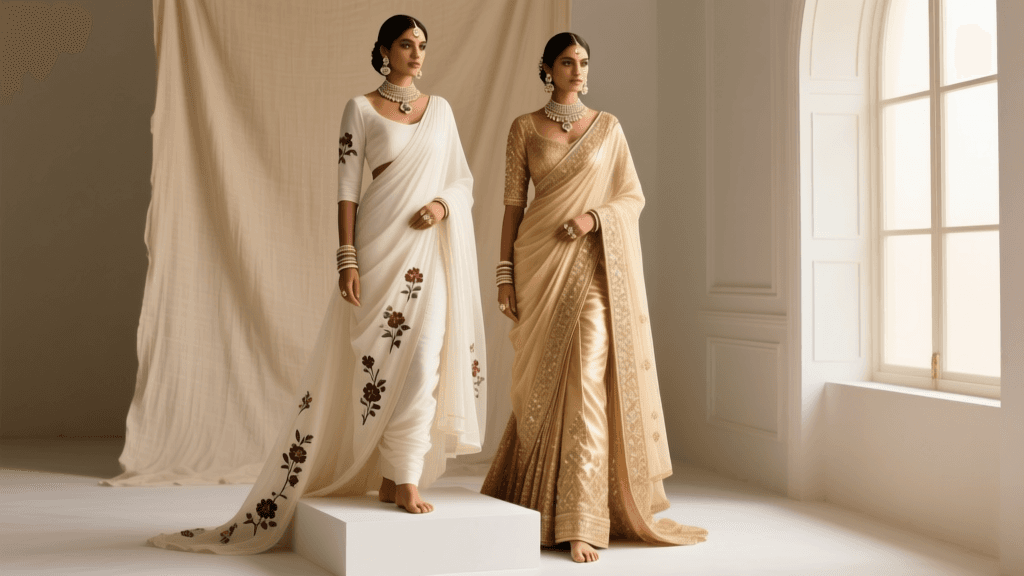
As we navigate the bridal fashion landscape of 2026, the South Asian wedding industry is experiencing a profound shift in textile preferences. Modern brides are no longer just looking for opulence; they are demanding a harmonious blend of heritage, luxury, and ethical sustainability. At the forefront of this movement is the debate between traditional Mulberry silk and the rapidly rising star of ethical luxury: Ahimsa (Peace) silk. When commissioning a bespoke bridal lehenga, the foundational fabric dictates everything from the garment's drape and weight to its compatibility with intricate embroidery. Understanding the structural and aesthetic differences between these two prestigious fibers is essential for making an informed choice in 2026.
Mulberry Silk: The Timeless Gold Standard
Mulberry silk has been the undisputed queen of bridal textiles for centuries. Produced by the Bombyx mori silkworm, which feeds exclusively on mulberry leaves, this textile is renowned for its uniform, continuous filament threads. According to the Metropolitan Museum of Art's historical textile archives, the cultivation of Mulberry silk represents one of humanity's oldest and most refined sericulture practices, yielding a fabric that is inherently lustrous, incredibly strong, and exceptionally smooth.
For a 2026 bridal lehenga, Mulberry silk offers an unparalleled high-sheen finish that catches the light beautifully during evening receptions and indoor ceremonies. Its high tensile strength makes it the preferred canvas for heavy, dense embroidery. In 2026, premium-grade Mulberry silk for bridal wear typically ranges from $65 to $110 per yard, depending on the momme weight (with 19 to 22 momme being the bridal standard for durability and structure). The continuous filament structure means the fabric glides over the skin, offering a cooling effect and a fluid, liquid-like drape that is highly sought after for voluminous lehenga skirts.
Ahimsa Silk: The Rise of Ethical Luxury
Ahimsa silk, often referred to as Peace silk, has transitioned from a niche eco-friendly alternative to a mainstream luxury textile in 2026. Unlike traditional sericulture, where the silkworm is boiled inside the cocoon to preserve the continuous filament, Ahimsa silk allows the moth to naturally hatch and leave the cocoon before the silk is harvested. Because the emerging moth breaks the continuous thread, Ahimsa silk must be spun rather than reeled, classifying it as a 'spun silk' or staple fiber.
This ethical harvesting process fundamentally alters the fabric's characteristics. As detailed by the Victoria and Albert Museum's comprehensive guide on silk properties, spun silks possess a distinctly different texture compared to reeled silks. Ahimsa silk features a matte finish, a slightly slubby or nubby texture, and an earthy, organic aesthetic. In 2026, advancements in eco-friendly spinning technologies have made Ahimsa silk softer and more refined than in previous decades, though it still retains its signature rustic elegance. Due to the lower yield per cocoon and the labor-intensive spinning process, authentic Ahimsa silk commands a premium, often costing between $90 and $150 per yard in the current market.
Head-to-Head Comparison: Mulberry vs. Ahimsa Silk
To help you visualize how these textiles perform in a bridal context, here is a detailed comparison based on 2026 textile industry standards:
| Feature | Mulberry Silk (Reeled) | Ahimsa Silk (Spun) |
|---|---|---|
| Surface Finish | High sheen, reflective, glossy | Matte, soft luster, earthy |
| Texture & Drape | Ultra-smooth, fluid, liquid drape | d>Slightly nubby, structured, cotton-like drape |
| Tensile Strength | Exceptionally high (continuous filament) | Moderate (spun staple fiber) |
| Dye Absorption | Vibrant, deep, jewel-tone saturation | Muted, organic, pastel-friendly tones |
| 2026 Avg. Cost | $65 - $110 per yard | $90 - $150 per yard |
| Ethical Footprint | Traditional (worm does not survive) | Cruelty-free (moth hatches naturally) |
Embroidery and Embellishment Compatibility
The choice between Mulberry and Ahimsa silk drastically influences the type of embellishment your lehenga can support. Mulberry silk's continuous filament provides a robust, tear-resistant base. If your 2026 bridal vision involves heavy Zardozi (metallic thread work), dense Dabka spring-coil embroidery, or extensive pearl and crystal dabbing, Mulberry silk is mandatory. The fabric's structural integrity prevents the heavy embellishments from sagging or tearing the warp and weft threads over time.
Conversely, Ahimsa silk's matte, textured surface is the perfect backdrop for intricate, flat embroidery techniques. Delicate Aari work, fine Resham (silk thread) embroidery, and traditional Gota Patti appliqué look exceptionally elegant against the rustic backdrop of Peace silk. The earthy texture of Ahimsa silk absorbs light rather than reflecting it, allowing the intricate threadwork to take center stage without competing with the shine of the base fabric. However, because Ahimsa is a spun fiber, it is more prone to snagging if subjected to heavy, sharp metallic threads, requiring a skilled artisan to use specialized backing and lining techniques.
Regional Weaving Techniques Adapted for 2026
Both fabrics are frequently utilized in heritage weaving techniques, though they yield vastly different results. When woven using the Banarasi brocade technique, Mulberry silk creates a stiff, regal fabric with raised gold and silver zari motifs that stand out sharply against the glossy background. This is ideal for bridal dupattas and structured lehenga bodices.
When Ahimsa silk is used in traditional weaves like Maheshwari or Chanderi adaptations, the resulting fabric is breathable, lightweight, and possesses a sophisticated, understated grace. In 2026, many contemporary designers are blending Ahimsa silk with fine organic cotton or bamboo yarns to create hybrid textiles that offer the structural benefits of cotton with the luxurious, hypoallergenic feel of peace silk, perfect for daytime wedding functions like the Haldi or Mehndi ceremonies.
Sourcing Authentic Silk in 2026: Avoiding Greenwashing
As the demand for sustainable fashion has peaked in 2026, so too has the prevalence of 'greenwashing' in the textile market. Many fabrics are misleadingly labeled as 'eco-silk' or 'vegan silk' (which is often just synthetic polyester or bamboo rayon). To ensure you are purchasing genuine Ahimsa silk, look for certifications from the Global Organic Textile Standard (GOTS) or the Silk Mark Organization of India, which has updated its traceability protocols in 2026 to include blockchain-verified tagging for peace silk batches. Genuine Ahimsa silk will always have slight irregularities in the weave—a hallmark of its natural, hand-spun origin—whereas perfectly uniform, highly glossy fabrics marketed as 'peace silk' are almost certainly synthetic blends or traditionally harvested Mulberry silk.
Care, Maintenance, and Longevity
Preserving your bridal lehenga requires specific care tailored to the silk type. Mulberry silk is highly sensitive to alkaline substances and prolonged exposure to direct sunlight, which can cause the vibrant dyes to fade and the fibers to become brittle. It must always be dry-cleaned using eco-friendly, non-toxic solvents that are widely available in 2026.
Ahimsa silk, while also requiring professional care, is slightly more forgiving due to its matte finish, which does not show water spots or minor handling marks as readily as glossy Mulberry silk. When storing either garment, avoid plastic covers, which trap moisture and encourage mildew. Instead, wrap your lehenga in unbleached, acid-free muslin cotton and store it in a climate-controlled environment. Refold the garment every six months to prevent permanent creasing along the fold lines, ensuring your sustainable or traditional silk masterpiece remains a pristine heirloom for generations to come.