Ahimsa vs Mulberry Silk Banarasi Sarees: 2026 Buyer Guide
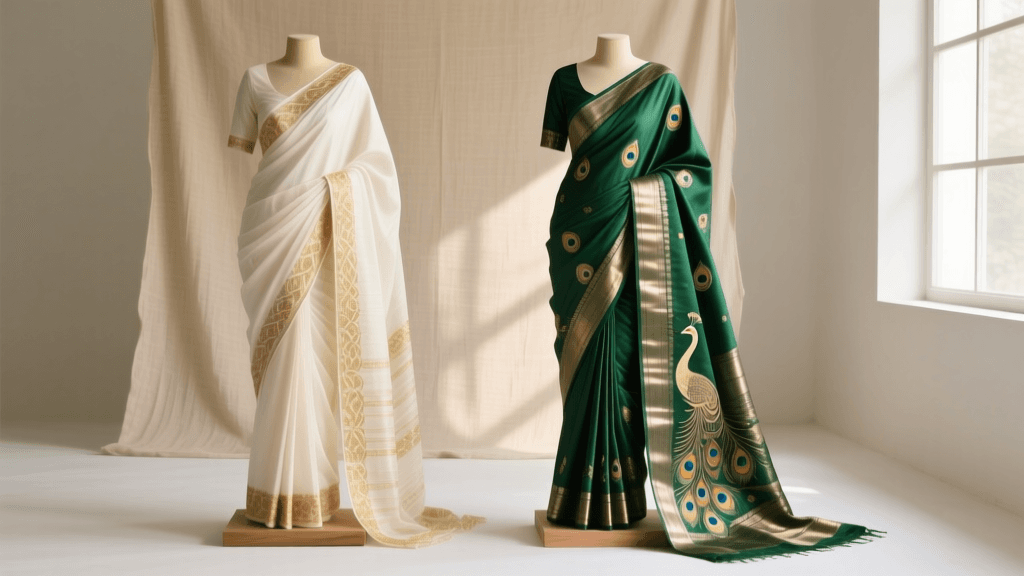
The 2026 Evolution of the Banarasi Saree
The Banarasi saree has long been the undisputed queen of Indian bridal trousseaus, celebrated for its opulent brocades, intricate jacquard weaving, and heavy metallic zari work. Originating from the ancient weaving clusters of Varanasi, these garments represent centuries of artisanal mastery. However, as we navigate the 2026 wedding season, a significant ideological and aesthetic shift is reshaping the luxury textile market. Modern consumers and eco-conscious brides are increasingly scrutinizing the origins of their garments, leading to a surge in demand for sustainable, cruelty-free textiles. This has brought the debate between traditional Mulberry silk and Ahimsa (Peace) silk to the forefront of the South Asian fashion industry.
Choosing the right silk base for a Banarasi saree is no longer just about color and drape; it is a decision that encompasses ethical sericulture, textile longevity, and climatic suitability. In 2026, master weavers in Varanasi have successfully adapted their centuries-old pit loom techniques to accommodate the unique structural properties of peace silk, making it a viable and highly sought-after alternative to conventional silk. This comprehensive guide explores the technical, aesthetic, and economic differences between Ahimsa and Mulberry silk Banarasi sarees, providing you with the actionable insights needed to make an informed investment this year.
Understanding the Fibers: Mulberry vs. Ahimsa
Traditional Mulberry Silk (Bombyx mori)
Traditional Mulberry silk is produced by the Bombyx mori silkworm, which feeds exclusively on mulberry leaves. In conventional sericulture, the silkworm spins a continuous cocoon of filament fiber. To harvest the silk in its unbroken, continuous form, the cocoons are boiled with the pupae still inside. This process yields a single, incredibly long, and uniform filament thread that can be reeled directly. The resulting fabric is renowned for its brilliant, mirror-like luster, smooth texture, and high tensile strength. For decades, this continuous filament has been the gold standard for Banarasi weaving, allowing for the crisp, high-definition execution of complex motifs like the kalga (mango) and bel (creeper) patterns.
Ahimsa (Peace) Silk
Ahimsa silk, widely known as peace silk, is harvested using a non-violent method that allows the silkworm to complete its metamorphosis and emerge from the cocoon as a moth. Because the moth secretes an alkaline fluid to melt a hole in the cocoon to escape, the continuous filament is broken into shorter staple fibers. These broken fibers must then be spun together, much like cotton or wool, rather than reeled. While Mulberry silk can be produced under Ahimsa conditions, the peace silk movement in 2026 heavily favors wild and semi-wild varieties like Eri and Tussar, which are naturally more resilient and possess a beautiful, earthy texture. The spun nature of Ahimsa yarn gives the fabric a slightly nubby, organic feel and a soft, matte sheen that contrasts sharply with the glossy finish of conventional silk.
The Loom Dynamics: Weaving Peace Silk in Varanasi
Weaving a Banarasi saree requires immense tension on the warp threads to support the heavy weft brocading and metallic zari. Historically, the continuous filament of Mulberry silk was preferred because its uniform thickness and high tensile strength could withstand the rigorous mechanical stress of the jacquard pit loom. Spun Ahimsa silk, with its inherent irregularities and shorter fiber staples, presented a significant challenge: the warp threads were prone to snapping under high tension, leading to frequent loom stoppages and increased production time.
However, the 2026 textile landscape has seen remarkable innovation in natural sizing agents. Master weavers in Varanasi now treat Ahimsa warp yarns with advanced organic starches derived from wild rice and arrowroot, combined with natural plant-based gums. This eco-friendly sizing process coats the spun fibers, binding them together and dramatically increasing their tensile strength without the use of harsh synthetic chemicals. As a result, Ahimsa silk can now be woven on traditional Banarasi looms with the same precision as Mulberry silk, yielding intricate brocades that retain the structural integrity required for heavy bridal wear while maintaining the fabric's breathable, organic core.
Zari Integration and Embellishment Compatibility
The hallmark of a genuine Banarasi saree is its zari work—metallic threads woven into the silk base to create shimmering patterns. In 2026, the market offers both traditional real zari (silver wire coated in pure gold) and high-grade tested zari (copper or synthetic core with metallic electroplating). The interaction between the zari and the silk base differs significantly between the two fiber types.
- Mulberry Silk Base: The smooth, glossy surface of Mulberry silk allows the zari to lie perfectly flat, reflecting maximum light. The contrast between the high-shine silk and the metallic thread creates a striking, formal opulence ideal for evening receptions and grand winter weddings.
- Ahimsa Silk Base: The matte, textured surface of spun Ahimsa silk absorbs light differently, creating a softer, more muted glow. When woven with antique-finish or oxidized zari, Ahimsa silk produces a vintage, heritage aesthetic that is highly prized in 2026 for daytime ceremonies, temple weddings, and intimate cultural events. The slight irregularity of the spun yarn gives the zari motifs a handcrafted, artisanal depth that continuous filament silk cannot replicate.
2026 Market Pricing and Availability Comparison
The pricing of Banarasi sarees in 2026 reflects not only the cost of raw materials but also the specialized labor required for ethical sericulture and adapted weaving techniques. Ahimsa silk commands a premium due to the lower yield per cocoon and the additional spinning and sizing processes required before it reaches the loom.
| Feature | Mulberry Silk Banarasi | Ahimsa (Peace) Silk Banarasi |
|---|---|---|
| Yarn Structure | Continuous Filament (Reeled) | Staple Fiber (Spun) |
| Surface Luster | High, glossy, reflective | Matte, soft sheen, textured |
| Drape and Weight | Fluid, heavy, structured folds | Earthy, breathable, slightly stiff initially |
| Zari Integration | Crisp, high-contrast, seamless | Blended, vintage, organic depth |
| 2026 Avg. Price (INR) | ₹25,000 - ₹1,50,000+ | ₹35,000 - ₹2,00,000+ |
| Weaving Time | 15 - 45 days | 25 - 60 days |
| Climatic Suitability | Best for cool climates / AC venues | Highly breathable, ideal for humid/warm climates |
Drape, Comfort, and Climatic Suitability
When selecting a garment for a multi-day South Asian wedding, comfort is just as critical as aesthetics. Mulberry silk is a natural insulator; it traps heat, making it incredibly comfortable in air-conditioned banquet halls or during winter weddings in North India. Its fluid drape allows for the tight, precise pleating required in traditional Nivi or Gujarati draping styles.
Conversely, the spun structure of Ahimsa silk introduces microscopic air pockets within the yarn, granting the fabric exceptional breathability and moisture-wicking properties. For brides hosting daytime ceremonies in the humid climates of South India or coastal regions, an Ahimsa silk Banarasi saree offers unparalleled comfort. While it may feel slightly stiffer off the loom, Ahimsa silk softens beautifully with wear and body heat, molding to the wearer over time while maintaining the architectural volume necessary for grand bridal silhouettes.
Authentication: Avoiding Counterfeits in 2026
As the premium on sustainable luxury grows, so does the prevalence of greenwashing in the textile market. Some retailers may market conventionally produced silk or synthetic blends as 'peace silk' to capitalize on the 2026 eco-trend. To ensure authenticity, buyers must look for verifiable certifications. The Silk Mark Organisation of India provides rigorous testing and certification for pure silk products, ensuring that the garment contains no synthetic adulterants. Furthermore, organizations like the Crafts Council of India actively support and document artisanal clusters that adhere to ethical sericulture practices. When purchasing an Ahimsa Banarasi saree, always request the Silk Mark label and inquire about the specific weaving cluster and the origin of the peace silk yarn, which should ideally trace back to certified Eri or Tussar rearing cooperatives in Assam, Jharkhand, or Odisha.
Long-Term Care and Archival Storage
Investing in a handwoven Banarasi saree is an investment in an heirloom. Proper care is essential to preserve the structural integrity of both the silk and the metallic zari. For Mulberry silk, traditional dry cleaning remains the standard recommendation to preserve the high-gloss finish and prevent water spotting. However, the chemical solvents used in standard dry cleaning can strip the natural sericin and organic sizing from Ahimsa silk, leaving it brittle.
In 2026, textile conservators recommend specialized eco-cleaning for Ahimsa garments, utilizing liquid carbon dioxide or gentle, pH-neutral organic washes. For archival storage, avoid plastic covers and naphthalene balls, which can cause the metallic zari to oxidize and tarnish, turning black over time. Instead, wrap your sarees in unbleached, acid-free cotton muslin. To deter pests naturally without exposing the delicate spun fibers to harsh chemicals, place dried neem leaves, cedar blocks, or whole cloves in the storage folds. Refold the saree every three months along different axes to prevent permanent creasing and fiber degradation along the fold lines, ensuring your sustainable bridal garment remains pristine for the next generation.
Conclusion: Making the Right Choice
The choice between Ahimsa and Mulberry silk for a Banarasi saree in 2026 ultimately depends on your personal values, aesthetic preferences, and the specific context of your event. If you prioritize a high-gloss, mirror-like finish, a fluid drape, and the crisp, high-contrast brilliance of traditional gold zari, Mulberry silk remains an unparalleled classic. However, if you are drawn to the heritage-rich, matte texture of handspun yarns, prioritize eco-conscious and cruelty-free production, and require a breathable fabric for warm-weather ceremonies, Ahimsa silk represents the pinnacle of modern, sustainable luxury. By understanding the intricate loom dynamics and fiber properties outlined in this guide, you can confidently select a Banarasi masterpiece that aligns with both your aesthetic vision and your ethical standards.