The Ahimsa vs Mulberry Silk Saris 2026 Fabric Guide
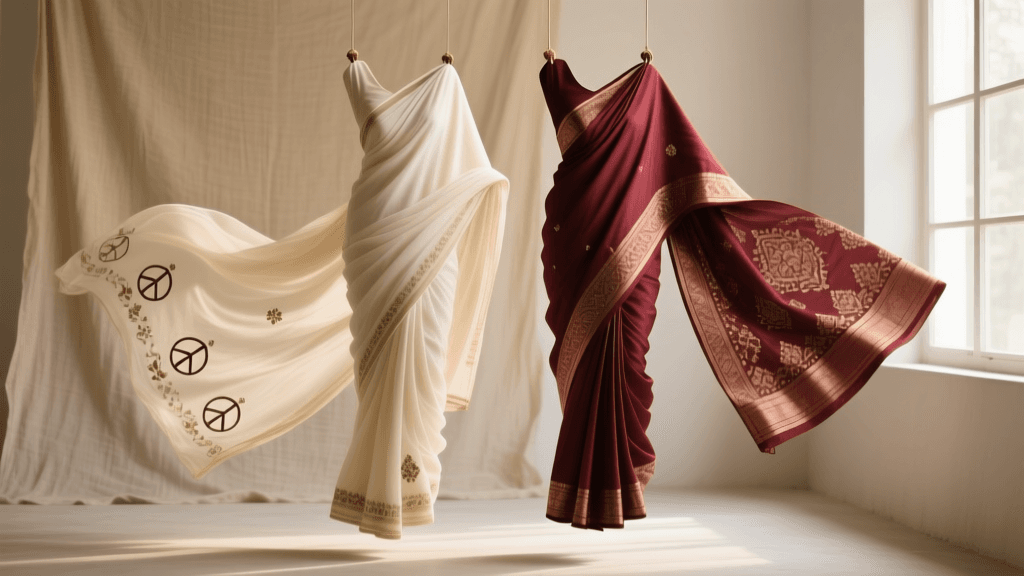
The Evolution of South Asian Silk in 2026
The landscape of South Asian traditional garments has undergone a profound transformation by 2026. As global consciousness shifts toward sustainable luxury, the Indian sari—a timeless emblem of cultural heritage—finds itself at the intersection of ancient weaving traditions and modern ethical demands. For brides, festival-goers, and everyday connoisseurs, choosing the right textile is no longer just about color and motif; it is about the very soul of the fabric. The debate between traditional Mulberry silk and cruelty-free Ahimsa (peace) silk dominates the 2026 bridal and couture markets. Understanding the structural, aesthetic, and ethical differences between these two powerhouse textiles is essential for making an informed investment in your wardrobe.
The Biology and Botany of the Threads
To appreciate the drape and sheen of a sari, one must first understand the entomology and sericulture behind the thread. Silk is a natural protein fiber, primarily composed of fibroin and sericin. However, the method of harvesting this fiber drastically alters its physical properties, dictating how it will eventually behave on the handloom and on the human body.
Mulberry Silk: The Standard of Brilliance
Traditional Mulberry silk is produced by the Bombyx mori silkworm, which feeds exclusively on the leaves of the white mulberry tree. In conventional sericulture, the cocoons are boiled with the pupae inside to prevent the emerging moth from breaking the continuous silk filament. This yields a single, unbroken thread that can measure up to 900 meters in length. The resulting fabric is renowned for its uniform, glass-like sheen, incredible tensile strength, and smooth, frictionless hand-feel. In 2026, Mulberry silk remains the undisputed king of heavy bridal Kanjeevarams and intricate Banarasi brocades, where high luster and structural integrity are paramount.
Ahimsa Silk: The Ethical Staple
Ahimsa silk, often referred to as peace silk, operates on the principle of non-violence (ahimsa). The moths—typically the Eri (Samia ricini) or Tasar (Antheraea mylitta) species—are allowed to complete their life cycle and naturally pierce the cocoon to emerge. Because the continuous filament is broken, the silk must be gathered and spun like cotton or wool, resulting in a staple fiber rather than a continuous filament. This spinning process introduces microscopic irregularities, giving Ahimsa silk a distinct, slubby texture with a subdued, matte finish that closely resembles fine linen or raw cotton.
2026 Market Data and Textile Comparison
The pricing and availability of these textiles have shifted significantly as sustainable farming practices have scaled. Below is a comprehensive comparison of the two fabrics based on current 2026 market data and textile performance metrics.
| Metric | Traditional Mulberry Silk | Ahimsa (Peace) Silk |
|---|---|---|
| Fiber Structure | Continuous Filament | Spun Staple Fiber |
| Visual Sheen | High, glass-like luster | Subdued, matte, linen-like |
| Drape & Pleating | Fluid, holds sharp crisp pleats | Relaxed, organic, softer folds |
| 2026 Avg. Price (Per Meter) | $35 - $85 USD | $45 - $110 USD |
| Breathability | Moderate (traps heat in heavy weaves) | High (thermoregulating, porous) |
| Zari & Embroidery | Supports heavy metallic Zari & Zardozi | Best for light Resham, Kantha, & beadwork |
Drape, Structure, and Climate Control
The way a sari falls, pleats, and wraps is entirely dependent on the yarn's twist and the fabric's weight, usually measured in momme (mm) or grams per square meter (GSM). Mulberry silk, typically woven between 16 and 22 momme for saris, possesses a heavy, fluid drape. It holds sharp, crisp pleats effortlessly, making it the preferred choice for the structured Nivi drape. The high density of the continuous filament allows the fabric to catch the light dynamically as the wearer moves, creating a striking visual impact during wedding receptions and grand ceremonies.
Ahimsa silk, conversely, offers a more relaxed, earthy drape. Because the spun fibers trap more air, Ahimsa textiles are remarkably thermoregulating. In the sweltering heat of a 2026 South Asian summer, an Eri silk sari provides superior breathability compared to its Mulberry counterpart. However, the staple fiber structure means it does not hold sharp pleats as rigidly; it requires a softer, more organic draping style, often favored in contemporary, minimalist sari silhouettes or pre-stitched lehenga-sari hybrids designed for day-time festivals and outdoor events.
Embroidery, Zari, and Loom Tension
The structural integrity of the base fabric determines what kind of embellishments it can support. Traditional Mulberry silk's high tensile strength allows it to bear the immense weight of pure metallic Zari (gold or silver-wrapped thread) and dense Zardozi work. The tight, smooth weave provides a flawless canvas for the high-tension jacquard looms used in Varanasi and Kanchipuram, enabling the creation of complex, double-sided brocade patterns without warping the base cloth.
Ahimsa silk's slightly more porous and textured weave struggles under the extreme tension of heavy metallic threads, which can cause the staple fibers to pucker or tear over time. Therefore, master weavers reserve Ahimsa silk for lighter, more delicate embellishments. It is the perfect foundation for Resham (silk thread) embroidery, intricate Kantha stitching from Bengal, or subtle Chikankari work. The matte texture of the peace silk provides a beautiful, rustic contrast to glossy silk embroidery threads, creating a tone-on-tone aesthetic that is highly coveted in modern sustainable couture.
Care, Maintenance, and Storage Protocols
Maintaining these protein fibers requires specific care protocols to ensure longevity. Both silks are highly sensitive to alkaline substances, chlorine, and prolonged UV exposure. In 2026, the industry standard for cleaning high-end Mulberry saris remains professional hydrocarbon dry cleaning, which preserves the sericin coating and prevents water-spotting. Ahimsa silk, having been degummed and spun, is slightly more forgiving and can sometimes be hand-washed using specialized, pH-neutral enzymatic detergents designed specifically for protein fibers. However, to maintain the structural integrity of the weave and the vibrancy of natural dyes, professional care is still heavily recommended.
Storage is equally critical. Never use naphthalene balls or synthetic mothballs, as the harsh chemicals degrade protein fibers and cause irreversible yellowing. Instead, use natural cedar blocks or dried neem leaves. Always wrap your silk garments in unbleached, acid-free muslin cloth to prevent moisture trapping, and store them in a cool, dark environment. For heavily embellished Mulberry saris, rolling the garment around an acid-free cardboard tube is preferable to folding, which can snap the delicate warp threads over time.
Authenticating Your Silk in 2026
With the premium pricing of ethical textiles in 2026, the market has unfortunately seen a rise in synthetic blends and semi-synthetic cupro masquerading as pure peace silk. To ensure you are purchasing genuine textiles, always look for authoritative certifications. The Silk Mark India label, backed by the government, is the primary indicator of pure silk authenticity and guarantees that the fabric is 100% natural silk.
Furthermore, for Ahimsa and organic claims, the Global Organic Textile Standard (GOTS) certification ensures that the entire supply chain—from the cultivation of the host plants to the ethical treatment of the moths and the eco-friendly dyeing processes—meets rigorous ecological and social criteria. The Central Silk Board of India also provides extensive resources, regional testing centers, and QR-code traceability for verifying the exact origin and species of silk yarns used in heritage weaves.
Conclusion: Choosing Your Silk
Choosing between Ahimsa and Mulberry silk in 2026 is not a matter of one being objectively superior; rather, it is about aligning the textile's properties with your specific sartorial needs, ethical values, and styling preferences. Mulberry silk offers unparalleled brilliance, structural rigidity, and the capacity to support heavy heritage embellishments, making it the ultimate choice for grand, traditional ceremonies and heirloom investments. Ahimsa silk provides a breathable, ethically harvested, and beautifully textured alternative that champions sustainable luxury and contemporary, understated elegance. By understanding the unique characteristics of these remarkable Asian textiles, you can curate a traditional wardrobe that honors both the past and the future of garment craftsmanship.