Ahimsa vs Mulberry Silk for Kanjeevaram Saris: 2026 Guide
The Evolution of South Indian Silk in 2026
The Kanjeevaram sari, originating from the temple town of Kanchipuram in Tamil Nadu, has long been considered the pinnacle of South Indian textile heritage. Known for its heavy drape, vibrant contrasting borders, and intricate gold zari work, this garment is a staple for weddings, festivals, and generational heirlooms. However, as we navigate the fashion landscape of 2026, a significant shift is occurring in the foundational textile of these saris. Today's conscious consumers and modern weavers are increasingly debating the merits of traditional Mulberry silk versus the rapidly rising Ahimsa (Peace) silk.
Choosing between these two luxurious fibers requires an understanding of their distinct physical properties, ethical implications, and how they interact with traditional weaving techniques like korvai and petni. Whether you are a bride shopping for your 2026 wedding trousseau or a textile collector, this comprehensive guide breaks down everything you need to know about fabric and textile choices in modern Kanjeevaram saris.
Understanding Traditional Mulberry Silk
For centuries, the undisputed gold standard for Kanjeevaram weaving has been Mulberry silk. Produced from the cocoons of the Bombyx mori silkworm, which feeds exclusively on mulberry leaves, this textile is renowned for its unparalleled luster, smooth texture, and incredible tensile strength.
The Sericulture Process
In traditional sericulture, the silkworm spins a continuous filament cocoon. To harvest the silk as a single, unbroken thread, the cocoons are boiled with the pupae inside. This process, known as reeling, yields the exceptionally fine, smooth, and highly reflective threads that give traditional Kanjeevaram saris their signature mirror-like sheen. According to the Central Silk Board of India, Mulberry silk accounts for the vast majority of India's commercial silk production, providing a highly standardized and reliable raw material for master weavers.
Characteristics in Kanjeevaram Weaving
- Luster: Extremely high; reflects light brilliantly, making the colors appear deeply saturated.
- Drape: Heavy and structured. A pure Mulberry Kanjeevaram sari typically weighs between 600 to 900 grams, holding its pleats rigidly.
- Durability: Exceptional. These saris are often passed down through three or four generations without losing their structural integrity.
The Rise of Ahimsa (Peace) Silk in 2026
As sustainability and ethical fashion dominate the 2026 luxury market, Ahimsa silk—often referred to as Peace silk or Eri silk—has carved out a substantial niche in South Indian handlooms. Ahimsa silk is harvested without harming the silkworm. The moth is allowed to naturally pierce the cocoon and emerge before the silk is harvested.
The Spinning Difference
Because the moth breaks the cocoon, the continuous filament is severed. The resulting shorter fibers must be spun together, much like cotton or wool, rather than reeled. This fundamental difference in processing drastically alters the textile's final hand-feel and visual aesthetic. The Craft Council of India has been instrumental in promoting these ethical sericulture practices, noting that artisan cooperatives are increasingly blending traditional motifs with cruelty-free yarns to meet modern ethical demands.
Characteristics in Kanjeevaram Weaving
- Luster: Low to medium. Ahimsa silk possesses a soft, matte, earthy glow rather than a high-gloss shine.
- Texture: Slightly nubby and textured, resembling a blend between raw silk and fine linen.
- Drape: Lighter and more breathable, typically weighing between 400 to 600 grams, making it highly comfortable for long summer ceremonies.
Head-to-Head Comparison: Mulberry vs. Ahimsa Silk
To make an informed purchasing decision in 2026, it is essential to compare these textiles across key performance and aesthetic metrics.
| Feature | Traditional Mulberry Silk | Ahimsa (Peace) Silk |
|---|---|---|
| Visual Finish | High-gloss, mirror-like shine | Matte, soft, earthy luster |
| Texture | Ultra-smooth, continuous filament | Slightly textured, spun feel |
| Weight & Drape | Heavy (600-900g), structured pleats | Medium (400-600g), fluid drape |
| Breathability | Moderate (can trap heat) | High (thermoregulating) |
| Ethical Rating | Low (cocoons are boiled) | High (cruelty-free harvesting) |
| 2026 Avg. Price Range | ₹15,000 - ₹45,000+ | ₹18,000 - ₹55,000+ |
Zari Work and Dye Absorption: How the Fabrics React
The true magic of a Kanjeevaram sari lies in its zari (metallic thread) and its vibrant dye work. The choice of base fabric dramatically alters the final visual impact of these elements.
Interaction with Zari
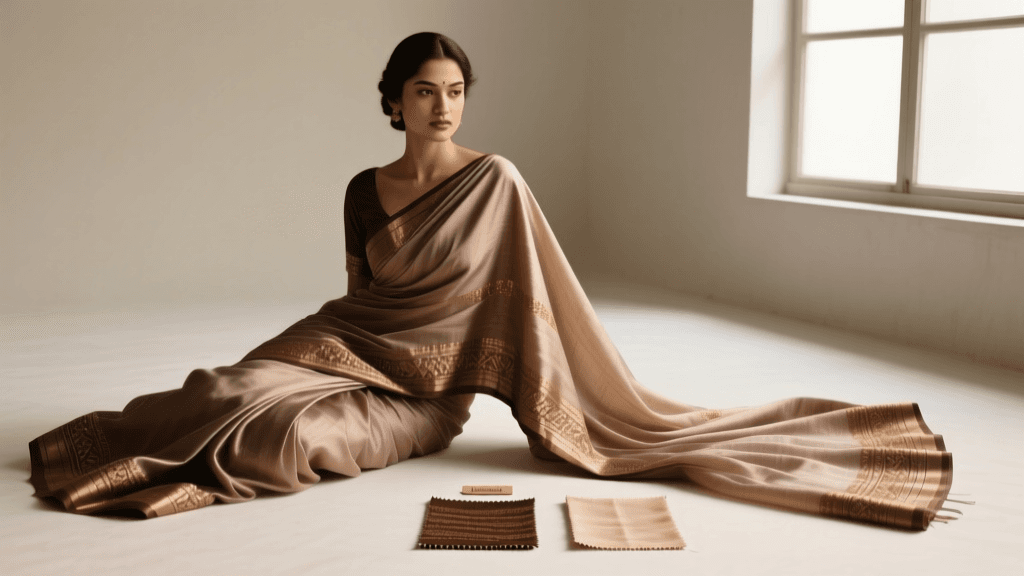
Traditional Kanjeevaram saris utilize pure silver zari dipped in gold. Against the high-gloss background of Mulberry silk, the zari blends into a cohesive, shimmering tapestry. However, in 2026, designers are leveraging the matte finish of Ahimsa silk to create striking visual contrast. The metallic zari pops brilliantly against the subdued, earthy background of Peace silk, giving the motifs a more pronounced, three-dimensional appearance.
Dye Absorption and Color Palettes
Mulberry silk takes acidic, chemical dyes exceptionally well, resulting in the iconic, blindingly bright Kanchipuram reds, emerald greens, and royal blues. Ahimsa silk, with its slightly porous and textured surface, absorbs dyes differently. While it can be dyed brightly, it excels with natural, organic dyes, yielding rich, muted, and vintage-inspired palettes like terracotta, sage green, and indigo. Historical context from the Victoria and Albert Museum's Asian Textile Collection highlights that pre-20th-century Indian textiles often featured these softer, naturally dyed tones, a trend that is roaring back into high fashion today.
The Korvai Technique and Textile Tension
A defining feature of an authentic Kanjeevaram sari is the korvai technique, where the contrasting border is woven separately and interlocked with the main body of the sari. This requires immense tension control on the pit loom.
Mulberry silk, with its high tensile strength, handles the rigorous tension of korvai weaving effortlessly, resulting in a seamless, nearly invisible join. Ahimsa silk, being a spun yarn, is inherently more fragile under extreme tension. Master weavers in 2026 have had to adapt their loom setups and use specialized sizing (starching) techniques to prevent the Ahimsa yarn from snapping during the interlocking process. This added labor and technical difficulty are primary reasons why high-quality Ahimsa Kanjeevaram saris often command a premium price over their Mulberry counterparts.
2026 Pricing and Market Availability
Historically, Mulberry silk was the more expensive option. However, the economics of silk have shifted dramatically by 2026. The labor-intensive nature of hand-spinning Ahimsa silk, combined with lower yields per cocoon and the specialized weaving adaptations required, has pushed the price of authentic Peace silk Kanjeevarams upward.
While a standard pure Mulberry Kanjeevaram with tested zari can be found starting around ₹15,000 to ₹25,000, an authentic Ahimsa silk Kanjeevaram with pure silver zari typically starts at ₹22,000 and can easily exceed ₹60,000 for complex, multi-color korvai designs.
Buyers should be wary of synthetic blends marketed as 'vegan silk' or 'eco-silk' in local markets. Always look for the Silk Mark label and specific Ahimsa certification provided by recognized textile cooperatives to ensure you are purchasing genuine Peace silk.
Care and Maintenance for Both Textiles
Proper care ensures these investment pieces survive for decades. The structural differences between the two silks dictate their maintenance routines.
Cleaning Protocols
- Mulberry Silk: Strictly dry-clean only for the first few washes. The heavy dyes used on Mulberry silk are prone to bleeding. Afterward, gentle hand-washing in cold water with a pH-neutral silk detergent is acceptable.
- Ahimsa Silk: Surprisingly resilient due to its spun nature. It can be hand-washed using traditional reetha (soapnut) or mild shampoos. The textured weave hides water spots and minor creases much better than the unforgiving glossy surface of Mulberry silk.
Storage Best Practices
Both fabrics are susceptible to moisture and silverfish. Store your saris in breathable, unbleached muslin bags. Avoid plastic covers, which trap humidity and cause the zari to tarnish or blacken. Fold the saris with the zari facing inward to prevent the metallic threads from snagging the delicate silk fibers, and refold them every three months to prevent permanent crease lines from weakening the yarn.
Final Verdict: Which Should You Choose?
The choice between Ahimsa and Mulberry silk for your Kanjeevaram sari ultimately depends on your personal values, aesthetic preferences, and intended use.
Choose Traditional Mulberry Silk if you desire the classic, heavy, structured drape with a blinding, high-gloss luster. It remains the ultimate choice for traditional bridal wear where vibrant, saturated colors and a heavy, regal presence are paramount.
Choose Ahimsa (Peace) Silk if you prioritize ethical, cruelty-free fashion and prefer a lightweight, breathable garment with a sophisticated, matte finish. It is the superior choice for daytime ceremonies, summer weddings, and modern styling where comfort and understated, earthy elegance are desired. As the textile industry continues to innovate in 2026, Ahimsa silk stands as a testament to how ancient traditions can evolve to meet the ethical standards of the modern world without sacrificing an ounce of artisanal beauty.